
Jack Nicholson: 12 Powerful Facts About the Legendary Hollywood Star
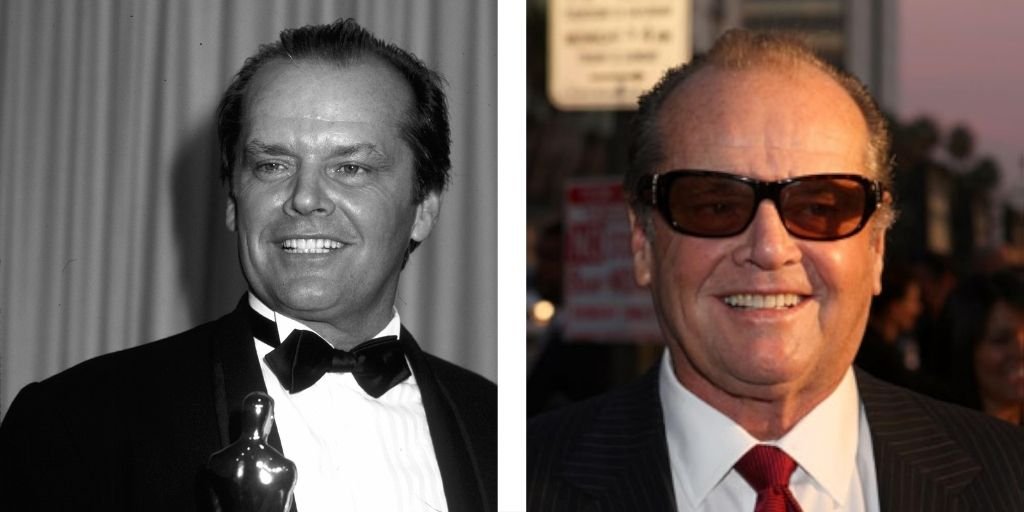
Jack Nicholson is one of those rare Hollywood actors whose name immediately brings a picture to mind. Maybe it is his unforgettable smile, his intense stare, or the wild energy he brought to the screen. Whatever comes first, there is no denying that he became much more than an actor. He became a symbol of American cinema.
Across a career spanning more than six decades, Nicholson played everything from troubled outsiders and complicated antiheroes to terrifying villains and charming romantics. His performances in films such as Easy Rider, Five Easy Pieces, Chinatown, One Flew Over the Cuckoo’s Nest, The Shining, Terms of Endearment, Batman, A Few Good Men, and As Good as It Gets helped define different eras of filmmaking.
What made him special? It was not simply his ability to memorize lines. Nicholson had a rare screen presence. He could make a quiet scene feel dangerous and turn a simple expression into a memorable moment. His career is like a long Hollywood road movie, filled with unexpected turns, risks, successes, and characters that audiences never forgot.
1. Early Life and a Surprising Family Story
Jack Nicholson was born on April 22, 1937, in Neptune City, New Jersey. He grew up in an unusual family situation that remained a major mystery to him for much of his childhood.
Nicholson was raised believing that his grandmother was actually his mother and that his mother, June Frances Nicholson, was his older sister. According to biographical accounts, he learned the truth in 1975 when a Time magazine journalist researching his life discovered the family story and brought it to his attention.
Imagine discovering something so fundamental about your family when you are already a successful adult. That revelation could have been overwhelming, but Nicholson continued building his career and personal identity.
His early years were not filled with the kind of privilege often associated with Hollywood stars. Instead, he gradually found his way toward entertainment and acting.
He eventually moved toward California, where the film industry offered opportunities for ambitious young performers. Like many actors of his generation, Nicholson did not become a major star overnight. He worked through smaller roles and gradually learned how to make audiences notice him.
That patience became important later. His career was built step by step rather than through one lucky break.
2. The Beginning of a Hollywood Career
Nicholson’s professional journey began during a period when Hollywood was changing rapidly. The studio system was evolving, younger filmmakers were experimenting with new styles, and audiences were becoming more interested in realistic and unconventional characters.
Early in his career, Nicholson worked as an actor, writer, and producer. He was not simply waiting for someone else to give him the perfect opportunity. He became involved in different parts of filmmaking and learned how movies were made.
His early work included appearances in films such as The Cry Baby Killer, The Little Shop of Horrors, and other low-budget productions.
Those early movies may not have had the cultural influence of his later classics, but they gave him valuable experience. More importantly, they helped him develop the ability to create distinctive characters.
The young Nicholson also benefited from his relationships with filmmakers who were interested in breaking away from traditional Hollywood formulas. His collaboration with producer and director Roger Corman, among others, gave him exposure to a more independent style of filmmaking.
This period helped prepare him for the breakthrough that would eventually arrive with Easy Rider.
3. Easy Rider Changed Everything
The late 1960s marked a major turning point.
In 1969, Nicholson appeared in Easy Rider, a counterculture road movie starring Peter Fonda and Dennis Hopper. Nicholson played George Hanson, a lawyer whose unexpected friendship with the film’s protagonists became one of the movie’s most memorable elements.
The role was important because it showed audiences a different side of Nicholson. He was funny, nervous, vulnerable, intelligent, and unpredictable.
His performance earned him his first Academy Award nomination, in the supporting actor category. The Academy’s records list Nicholson as a nominee for Easy Rider at the 1970 ceremony.
Suddenly, people in Hollywood were paying closer attention.
The film itself became associated with the changing cultural landscape of the late 1960s. Nicholson’s performance fit perfectly into that world because he did not seem like a traditional Hollywood leading man.
He felt more complicated.
That quality would become one of his greatest strengths.
Rather than presenting perfectly polished heroes, Nicholson often played people with flaws, contradictions, anger, humor, fear, and desire. Audiences could recognize something human in them.
4. Five Easy Pieces and the Rise of a Major Actor
After Easy Rider, Nicholson moved into an even more important stage of his career.
His performance in Five Easy Pieces became a defining moment. Released in 1970, the film featured Nicholson as Robert Dupea, a restless man struggling with his identity, relationships, family expectations, and dissatisfaction with his life.
The character was not a conventional hero. Robert could be selfish, frustrated, charming, intelligent, and emotionally distant.
Nicholson’s performance earned him another Academy Award nomination for Best Actor.
What made the performance so powerful was its restraint. Nicholson did not need to shout constantly or create dramatic speeches to hold attention. His body language and expressions often communicated what the character could not say.
This became a recurring feature of his acting.
He could communicate tension with a glance.
He could make a smile feel suspicious.
He could make silence feel uncomfortable.
By the early 1970s, Nicholson was no longer simply a promising performer. He was becoming one of the most respected actors of his generation.
5. Chinatown Established His Status as a Screen Icon
In 1974, Nicholson starred as private investigator J. J. “Jake” Gittes in Roman Polanski’s Chinatown.
The movie became one of the most celebrated examples of American film noir, and Nicholson’s performance became central to its reputation.
Gittes is clever and confident, but he is also vulnerable. He believes he understands the world around him, only to discover that the situation is much more complicated than he imagined.
Nicholson brought humor and personality to the character without destroying the seriousness of the story.
His performance earned him an Academy Award nomination for Best Actor. The Academy’s records confirm his nomination for Chinatown at the 1975 ceremony.
The film also demonstrated how effectively Nicholson could carry a complicated story.
His version of the private detective was not simply a tough guy with a hat and a sharp line. Gittes had emotional baggage, mistakes in his past, and a growing sense that he was trapped inside a situation larger than himself.
That combination helped make Chinatown a lasting classic.
6. One Flew Over the Cuckoo’s Nest and His First Oscar
If one role helped transform Nicholson from major star into Hollywood legend, it was Randle P. McMurphy in One Flew Over the Cuckoo’s Nest.
Released in 1975 and directed by Miloš Forman, the film followed McMurphy, a rebellious man who enters a psychiatric institution and clashes with the rigid Nurse Ratched.
Nicholson’s performance balanced humor, rebellion, vulnerability, and tragedy.
McMurphy is not perfect. He can be selfish and reckless, but he also represents freedom and resistance against an oppressive environment.
Nicholson made the character charismatic without making him unrealistically heroic.
The performance earned him the Academy Award for Best Actor at the 1976 ceremony. The film also won Best Picture, Director, Actress, and Adapted Screenplay, becoming the first movie since It Happened One Night to win all five major categories.
This was a landmark achievement.
Nicholson had officially reached the highest level of American acting.
And yet, rather than becoming predictable after winning his first Oscar, he continued taking unusual roles.
7. The Shining and One of Cinema’s Most Famous Villains
When people discuss Nicholson’s most recognizable performances, Jack Torrance is almost always near the top.
Stanley Kubrick’s The Shining, released in 1980, gave Nicholson one of the most challenging characters of his career.
He played Jack Torrance, a writer who accepts a winter caretaker position at the isolated Overlook Hotel. As the story progresses, Jack’s psychological stability begins to deteriorate.
The performance became famous for its intensity.
Nicholson could move from calm to frightening in seconds. His facial expressions became almost as important as his dialogue.
The film’s atmosphere helped, but Nicholson’s performance gave the character a disturbing human quality. Jack is not simply a monster. He is a man whose weaknesses, frustrations, and anger gradually become more dangerous.
That distinction matters.
A great villain can be frightening because we understand something about them. Nicholson’s portrayal created exactly that effect.
Decades later, images and moments associated with his performance remain part of popular culture.
8. Another Oscar for Terms of Endearment
Nicholson continued to demonstrate that he could move between very different genres.
In Terms of Endearment, released in 1983, he played Garrett Breedlove, a former astronaut with a complicated relationship with Emma Greenway, played by Shirley MacLaine.
The character allowed Nicholson to show a warmer and more playful side.
Instead of relying entirely on intensity, he used humor, charm, vulnerability, and emotional timing.
His performance earned him the Academy Award for Best Supporting Actor. At the 1984 Oscars, Nicholson won in the supporting actor category for Terms of Endearment.
The victory was particularly significant because it showed the breadth of his acting ability.
He could play a rebellious young man.
He could portray a morally complicated detective.
He could become a terrifying psychological villain.
And he could also make audiences laugh and feel emotionally connected to a flawed romantic character.
That range separated him from many of his contemporaries.
9. Batman Made Him the Joker
In 1989, Nicholson took on one of the most recognizable comic-book villains in cinema: the Joker in Tim Burton’s Batman.
This was not a small role. Nicholson’s version of the Joker became one of the defining interpretations of the character for a new generation of moviegoers.
His Joker was theatrical, unpredictable, humorous, violent, and larger than life.
Nicholson understood something important about the character: the Joker is frightening partly because he enjoys being unpredictable.
One moment he could be entertaining, and the next he could become threatening.
The performance also allowed Nicholson to lean into his natural ability to create unusual facial expressions and eccentric mannerisms.
The result was a villain who felt almost like a performance within a performance.
The success of Batman also introduced Nicholson to a massive mainstream audience. People who may not have followed his earlier dramatic work now knew him as the Joker.
His ability to move between serious drama and blockbuster entertainment was another example of his versatility.
10. A Few Good Men and As Good as It Gets
The 1990s gave Nicholson several memorable performances.
In A Few Good Men (1992), he played Colonel Nathan R. Jessup, a powerful military officer whose courtroom confrontation with Tom Cruise’s character became one of the movie’s most famous sequences.
Nicholson’s performance earned another Academy Award nomination for supporting actor.
The role showed once again how effective he could be when playing authority figures.
Jessup is confident, intimidating, and convinced that his position gives him the right to make difficult decisions.
Nicholson’s delivery made the character unforgettable.
Then came As Good as It Gets in 1997.
Nicholson played Melvin Udall, a successful but deeply unpleasant writer whose life begins to change through unexpected relationships with people around him.
The character could easily have become unlikeable beyond redemption. Nicholson, however, gave him enough humor and vulnerability to keep audiences invested.
His performance earned him the Academy Award for Best Actor, his third competitive Oscar. IMDb’s career summary also identifies As Good as It Gets as his third Oscar-winning performance.
This achievement confirmed something that had been clear for years: Nicholson could make difficult characters fascinating.
11. Later Career and Memorable Final Roles
Nicholson remained active in major films during the 2000s.
He appeared in movies including About Schmidt, Something’s Gotta Give, The Departed, and The Bucket List.
In About Schmidt, he played Warren Schmidt, a recently retired man struggling with questions about aging, purpose, family, and identity.
The role was much quieter than some of his earlier work.
Instead of the explosive personality seen in The Shining or Batman, Nicholson relied on subtle reactions and understated humor.
The Departed, directed by Martin Scorsese and released in 2006, gave him another opportunity to play a morally complicated figure. His performance as Frank Costello showed that Nicholson’s ability to create intimidating characters had not disappeared.
His later films often focused more heavily on aging, relationships, regret, and personal reflection.
That was fitting for an actor whose career had already covered so many stages of American life and culture.
The Bucket List in 2007 became another well-known late-career appearance, pairing Nicholson with Morgan Freeman.
The film’s themes of friendship, mortality, and unfinished dreams resonated with audiences around the world.
12. Legacy, Awards, Influence, and Why Jack Nicholson Still Matters
Nicholson’s legacy cannot be reduced to three Oscars or a list of famous movies.
His influence is much broader.
He helped redefine what a Hollywood leading man could look like.
Instead of always presenting polished, traditional heroes, he often played damaged, rebellious, funny, arrogant, frightened, lonely, or morally complicated people.
That approach influenced generations of performers.
According to IMDb’s career summary, Nicholson received 12 Academy Award nominations and won three times. He is also noted as one of only two actors, alongside Michael Caine, to receive an Oscar nomination in every decade from the 1960s through the 2000s.
His Oscar wins came for three very different performances:
- Best Actor – One Flew Over the Cuckoo’s Nest
- Best Supporting Actor – Terms of Endearment
- Best Actor – As Good as It Gets
That variety tells us something important.
Nicholson was never trapped inside one type of character.
He could be dramatic.
He could be funny.
He could be frightening.
He could be romantic.
He could be unpredictable.
He could even make a deeply unpleasant character strangely lovable.
His screen presence was like a magnet: you might not always know what the character would do next, but you wanted to keep watching.
A Career Built on Risk
One of the most valuable lessons from Nicholson’s career is the importance of taking risks.
He did not spend his entire career repeating the same role.
From independent films to major studio productions, from character drama to comic-book spectacle, he repeatedly changed direction.
That willingness to experiment kept his work interesting.
The Nicholson Smile
Few actors have a facial expression as recognizable as Nicholson’s famous grin.
It became part of his cinematic identity.
Sometimes the smile meant humor.
Sometimes it meant danger.
Sometimes it suggested that the character knew something everyone else had missed.
That ambiguity was part of his appeal.
His Impact on Popular Culture
Nicholson became more than a film star. He became a cultural reference point.
His image at sporting events, his distinctive laugh, his sunglasses, his expressions, and his famous movie performances all contributed to his public identity.
For many people, saying his name immediately brings up images of the Joker, Jack Torrance, or his courtroom performance in A Few Good Men.
That is the mark of a genuine cultural icon.
Conclusion
Jack Nicholson’s career is remarkable because it was never simply about fame. It was about character.
From his early days in low-budget movies to his breakthrough in Easy Rider, his acclaimed performances in Five Easy Pieces and Chinatown, his Oscar-winning work in One Flew Over the Cuckoo’s Nest, Terms of Endearment, and As Good as It Gets, and his unforgettable appearances in The Shining, Batman, and A Few Good Men, he continually found ways to surprise audiences.
He brought an unusual combination of humor, danger, intelligence, vulnerability, and unpredictability to the screen.
Hollywood has produced countless talented actors, but only a small number become instantly recognizable through a look, a voice, or a single performance.
Nicholson belongs in that group.
His films remain popular because his characters still feel human. They make mistakes, chase dreams, lose control, fall in love, become angry, and sometimes reveal sides of themselves they would rather hide.
That is why his work continues to matter.
Jack Nicholson did not simply appear in movies. He left fingerprints on the history of American cinema.
FAQs
1. How many Oscars has Jack Nicholson won?
Jack Nicholson has won three Academy Awards. He won Best Actor for One Flew Over the Cuckoo’s Nest and As Good as It Gets, and Best Supporting Actor for Terms of Endearment.
2. What is Jack Nicholson’s most famous movie?
There is no single universally accepted answer, but The Shining, One Flew Over the Cuckoo’s Nest, Chinatown, Batman, and A Few Good Men are among his most recognizable films.
3. Did Jack Nicholson play the Joker?
Yes. Nicholson portrayed the Joker in Tim Burton’s 1989 film Batman. The performance became one of the best-known interpretations of the character.
4. What was Jack Nicholson’s first Oscar-winning performance?
His first Academy Award came for Best Actor for his performance as Randle P. McMurphy in One Flew Over the Cuckoo’s Nest. The film won five major Academy Awards at the 1976 ceremony.
5. Why is Jack Nicholson considered one of Hollywood’s greatest actors?
Nicholson is widely regarded as one of Hollywood’s great actors because of his extraordinary range, memorable screen presence, career longevity, and ability to play both sympathetic and deeply disturbing characters. His 12 Academy Award nominations and three wins are one measure of his achievements, but his influence on popular cinema extends far beyond awards.


