
Brad Pitt: The Life, Career, Films, and Lasting Legacy of a Hollywood Icon
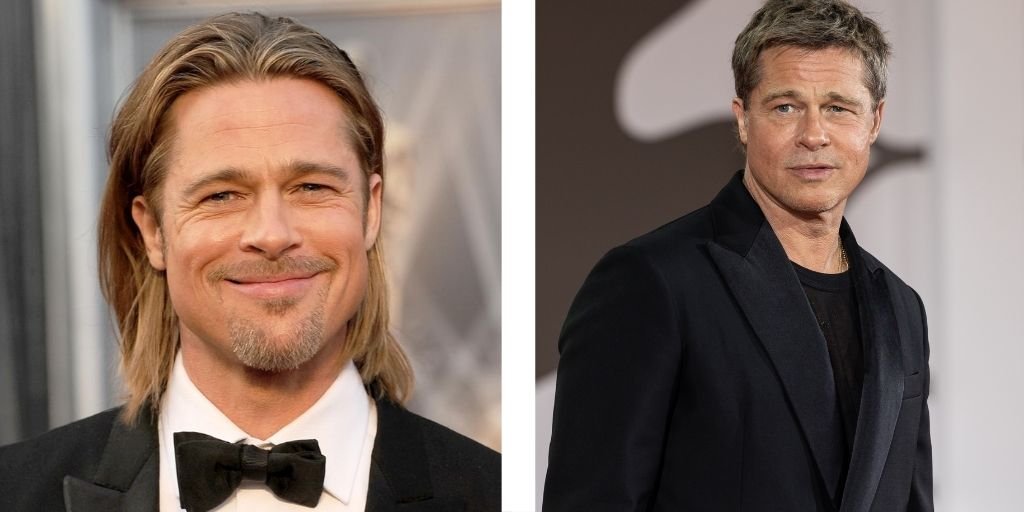
Brad Pitt is one of those actors whose name seems to belong to Hollywood history as much as it belongs to modern entertainment. For decades, audiences have watched him move between romantic dramas, intense thrillers, action blockbusters, comedies, and serious award-winning films. Yet his career is about much more than being a famous movie star. He has repeatedly taken risks, worked with respected filmmakers, and built a reputation for choosing roles that challenge expectations.
From his early days as a young actor searching for recognition to becoming an Academy Award-winning performer and producer, Pitt’s journey has been remarkably varied. He has experienced enormous success, public scrutiny, professional reinvention, and personal changes while remaining one of the most recognizable figures in cinema.
So, what makes Brad Pitt so enduring? Perhaps it is his ability to evolve. Like a well-made film that reveals something new each time you watch it, his career has developed in different layers over the years. His appearance may have helped him attract attention early on, but his longevity has come from talent, discipline, curiosity, and an impressive willingness to take creative chances.
Early Life and the Road to Hollywood
Brad Pitt was born William Bradley Pitt on December 18, 1963, in Shawnee, Oklahoma, and grew up in Springfield, Missouri. His upbringing was relatively ordinary compared with the extraordinary life he would eventually lead.
He attended the University of Missouri, where he studied journalism with a focus on advertising. At first, acting was not necessarily the obvious career path. However, shortly before completing his degree, he decided to move to Los Angeles and pursue acting.
That decision changed everything.
Like many aspiring performers, Pitt began with smaller opportunities. He appeared in television shows and took supporting parts while learning how the entertainment industry worked. There was no guarantee that he would become a major star. Hollywood is filled with talented people who never receive the opportunity to break through.
Pitt, however, kept working.
His early television appearances helped him gain experience and visibility. Gradually, casting directors and audiences began to notice him. His natural screen presence made him particularly effective in roles where charm and confidence were important.
The breakthrough did not happen overnight, but his persistence eventually opened the door to much bigger opportunities.
The Breakthrough That Made Him Famous
Pitt’s career began gaining serious momentum in the early 1990s. One of his most memorable early appearances came in Thelma & Louise, where he played J.D., a charismatic young man who encounters the title characters during their journey.
Although his screen time was limited, the performance attracted enormous attention.
Suddenly, Pitt was being discussed as one of Hollywood’s most promising young actors. His good looks were certainly part of the conversation, but the attention also created a challenge. How could he prove that he was more than a handsome newcomer?
His answer was to choose increasingly demanding roles.
Films such as A River Runs Through It, Legends of the Fall, and Interview with the Vampire helped establish him as a serious leading man. Each project presented a different side of his personality and acting ability.
Instead of staying within one safe category, he explored romance, historical drama, horror, and psychological storytelling.
That variety became one of the defining features of his career.
From Heartthrob to Serious Actor
During the 1990s, Pitt gradually moved beyond the traditional image of a Hollywood heartthrob.
His performance in 12 Monkeys was particularly important. Playing Jeffrey Goines allowed him to embrace eccentricity and unpredictability. The role earned him an Academy Award nomination for Best Supporting Actor and demonstrated that he could disappear into unusual characters.
Then came Se7en, directed by David Fincher.
The dark crime thriller paired Pitt with Morgan Freeman and presented a much more serious atmosphere than some of his earlier work. Pitt’s portrayal of Detective David Mills showed vulnerability, frustration, determination, and emotional intensity.
His collaboration with Fincher would later become one of the most interesting creative relationships in his career.
Pitt also appeared in Fight Club, another film that initially divided audiences but eventually became a major cultural touchstone. His portrayal of Tyler Durden became one of his most recognizable performances.
What made the role memorable was not simply the character’s confidence or physical presence. Pitt understood how to make Tyler fascinating, entertaining, and unsettling at the same time.
This period marked an important transformation. The public could no longer easily describe him as simply a movie star.
He was becoming an actor who wanted to experiment.
Major Films That Defined His Career
Over the years, Pitt has built a filmography that covers an unusually broad range of genres.
Ocean’s Eleven showcased his relaxed comedic timing and effortless chemistry with an ensemble cast. The film became a major success and led to two sequels, helping establish Pitt as a bankable star in sophisticated commercial entertainment.
Troy gave him the opportunity to lead a large-scale historical epic as Achilles. The physical demands of the production emphasized another aspect of his screen persona, while the film introduced his work to a huge international audience.
In Mr. & Mrs. Smith, Pitt combined action, humor, romance, and celebrity appeal. The movie became a commercial success and remains one of his better-known mainstream projects.
He also returned to darker material.
The Assassination of Jesse James by the Coward Robert Ford allowed Pitt to portray the legendary outlaw with restraint rather than relying solely on traditional Western heroics. His performance demonstrated a growing interest in subtle characterization.
Then came The Curious Case of Benjamin Button, which earned him another Academy Award nomination for Best Actor. The film required him to portray a character experiencing life in an unusual physical and emotional progression.
Pitt’s career continued to develop with films such as Inglourious Basterds, Moneyball, World War Z, 12 Years a Slave, Fury, The Big Short, Once Upon a Time in Hollywood, and Bullet Train.
Each project added something different to his professional identity.
Working With Great Directors
One of the strongest features of Pitt’s career has been his willingness to collaborate with major filmmakers.
His repeated work with David Fincher is especially notable. Their films include Se7en, Fight Club, and The Curious Case of Benjamin Button. These projects demonstrate how an actor and director can repeatedly explore different creative territory together.
Pitt also worked with Quentin Tarantino in Inglourious Basterds and later Once Upon a Time in Hollywood. His performance as Cliff Booth in the latter earned him the Academy Award for Best Supporting Actor.
Steven Soderbergh’s Ocean’s Eleven series offered another creative environment. Rather than focusing exclusively on individual performance, the movies depended heavily on ensemble chemistry.
Pitt has also collaborated with directors including Terrence Malick, Alejandro González Iñárritu, Bennett Miller, Ridley Scott, James Gray, and Damien Chazelle.
These collaborations matter because actors often develop dramatically when they work with filmmakers who have different styles.
Some directors push toward realism. Others emphasize spectacle. Some focus on dialogue, while others rely on visual storytelling.
Pitt has moved comfortably between these approaches.
Brad Pitt as a Producer
Many people primarily think of Pitt as an actor, but his work as a producer is equally significant.
Through his production company, Plan B Entertainment, he has been involved with films that are ambitious, socially relevant, and artistically respected.
One of the company’s most important achievements was 12 Years a Slave, which won the Academy Award for Best Picture. Pitt also appeared in the film in a supporting role.
Plan B has been associated with a wide range of projects, including films dealing with history, politics, social issues, personal relationships, and difficult human experiences.
This side of his career reveals another dimension of his interests.
As an actor, he interprets characters created by other people. As a producer, he can help decide which stories deserve to be told.
That difference is important.
It means Pitt’s influence extends beyond what happens when the camera starts rolling. He has participated in shaping projects from behind the scenes as well.
Awards and Professional Recognition
Pitt’s career has received extensive recognition from the entertainment industry.
He has earned multiple Academy Award nominations as both an actor and producer. His supporting performance in Once Upon a Time in Hollywood finally brought him an acting Oscar.
The victory was widely viewed as an important moment in a career that had already lasted for decades.
He had previously won an Academy Award as a producer when 12 Years a Slave received the Best Picture award.
Beyond the Oscars, Pitt has received recognition from organizations including the Golden Globes, Screen Actors Guild, and other major industry groups.
Awards, however, only tell part of the story.
An actor’s cultural impact cannot always be measured by trophies. Some performances become part of popular culture even without winning major prizes.
Pitt has several examples of exactly that.
Characters such as Tyler Durden, Rusty Ryan, Achilles, Detective Mills, Cliff Booth, and others remain recognizable to audiences around the world.
His Approach to Different Genres
One reason Pitt has maintained such a long career is his versatility.
He can play a serious dramatic character without making the performance feel overly theatrical. He can also participate in broad comedy without appearing uncomfortable.
His action roles have allowed him to use physicality, while quieter dramas have required emotional restraint.
In Moneyball, for example, much of his performance depends on conversation, body language, and understated reactions. The film is about baseball statistics and professional pressure, but the emotional core comes from the people involved.
In Fury, the atmosphere is much harsher. Pitt plays a tank commander dealing with the psychological consequences of war.
In The Big Short, he appears in a film that combines financial subject matter with humor and social commentary.
Then, in Once Upon a Time in Hollywood, he shifts toward relaxed confidence and dry comedy.
This ability to change gears is one of his greatest professional strengths.
Public Image and Life Away From the Camera
Few Hollywood actors have experienced the level of public attention that has surrounded Pitt.
His relationships, family life, appearance, career choices, and personal circumstances have all received extensive media coverage over the years.
That attention can be difficult for anyone, particularly for someone whose profession already places them under a spotlight.
Pitt has generally maintained a distinction between his public career and his private life, although that boundary has not always been easy to preserve.
His high-profile marriage to Jennifer Aniston and later relationship and marriage to Angelina Jolie became subjects of worldwide media interest.
Rather than focusing heavily on personal controversies, it is more useful to recognize how celebrity culture can affect people who live under constant public observation.
Pitt’s professional career has continued despite periods of intense media attention.
That resilience is notable.
The entertainment business can be unforgiving. Public interest can rise and fall quickly, but maintaining a decades-long career requires more than fame.
It requires the ability to keep working, adapt, and make meaningful professional decisions.
Humanitarian Interests and Public Causes
Pitt has also been involved in humanitarian and charitable efforts.
One notable area has been his involvement with rebuilding and housing initiatives following Hurricane Katrina. The Make It Right Foundation was established to help create sustainable homes in New Orleans’ Lower Ninth Ward.
Although the organization later faced significant challenges and criticism, the effort reflected Pitt’s interest in architecture, sustainability, and community rebuilding.
He has also supported various charitable causes and organizations over the years.
Celebrity philanthropy can sometimes attract skepticism, and rightly so. Good intentions alone do not guarantee successful outcomes.
Still, Pitt’s involvement demonstrates that his interests have extended beyond entertainment.
His public profile has given him opportunities to draw attention to causes that might otherwise receive less visibility.
Brad Pitt’s Influence on Popular Culture
It is difficult to discuss modern Hollywood without considering Pitt’s influence.
His appearance helped shape the idea of the modern male movie star, but his career eventually became more interesting than that image.
He demonstrated that a leading man could combine commercial appeal with unusual artistic choices.
He also helped normalize the idea that major stars could work in both huge studio productions and smaller, filmmaker-driven projects.
His influence can be seen in how audiences respond to celebrity casting today. People do not simply ask whether an actor is famous. They also want to know what kind of character the actor will play.
Pitt has repeatedly surprised audiences by refusing to stay in one category.
His career is almost like a large library. Some books are action stories, some are comedies, some are tragedies, and some are experimental. Yet they all belong to the same collection.
That variety is a major reason his work remains interesting.
The Legacy of Brad Pitt
What will Brad Pitt ultimately be remembered for?
There are several possible answers.
Some people will remember the unforgettable characters. Others will remember the blockbuster films. Some will focus on his Oscar-winning performances, while others will point to his work as a producer.
For many movie fans, his greatest achievement may simply be longevity.
Hollywood changes constantly. New stars appear, trends disappear, and audiences move toward new forms of entertainment. Yet Pitt has remained relevant across multiple generations.
He began working professionally when the entertainment industry looked completely different from today’s streaming-driven environment. He successfully navigated the transition from traditional movie stardom to a more fragmented global entertainment landscape.
His career also illustrates an important lesson about success.
Talent can open a door, but longevity requires reinvention.
Pitt did not rely forever on the image that first made him famous. He gradually challenged it, taking darker roles, unusual characters, dramatic stories, comedic parts, and production responsibilities.
That willingness to change may ultimately be his most important legacy.
Conclusion
Brad Pitt’s career is a remarkable combination of fame, versatility, risk-taking, and persistence. From his early television appearances and breakout role in Thelma & Louise to acclaimed films such as Se7en, Fight Club, Moneyball, 12 Years a Slave, and Once Upon a Time in Hollywood, he has continually expanded his range.
His achievements as an actor and producer have made him one of the most influential figures in modern cinema. More importantly, his career shows that lasting success is rarely about repeating the same formula. It is about growing, experimenting, and remaining willing to surprise an audience.
For general movie fans, Pitt’s filmography offers something for almost everyone. Whether you enjoy action, drama, comedy, crime stories, historical films, or character-driven cinema, there is a good chance his work has something worth discovering.
Frequently Asked Questions
1. Who is Brad Pitt?
Brad Pitt is an American actor and film producer known for major movies including Fight Club, Se7en, Ocean’s Eleven, Moneyball, World War Z, and Once Upon a Time in Hollywood.
2. What was Brad Pitt’s breakthrough role?
His breakthrough role is widely associated with J.D. in Thelma & Louise (1991). Although the part was relatively small, it brought him considerable attention and helped launch his major film career.
3. Has Brad Pitt won an Academy Award?
Yes. Pitt won the Academy Award for Best Supporting Actor for Once Upon a Time in Hollywood. He also received an Academy Award as a producer of 12 Years a Slave, which won Best Picture.
4. What are some of Brad Pitt’s most famous movies?
Some of his best-known films include Se7en, Fight Club, Ocean’s Eleven, Troy, Mr. & Mrs. Smith, The Curious Case of Benjamin Button, Inglourious Basterds, Moneyball, World War Z, Fury, and Once Upon a Time in Hollywood.
5. Is Brad Pitt also a film producer?
Yes. Pitt has worked extensively as a producer through Plan B Entertainment and has been involved with several critically acclaimed films, including 12 Years a Slave.


