
Warren Buffett: The Remarkable Life, Investment Philosophy, and Legacy of the “Oracle of Omaha”
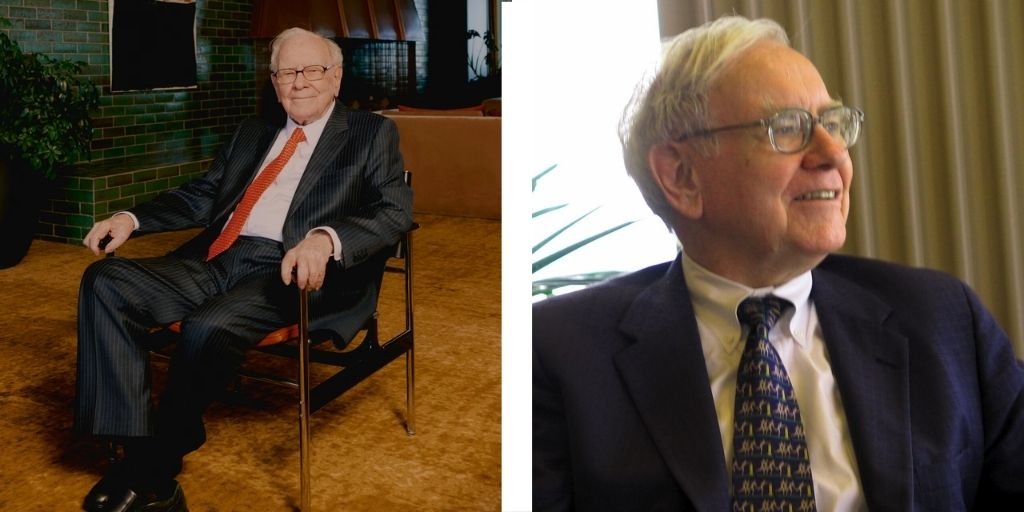
Warren Buffett is one of the most recognized names in the world of investing. For decades, his decisions, letters, and simple approach to money have attracted the attention of investors, business owners, students, and ordinary people alike. But what makes his story so interesting? Is it simply the enormous fortune he built, or is there something deeper behind his success?
Buffett’s journey is really a story about patience, discipline, learning, and making sensible decisions over a very long period. He did not become successful overnight. Instead, he spent decades studying businesses, controlling his emotions, and allowing good investments to grow.
His philosophy can be surprisingly easy to understand. You do not necessarily need to be a financial expert to appreciate the ideas behind it. Buffett has often emphasized buying quality businesses, thinking independently, avoiding unnecessary risks, and giving investments enough time to develop.
From his childhood in Nebraska to his leadership of Berkshire Hathaway, his life provides valuable lessons far beyond the stock market.
Early Life and the Beginning of His Interest in Money
Warren Edward Buffett was born on August 30, 1930, in Omaha, Nebraska. His father, Howard Buffett, was a businessman and later served as a U.S. congressman. Growing up in a family where business and economics were familiar subjects gave Buffett an early opportunity to observe how money worked.
However, his interest went beyond what he learned at home. Even as a child, he showed an unusual fascination with numbers, business, and earning money.
Buffett reportedly began looking for ways to make money while he was still young. He sold chewing gum and soft drinks and later delivered newspapers. These small activities may seem ordinary, but they helped develop something important: an understanding that money could be earned, saved, and reinvested.
A young entrepreneur
As a teenager, Buffett purchased a used pinball machine business with a friend. They placed machines in local businesses and eventually sold the operation for a profit.
He also invested money he had saved into farmland.
What can we learn from this? Buffett was already thinking about money as something that could produce additional money rather than simply something to spend.
That idea would become central to his financial philosophy.
Education and the Influence of Benjamin Graham
After finishing high school, Buffett attended the University of Pennsylvania before transferring to the University of Nebraska, where he completed his undergraduate education.
His most important educational experience, however, came later at Columbia Business School.
There he studied under Benjamin Graham, widely regarded as one of the pioneers of modern value investing.
Graham’s ideas had a profound influence on Buffett. Rather than trying to predict what stock prices would do tomorrow or next week, value investors examine the underlying business and attempt to determine what it is actually worth.
The concept of intrinsic value
Imagine walking into a shop where a high-quality product is being sold for much less than its reasonable value. If you understand the product well, the temporary discount could represent an opportunity.
Buffett applied a similar concept to businesses.
He learned to look beyond stock charts and ask questions such as:
- How strong is the company?
- Does it have a durable competitive advantage?
- Can it generate reliable profits?
- Is management trustworthy?
- Is the price reasonable compared with the business’s value?
This approach helped separate Buffett from investors who were primarily focused on short-term market movements.
Buffett’s Partnership and the Road to Berkshire Hathaway
After working with Benjamin Graham, Buffett eventually returned to Omaha and established an investment partnership in the late 1950s.
His results attracted increasing attention.
Rather than constantly chasing fashionable companies, Buffett searched for situations where he believed the market price did not properly reflect the underlying value.
One of the most important investments of his early career involved Berkshire Hathaway.
At the time, Berkshire was a struggling textile company. Buffett initially purchased shares because he believed they were undervalued. Over time, however, he became increasingly involved with the company.
The textile business ultimately declined, but Buffett transformed Berkshire Hathaway into something entirely different.
From textile company to business empire
Instead of keeping Berkshire focused on textiles, Buffett gradually redirected its capital toward insurance, transportation, utilities, consumer businesses, financial companies, and other assets.
This transformation became one of the most remarkable stories in corporate history.
Berkshire eventually became a holding company that owned stakes in numerous major businesses while also owning many companies outright.
Buffett’s approach was not simply to buy stocks and sell them quickly. He often preferred owning excellent businesses for years or even decades.
The Core Principles Behind Buffett’s Investment Philosophy
Why has Buffett’s philosophy remained so influential?
One reason is its simplicity.
At its heart, his approach focuses on understanding what you own, paying a sensible price, maintaining discipline, and allowing time to work in your favor.
1. Buy businesses, not ticker symbols
A stock represents ownership in a business. Buffett encourages investors to remember that fact.
Instead of viewing a stock as a flashing number on a screen, imagine that you are purchasing a small part of a real company. Would you want to own it if the stock market closed for five years?
That question can change the way an investor thinks.
2. Look for quality
Buffett increasingly emphasized the importance of excellent businesses rather than simply cheap businesses.
A company with a powerful brand, strong customer loyalty, capable management, and consistent profitability may deserve a higher valuation than a struggling company.
3. Think long term
Buffett is famous for emphasizing patience.
Compounding is one of the most powerful forces behind long-term wealth. Small gains can become substantial when they are repeatedly reinvested over many years.
It is similar to planting a tree. You cannot pull on the branches to make it grow faster. You provide the right conditions and give it time.
4. Maintain a margin of safety
Investing always involves uncertainty. Even a great business can face unexpected problems.
A margin of safety means avoiding situations where everything has to go perfectly for an investment to work.
The less you depend on perfect predictions, the more resilient your investment approach can become.
The Power of Compounding in Buffett’s Wealth
Compounding is arguably one of the most important ideas associated with Buffett.
Suppose you invest money and earn a return. Instead of spending the gain, you reinvest it. Now the next return is earned not only on your original money but also on previous gains.
Over time, this creates a snowball effect.
Buffett’s extraordinary wealth is closely connected to this principle, but there is another important point: time matters enormously.
Many people focus on how much money someone invests. Buffett’s story demonstrates that how long capital remains productive can be just as important.
His enormous fortune accumulated primarily later in life because decades of compounding produced increasingly large results.
This is an important lesson for ordinary investors. You do not have to begin with millions of dollars to understand the principle.
Starting early, saving consistently, avoiding destructive mistakes, and staying invested can matter greatly.
Berkshire Hathaway and Its Extraordinary Growth
Berkshire Hathaway became the platform through which Buffett demonstrated his philosophy on an enormous scale.
The company evolved into a diversified organization with businesses and investments spanning numerous industries.
Its insurance operations became particularly important because insurance companies collect premiums before claims are paid. The resulting funds, commonly known as float, can potentially be invested while the insurer manages its obligations.
A collection of businesses
Over the years, Berkshire became associated with businesses in areas such as:
- Insurance
- Energy
- Rail transportation
- Manufacturing
- Retail
- Consumer products
- Financial services
- Investments in publicly traded companies
This structure allowed Berkshire to allocate capital across different opportunities.
Rather than trying to build every company from scratch, Buffett often preferred acquiring strong businesses and allowing capable managers to operate them.
That approach reflected another important principle: good management matters.
Buffett’s Approach to Risk and Market Crashes
Financial markets can be emotional places.
When prices rise rapidly, people may become overly confident. When markets fall sharply, fear can take control.
Buffett has consistently argued that investors should avoid allowing emotions to dictate decisions.
Why does Buffett keep cash?
Cash can provide flexibility.
When markets become highly uncertain or attractive opportunities appear, having available capital can allow an investor to act.
Buffett has also repeatedly warned against excessive debt and investments that depend heavily on precise predictions.
His philosophy is not about avoiding every loss. Losses are unavoidable in investing.
Instead, the objective is to avoid permanent, catastrophic losses that can destroy years of progress.
This distinction is extremely important.
A temporary decline in the value of a strong business is different from owning a fundamentally weak business whose value is permanently damaged.
Buffett’s Simple Lifestyle and Personal Habits
Despite becoming one of the world’s wealthiest individuals, Buffett has long been associated with a relatively modest lifestyle.
He became famous for continuing to live in Omaha and maintaining habits that contrast sharply with the stereotypical image of a billionaire.
His personal behavior has become part of his public appeal.
Reading as a daily habit
Buffett has frequently discussed the importance of reading.
He has encouraged people to spend significant amounts of time learning because knowledge can accumulate just like financial capital.
Reading annual reports, newspapers, books, and business information allows investors to develop a broader understanding of companies and industries.
This is another area where Buffett’s philosophy is accessible to almost anyone.
You may not have the money to buy a major corporation, but you can read, study, and improve your knowledge.
Warren Buffett’s Leadership Style
Buffett’s leadership style is also unusual.
Berkshire Hathaway has historically operated with considerable independence among its businesses. Rather than controlling every small decision, Buffett has often trusted managers to run their companies.
This decentralized structure reflects his confidence in capable people.
Trust and reputation
Buffett places considerable importance on reputation.
A company can have impressive financial results and still become a poor investment if its leadership behaves irresponsibly.
Trust matters because businesses depend on customers, employees, suppliers, investors, and communities.
For Buffett, reputation is not merely a public-relations issue. It can affect the long-term value of a company.
His letters to Berkshire shareholders have also become famous because they explain complicated business subjects in relatively straightforward language.
Buffett’s Views on Everyday Financial Decisions
You do not need to own shares of Berkshire Hathaway to benefit from Buffett’s financial lessons.
Many of his principles can be applied to ordinary life.
Spend less than you earn
This may sound obvious, but it is fundamental.
If someone consistently spends more than they earn, building wealth becomes difficult regardless of investment performance.
Avoid unnecessary debt
Debt can be useful when managed responsibly, but expensive debt can consume future income.
Credit-card balances with high interest rates are an obvious example of how borrowing can work against wealth creation.
Invest in yourself
Education, skills, health, communication, and professional development can increase your ability to earn and create opportunities.
Buffett has often spoken about the value of investing in yourself because knowledge and skills cannot easily be taken away from you.
Control your behavior
Perhaps the biggest lesson is behavioral.
An investor who understands everything but panics during every market decline may struggle.
Meanwhile, someone with a simple strategy who remains disciplined may have a better chance of achieving long-term results.
Criticism, Mistakes, and Lessons From Buffett’s Career
It would be misleading to describe Buffett as an investor who never makes mistakes.
He has made many.
Some investments produced disappointing results. Some businesses did not perform as expected. Berkshire itself remained in the textile industry longer than it ideally should have.
Buffett has openly acknowledged several of his mistakes over the years.
This is important because successful investing is not about being correct all the time.
The importance of admitting mistakes
One of Buffett’s strengths has been his willingness to recognize errors and move forward.
Investors can become emotionally attached to their decisions. Once someone has spent months researching a company, admitting that the original thesis was wrong can be difficult.
But refusing to acknowledge a mistake simply because you already invested money can make the situation worse.
Buffett’s career demonstrates that learning from mistakes can be more valuable than pretending they never happened.
Buffett’s Influence on Modern Investors
Few investors have had as much influence on public understanding of investing as Warren Buffett.
His annual Berkshire Hathaway shareholder meetings became major events, attracting thousands of shareholders and observers.
Buffett also helped make financial education more approachable.
Instead of presenting investing as a mysterious activity reserved for Wall Street professionals, he frequently explained it through everyday examples.
His famous letters and public discussions have influenced professional investors and beginners alike.
Why does his philosophy remain popular?
Because the underlying principles are timeless:
- Patience
- Discipline
- Independent thinking
- Long-term ownership
- Financial responsibility
- Continuous learning
- Emotional control
- Understanding value
- Avoiding unnecessary risk
These ideas can remain useful even as technology, markets, and industries change.
Warren Buffett’s Legacy and What We Can Learn From His Story
Warren Buffett’s greatest legacy may not simply be the fortune he accumulated.
His bigger contribution is the way he demonstrated that successful investing does not always require constant activity.
In a world that rewards speed, Buffett has repeatedly emphasized patience.
In a culture obsessed with trends, he has focused on fundamentals.
And while many people associate wealth with luxury, his public image has often emphasized simplicity.
The bigger lesson
Perhaps Buffett’s story can be summarized with one simple idea: make sensible decisions repeatedly for a very long time.
That principle applies beyond investing.
If you save consistently, learn continuously, treat people well, avoid unnecessary risks, and remain patient, small advantages can become meaningful over time.
Buffett’s career is therefore more than a financial success story. It is a lesson in how habits, judgment, and time can interact.
Conclusion
Warren Buffett’s journey from a curious young boy in Omaha to one of the world’s most successful investors is remarkable. His success was built through knowledge, discipline, patience, careful decision-making, and decades of compounding.
What makes his philosophy particularly appealing is that many of its foundations are simple. Understand what you own. Avoid unnecessary risks. Think independently. Keep learning. Do not let fear or excitement control your decisions. Most importantly, give good decisions enough time to work.
You do not have to become Warren Buffett to benefit from his lessons. The real value of his story is that ordinary people can apply many of the same principles to their own financial lives.
Frequently Asked Questions
1. Who is Warren Buffett?
Warren Buffett is an American investor and business leader best known for leading Berkshire Hathaway. He is widely regarded as one of the most successful investors in history.
2. What is Warren Buffett’s investment strategy?
His approach generally emphasizes buying understandable, high-quality businesses at sensible prices and holding investments for the long term rather than attempting to profit from short-term market movements.
3. Why is Warren Buffett called the “Oracle of Omaha”?
The nickname refers to his long association with Omaha, Nebraska, and his extraordinary reputation for investment judgment and business analysis.
4. What is the most important lesson from Warren Buffett?
One of the most important lessons is the value of patience and compounding. Consistent, sensible decisions can become much more powerful when they are maintained over many years.
5. Does Warren Buffett believe ordinary people can invest successfully?
Yes. Buffett has frequently promoted simple, long-term approaches for ordinary investors, including diversified investing, low costs, patience, and avoiding emotional decisions.


