
Lewis Carroll: The Brilliant Mind Behind Alice in Wonderland
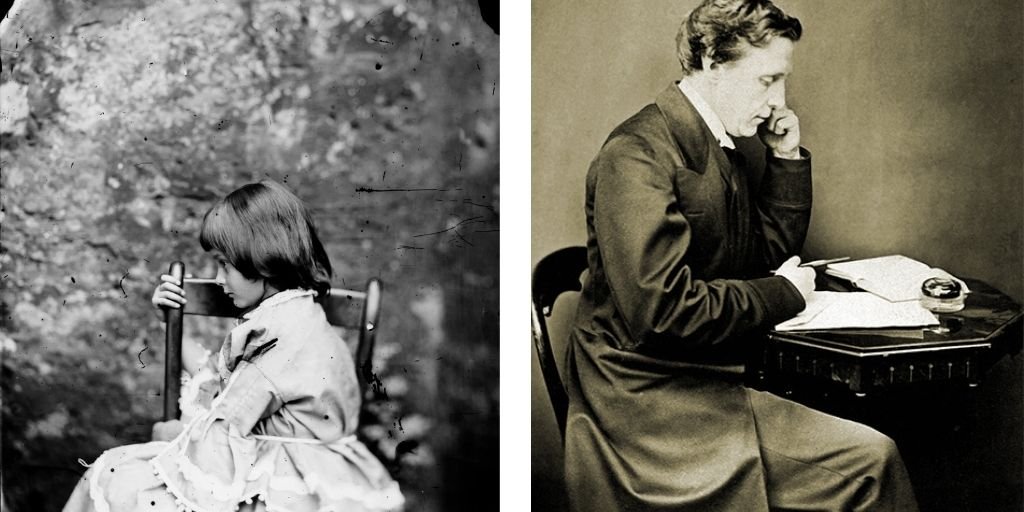
Few writers have created a world as strange, playful, and unforgettable as Lewis Carroll. When readers first step into Wonderland, they encounter talking animals, disappearing cats, absurd conversations, impossible rules, and characters who seem to have escaped from a dream. Yet behind this wonderfully chaotic world was a highly educated Victorian scholar whose real life was very different from the fantasy he created.
Lewis Carroll is best known as the author of Alice’s Adventures in Wonderland and Through the Looking-Glass, but calling him simply a children’s writer would miss much of what made him remarkable. He was a mathematician, logician, photographer, teacher, poet, and storyteller. His interests stretched from serious academic study to jokes, puzzles, wordplay, and imaginative fiction.
His work continues to attract readers because it does something unusual: it treats nonsense as a serious form of entertainment. Carroll understood that children and adults both enjoy stepping outside ordinary rules for a while. His stories are like a door into a room where gravity, logic, language, and common sense can all behave differently.
More than a century after his death, his characters remain familiar across the world. Alice, the Cheshire Cat, the Mad Hatter, the Queen of Hearts, and the White Rabbit have become part of popular culture. But who was the man behind these unforgettable creations?
1. Who Was Lewis Carroll?
Lewis Carroll was the pen name of Charles Lutwidge Dodgson, an English writer and scholar born on January 27, 1832, in the village of Daresbury, Cheshire, England. He later became closely associated with Christ Church, Oxford, where he studied mathematics and eventually worked as a lecturer.
The name “Lewis Carroll” was not simply chosen at random. Dodgson translated his first two names, Charles Lutwidge, into Latin and then transformed them back into an English form. The result became the name under which generations of readers would know him.
His professional life and literary life were remarkably different. At Oxford, he was deeply involved in mathematics, logic, and academic teaching. As Carroll, he became a master of imaginative fiction and playful language.
This dual identity is one of the most interesting things about him. Imagine a person spending the morning working through mathematical problems and the evening inventing a world where a rabbit carries a pocket watch and complains about being late. That contrast captures much of Carroll’s personality.
He was also known for his interest in photography. During the Victorian era, photography was still a relatively new technology, and Carroll became an enthusiastic photographer. His surviving photographs provide another window into his interests and social world.
Although his literary reputation eventually became enormous, he did not abandon his academic work. Mathematics remained an important part of his identity throughout his life.
2. Lewis Carroll’s Childhood and Early Education
Carroll grew up in a large Victorian family. His father, Charles Dodgson, was a clergyman and an influential figure in the household. Lewis was one of eleven surviving children, and the family environment encouraged education, creativity, and intellectual curiosity.
From an early age, Carroll showed a strong interest in puzzles, drawing, writing, and mathematics. He reportedly created small magazines and entertainment materials for his family. These early activities suggest that his fascination with combining words, pictures, humor, and games began long before Alice’s Adventures in Wonderland appeared.
His education eventually led him to Oxford. He entered Christ Church in 1851, where he studied mathematics and classics. His academic ability was quickly recognized, and mathematics became the foundation of his professional career.
Oxford itself would become extremely important to Carroll’s life. He spent most of his adult years there, and the atmosphere of the university appears to have influenced both his thinking and his imagination.
The contrast between the orderly world of mathematics and the unpredictable world of Wonderland is especially fascinating. Carroll knew the rules of logic extremely well. Perhaps that is one reason he was so good at breaking them in entertaining ways.
3. The Birth of Alice in Wonderland
The story of Alice began during a boating trip on the River Thames in July 1862. Carroll was accompanying the Reverend Robinson Duckworth and three young sisters of the Liddell family, including Alice Liddell.
During the outing, Carroll told the children a story about a girl who entered an extraordinary underground world. Alice reportedly asked him to write the story down.
That request eventually led to one of the most famous children’s books ever published.
Carroll worked on the manuscript and eventually produced a handwritten version called Alice’s Adventures Under Ground. He later expanded and revised it for publication. The finished book, Alice’s Adventures in Wonderland, appeared in 1865.
The story was unlike many children’s books of its time. Instead of teaching a straightforward moral lesson, it invited children to experience confusion, curiosity, humor, and imagination.
Alice does not enter Wonderland and immediately understand how everything works. Quite the opposite happens. Almost every familiar rule seems to disappear.
That is part of the book’s charm.
Children know what it feels like to live in a world controlled by adults, where rules often seem mysterious or arbitrary. Wonderland turns that experience upside down. Adults and creatures behave strangely, while Alice attempts to maintain some sense of reason.
4. The Characters Who Made Wonderland Famous
One of Carroll’s greatest achievements was creating characters that could be remembered almost instantly.
Alice is the center of the story. She is curious, confident, occasionally frustrated, and determined to understand the bizarre world around her. Unlike a passive fairy-tale heroine, Alice constantly asks questions and challenges what she sees.
The White Rabbit introduces Alice to Wonderland. His obsession with being late begins the adventure and establishes the strange relationship between time and reality that runs throughout the story.
The Cheshire Cat is one of the most memorable characters because of his mysterious smile and philosophical attitude. He rarely gives Alice straightforward answers, yet his conversations often contain surprising observations about Wonderland.
The Mad Hatter and March Hare create some of the book’s most famous scenes. Their tea party turns ordinary social behavior into complete absurdity.
The Queen of Hearts represents authority taken to an extreme. Her constant demand for punishment makes her both ridiculous and intimidating.
The Caterpillar introduces another layer of uncertainty by asking Alice a deceptively simple question about her identity.
These characters work so well because they are not merely decorations. Each one challenges Alice’s understanding of the world.
5. Why Was Wonderland So Different?
What makes Alice’s Adventures in Wonderland special is its treatment of logic and nonsense.
Carroll understood that language can sound perfectly reasonable while becoming meaningless when its assumptions are changed. Characters frequently argue over definitions, misunderstand questions, or follow rules that make sense only inside Wonderland.
This technique creates humor, but it also encourages readers to think.
Consider how children naturally ask questions that adults sometimes dismiss as obvious. Why is something called what it is? Who decided a particular rule? What happens if we change one assumption?
Carroll turns those questions into fiction.
His mathematical background may also help explain his fascination with structure and logical games. Rather than simply abandoning logic, he often played with it. Wonderland can therefore be viewed as a kind of laboratory for language and reasoning.
The result is a story that works on several levels. A child can enjoy the talking animals and adventures, while an adult may notice the satire, wordplay, philosophical questions, and social observations hidden underneath.
6. Through the Looking-Glass and the World Beyond Wonderland
Carroll returned to Alice in 1871 with Through the Looking-Glass, and What Alice Found There.
Although the sequel is connected to the first book, it has its own distinctive structure. Alice passes through a mirror into a world where the landscape operates according to unusual rules.
One of the most interesting differences is the book’s chess-inspired structure. Alice moves through a landscape resembling a chessboard, encountering unusual figures along the way.
The sequel introduced several characters who became famous in their own right.
Tweedledum and Tweedledee embody the comic possibilities of repetition and contradiction. Their conversations often feel like verbal games.
Humpty Dumpty offers one of the book’s most memorable discussions about words and meaning.
The Red Queen presents Alice with a world in which movement and progress operate strangely.
The book also contains “Jabberwocky,” one of Carroll’s most celebrated pieces of literary nonsense. The poem demonstrates how language can create mood and imagery even when many of its words are invented.
That achievement is surprisingly difficult. Carroll makes unfamiliar words feel meaningful through rhythm, sound, and context.
7. Lewis Carroll the Mathematician
It is easy to forget that Lewis Carroll was also Charles Dodgson, an accomplished mathematician.
His academic career was centered at Christ Church, Oxford. He wrote works on geometry, algebra, logic, probability, and recreational mathematics.
His mathematical interests were not limited to dry academic exercises. He enjoyed puzzles and problems that encouraged people to think carefully about assumptions.
This connection between mathematics and literature is worth considering.
Mathematics teaches us that changing one condition can completely change an answer. Carroll’s fiction frequently does something similar. Change the meaning of a word, reverse a rule, alter the direction of time, or make a familiar object behave differently—and suddenly the ordinary world becomes extraordinary.
His interest in logic also appears in his other writings. He created puzzles and logical problems designed to entertain as well as educate.
This part of his career demonstrates that Carroll’s imagination was not separate from his scholarly mind. The two sides often supported each other.
His books remind us that intellectual curiosity does not have to be boring. A difficult idea can become entertaining when presented as a game.
8. Carroll’s Love of Wordplay and Nonsense
Perhaps no feature of Carroll’s writing has had a longer cultural influence than his love of language.
He enjoyed puns, double meanings, invented words, riddles, and linguistic tricks. He understood that language could be both a tool for communication and a source of comedy.
The term “portmanteau,” in the literary sense, is strongly associated with his explanation of words created by combining parts of other words. His poem “Jabberwocky” provides the most famous example.
Words such as “slithy” and “brillig” feel as though they should have meanings even when readers encounter them for the first time. Sound gives them personality.
That is a powerful lesson for writers. A word does not always need to appear in a dictionary to communicate something. Rhythm, context, repetition, and sound can help readers understand an invented expression.
Carroll’s nonsense also has an important characteristic: it is usually carefully constructed.
Good nonsense is not simply random.
It is more like a puzzle whose pieces have been deliberately rearranged. The reader recognizes familiar patterns but discovers that something is slightly wrong. That tension creates humor and curiosity.
This may explain why his writing remains enjoyable even after repeated readings.
9. Lewis Carroll as a Photographer
Carroll’s creative interests extended beyond writing and mathematics.
He became interested in photography during the 1850s, when the medium was still relatively young. He eventually produced a substantial collection of photographs.
Photography gave Carroll another way to observe and document the people and world around him. His work included portraits of adults and children, landscapes, and staged compositions.
Victorian photography required patience and technical skill. Exposure times could be long, equipment was cumbersome, and creating a successful image demanded careful preparation.
Carroll took the craft seriously.
His photographs are now studied by historians and scholars interested in Victorian culture as well as in Carroll himself. They offer an additional perspective on the period in which he lived.
Photography also reveals something about his broader personality. He was not satisfied with experiencing the world passively. He wanted to examine, record, arrange, and reinterpret it.
In that sense, the camera and the written page served similar purposes. Both allowed him to transform observation into creative work.
10. The Lasting Cultural Influence of Lewis Carroll
Few nineteenth-century authors have had an influence as broad as Carroll’s.
Alice has appeared in films, television programs, stage productions, illustrations, games, music, advertising, and countless adaptations. The characters have become recognizable even to people who have never read the original books.
Why has this particular story survived so well?
One reason is flexibility.
The world of Wonderland can be interpreted as comedy, fantasy, satire, philosophical play, psychological adventure, or simply a wonderfully strange children’s story.
Different generations discover different things in it.
Children may enjoy the characters and adventures. Teenagers may appreciate Alice’s struggle to understand a confusing world. Adults may notice commentary about manners, authority, education, language, and Victorian society.
Artists have also found Wonderland irresistible because Carroll’s descriptions create strong visual possibilities. The bizarre creatures and constantly shifting environments provide almost unlimited opportunities for illustration.
Even modern popular culture continues to borrow from Carroll’s ideas. Expressions such as “down the rabbit hole” have entered everyday language as a metaphor for entering a complicated or unexpected situation.
His influence is therefore not limited to literature. It has become part of the way people describe curiosity, confusion, imagination, and strange discoveries.
11. Lewis Carroll’s Legacy and Why He Still Matters
Lewis Carroll died on January 14, 1898, in Guildford, England. He left behind an unusually diverse body of work.
His legacy is larger than Alice’s Adventures in Wonderland. He demonstrated how literature could challenge expectations without becoming inaccessible. He showed that nonsense could contain serious ideas and that intellectual writing could also be playful.
Perhaps his greatest gift was permission to question ordinary reality.
In everyday life, we often assume that things must work a certain way simply because they always have. Carroll’s stories ask us to pause and reconsider.
What if language behaved differently?
What if time moved strangely?
What if a conversation followed a completely different set of rules?
What if a child could challenge the adults and authorities around her?
Those questions make his work feel surprisingly modern.
His books also demonstrate the value of curiosity. Alice keeps moving forward even when she does not understand what is happening. She asks questions, experiments, gets frustrated, makes mistakes, and continues exploring.
That is a useful lesson beyond literature.
Curiosity is often the beginning of discovery.
Carroll’s combination of mathematics, logic, photography, poetry, and fiction also reminds us that people do not need to fit neatly into one category. A person can be analytical and imaginative at the same time.
That may be one of the reasons his life remains so fascinating. He was not simply a writer who occasionally thought about mathematics. He was a scholar whose imagination found another language through fiction.
Conclusion
Lewis Carroll created something extraordinary from a simple idea: take a curious girl and place her in a world where ordinary rules no longer apply. More than a century later, that idea still feels fresh.
His stories remain popular because they respect the imagination of readers. They do not insist that everything must have a simple explanation. Instead, they invite us to laugh, question, explore, and occasionally become wonderfully confused.
From mathematics and logic to photography and literature, Carroll’s life was filled with curiosity. His greatest achievement may have been showing that serious thought and playful imagination can exist side by side.
Whenever someone follows a new idea “down the rabbit hole,” they are using an expression connected to the imaginative world he created. That is a remarkable legacy for a Victorian scholar who once began telling a story during a summer boat trip.
Lewis Carroll’s Wonderland may be impossible, but its invitation is timeless: stay curious, question the rules, and never be afraid to imagine something different.
Frequently Asked Questions
1. Who was Lewis Carroll?
Lewis Carroll was the pen name of Charles Lutwidge Dodgson, an English writer, mathematician, logician, photographer, and academic. He is best known for Alice’s Adventures in Wonderland and Through the Looking-Glass.
2. Why did Charles Dodgson use the name Lewis Carroll?
He created the pen name by working from his first and middle names, Charles Lutwidge. He translated and adapted the names through Latin before arriving at the English form “Lewis Carroll.”
3. What is Lewis Carroll most famous for?
He is most famous for creating Alice and the fantastical world of Alice’s Adventures in Wonderland. The book became one of the most influential works of children’s literature.
4. Was Lewis Carroll actually a mathematician?
Yes. Carroll was a mathematics lecturer at Christ Church, Oxford. He wrote academic and recreational works involving mathematics, logic, puzzles, and reasoning.
5. Why is Lewis Carroll still important today?
Carroll remains influential because his stories combine fantasy, humor, wordplay, logic, and imagination. His characters and ideas have influenced literature, film, theater, art, popular culture, and everyday language for generations.


