
Queen Elizabeth II: The Extraordinary Life, Reign, and Legacy of Britain’s Longest-Reigning Monarch
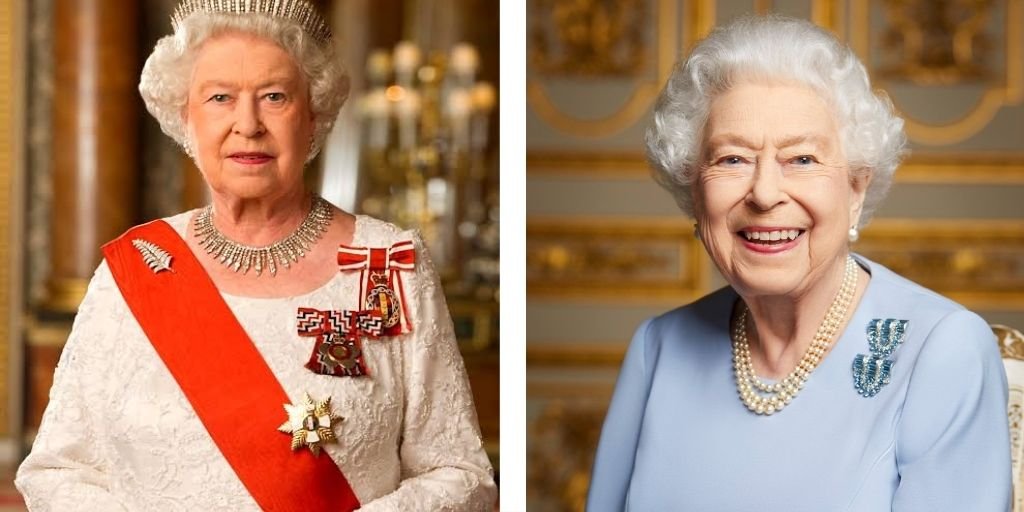
Queen Elizabeth II was one of the most recognizable figures of the modern world. For more than seven decades, she occupied a position that connected generations, political eras, and enormous social change. She became queen when Britain was still recovering from the Second World War and remained on the throne through the arrival of the internet, smartphones, social media, and a dramatically transformed global society.
Born Princess Elizabeth Alexandra Mary in 1926, she was never originally expected to become monarch. Yet circumstances changed when her uncle, King Edward VIII, abdicated in 1936. Her father became King George VI, placing Elizabeth directly in the line of succession. When George VI died in 1952, the 25-year-old princess became Queen Elizabeth II.
Her reign ultimately lasted more than 70 years, making her the longest-reigning monarch in British history.
But what made her such a remarkable historical figure? Was it simply the length of her reign? Or was it her ability to remain a steady presence while the world around her changed almost beyond recognition?
The answer lies in a combination of duty, tradition, adaptability, public service, family life, and an extraordinary understanding of the symbolic role of the monarchy.
Early Life and Childhood of Princess Elizabeth
Elizabeth was born on April 21, 1926, in London. Her parents were the Duke and Duchess of York, who later became King George VI and Queen Elizabeth. At the time of her birth, nobody expected the young princess to become Britain’s reigning monarch.
Her early childhood was relatively private compared with the enormous public attention that followed later in her life. Elizabeth and her younger sister, Princess Margaret, were raised within a close family environment.
Everything changed in 1936.
King George V died, and his eldest son became King Edward VIII. Edward’s decision to marry Wallis Simpson, an American divorcée, created a constitutional crisis. He eventually abdicated the throne in December 1936.
Elizabeth’s father reluctantly became King George VI.
At just ten years old, Elizabeth suddenly became heir presumptive. The event transformed her future. Instead of growing up as a relatively distant member of the Royal Family, she was now being prepared for the possibility that one day she would become queen.
Her education was conducted largely at home. She studied constitutional history, law, languages, music, art, and other subjects that would help prepare her for public life.
The Second World War also shaped her childhood and teenage years. Elizabeth and Margaret remained in Britain while the country faced bombing and uncertainty. In 1940, the young princess made a radio broadcast to children throughout the Commonwealth, offering encouragement during wartime.
Her sense of duty developed remarkably early.
The Young Princess Who Prepared for Service
Elizabeth did not simply inherit a title; she gradually learned what that title required.
One of the most important moments came in 1945 when she joined the Auxiliary Territorial Service during the final months of the Second World War. She trained as a mechanic and driver, becoming the first female member of the British Royal Family to serve as a full-time active member of the armed services.
This experience gave her an unusual connection with ordinary citizens.
She was not serving on the battlefield, but she was participating in the national effort alongside other young women. It was an important indication of the approach she would later bring to monarchy: service rather than privilege alone.
On her 21st birthday in 1947, she made a famous public commitment to the Commonwealth. She promised to devote her life to public service.
Looking back, that statement became a kind of blueprint for her entire reign.
Imagine planting a tree when you are 21 and promising to care for it for the rest of your life. You cannot know exactly how large it will become or what storms it will face. Elizabeth’s reign was much the same. She made her promise before knowing what the next seven decades would bring.
Marriage to Prince Philip and Family Life
In November 1947, Princess Elizabeth married Prince Philip of Greece and Denmark at Westminster Abbey.
Their marriage became one of the defining personal relationships of her life.
Philip later became the Duke of Edinburgh and served as her companion throughout most of her reign. The couple had four children: Charles, Anne, Andrew, and Edward.
Balancing motherhood with royal responsibility was not easy. When Elizabeth became queen in 1952, Prince Charles was only three years old and Princess Anne was just one.
The demands of monarchy meant long journeys, official meetings, ceremonies, state occasions, and constant public attention. Her private family life was therefore intertwined with an extraordinary public role.
Prince Philip accompanied her on many tours and engagements and became an important source of support.
The Queen herself later described him as a source of strength throughout her reign.
Their relationship was not without challenges, as any long marriage involves change and adjustment. But their partnership lasted more than seven decades, until Philip’s death in April 2021.
For the British public, their marriage represented continuity. For Elizabeth personally, Philip was a trusted companion who understood the unusual pressures of royal life better than almost anyone else.
Becoming Queen in 1952
Elizabeth’s accession to the throne happened suddenly.
In early 1952, King George VI was seriously ill. Elizabeth and Philip were traveling abroad when news reached her that her father had died on February 6 at Sandringham.
She was staying in Kenya when she learned that she had become queen.
In an instant, Princess Elizabeth became Queen Elizabeth II.
She was only 25.
Her return to Britain marked the beginning of a new era. Winston Churchill was Prime Minister, Britain was still recovering from the war, rationing had not completely disappeared, and the British Empire was beginning a major transformation.
The young queen faced an enormous responsibility.
Her coronation took place on June 2, 1953, at Westminster Abbey. It was one of the most important ceremonial events of the twentieth century.
Television played a major role in bringing the ceremony into people’s homes. Millions watched around the world, making the coronation a significant moment in the growth of mass television culture.
The woman who entered Westminster Abbey as a young monarch would eventually become one of the longest-serving rulers in recorded history.
A Reign That Witnessed a Changing World
The extraordinary thing about Elizabeth II’s reign was not simply its length. It was the amount of change that occurred during it.
When she became queen, computers were primitive, commercial television was still developing, international air travel was far less common, and Britain was dealing with the aftermath of World War II.
During her reign, humans landed on the Moon, the Cold War shaped global politics, the Berlin Wall rose and later fell, the Soviet Union collapsed, the internet transformed communication, and social media changed how people interacted.
Britain itself experienced enormous cultural and political change.
The British Empire declined and the Commonwealth developed into a different kind of international association. Elizabeth became Head of the Commonwealth and visited countries across the world.
The Royal Family states that she visited more than 100 countries during her reign and made more than 150 visits within the Commonwealth.
She also worked with 15 British prime ministers, beginning with Winston Churchill.
Think about that for a moment. A single monarch worked with leaders from completely different generations and political backgrounds while maintaining the constitutional requirement to remain politically neutral.
That continuity became one of her defining characteristics.
Queen Elizabeth II and the Commonwealth
The Commonwealth was central to Elizabeth’s public role.
The organization evolved considerably during her reign. Countries gained independence, political relationships changed, and the old imperial structure gradually disappeared.
Elizabeth’s position was therefore different from that of earlier British monarchs. She was not simply presiding over an empire. She became a symbolic figure for a diverse association of independent countries.
Her travels were important in maintaining relationships between Britain and Commonwealth nations.
She visited Canada more than any other country, making 22 visits there, while France became her most frequently visited country in Europe, with 13 visits.
These journeys were not merely ceremonial photo opportunities.
They allowed the Queen to meet presidents, prime ministers, community leaders, students, military personnel, volunteers, artists, athletes, and ordinary citizens.
Her presence could give international attention to local communities and organizations.
This was one reason royal visits remained an important part of her work even as international communication became easier.
The Queen’s Constitutional Role and Daily Duties
What did Queen Elizabeth II actually do every day?
Although she did not govern Britain like a political leader, her constitutional responsibilities were substantial.
She met regularly with her prime ministers, received government documents, formally appointed certain officials, opened Parliament, hosted visiting heads of state, and gave Royal Assent to legislation.
The famous red boxes associated with the monarch contained official documents and government papers. According to the Royal Family, these papers covered parliamentary matters, Commonwealth affairs, and other state business requiring attention.
Her weekly meetings with prime ministers were particularly significant.
The monarch’s political neutrality meant that Elizabeth did not publicly campaign for political parties or attempt to govern. Yet she could privately advise, encourage, or warn her prime ministers.
That distinction was essential.
Her influence depended partly on what she did not do. She understood that the monarchy’s constitutional position required restraint.
For seven decades, she operated within this delicate balance.
She was highly visible, yet politically restrained.
She represented the country without being its elected political leader.
Public Service, Charities, and Patronages
Elizabeth II’s work extended far beyond ceremonies and constitutional duties.
She supported hundreds of charitable, professional, cultural, and public-service organizations.
The Royal Family says she was associated as Royal Patron or President with more than 500 charities, professional bodies, and public-service organizations.
These organizations covered an enormous range of subjects.
They included youth development, environmental conservation, healthcare, education, arts, military organizations, sports, animal welfare, and community services.
This aspect of her role often received less international attention than major royal ceremonies, but it was an important part of her working life.
A royal patron does not run a charity. Instead, the position can provide visibility, credibility, fundraising opportunities, and public attention.
Elizabeth frequently met volunteers and recipients, opened facilities, attended charity events, and recognized people whose contributions might otherwise receive little attention.
Her philosophy of service was therefore practical as well as symbolic.
Elizabeth II and the British People
The relationship between Elizabeth and the public changed over the decades.
When she became queen, monarchy was surrounded by formal ceremony and considerable distance. Royal life was presented through newspapers, radio, official photographs, and carefully controlled public appearances.
Later, television brought the Royal Family directly into people’s living rooms.
Then came the internet and social media.
Elizabeth’s image became part of popular culture in ways that earlier monarchs could never have imagined. Her brightly colored clothing, handbags, hats, corgis, public appearances, and carefully controlled expressions became instantly recognizable around the world.
Yet she generally maintained a strong boundary between public and private life.
She rarely gave traditional interviews and was careful about personal political opinions.
That restraint sometimes made her appear mysterious, but it also contributed to the durability of her public image.
She understood that a monarch could become less effective if every personal opinion became public news.
Major Milestones: Jubilees and Historic Achievements
Elizabeth’s reign contained numerous milestones.
Her Silver Jubilee in 1977 marked 25 years on the throne.
The Golden Jubilee in 2002 celebrated 50 years.
In 2012, she reached her Diamond Jubilee, marking 60 years as monarch.
Then came an extraordinary achievement.
On September 9, 2015, Elizabeth II surpassed Queen Victoria’s record and became the longest-reigning monarch in British history.
She eventually reached 70 years on the throne in 2022, becoming the first British monarch to celebrate a Platinum Jubilee.
The Platinum Jubilee celebrations became a nationwide and international event, bringing together concerts, street parties, public ceremonies, and tributes.
The scale of the milestone was difficult to comprehend.
Most people never meet someone who has held the same professional position for 70 years. Elizabeth’s role was much more unusual because she had occupied one of the most visible constitutional positions in the world for essentially an entire lifetime.
Personal Interests, Style, and the Human Side of the Queen
Despite the seriousness of her responsibilities, Elizabeth II had personal interests that helped make her more relatable.
She was particularly associated with horses and equestrian activities. She also had a lifelong affection for dogs, especially Pembroke Welsh corgis.
Her interest in horse breeding and racing was well known, and she regularly attended major equestrian events.
Her clothing also became part of her identity.
Bright colors were not simply a fashion choice. They helped make her visible in crowds. When thousands of people gathered to see the Queen, her distinctive clothing allowed them to spot her easily.
Her handbags, hats, brooches, and coats became recognizable symbols.
She also possessed a reputation for discipline and routine.
Her Christmas broadcasts became another important tradition. Through these annual messages, she spoke directly to the public about family, service, hope, faith, loss, and national events.
For many viewers, the broadcast became a familiar part of the Christmas season.
It was one of the rare occasions when the Queen could speak to millions of people without the mediation of a political campaign or parliamentary debate.
Challenges, Controversies, and a Changing Monarchy
No long reign can pass without controversy.
Elizabeth’s time on the throne included difficult periods for the Royal Family and the institution of monarchy itself.
The 1990s were particularly challenging.
There were public disagreements and family difficulties, intense media scrutiny, and criticism of royal traditions. The breakdown of several royal marriages generated enormous press attention.
The death of Diana, Princess of Wales, in 1997 created another major moment of public emotion and criticism.
The monarchy had to navigate a society increasingly influenced by television news, celebrity culture, investigative journalism, and later social media.
This raised a difficult question: How should an ancient institution behave in a modern democracy?
Elizabeth’s answer was usually cautious adaptation rather than dramatic transformation.
She preserved many traditions while gradually allowing the monarchy to become more accessible.
Her reign therefore demonstrated that institutions do not always survive by remaining exactly the same. Sometimes they survive by changing slowly enough to preserve their identity while responding to new expectations.
The Final Years and the End of an Era
Elizabeth continued carrying out official duties well into her nineties.
Her final years included significant personal and national challenges.
Prince Philip died in April 2021, ending their long marriage. The Queen continued her public responsibilities despite the loss.
In 2022, she celebrated her Platinum Jubilee.
Only months later, her health declined.
On September 8, 2022, Queen Elizabeth II died at Balmoral Castle in Scotland at the age of 96.
Her death marked the end of an extraordinary era.
She had been queen for more than 70 years.
For many people alive at the time, she had been the only British monarch they had ever known.
Her funeral took place on September 19, 2022, drawing world leaders, members of royal families, officials, and enormous crowds. The event was watched by audiences around the world.
Her death also triggered the constitutional transition to the reign of her eldest son, King Charles III.
The Lasting Legacy of Queen Elizabeth II
How should history remember Elizabeth II?
There is no single answer.
Supporters see her as a remarkable example of dedication, stability, and public service. Critics of monarchy may evaluate her reign through very different political and historical perspectives.
Both views can exist.
What is difficult to dispute is the scale of her historical presence.
She was queen during an extraordinary period of transformation. She met countless political leaders, traveled extensively, supported hundreds of organizations, and represented Britain and the Commonwealth across generations.
Her greatest strength may have been continuity.
She was like a lighthouse standing beside a coastline while the landscape around it changed. The lighthouse did not control the waves, the weather, or the ships. It simply remained visible and dependable.
That image captures much of Elizabeth II’s public role.
She did not personally direct every political, technological, or social change that occurred during her reign. Instead, she provided a recognizable point of continuity while those changes unfolded.
Her legacy will therefore be debated for decades.
Historians will examine her relationship with the Commonwealth, the transformation of the monarchy, her family, her constitutional role, her public service, and the changing expectations placed on royal institutions.
But one fact will remain remarkable: Elizabeth II became queen as a young woman in the aftermath of World War II and remained on the throne until the twenty-first century was well underway.
Few individuals have witnessed so much history from such a unique position.
Conclusion
Queen Elizabeth II’s life was extraordinary not because she sought constant attention, but because she spent more than seven decades performing a demanding public role with remarkable consistency.
From a young princess unexpectedly placed in the line of succession to the longest-reigning British monarch, her story was shaped by duty, family, tradition, travel, service, and an ever-changing world.
She witnessed the decline of empire, the growth of the Commonwealth, major wars and political crises, technological revolutions, cultural transformations, and the arrival of a digital age.
Her reign ended in 2022, but her influence did not disappear with her death.
Whether viewed as a symbol of tradition, a constitutional figure, a global ambassador, or simply a woman who devoted her life to public service, Elizabeth II remains one of the defining figures of twentieth- and early twenty-first-century history.
Her greatest legacy may ultimately be the promise she made as a young woman: to dedicate her life to service. More than 70 years later, that promise had become the defining story of her life.
Frequently Asked Questions
1. When did Queen Elizabeth II become queen?
Queen Elizabeth II became queen on February 6, 1952, following the death of her father, King George VI. She was 25 years old at the time. Her coronation took place on June 2, 1953, at Westminster Abbey.
2. How long did Queen Elizabeth II reign?
Queen Elizabeth II reigned for more than 70 years, from 1952 until her death in 2022. In 2015, she surpassed Queen Victoria to become the longest-reigning monarch in British history.
3. Who was Queen Elizabeth II’s husband?
Her husband was Prince Philip, Duke of Edinburgh. They married in 1947 and remained married until his death in 2021. They had four children: Charles, Anne, Andrew, and Edward.
4. How many children did Queen Elizabeth II have?
Queen Elizabeth II had four children: King Charles III, Princess Anne, Prince Andrew, and Prince Edward. She later became a grandmother and great-grandmother.
5. Why was Queen Elizabeth II historically important?
She was historically important because she became Britain’s longest-reigning monarch and remained a major constitutional and symbolic figure through enormous political, social, technological, and cultural changes. She also played a significant role in maintaining relationships between Britain and the Commonwealth.


