
Charles Darwin: The Extraordinary Life and Revolutionary Ideas of a Naturalist
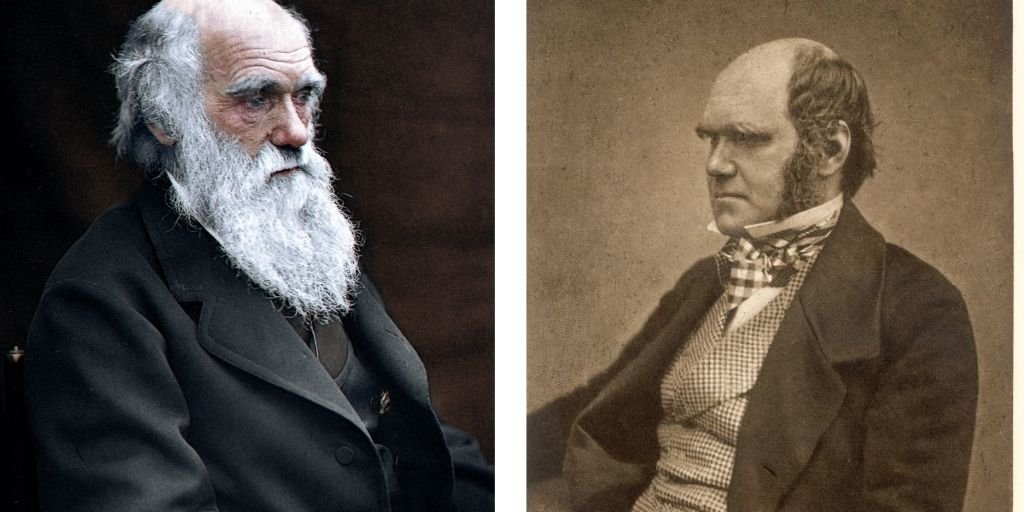
Charles Darwin is one of the most influential scientists in history. His name is closely associated with evolution, natural selection, and the remarkable diversity of life on Earth. Yet, behind the famous scientific theory was a curious, thoughtful man who spent decades observing plants, animals, fossils, rocks, and people before presenting his ideas to the world.
Why did Darwin’s work become so important? The answer lies in the way he changed a basic question about life. Instead of simply asking what living things were like, he asked how they came to be the way they are.
His journey took him from a young naturalist with an uncertain career to a scientist whose ideas transformed biology. His voyage aboard HMS Beagle, observations in South America and the Galápagos Islands, years of careful research, and eventual publication of On the Origin of Species helped create a new way of understanding the natural world.
Today, Darwin remains a fascinating historical figure because his story is not only about science. It is also about curiosity, patience, evidence, uncertainty, and the courage to challenge established ideas.
Early Life and Family Background
Charles Robert Darwin was born on February 12, 1809, in Shrewsbury, England. He came from a prosperous and intellectually active family. His father, Robert Darwin, was a successful physician, while his mother, Susannah Darwin, was the daughter of the famous industrialist Josiah Wedgwood.
Darwin grew up in an environment where education, science, business, and intellectual discussion were valued. His family connections would later become important in his personal and professional life.
Unfortunately, Darwin lost his mother when he was only eight years old. His older sisters helped care for him, while his father remained an important influence.
As a boy, Darwin developed a strong interest in collecting. He collected rocks, shells, insects, and other natural objects. This habit may seem ordinary today, but it reflected something important about his personality: he wanted to look closely at the world around him.
At school, however, Darwin was not considered an extraordinary student. He found traditional classical education less interesting than the natural world. He enjoyed outdoor activities and developed an enthusiasm for collecting specimens.
His father initially expected him to become a doctor. Darwin entered the University of Edinburgh to study medicine, but he struggled to develop an interest in medical training. Surgery in particular disturbed him, especially because anesthesia was not yet available.
Eventually, it became clear that medicine was not the right path for him.
His father then encouraged him to pursue the clergy. Darwin entered Christ’s College, Cambridge, where he studied for a degree that could lead toward becoming a clergyman.
Cambridge turned out to be extremely important. There, Darwin met influential naturalists, including the botanist John Stevens Henslow. Henslow recognized Darwin’s abilities and encouraged his interest in natural history.
This connection would eventually help change Darwin’s life.
The Voyage of HMS Beagle
One of the most important events in Darwin’s life began in 1831, when he joined the surveying voyage of HMS Beagle.
Darwin was only 22 when he departed from England. The journey was originally planned to survey coastlines, but it became something much more significant for him.
The voyage lasted almost five years, from 1831 to 1836. During this time, Darwin visited parts of South America, the Galápagos Islands, Australia, South Africa, and other locations.
He spent enormous amounts of time examining the natural world.
He studied fossils, geological formations, plants, birds, insects, mammals, and marine organisms. He also recorded detailed observations in notebooks.
South America made a particularly strong impression on him. Darwin discovered fossils of enormous extinct mammals and compared them with living species. He began thinking seriously about how species might change over long periods.
Geology was also important. The work of geologist Charles Lyell influenced Darwin’s thinking about Earth’s immense age and gradual geological change.
Imagine looking at a mountain and realizing that what appears permanent may actually be the result of incredibly slow changes occurring over millions of years. That perspective helped Darwin understand that life, too, might change gradually.
The voyage gave him something that books alone could not provide: direct evidence from nature.
Darwin and the Galápagos Islands
The Galápagos Islands became one of the most famous parts of Darwin’s journey.
The islands are located in the Pacific Ocean, west of Ecuador. They contain a remarkable collection of species, many of which are found nowhere else.
Darwin noticed differences among organisms living on different islands. The famous finches later became strongly associated with his work because their beaks and feeding habits varied from island to island.
However, it is important to understand a common misconception. Darwin did not suddenly discover evolution in the Galápagos. His ideas developed gradually, and his observations there were only one part of a much larger body of evidence.
He also did not immediately understand the importance of the finches in the way later generations would describe them.
After returning to England, Darwin continued examining specimens and discussing his observations with other scientists. Over time, the differences among island populations became part of a broader explanation for how organisms might adapt.
The Galápagos provided a powerful lesson: living things are not necessarily fixed and unchanging. Their characteristics can be connected to the environments in which they live.
That idea would eventually become central to evolutionary biology.
The Development of Natural Selection
After returning from the Beagle voyage in 1836, Darwin began working seriously on his ideas.
He did not rush to publish.
Instead, he spent years collecting evidence, conducting experiments, reading scientific literature, and communicating with other researchers. His notebooks reveal that he was deeply concerned about whether his explanation could withstand criticism.
Darwin eventually developed the concept of natural selection.
The basic idea is surprisingly straightforward.
Individuals within a population naturally differ from one another. Some of those differences can be inherited. Living things produce more offspring than can survive, which means there is competition for resources.
If an inherited characteristic helps an organism survive and reproduce, individuals with that characteristic may leave more offspring. Over many generations, useful characteristics can become more common within a population.
This process can gradually produce significant changes.
Think of evolution as a massive sculpture being shaped over an extremely long period. Natural selection is not an artist consciously planning the final statue. Instead, countless small differences are filtered by environmental conditions over generations.
Darwin’s great insight was that this process could help explain adaptation and the diversity of life without requiring every species to have been separately designed in its present form.
On the Origin of Species
Darwin published his most famous work, On the Origin of Species, in 1859.
The full title was On the Origin of Species by Means of Natural Selection, or the Preservation of Favoured Races in the Struggle for Life.
The book was carefully argued and supported by observations from many areas of natural history.
Darwin discussed variation, inheritance, competition, adaptation, geographical distribution, fossils, classification, and the relationships among organisms.
He presented evolution by common descent as a framework for understanding the diversity of life.
The book immediately attracted attention.
Some scientists welcomed the explanation, while others criticized aspects of it. Religious and social reactions were also intense because the implications of evolutionary theory challenged traditional beliefs about humanity and creation.
Yet Darwin’s approach was powerful because he did not rely on a single observation. He presented a broad collection of evidence and attempted to connect many different biological facts through one explanation.
The first edition sold quickly, and the book became one of the most influential scientific publications ever written.
How Natural Selection Works
To understand Darwin’s contribution, it helps to separate evolution from natural selection.
Evolution refers broadly to changes in inherited characteristics within populations across generations.
Natural selection is one mechanism that can cause those changes.
Consider a population of birds. Imagine that some birds naturally have slightly stronger beaks than others. If the available food favors birds with stronger beaks, those individuals may have a better chance of surviving and reproducing.
If the relevant trait can be inherited, their descendants may also possess stronger beaks.
Generation after generation, the population can gradually change.
Importantly, nature is not making conscious choices. There is no plan or intention involved in the process.
Environmental conditions simply affect which inherited characteristics are more likely to contribute to successful reproduction.
This explanation helped Darwin make sense of adaptations that might otherwise seem mysterious.
The long neck of a giraffe, the camouflage of insects, the specialized structures of flowers, and many other biological features can be studied in terms of survival, reproduction, inheritance, and environmental pressures.
Modern biology has expanded considerably beyond Darwin’s original work, especially through genetics and molecular science. Nevertheless, natural selection remains a central principle of evolutionary biology.
Darwin’s Work After Origin of Species
Darwin did not stop working after publishing On the Origin of Species.
He continued investigating biological questions and publishing books and papers.
One important work was The Descent of Man, published in 1871. In this book, Darwin applied evolutionary thinking to human beings.
He argued that humans share common ancestry with other forms of life and discussed the development of human characteristics.
The subject was controversial because many people found the idea of human evolution especially challenging.
Darwin also studied plants extensively.
His research on orchids examined how their structures encouraged pollination by particular insects. He showed that seemingly unusual floral structures could have important biological functions.
He investigated climbing plants, insectivorous plants, earthworms, and plant movement.
His work on earthworms was particularly interesting. He studied how these small creatures affected soil and contributed to the breakdown and movement of organic material.
This illustrates something distinctive about Darwin’s approach. He was willing to study subjects that might seem insignificant.
For him, an ordinary organism could reveal an important principle about nature.
Darwin’s Personal Life
Darwin married his first cousin, Emma Wedgwood, in 1839. They had ten children, although not all survived childhood.
Emma played an important role in Darwin’s personal life and supported him throughout his scientific career. Their relationship was also intellectually interesting because Emma had strong religious convictions, while Darwin’s views became increasingly complex.
Darwin’s family life was central to his existence. He spent much of his later life at Down House in Kent, where he conducted experiments, wrote, observed plants and animals, and maintained correspondence with scientists around the world.
Unlike the stereotypical image of a scientist working alone in a laboratory, Darwin’s research involved letters, books, specimens, gardeners, family members, fellow scientists, and years of observation.
His study at Down House became an important center of his scientific work.
Darwin also experienced periods of poor health throughout much of his adult life. Historians and medical researchers have debated the exact nature and causes of his symptoms. What is clear is that he frequently had periods when illness limited his activities.
Despite these difficulties, he continued writing and researching.
Darwin’s Relationship With Religion
Darwin’s views on religion are often oversimplified.
He was raised within a Christian household and initially considered a career in the clergy. During his years at Cambridge, he was interested in religious questions.
Over time, however, his beliefs changed.
Darwin became increasingly uncomfortable with traditional religious explanations, particularly as his scientific understanding developed. His views are often described as agnostic, although the exact language he used and how his position developed over time are more complicated than a simple label suggests.
His evolutionary theory was sometimes presented as a direct attack on religion, but Darwin himself did not frame all of his scientific work in those terms.
The relationship between evolutionary science and religious belief remains a subject of discussion today.
It is also worth remembering that religious responses to evolution have never been completely uniform. Some religious traditions and individuals reject evolutionary explanations, while others accept evolution and see no necessary conflict between scientific explanations and faith.
Darwin’s own intellectual journey was personal and gradual rather than a simple overnight rejection of religion.
Criticism, Controversy, and Misunderstandings
Darwin’s ideas have been debated since they first appeared.
Some early critics questioned whether natural selection could explain the complexity of organisms. Others objected to the idea of common ancestry.
At the time Darwin published Origin of Species, scientists did not yet understand genetics, DNA, chromosomes, or the molecular basis of inheritance.
This is an important point.
Darwin understood that inheritance mattered, but he did not have the modern genetic framework that scientists use today.
Later discoveries helped strengthen evolutionary theory. The development of genetics in the twentieth century allowed scientists to understand how variations could be inherited and passed through populations.
The combination of natural selection and genetics became a foundation of what is often called the modern evolutionary synthesis.
Darwin has also been connected to the phrase “survival of the fittest,” but that phrase was not originally Darwin’s. It was coined by philosopher Herbert Spencer and later incorporated into discussions of evolutionary theory.
Another serious misunderstanding is the belief that evolution means organisms simply “try” to improve.
That is not how natural selection works.
A population does not consciously decide to evolve. Instead, inherited variation exists, environmental conditions influence reproductive success, and populations can change across generations.
Understanding this distinction makes evolutionary theory much easier to appreciate.
Darwin’s Influence on Modern Science
Few scientific ideas have had an impact as broad as Darwin’s theory of evolution by natural selection.
Modern biology uses evolutionary principles to study everything from animal behavior to genetics and ecosystems.
Evolutionary thinking helps scientists understand why organisms share certain characteristics, why species differ, how populations change, and how biological relationships can be reconstructed.
Medicine also benefits from evolutionary thinking. For example, the development of resistance in infectious organisms demonstrates how populations can change when environmental pressures favor certain variants.
Agriculture uses evolutionary principles when studying crops, livestock, pests, and breeding.
Ecology examines how organisms adapt to changing environments and interact within biological communities.
Even fields such as conservation biology rely on evolutionary knowledge. Protecting genetic diversity can help populations remain capable of responding to environmental change.
Darwin’s work therefore belongs not only to the history of science. It remains part of the intellectual foundation of modern biology.
His influence is similar to opening a door that leads into many different rooms. Once the basic idea of evolution became established, scientists could apply it to an enormous range of questions.
Darwin’s Legacy and Lasting Importance
Charles Darwin died on April 19, 1882, at Down House. He was buried in Westminster Abbey in London, an extraordinary honor for a scientist.
More than a century later, his influence remains enormous.
Darwin did not discover every aspect of evolution, and modern evolutionary science contains knowledge that he could never have imagined. Scientists now have access to DNA sequencing, genetics, computational biology, fossils discovered long after his death, and countless observations unavailable during his lifetime.
Yet the central importance of Darwin’s contribution remains.
He offered a compelling natural explanation for how populations can change and how adaptations can arise through generations.
Perhaps the most impressive part of Darwin’s story is the patience behind his work.
He spent decades questioning his own ideas before publishing them. He gathered evidence from different disciplines and recognized that a convincing explanation needed to account for many observations at once.
That approach offers a lesson beyond biology.
Good science is not simply about having a clever idea. It is about testing that idea, searching for evidence, considering alternatives, accepting uncertainty, and being willing to change one’s mind.
Darwin’s life demonstrates the power of curiosity.
He began as a young man who loved collecting specimens and exploring nature. He eventually became one of history’s most important scientific thinkers.
His legacy encourages us to look at the natural world with fresh eyes and to ask a simple but profound question: How did this come to be?
Conclusion
Charles Darwin changed the way humanity understands life. Through years of observation, travel, research, and careful reasoning, he developed an explanation that connected the diversity of living organisms with descent, variation, inheritance, and natural selection.
His journey was not an overnight discovery. It was a long process filled with questions, evidence, uncertainty, and revision.
That may be the most valuable part of his story. Darwin showed that major scientific breakthroughs can grow from something as simple as paying close attention to the world around us.
His ideas continue to shape biology and influence scientific research today. Whether studying fossils, genetics, ecosystems, animals, or human origins, scientists still work within a scientific landscape that Darwin helped transform.
Frequently Asked Questions
1. Who was Charles Darwin?
Charles Darwin was an English naturalist and scientist best known for developing the theory of evolution by natural selection. His research provided a major explanation for how living populations change over generations and how different forms of life are related through common ancestry.
2. What is Charles Darwin most famous for?
Darwin is most famous for natural selection and his book On the Origin of Species, published in 1859. The book presented extensive evidence and arguments supporting evolution and explained how natural selection could contribute to adaptation and biological diversity.
3. What did Darwin discover on the HMS Beagle voyage?
Darwin made extensive observations during the HMS Beagle voyage, including studies of fossils, geology, plants, animals, and geographical variation. His experiences, including observations in the Galápagos Islands, contributed significantly to the development of his evolutionary ideas.
4. Did Charles Darwin invent the idea of evolution?
No. Ideas about species changing over time existed before Darwin. Earlier thinkers had proposed different forms of evolutionary change. Darwin’s major contribution was developing natural selection as a powerful mechanism for explaining how evolutionary change and adaptation could occur.
5. Why is Charles Darwin still important today?
Darwin remains important because evolutionary theory is fundamental to modern biology. His work influenced research into genetics, ecology, behavior, conservation, medicine, and the history of life. Modern science has expanded and refined his ideas, but natural selection remains a central evolutionary concept.


