
Pablo Picasso: The Life, Art, and Legacy of a Revolutionary Artist
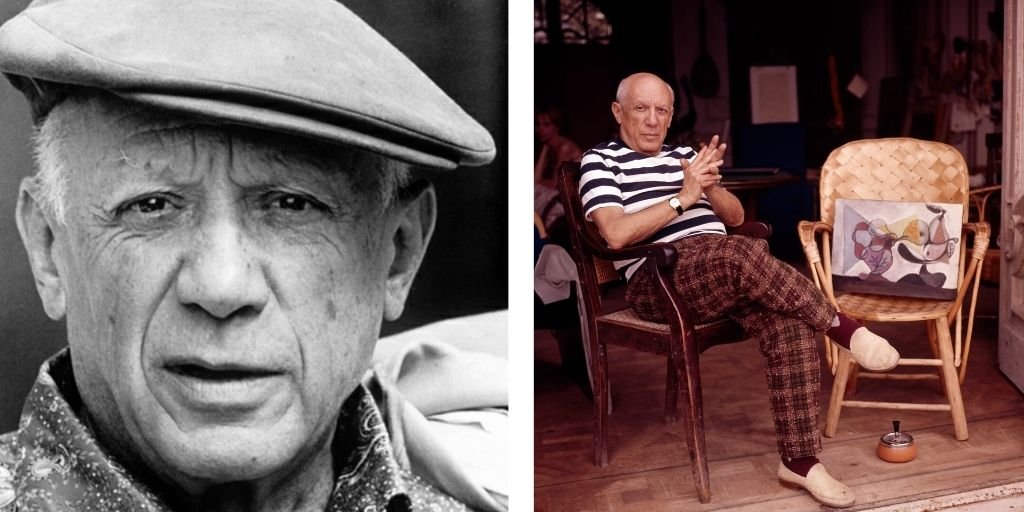
Pablo Picasso remains one of the most recognizable names in modern art. His paintings, drawings, sculptures, and ceramics changed the way people thought about creativity. Even if someone has never studied art, they have probably seen his unusual portraits, fragmented faces, or bold lines. But what made Picasso so important? Was it simply his talent, or was there something deeper behind his extraordinary career?
Born in Spain and active for most of his life in France, Picasso constantly challenged artistic traditions. He moved through different periods, experimented with materials, developed new approaches to representation, and influenced generations of artists. His career lasted more than seven decades, giving him enough time to explore an enormous range of ideas.
Understanding Picasso is not just about memorizing famous paintings. His story is also about ambition, experimentation, relationships, politics, war, identity, and the freedom to look at the world differently.
1. Early Life and the Making of a Young Artist
Pablo Ruiz Picasso was born on October 25, 1881, in Málaga, Spain. His father, José Ruiz Blasco, was an artist and art teacher who specialized in drawing and painting birds. Growing up around art gave Picasso an unusual start. He was exposed to artistic techniques at a very young age, and his father’s influence helped develop his skills.
According to accounts of his childhood, Picasso showed remarkable artistic ability early in life. His family moved several times, eventually settling in Barcelona, where he studied at the city’s School of Fine Arts. Barcelona became especially important to his development because its lively artistic community exposed him to new ideas.
Picasso was not satisfied with simply copying what he saw. Even as a young artist, he wanted to understand how pictures worked. He studied traditional European painting but gradually began looking for different ways to express people, emotions, and surroundings.
His early paintings demonstrate impressive technical ability. Ironically, his later reputation for breaking artistic rules sometimes makes people forget how skilled he was at traditional drawing. He could realistically portray the human body before deliberately choosing to distort it.
In 1900, Picasso traveled to Paris, a city that was becoming one of Europe’s great artistic centers. That move opened another chapter in his life. Paris introduced him to artists, writers, collectors, galleries, and intellectual circles that would influence his direction for years.
2. The Blue Period and Its Emotional World
One of the most recognizable stages of Picasso’s career is his Blue Period, which lasted roughly from 1901 to 1904.
During these years, his paintings were dominated by blue and blue-green tones. The mood was often quiet, lonely, and deeply emotional. His subjects included beggars, prisoners, blind people, mothers, children, and other individuals living on the margins of society.
Why blue?
Color became more than decoration for Picasso. It helped communicate emotion. The limited palette created a sense of sadness and isolation, almost as if the paintings were wrapped in a cold atmosphere.
A major event behind this period was the death of Picasso’s close friend Carlos Casagemas in 1901. Casagemas’s death affected him deeply, and grief became an important part of his artistic expression.
Paintings such as The Old Guitarist are powerful examples of this period. The thin body, bowed head, and oversized guitar create a feeling of vulnerability. There is little visual comfort in the composition, yet the work remains remarkably beautiful.
The Blue Period shows something important about Picasso: experimentation did not always mean becoming louder or more complicated. Sometimes he achieved powerful results by limiting his choices.
3. The Rose Period and a New Sense of Warmth
Around 1904, Picasso’s artistic world began to change. The cold blues gradually gave way to warmer pinks, reds, and earth tones. This stage became known as the Rose Period.
The subjects changed too. Picasso became fascinated by circus performers, acrobats, harlequins, and traveling entertainers. These figures allowed him to explore movement, performance, loneliness, and identity.
At first glance, the Rose Period can seem happier than the Blue Period. The colors are warmer and the subjects are more playful. Yet many of the paintings still contain a sense of uncertainty and quiet reflection.
The harlequin became especially important. With its patterned costume and theatrical identity, the character represented transformation and disguise. A performer can become someone else on stage, and Picasso was similarly interested in how people construct identities.
This fascination with performers also connected with Picasso’s own life. He was developing a distinctive public identity as an artist while moving through an increasingly competitive creative environment.
4. Cubism and the Revolution in Modern Art
Perhaps Picasso’s greatest contribution to art came through Cubism, developed in collaboration with Georges Braque during the early twentieth century.
Traditional painting generally tried to create the illusion of seeing an object from a particular viewpoint. Cubism challenged that assumption.
Imagine looking at a person from the front, then from the side, then from above. A traditional portrait might choose one viewpoint. Cubism asked a different question: why not show several viewpoints at once?
That simple idea had enormous consequences.
Picasso and Braque began breaking objects into geometric shapes and reorganizing them across the picture surface. Instead of presenting a single stable perspective, they created images in which different angles could exist together.
The result could look confusing at first. A face might appear to have multiple noses. A guitar could be represented through overlapping planes. A table might seem to be viewed simultaneously from several directions.
But this was not random distortion. There was a logic behind it.
One of Picasso’s landmark works, Les Demoiselles d’Avignon, painted in 1907, helped point toward the development of Cubism. Its fractured figures and unconventional forms challenged traditional ideas of beauty and representation.
The painting shocked many viewers and even some fellow artists. Yet its influence was enormous.
Cubism changed more than painting. Its ideas affected sculpture, design, architecture, collage, photography, and other creative fields. It helped artists realize that art did not have to imitate reality like a mirror.
Instead, a painting could construct its own reality.
5. Picasso’s Experiments Beyond Painting
Picasso refused to remain inside one artistic category.
He worked with drawing, sculpture, printmaking, collage, ceramics, and stage design. His curiosity seemed almost endless.
His sculptures were especially important because they demonstrated that Cubist thinking could move into three-dimensional space. Instead of simply carving traditional forms, he experimented with found objects, unusual materials, and constructed shapes.
Collage also became an important part of his work. Picasso and Braque incorporated pieces of newspapers, wallpaper, labels, and other everyday materials into artworks.
This approach challenged the traditional idea that a serious artwork had to be made entirely from expensive artistic materials.
Why shouldn’t a newspaper become part of a painting?
Why couldn’t an ordinary object become part of a sculpture?
Picasso’s willingness to ask such questions helped expand the boundaries of modern art.
His work suggested that creativity is not necessarily about having the most expensive tools. It is about seeing possibilities in things that other people overlook.
6. Personal Relationships and Their Influence on His Art
Picasso’s personal life was complicated, and his relationships with women were closely connected to different phases of his artistic career.
He had relationships with several women, including Fernande Olivier, Olga Khokhlova, Marie-Thérèse Walter, Dora Maar, Françoise Gilot, and Jacqueline Roque. Their appearances, personalities, and relationships with Picasso frequently influenced his work.
This does not mean that every portrait was simply a direct representation of a romantic partner. Picasso often transformed people into visual experiments, changing their features, proportions, colors, and expressions.
For example, Marie-Thérèse Walter became associated with a softer and more rounded visual style during a period of Picasso’s career. Dora Maar, a photographer and artist herself, was connected to some of his more intense and dramatic imagery.
His relationship with Françoise Gilot was also significant, and she later wrote about their life together.
Picasso’s relationships have been discussed critically in modern scholarship because some were marked by significant differences in age, power, and emotional control. His artistic achievements should not prevent us from examining the more troubling aspects of his personal behavior.
This is an important lesson when studying famous figures: admiration for someone’s work does not require ignoring their flaws.
7. Guernica and Art During Wartime
Picasso’s work took a dramatic political turn during the Spanish Civil War.
His most famous political painting, Guernica, was created in 1937 after the bombing of the Basque town of Guernica. The attack caused widespread horror and became an international symbol of the destruction caused by war.
Picasso created the huge black-and-white painting for the Spanish Pavilion at the 1937 Paris International Exposition.
The scene is filled with distorted human and animal forms. A mother holds her dead child. A wounded figure reaches outward. A horse appears to scream. A bull stands among the chaos.
There is no traditional heroic battlefield scene.
Instead, viewers encounter suffering.
The absence of color makes the painting feel almost like a newspaper photograph, while the fractured forms intensify the sense of panic.
Guernica became far more than a response to one historical event. It developed into a universal image of civilian suffering and the destructive nature of warfare.
Its power comes partly from its ambiguity. Picasso did not provide a simple written explanation for every symbol. Different viewers can interpret the figures in different ways.
That openness has helped the painting remain relevant long after the Spanish Civil War ended.
8. Picasso and Politics
Picasso’s relationship with politics became increasingly important as Europe moved through periods of war and political upheaval.
He opposed fascism and remained associated with the Communist movement after World War II. In 1944, he joined the French Communist Party.
His political beliefs were reflected in some of his later work, although his art was never limited to political propaganda.
He created images connected with peace, including the famous Dove of Peace, which became an international symbol.
Picasso’s political identity sometimes generated controversy. Like many major historical figures, he cannot be reduced to one simple description. His political commitments, personal behavior, friendships, and artistic choices existed within complicated historical circumstances.
For modern audiences, this makes his career worth studying rather than simply celebrating.
9. Later Career and Constant Reinvention
One remarkable feature of Picasso’s career was his refusal to settle into a single style.
Many artists become associated with one recognizable visual language. Picasso repeatedly changed his.
He could create a classical-looking portrait and later produce a wildly distorted figure. He could move between painting, sculpture, ceramics, prints, and drawings with extraordinary energy.
During his later years, Picasso continued producing large numbers of works. He revisited themes from earlier art history, including portraits, musicians, mythological figures, and famous compositions by earlier painters.
Rather than treating the past as untouchable, he treated it as something that could be questioned and reinvented.
This attitude is one reason his work continues to interest artists.
Picasso’s career resembles a long conversation with art history. He looked backward while constantly pushing forward.
10. The Meaning Behind His Unusual Portraits
For many people, Picasso is best known for faces that appear fragmented, asymmetrical, or strangely rearranged.
But why did he paint people that way?
The answer is not simply that he wanted portraits to look strange.
Picasso was interested in how we understand people. A face is not just a collection of physical measurements. We recognize someone’s expression, personality, memory, and emotional state.
By breaking conventional proportions, Picasso encouraged viewers to think about a person differently.
A traditional portrait might attempt to capture physical appearance. Picasso often tried to capture several aspects of a subject simultaneously.
This is one reason his work can feel almost dreamlike.
It is similar to remembering someone after many years. You may remember their eyes, their voice, their smile, and a particular expression, but your mental image does not necessarily function like a photograph.
Picasso’s portraits often operate in a similar space between physical reality and personal perception.
11. Picasso’s Legacy and Influence on Modern Culture
Picasso died on April 8, 1973, in Mougins, France, at the age of 91.
By that time, his reputation had become enormous. He had influenced painting, sculpture, printmaking, ceramics, design, and popular visual culture.
His name became almost synonymous with modern art.
Yet his legacy is bigger than a list of famous paintings.
Picasso helped change the public’s understanding of what an artist could be. An artist did not have to spend a lifetime perfecting one traditional method. An artist could experiment, fail, change direction, and begin again.
That idea remains influential today.
Contemporary artists continue to explore fragmented images, mixed materials, multiple perspectives, abstraction, and the combination of everyday objects with fine art.
Picasso also demonstrated the importance of artistic productivity. He created an enormous body of work throughout his lifetime, showing that creativity can be treated as an ongoing practice rather than an occasional burst of inspiration.
At the same time, his legacy is debated. Museums, historians, and the public increasingly examine both his achievements and his treatment of people close to him.
That complexity does not make his art less historically important. Instead, it gives us a more complete picture.
12. Why Picasso Still Matters Today
Why should people in the twenty-first century still care about an artist who lived more than a century ago?
Because Picasso’s central question remains relevant: How else could we see this?
That question is useful far beyond painting.
In everyday life, we often accept familiar ways of looking at things. We assume that a portrait should look realistic, a sculpture should represent a recognizable object, or a painting should show one clear viewpoint.
Picasso challenged those assumptions.
His work reminds us that creativity can begin with questioning.
You do not always have to accept the first answer. You can turn an idea around, break it apart, rebuild it, and see what happens.
That may be the most valuable part of his legacy.
Picasso was not simply an artist who painted unusual faces. He was an artist who spent a lifetime challenging the boundaries of visual expression.
Conclusion
Pablo Picasso’s career was extraordinarily broad, complicated, and influential. From his early training in Spain to his years in Paris, from the emotional Blue Period and colorful Rose Period to the revolutionary experiments of Cubism, he continually searched for new possibilities. Works such as Les Demoiselles d’Avignon and Guernica changed how generations understood modern art.
His personal life and political beliefs remain subjects of serious discussion, reminding us that historical figures can be both influential and deeply complicated. Yet his artistic legacy remains undeniable.
Picasso’s greatest lesson may be simple: look again. The world does not have to be represented in only one way. Sometimes the most interesting discoveries begin when we stop accepting familiar answers.
FAQs About Pablo Picasso
1. Who was Pablo Picasso?
Pablo Picasso was a Spanish-born artist who became one of the most influential figures in modern art. He worked across painting, drawing, sculpture, printmaking, collage, ceramics, and other forms.
2. What is Pablo Picasso most famous for?
He is particularly famous for helping develop Cubism, along with Georges Braque. He is also widely known for works such as Guernica, Les Demoiselles d’Avignon, and The Old Guitarist.
3. What was Picasso’s Blue Period?
The Blue Period was a phase of Picasso’s career around 1901–1904 when he frequently used blue and blue-green colors. His paintings often focused on loneliness, poverty, grief, and people living difficult lives.
4. Why is Guernica important?
Guernica is important because it became a powerful artistic response to the suffering caused by war. Its monumental scale, monochromatic palette, and distorted figures communicate fear, grief, and destruction.
5. How did Picasso influence modern art?
Picasso helped expand ideas about perspective, representation, materials, and artistic freedom. His experiments influenced painting, sculpture, collage, design, ceramics, and many later artistic movements.


