
Elizabeth Taylor: The Extraordinary Life, Career, and Legacy of a Hollywood Icon
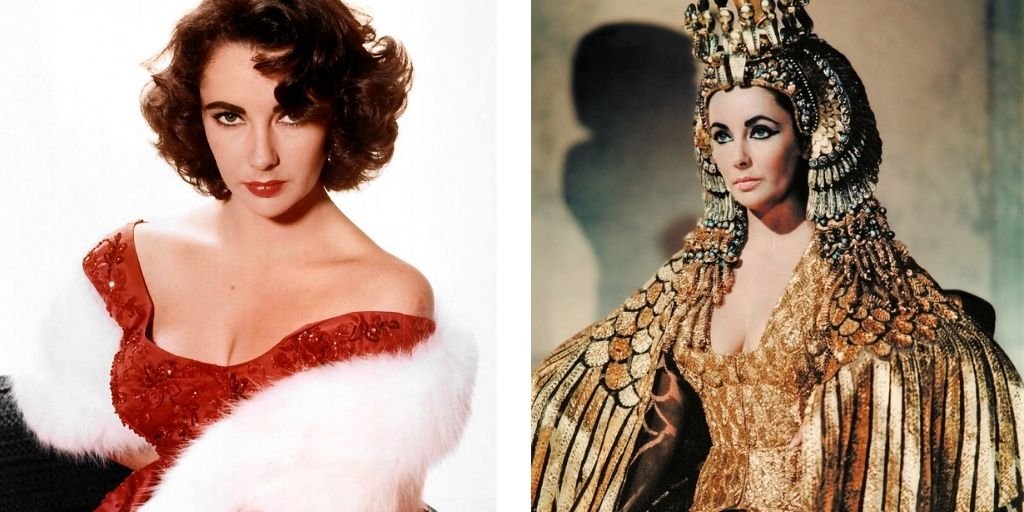
Elizabeth Taylor remains one of the most recognizable names in entertainment history. With her striking violet-blue eyes, unforgettable screen presence, and remarkable career, she became much more than a movie star. She was a cultural phenomenon whose life included spectacular success, complicated relationships, personal struggles, philanthropy, and a lasting influence on popular culture.
Born into a world far removed from the glamour of Hollywood, Taylor began acting as a child and eventually became one of the highest-paid and most celebrated performers of her generation. Her journey from child actress to Academy Award-winning leading lady is filled with fascinating chapters. Yet her story was never simply about films. She was also known for her friendships, marriages, jewelry collection, charitable work, and willingness to speak openly about issues that mattered to her.
So, what made Elizabeth Taylor so unforgettable? Perhaps it was the combination of talent and vulnerability. She could appear completely glamorous while also revealing the very human emotions behind the image. Like a diamond under different lights, she seemed to show a different side of herself at every stage of her life.
Early Life and Childhood
Elizabeth Rosemond Taylor was born on February 27, 1932, in Hampstead, London, England. Her parents, Francis and Sara Taylor, were Americans living in Britain. Her father worked as an art dealer, while her mother had previously been involved in acting.
Taylor’s family returned to the United States when she was still young. They eventually settled in Los Angeles, where the entertainment industry was rapidly expanding.
It did not take long for people around her to notice her unusual appearance. She had dark hair, distinctive features, and eyes that often appeared blue, violet, or purple depending on the lighting. Her appearance attracted attention, but her success would ultimately depend on far more than her looks.
Her mother encouraged her toward acting, and Taylor began appearing in films as a child. At an age when most children were focused on school and play, she was already learning how demanding professional filmmaking could be.
Her early experiences gave her something that would become invaluable later: an understanding of cameras, studios, directors, and the expectations placed on performers.
The Rise of a Child Star
Taylor’s early career developed during Hollywood’s studio era, when major film companies controlled many aspects of actors’ professional lives. Young performers were carefully groomed, promoted, and sometimes expected to behave according to carefully designed public images.
One of her early notable appearances came in Lassie Come Home in 1943. She later gained wider attention through films such as National Velvet, released in 1944.
National Velvet was particularly important because it demonstrated that Taylor could carry a major production despite being very young. Her performance helped establish her as a serious young talent rather than simply another attractive child performer.
As she grew older, her roles became increasingly sophisticated. She successfully made the difficult transition from child star to adult actress, something that many performers struggle to accomplish.
Her career during these years was almost like climbing a staircase one step at a time. Each film introduced her to a larger audience and prepared her for increasingly demanding roles.
Becoming a Hollywood Leading Lady
By the 1950s, Taylor had become an established Hollywood star. She appeared in a wide variety of productions, including dramas, romantic films, and large-scale historical pictures.
Her beauty attracted enormous public attention, but audiences gradually became more interested in her ability to communicate powerful emotions on screen.
Films such as A Place in the Sun, Giant, and Raintree County helped strengthen her reputation.
In Giant, she appeared alongside major stars including James Dean and Rock Hudson. The film became an important part of American cinema, and Taylor’s performance showed that she could hold her own beside highly respected actors.
During this period, she also became one of the most photographed women in the world. Magazines frequently covered her clothing, relationships, friendships, and lifestyle.
That intense public interest would follow her for decades.
Cat on a Hot Tin Roof and Critical Recognition
One of Taylor’s defining performances came in the 1958 film Cat on a Hot Tin Roof. Based on Tennessee Williams’ acclaimed play, the movie dealt with family tension, emotional repression, marriage, and hidden pain.
Taylor played Maggie Pollitt, a woman determined to protect her marriage and secure her future within a troubled family.
The role allowed her to move beyond traditional glamour. Maggie was complicated, ambitious, emotional, and vulnerable. Taylor brought those qualities together in a performance that helped demonstrate her dramatic range.
The film also featured Paul Newman, whose restrained performance contrasted effectively with Taylor’s emotional intensity.
For audiences, Taylor was no longer simply a beautiful star. She was becoming an actress capable of taking on complex characters.
Academy Awards and Major Career Achievements
Taylor won two Academy Awards for Best Actress.
Her first came for BUtterfield 8, released in 1960. The role allowed her to portray a troubled woman caught between relationships, social expectations, and personal choices.
Her second Oscar came for Who’s Afraid of Virginia Woolf? in 1966.
This second victory is particularly significant because the role was radically different from the glamorous image that had become associated with her.
Taylor played Martha, a deeply unhappy and emotionally volatile woman trapped in a destructive marriage. Opposite Richard Burton, she delivered a performance filled with anger, humor, pain, and psychological complexity.
The film became one of the most important dramatic productions of the 1960s.
Taylor’s performance demonstrated that she was willing to abandon conventional beauty when a role required something harsher and more emotionally demanding.
Cleopatra and Global Fame
If one film transformed Elizabeth Taylor into an international sensation, it was Cleopatra.
Released in 1963, the historical epic became famous for its enormous production costs, elaborate costumes, spectacular sets, and behind-the-scenes drama.
Taylor portrayed Cleopatra, the legendary queen of ancient Egypt. She reportedly became the first actor to receive a million-dollar salary for a single film role, a landmark in Hollywood history.
The production experienced serious delays and financial problems, but the film became a major cultural event.
Yet Cleopatra is remembered for more than its production scale. It also intensified public fascination with Taylor’s relationship with Richard Burton.
The pair had met professionally and developed an intense romantic relationship while both were married to other people. Their affair became international news.
The combination of a massive Hollywood production and a headline-making romance made Taylor one of the most discussed celebrities on the planet.
Elizabeth Taylor and Richard Burton
Taylor’s relationship with Richard Burton became one of the most famous romances in entertainment history.
They first worked together on Cleopatra, and their chemistry quickly became impossible for the public to ignore.
Both were already married when their relationship began, creating enormous controversy. Newspapers and magazines followed their every move.
Eventually, Taylor and Burton married in 1964.
Their relationship was passionate, dramatic, affectionate, and turbulent. They divorced in 1974, remarried in 1975, and divorced again in 1976.
Their story fascinated the public partly because it seemed larger than life. They were two enormously talented performers who shared an intense personal bond while also experiencing serious conflict.
They worked together on several films, including The Sandpiper, The Taming of the Shrew, and Who’s Afraid of Virginia Woolf?
The latter remains particularly important because their personal chemistry added another layer to an already intense drama.
Marriages, Family, and Private Life
Elizabeth Taylor was married eight times to seven husbands. Her marriages became a major part of her public image, although reducing her life to her relationships would overlook many other important aspects of her story.
Her husbands included Conrad Hilton Jr., Michael Wilding, Michael Todd, Eddie Fisher, Richard Burton, John Warner, and Larry Fortensky. She married Burton twice.
Taylor had four children: Michael Wilding Jr., Christopher Wilding, Liza Todd, and Maria Burton. She also became a grandmother and great-grandmother later in life.
Her personal relationships were frequently covered by newspapers and entertainment magazines. At times, the attention was so intense that it became difficult for her to separate her private identity from her celebrity image.
Nevertheless, Taylor continued working, raising her family, building friendships, and developing interests outside the film industry.
Her life showed that fame does not necessarily make personal relationships easier. If anything, constant public attention can make ordinary challenges far more complicated.
Jewelry, Fashion, and the Elizabeth Taylor Image
Few celebrities have been as closely associated with jewelry as Elizabeth Taylor.
She developed a legendary collection that included extraordinary diamonds, pearls, emeralds, and other precious stones. Some pieces became famous because of their historical significance as well as their beauty.
Among the best-known items associated with her collection were the Krupp Diamond, the Taylor-Burton Diamond, and the La Peregrina pearl.
Taylor did not simply wear jewelry as decoration. She had a genuine passion for it and understood how individual pieces could become part of a larger personal story.
Her fashion influence extended beyond jewelry. Her hairstyles, makeup, gowns, and glamorous appearance influenced generations of fans.
She became an early example of a celebrity whose personal style could have commercial value independent of acting.
Life Beyond Hollywood
As Taylor grew older, she increasingly focused on interests beyond traditional movie stardom.
She became an entrepreneur, participating in successful fragrance ventures and other commercial projects. Her name itself had enormous recognition, allowing her to build a business identity that existed separately from her acting career.
She also became increasingly involved in philanthropy.
One of her most important contributions was her work related to HIV/AIDS awareness and fundraising. At a time when the disease was heavily stigmatized and misunderstood, Taylor became an outspoken advocate.
She helped establish the American Foundation for AIDS Research and later founded the Elizabeth Taylor AIDS Foundation.
Her activism demonstrated a willingness to use celebrity for a purpose beyond entertainment.
Rather than simply appearing at glamorous events, she used her public platform to raise awareness, attract donations, and encourage compassion toward people affected by HIV/AIDS.
That part of her legacy remains especially significant.
Health Challenges and Personal Resilience
Taylor experienced numerous health challenges throughout her life. She underwent several major medical procedures and faced periods of significant physical difficulty.
Her health became a frequent subject of media coverage, sometimes overshadowing her professional achievements.
Despite these difficulties, she continued to appear publicly and remained involved in charitable activities.
Her later years were quieter than the peak of her Hollywood career, but she did not disappear from public life.
She continued advocating for causes important to her and maintained close relationships with family and friends.
Taylor died on March 23, 2011, at Cedars-Sinai Medical Center in Los Angeles at the age of 79.
Her death prompted tributes from Hollywood, political leaders, charitable organizations, and admirers around the world.
Elizabeth Taylor’s Cultural Legacy
Why does Elizabeth Taylor remain famous decades after many of her most successful films were released?
The answer is complicated.
First, her film career included several enduring classics. Her performances remain part of the history of American cinema.
Second, her appearance helped establish an enduring idea of Hollywood glamour. Her eyes, hair, clothing, and jewelry became instantly recognizable.
Third, her personal life was unusually public. Her marriages, friendships, romances, and controversies kept her in newspapers for much of her adult life.
But perhaps the most important reason is that Taylor repeatedly reinvented herself.
She was a child performer, teenage star, dramatic actress, international celebrity, businesswoman, jewelry enthusiast, and humanitarian.
Her story cannot easily be placed into one category.
She also helped demonstrate that female stars could have significant power outside the traditional studio system. Taylor negotiated major salaries and built a public identity that extended well beyond movie roles.
Her influence can still be seen in the way modern celebrities combine entertainment, fashion, business, branding, and philanthropy.
The Films That Best Define Her Career
Anyone discovering Taylor’s work today has an impressive selection of films to explore.
National Velvet introduced audiences to her remarkable potential as a young performer.
A Place in the Sun showed her alongside Montgomery Clift and Shelley Winters in a serious romantic drama.
Giant placed her alongside James Dean and Rock Hudson in an ambitious story about wealth, family, and social change.
Cat on a Hot Tin Roof highlighted her dramatic abilities opposite Paul Newman.
Suddenly, Last Summer allowed her to explore another psychologically challenging character.
BUtterfield 8 earned her first Academy Award.
Cleopatra transformed her into a global cultural sensation.
Who’s Afraid of Virginia Woolf? earned her second Academy Award and is widely regarded as one of her greatest performances.
Together, these films reveal how much her career changed over time.
Rather than remaining trapped in one type of role, Taylor repeatedly tested the boundaries of her public image.
Why Elizabeth Taylor Still Matters Today
Elizabeth Taylor’s significance goes beyond nostalgia.
Today’s entertainment world is filled with celebrities who build personal brands, launch businesses, influence fashion, and support charitable causes. Taylor was doing many of these things long before social media existed.
She understood the power of attention.
She also understood that fame could be turned into influence.
Her career offers a fascinating look at the transformation of Hollywood from the tightly controlled studio era to a more personality-driven entertainment culture.
At the same time, her story reminds us that celebrities are people rather than fictional characters. Behind the glamorous photographs were relationships, disappointments, mistakes, ambitions, illnesses, friendships, and responsibilities.
That contrast may be the most interesting part of her legacy.
The public saw the diamonds and movie premieres. Taylor also experienced the difficult realities that came with being one of the world’s most famous women.
Conclusion
Elizabeth Taylor was far more than a glamorous Hollywood actress. She was a talented performer, international celebrity, entrepreneur, jewelry enthusiast, mother, and passionate humanitarian. Her career stretched across generations, and her most memorable performances remain important pieces of film history.
Her life was sometimes complicated and controversial, but that complexity is part of what made her fascinating. She never fit comfortably into a single description.
From child-star beginnings to Academy Award victories, from Cleopatra to her unforgettable partnership with Richard Burton, and from Hollywood glamour to HIV/AIDS activism, Taylor lived an unusually full life.
Her legacy continues because she combined extraordinary talent with an equally extraordinary public presence. Long after the cameras stopped rolling, Elizabeth Taylor remained a symbol of classic Hollywood—and a reminder that true celebrity can become much bigger than the screen.
FAQs About Elizabeth Taylor
1. Who was Elizabeth Taylor?
Elizabeth Taylor was a British-American actress, businesswoman, and humanitarian who became one of Hollywood’s most famous stars. She began acting as a child and later won two Academy Awards for Best Actress.
2. How many times was Elizabeth Taylor married?
Elizabeth Taylor was married eight times to seven different men. She married Richard Burton twice.
3. What movies is Elizabeth Taylor best known for?
Some of her most famous films include National Velvet, A Place in the Sun, Giant, Cat on a Hot Tin Roof, Cleopatra, BUtterfield 8, and Who’s Afraid of Virginia Woolf?
4. How many Oscars did Elizabeth Taylor win?
She won two Academy Awards for Best Actress. Her victories were for BUtterfield 8 in 1961 and Who’s Afraid of Virginia Woolf? in 1967.
5. What was Elizabeth Taylor known for besides acting?
Beyond cinema, Taylor was famous for her jewelry collection, fashion influence, business ventures, and humanitarian work, particularly her advocacy and fundraising efforts related to HIV/AIDS.


