
Oprah Winfrey: The Inspiring Story of a Media Icon Who Changed Television
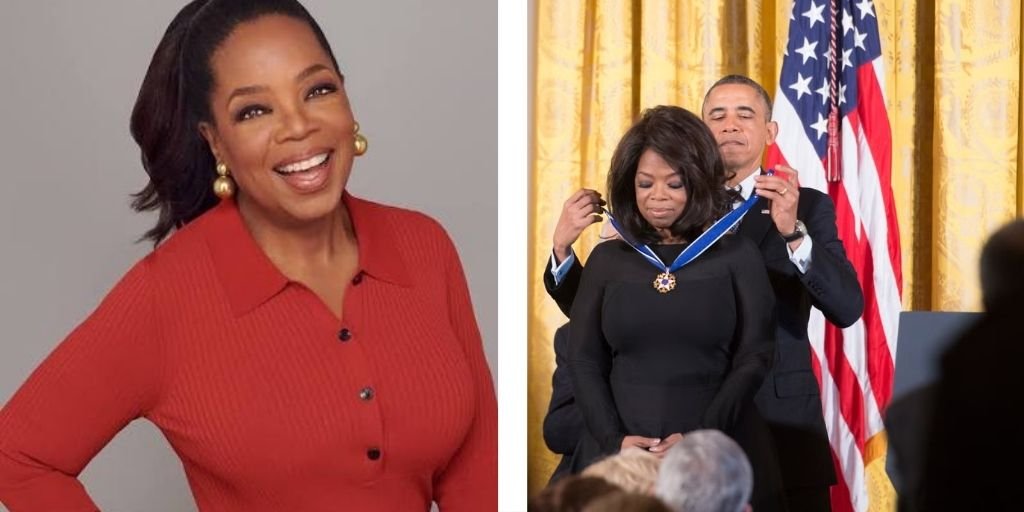
Oprah Winfrey is one of the most recognizable names in modern media. For decades, she has been known as a television host, producer, entrepreneur, author, philanthropist, and influential public figure. Her journey is especially remarkable because it began with difficult circumstances and eventually led to extraordinary success.
What makes her story so interesting is not simply the size of her career. It is the way she connected with ordinary people. Through television, books, interviews, films, and charitable work, she built a reputation for listening to people and encouraging them to believe that change was possible.
Her career also shows how powerful communication can be. She did not simply host a talk show; she helped create a space where personal experiences, social issues, books, relationships, health, education, and self-improvement could become part of mainstream conversation.
1. Early Life and Childhood
Oprah Winfrey was born on January 29, 1954, in Kosciusko, Mississippi. Her childhood was far removed from the glamorous world she would later enter. She spent parts of her early years living with family members and experienced financial hardship.
Despite those challenges, she developed a strong interest in speaking and performing at an early age. Communication became one of her natural strengths. She could express ideas clearly, tell stories, and capture people’s attention.
Her early experiences also shaped the way she later approached interviews. She understood that people’s lives could contain both pain and hope. That understanding became an important part of her public identity.
As a young girl, she was already comfortable speaking in front of others. She participated in church activities and public speaking events, developing confidence that would later become valuable in broadcasting.
Education also played an important role in her development. Her academic abilities and communication skills eventually helped her earn opportunities in radio and television.
Her childhood was not an easy beginning, but it gave her experiences that influenced the person she became. In many ways, those early years became the foundation of a career built around stories and human connection.
2. The Beginning of Her Broadcasting Career
Oprah’s professional journey into broadcasting began when she was still young. She worked in radio before moving into television, where she quickly demonstrated an unusual ability to connect with audiences.
Her early television work included news broadcasting. However, traditional news was not necessarily the perfect environment for her personality. She had a warm, expressive style that made people feel comfortable around her.
That quality eventually became a major advantage.
She moved into talk television and began developing the conversational approach that would later make her famous. Instead of treating guests as distant personalities, she often encouraged them to discuss their experiences openly.
This approach helped distinguish her from many television personalities of the era.
In 1984, she moved to Chicago to host AM Chicago. The program was struggling when she arrived, but her presence helped transform it. Within a relatively short period, the show became highly successful.
That success led to a much bigger opportunity.
3. The Oprah Winfrey Show Becomes a Television Phenomenon
In 1986, The Oprah Winfrey Show became a nationally syndicated program.
This was the turning point of her career.
The show eventually became one of the most influential daytime television programs in the United States. It covered an enormous range of subjects, including relationships, family problems, celebrities, books, personal struggles, social issues, health, achievement, and everyday life.
But why did audiences continue watching?
One major reason was authenticity.
Oprah’s interviewing style often made guests feel as though they were having a personal conversation rather than participating in a formal television interview. Her reactions were emotional, direct, and sometimes vulnerable.
The program also changed over time. It was not limited to celebrity interviews. It became a platform for ordinary people to tell extraordinary stories.
Some episodes were lighthearted, while others dealt with difficult experiences. This variety allowed the program to appeal to a broad audience.
The show ran for 25 seasons and ended in 2011. By that point, Oprah had become much more than a television host. She had become a major cultural influence.
4. Her Unique Approach to Interviews
One of Oprah’s greatest strengths has always been her ability to listen.
Good interviewing is not simply about asking questions. It is about understanding what another person is saying and knowing when to ask the next question.
Oprah became particularly skilled at encouraging guests to discuss personal experiences.
She could move a conversation from a simple topic toward deeper questions about fear, ambition, family, disappointment, forgiveness, or personal growth.
Her style also relied heavily on empathy.
Rather than presenting herself as someone who had all the answers, she often positioned herself as someone exploring the issue alongside the audience.
This helped create a sense of trust.
Her interviews with celebrities became especially popular because audiences could see famous people discussing ordinary emotions. Actors, musicians, authors, politicians, athletes, and other public figures could appear more relatable when speaking with her.
Her interviewing style became almost like opening a door into someone’s personal story. Once the door was open, audiences were invited inside.
5. Building Harpo Productions
Oprah’s influence expanded significantly when she established Harpo Productions.
The company gave her greater control over the content associated with her television career. This was an important business decision because it moved her beyond the role of on-screen personality.
She became a producer and media executive.
That distinction matters.
Many television personalities become famous because of a successful program, but Oprah worked to gain control over the production and business side of her career.
Harpo became involved in television production and other entertainment projects. Through this company, Oprah participated in the development of programs and films while strengthening her position within the media industry.
Her business decisions demonstrated that long-term success requires more than popularity.
She understood the value of ownership, production, branding, and creative control.
That lesson later became an important part of her broader business empire.
6. Oprah and the Power of Books
Books have played an enormous role in Oprah’s public influence.
The creation of Oprah’s Book Club transformed the relationship between television audiences and literature. When she recommended a book, millions of viewers could suddenly become interested in reading it.
The effect became so significant that publishers and authors paid close attention to her selections.
A recommendation from Oprah could bring a previously lesser-known book into the national spotlight.
Her book club also encouraged conversations about literature. Viewers were not simply told what to read; they were encouraged to think about characters, relationships, social problems, identity, and personal experiences.
Over time, the book club became associated with thoughtful storytelling and emotional depth.
This part of her career also demonstrated her ability to influence consumer behavior without relying solely on traditional advertising.
She had built something much more powerful: trust.
When people trusted her judgment, her recommendations carried considerable weight.
7. Acting, Film, and Entertainment
Oprah has also had an important career in film and entertainment.
One of her best-known acting roles came in The Color Purple, the 1985 film based on Alice Walker’s acclaimed novel. Her performance as Sofia received significant attention and earned her an Academy Award nomination for Best Supporting Actress.
The role demonstrated that she was capable of moving beyond television.
She later became involved in film production as well as acting. Her work connected her media career with stories centered on family, identity, history, race, resilience, and social challenges.
She also participated in productions such as Beloved and other entertainment projects.
Although television remained central to her public image, her film career showed another side of her creative abilities.
She understood the power of storytelling in different forms.
Whether the platform was television, film, publishing, or digital media, the central idea remained similar: stories can change how people understand themselves and the world around them.
8. Business Success and the Oprah Brand
Oprah’s career eventually expanded far beyond television.
Her name became associated with publishing, entertainment, lifestyle products, magazines, digital media, and other ventures.
The Oprah brand was built largely around ideas such as personal growth, confidence, wellness, relationships, reading, and meaningful living.
One important business lesson from her success is consistency.
Her various projects often shared a recognizable emotional identity. Whether she was discussing a book, interviewing a celebrity, producing a television program, or promoting a charitable initiative, her audience generally understood what she represented.
This created an unusually strong relationship between personality and brand.
She also demonstrated that personal credibility can become an important business asset.
People may purchase products or follow recommendations for many reasons, but trust can be one of the strongest.
Her career therefore offers an interesting example of how a media personality can develop into a powerful entrepreneur.
9. Philanthropy and Giving Back
Success has also allowed Oprah to invest heavily in charitable causes.
Education has been one of the major areas associated with her philanthropy. She has supported educational opportunities for young people and established initiatives designed to help students reach their potential.
The Oprah Winfrey Leadership Academy for Girls in South Africa is one of her most notable philanthropic projects.
The school was created to provide educational opportunities for academically talented girls from disadvantaged backgrounds.
Her charitable work has also included disaster relief, health-related causes, community programs, and support for organizations working with vulnerable populations.
For Oprah, philanthropy has often been connected to a larger belief in opportunity.
The basic idea is simple: when people receive education, resources, encouragement, and support, they may gain opportunities that were previously unavailable to them.
Her charitable activities therefore became another part of her broader legacy.
10. Oprah’s Cultural Influence
It is difficult to discuss Oprah’s career without discussing her influence on popular culture.
She helped normalize conversations about subjects that television audiences did not always discuss openly.
Mental and emotional well-being, family conflict, personal trauma, relationships, addiction, self-esteem, grief, and personal development became recurring topics in mainstream television.
Her influence also extended to celebrity culture.
An appearance on her program could become an important moment in a public figure’s career. At the same time, her interviews sometimes introduced audiences to people who were not famous at all.
This mixture of celebrity and ordinary experience helped make her program distinctive.
She also became an important figure in discussions surrounding representation in American media.
Her success demonstrated that a woman, a Black media personality, and a television producer could occupy an extraordinarily influential position within the entertainment industry.
Her cultural impact was therefore not limited to ratings.
It was also about visibility.
11. Oprah’s Enduring Legacy
Oprah’s legacy is ultimately about more than money or fame.
Her career represents a long transformation from a young broadcaster into a global media entrepreneur.
She showed that television could be both entertaining and deeply personal. She demonstrated the importance of listening and proved that audiences could remain interested in conversations about books, emotions, family, and personal challenges.
Perhaps her greatest achievement is the community she created around storytelling.
For millions of viewers, watching her programs became a shared experience. People discussed episodes with friends and family, read recommended books, and reflected on the lessons presented by guests.
Her career can be compared to a bridge. On one side were celebrities, authors, experts, and public figures. On the other were ordinary viewers sitting at home. Oprah helped connect those two worlds.
Even as traditional television has changed, the principles behind her success remain relevant.
Authenticity matters. Good stories matter. Listening matters. And audiences respond to people who make them feel understood.
Conclusion
Oprah Winfrey’s story is one of resilience, communication, entrepreneurship, and influence. From a challenging childhood to the highest levels of media success, her career has demonstrated the power of determination and connection.
She transformed daytime television, helped books reach enormous audiences, expanded into film and production, built successful businesses, and invested in education and philanthropy.
Her greatest lesson may be surprisingly simple: success is not only about reaching a destination. It is also about what you do with the influence you gain along the way.
Oprah’s journey continues to attract attention because it combines ambition with storytelling and achievement with service. Her career has left a lasting mark on television, entertainment, publishing, and popular culture.
Frequently Asked Questions
1. Who is Oprah Winfrey?
Oprah Winfrey is an American media personality, television host, producer, entrepreneur, actress, author, and philanthropist. She became internationally famous through The Oprah Winfrey Show.
2. When was Oprah Winfrey born?
Oprah Winfrey was born on January 29, 1954, in Kosciusko, Mississippi.
3. Why is Oprah Winfrey famous?
She is best known for hosting The Oprah Winfrey Show, one of the most successful daytime television programs in American broadcasting history. Her work in publishing, film, business, and philanthropy also contributed to her worldwide reputation.
4. What is Oprah’s Book Club?
Oprah’s Book Club is a reading initiative associated with her media career. Her selections have attracted large audiences and helped bring many books and authors into the public spotlight.
5. What is Oprah Winfrey’s legacy?
Her legacy includes transforming daytime television, promoting reading, supporting education and charitable causes, creating opportunities for other storytellers, and demonstrating the power of authentic communication.


