
Meryl Streep: The Extraordinary Career of a Hollywood Legend
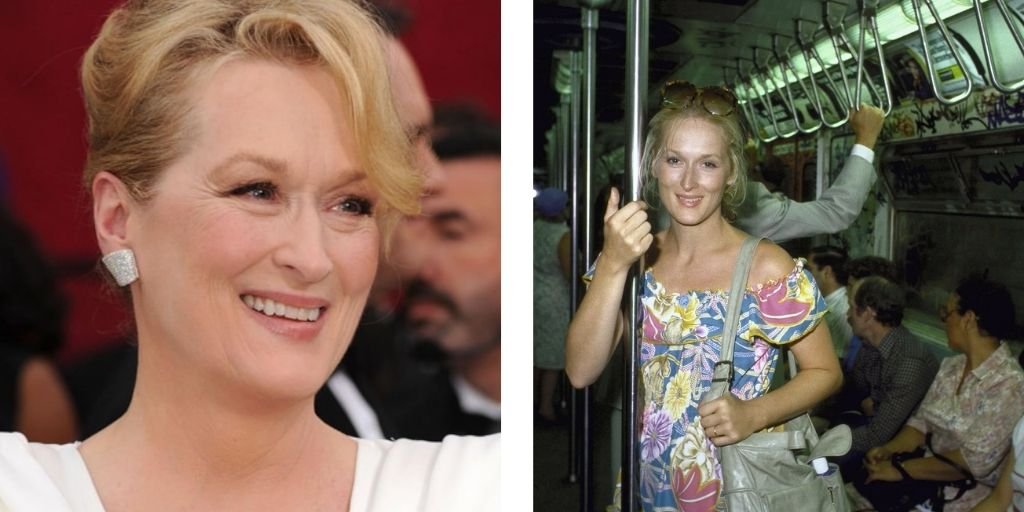
Meryl Streep is widely regarded as one of the most accomplished actors of her generation. Over a career spanning more than five decades, she has built a remarkable body of work across drama, comedy, musicals, historical films, and intimate character studies. What makes her career especially fascinating is not simply the number of awards she has received, but the extraordinary range of people she has brought to life.
From emotionally demanding dramas to lighthearted comedies, she has repeatedly shown that great acting is about more than memorizing lines. It is about observing people, understanding emotions, and making an audience believe that a fictional character is completely real. Her performances have often felt like windows into other lives.
But who is the woman behind these unforgettable roles? How did she become one of Hollywood’s most respected performers, and why has her influence remained so strong for so long? Her story provides an interesting look at talent, determination, preparation, and the changing world of cinema.
Early Life and the Beginning of a Remarkable Journey
Meryl Streep was born Mary Louise Streep on June 22, 1949, in Summit, New Jersey. She grew up in a supportive family and showed an interest in performance from a young age. Although she initially explored singing and other interests, acting eventually became the area where her abilities truly stood out.
She attended Vassar College, where she studied drama and developed her understanding of performance. After graduating, she continued her education at the Yale School of Drama. This period was important because it gave her a strong foundation in theater and introduced her to the discipline required for professional acting.
Theater training can be demanding. Actors have to learn how to communicate without relying on close-ups, editing, or elaborate film production. They must understand voice, movement, timing, and character psychology. For Streep, this training became an important part of the toolkit she would later bring to the screen.
Her early theater work helped establish her reputation as a serious performer. She appeared in several productions and quickly attracted attention for her ability to disappear into different characters.
Rather than trying to become famous overnight, she developed her craft step by step. That slow beginning became one of the foundations of her extraordinary career.
The Breakthrough That Changed Everything
Streep’s transition from theater to film happened during a period when Hollywood was changing. Audiences were becoming increasingly interested in realistic performances and complicated characters.
One of her earliest major film appearances came in Julia in 1977. Although her role was relatively small, it gave audiences and filmmakers a glimpse of the talent that would soon become impossible to ignore.
Her breakthrough arrived with The Deer Hunter in 1978. The film explored friendship, war, trauma, and the lasting effects of difficult experiences. Streep’s performance received widespread attention and earned her an Academy Award nomination.
The following year, she appeared in Kramer vs. Kramer, a film that became a major success. Her portrayal of Joanna Kramer was emotionally complex because the character could not simply be described as good or bad. She was a mother struggling with personal identity, marriage, responsibility, and independence.
The role earned Streep her first Academy Award for Best Supporting Actress.
This was an important moment because it demonstrated something that would become a recurring feature of her career: she could make complicated characters understandable without making them simple.
A Career Built on Range and Transformation
What separates Streep from many performers is her extraordinary range.
She has played characters from different countries, historical periods, social backgrounds, and professions. She has portrayed mothers, political figures, writers, business leaders, teachers, artists, and fictional personalities.
Her approach often involves extensive preparation. Accents, body language, speech patterns, posture, and emotional habits can all contribute to a character’s identity. Instead of simply delivering dialogue, she works toward creating a complete person.
Consider how different her performances can feel from one film to another. The elegant and mysterious character in Out of Africa has little resemblance to the determined fashion executive in The Devil Wears Prada. Her performance as Margaret Thatcher in The Iron Lady is again dramatically different.
It is almost like watching a skilled musician change instruments. The underlying talent remains recognizable, but the sound can be completely different.
This flexibility has allowed her to move between genres without becoming trapped in one particular image.
The Films That Defined Her Reputation
Throughout her career, Streep has appeared in a remarkable collection of films.
Sophie’s Choice became one of the defining performances of her early career. Her portrayal of Sophie Zawistowski required extraordinary emotional control, and the role earned her the Academy Award for Best Actress.
She continued to take challenging parts throughout the 1980s and 1990s. Films such as Silkwood, Out of Africa, A Cry in the Dark, The Bridges of Madison County, and One True Thing demonstrated her ability to explore different forms of emotional storytelling.
Her work in The Bridges of Madison County was particularly memorable because the film relied heavily on subtle emotions. The story was not driven by explosions or elaborate action sequences. Instead, much of its power came from looks, pauses, conversations, and quiet moments.
Streep understood how to make those small moments meaningful.
Her filmography later expanded into more commercial and comedic projects. The Devil Wears Prada introduced her to a younger generation and showed that she could be intimidating, funny, stylish, and emotionally restrained at the same time.
Her portrayal of Miranda Priestly became one of the most recognizable characters in modern popular cinema.
The Devil Wears Prada and a New Generation of Fans
Few roles illustrate Streep’s versatility better than Miranda Priestly.
The character is demanding, powerful, intimidating, and often brutally direct. Yet Streep avoided turning Miranda into a cartoon villain. Instead, she gave the character subtlety.
A raised eyebrow, a quiet response, or a carefully controlled expression could communicate more than a long speech.
The film became a cultural favorite, and Miranda Priestly remains one of Streep’s most discussed characters. The performance also demonstrated her willingness to embrace comedy and commercial entertainment without sacrificing her standards as an actor.
Interestingly, Streep did not need to dominate every scene through exaggerated behavior. Her restraint became part of the character’s power.
That is one reason the performance continues to be remembered.
Musicals and Unexpected Creative Choices
Another fascinating part of Streep’s career is her willingness to step outside expectations.
She demonstrated her singing abilities in films such as Mamma Mia! and later Into the Woods. For an actor primarily known for dramatic performances, appearing in major musicals represented another opportunity to surprise audiences.
Mamma Mia! became a global hit and introduced Streep’s work to people who might not normally watch serious dramas.
Her performance was energetic and emotionally open. Rather than trying to maintain a distant image as a prestigious dramatic actor, she embraced the fun of the material.
That willingness to experiment has helped keep her career fresh.
An actor who repeatedly plays the same type of character can become predictable. Streep has generally done the opposite. She has moved between serious drama, comedy, romance, musical theater, historical stories, and contemporary films.
The Iron Lady and Playing a Historical Figure
One of Streep’s most demanding roles came in The Iron Lady, where she portrayed British Prime Minister Margaret Thatcher.
Playing a real historical figure presents a unique challenge. Audiences already know something about the person, meaning the actor must balance resemblance with interpretation.
Streep worked extensively on Thatcher’s voice, mannerisms, posture, and public presence. The result was a performance that received enormous critical attention.
She won the Academy Award for Best Actress for the role.
What makes the performance interesting is that it does not simply imitate Thatcher. Streep also explores the private person behind the public image, particularly the effects of age and memory.
This illustrates an important feature of biographical acting: physical resemblance may attract attention, but emotional understanding is what makes the performance convincing.
A Record of Awards and Recognition
Streep’s awards history is extraordinary.
She has received numerous Academy Award nominations, making her one of the most frequently nominated performers in Oscar history. Her wins include awards for Kramer vs. Kramer, Sophie’s Choice, and The Iron Lady.
She has also received multiple Golden Globe Awards, BAFTA recognition, Screen Actors Guild honors, Emmy Awards, and other major distinctions.
However, awards tell only part of the story.
Some performers receive recognition for a few iconic roles. Streep’s distinction comes from the consistency of her work across decades.
Her nominations continued long after her early career, demonstrating that she remained relevant as the film industry changed.
That longevity is difficult to achieve. Hollywood often focuses heavily on youth and new talent, but Streep repeatedly demonstrated that audiences remain interested in compelling performances regardless of age.
Her Approach to Acting and Character Preparation
Why does she perform so convincingly?
There is no single answer.
Streep has spoken extensively over the years about acting, imagination, observation, and preparation. Her work suggests that she pays close attention to the small details that make people different from one another.
An accent is not merely a different pronunciation. A character’s speech can reveal where they grew up, their education, their social environment, and their personality.
The same applies to physical behavior.
Someone who is confident may walk differently from someone who is nervous. A person hiding sadness may smile differently from someone who is genuinely happy. These details can transform a performance.
Streep’s ability to combine such details with emotional depth is one reason her characters often feel complete.
She also understands the importance of listening. In film acting, a convincing performance is not simply about speaking lines well. Reactions matter just as much.
Sometimes the most powerful moment in a scene is the expression on a character’s face while another person is talking.
Working Across Drama, Comedy, and Contemporary Stories
It would be easy to associate Streep exclusively with serious movies, but that would overlook an important part of her career.
She has demonstrated strong comic timing in movies such as Death Becomes Her, The Devil Wears Prada, It’s Complicated, and Julie & Julia.
In Julie & Julia, she portrayed legendary chef Julia Child. The performance combined comedy, warmth, physicality, and personality.
Streep’s interpretation captured Child’s enthusiasm without turning her into a caricature.
Her ability to move naturally between drama and comedy shows that emotional intelligence can serve many different genres.
Comedy, after all, requires timing and observation. A pause that is perfect in a dramatic scene can be equally effective in a humorous one.
Influence on Hollywood and Modern Acting
Streep’s influence extends beyond individual movies.
She became a model of what a long-lasting acting career could look like. Rather than building her identity around a single character type, she continued developing and challenging herself.
She also became an important figure in conversations about women in Hollywood.
Throughout her career, she has portrayed women with ambitions, weaknesses, intelligence, fears, humor, and contradictions. Her characters are often not defined solely by their relationships to men.
They can be professionals, leaders, mothers, artists, friends, and individuals searching for meaning.
That variety matters because cinema influences how audiences understand different kinds of people.
Her career has also helped demonstrate that older female performers can continue to lead major productions and attract audiences.
Personal Life and Maintaining Privacy
Despite being one of the world’s most recognizable actors, Streep has generally maintained a relatively private personal life.
She married sculptor Don Gummer in 1978, and they built a family together. Their children include Mamie Gummer, Grace Gummer, and Henry Wolfe Gummer, who have pursued creative careers of their own.
Streep has often emphasized the importance of balancing professional commitments with family life.
That balance is not always easy for someone working in an industry that can demand long periods away from home.
Her ability to maintain a substantial career while keeping many aspects of family life away from constant public attention has contributed to her reputation for professionalism.
Why Meryl Streep Remains Relevant
What explains her lasting appeal?
Part of it is talent, but talent alone is rarely enough to sustain a career for decades.
Curiosity appears to be another important factor.
Streep has repeatedly explored unfamiliar characters and genres. She has not treated success as a reason to stop experimenting.
She also understands that audiences change.
Someone who watched Sophie’s Choice decades ago may later discover her through The Devil Wears Prada, Mamma Mia!, or another contemporary project. Each generation can find a different entry point into her filmography.
That is a rare achievement.
Her career resembles a large library: there is no single book that represents everything inside it. Different readers may enter through different shelves, but eventually they discover how extensive the collection really is.
Legacy of an Extraordinary Performer
Meryl Streep’s legacy is not based solely on awards, famous quotes, or box-office success.
It is built on a deeper quality: the ability to make audiences care about people they may never have met.
Her characters can be inspiring, frustrating, funny, heartbreaking, ambitious, selfish, generous, or complicated. Most importantly, they often feel human.
That humanity is perhaps the greatest lesson of her career.
Great acting does not require every character to be perfect. In fact, imperfections often make characters more believable.
Streep has spent decades exploring those imperfections, giving audiences performances that remain memorable long after the credits roll.
Her career also demonstrates the value of preparation and adaptability. She entered professional acting through theater, developed her skills through demanding training, and continued taking risks as her reputation grew.
Instead of allowing success to limit her choices, she used it to expand them.
Conclusion
Meryl Streep’s career is an extraordinary example of artistic longevity. From early theater work and breakthrough dramas to comedy, musicals, historical roles, and modern cinema, she has continually demonstrated remarkable versatility.
Her greatest achievement may not be any individual award or performance. It is the body of work created over decades. She has shown that an actor can continue learning, experimenting, and surprising audiences throughout an entire career.
For movie lovers, her filmography offers something for almost everyone. For aspiring performers, her journey offers a lesson in preparation, patience, courage, and curiosity.
Ultimately, her enduring appeal comes down to something simple: she makes characters feel alive. And when an actor can do that, audiences remember them.
FAQs About Meryl Streep
1. What is Meryl Streep best known for?
She is best known for her extraordinary range as an actor and for acclaimed performances in films such as Sophie’s Choice, Kramer vs. Kramer, Out of Africa, The Devil Wears Prada, Julie & Julia, and The Iron Lady.
2. How many Academy Awards has Meryl Streep won?
She has won three Academy Awards: Best Supporting Actress for Kramer vs. Kramer and Best Actress for Sophie’s Choice and The Iron Lady.
3. Has Meryl Streep appeared in musicals?
Yes. She has appeared in major musical productions on film, most notably Mamma Mia! and Into the Woods, showcasing her singing and performance abilities.
4. Did Meryl Streep play Margaret Thatcher?
Yes. She portrayed former British Prime Minister Margaret Thatcher in The Iron Lady, a performance that earned her the Academy Award for Best Actress.
5. Why is Meryl Streep considered one of the greatest actors?
Her reputation comes from her remarkable range, emotional depth, character preparation, longevity, and ability to convincingly portray very different people across many genres and decades.


