
Lily James: Life, Career, Movies, and Lasting Screen Appeal
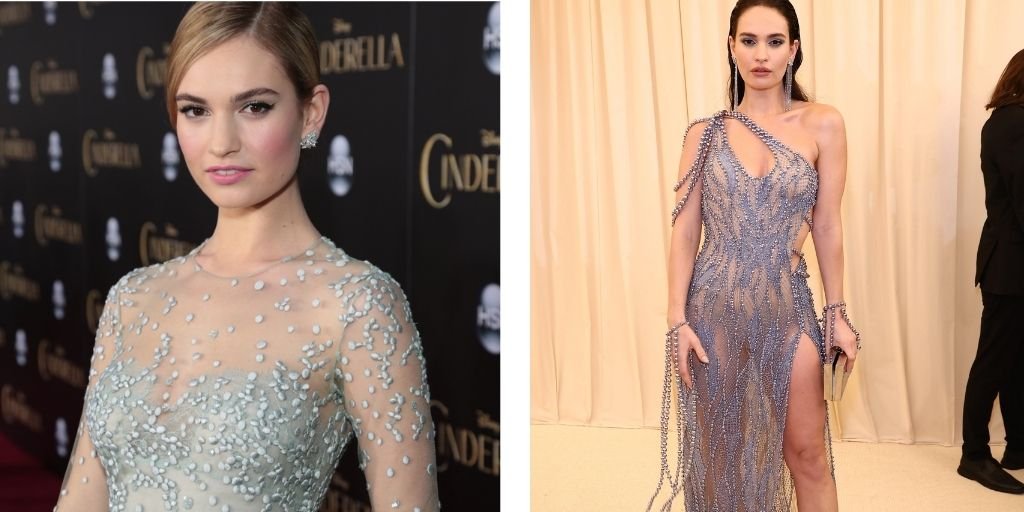
Lily James has built a career by moving comfortably between period dramas, romantic stories, action films, television series, and modern comedies. From her breakthrough as Lady Rose MacClare in Downton Abbey to memorable performances in Cinderella, Baby Driver, Darkest Hour, and Pam & Tommy, she has shown that she is far more versatile than a single famous role might suggest.
But what makes an actor truly memorable? Is it simply appearing in successful movies, or is it the ability to make audiences believe that every character is a real person? In James’s case, her appeal comes from that second quality. She brings warmth, energy, vulnerability, and determination to her performances, allowing her to move from one very different character to another without losing her individual screen presence.
Her journey is also a reminder that acting careers rarely follow a straight road. Sometimes an actor becomes famous through one role and then has to work hard to prove that there is much more to them. James has done exactly that, gradually expanding her range while taking on increasingly challenging projects.
Early Life and Family Background
Lily James was born Lily Chloe Ninette Thomson on April 5, 1989, in Esher, Surrey, England. She grew up in a family with strong connections to the entertainment world. Her father, James Thomson, worked as an actor and musician, while her mother, Ninette Mantle, was an actress.
Growing up around performers naturally gave James an early understanding of the entertainment industry. She could see both the excitement and uncertainty that came with a creative career. Acting may have been part of her family environment, but becoming a successful professional actress was still something she had to earn for herself.
She attended Tring Park School for the Performing Arts, where she developed her interest in performance. The school provided training in acting and other performing arts, helping her build the confidence and discipline required for professional work.
After completing her education, she studied at the Guildhall School of Music and Drama in London. Guildhall has produced many respected actors, and the training gave James an opportunity to develop her craft in a demanding environment.
A strong foundation
For many young actors, formal training is where imagination begins to meet discipline. James learned how to understand characters, work with other performers, use her voice effectively, and approach scripts with greater depth.
That foundation became particularly useful when she later began playing characters from different periods and social backgrounds. Rather than simply wearing a costume and adopting an accent, she learned to think about what might be happening underneath the character’s appearance.
The Breakthrough Role in Downton Abbey
For many viewers, the name Lily James is closely connected with Downton Abbey. She joined the popular British period drama during its later seasons as Lady Rose MacClare.
The series had already developed a huge international following, so entering an established show was a significant opportunity. James brought a lively, youthful quality to Rose, a character who was more modern and independent-minded than some of the older members of the aristocratic household.
Lady Rose was not simply a decorative character. Her storylines explored changing social expectations, relationships, independence, and the tension between tradition and modern life.
James’s performance helped her attract wider attention. Audiences saw that she could fit naturally into a large ensemble while still making her character distinctive.
Why Rose mattered
Rose represented a younger generation entering a world governed by older traditions. James captured that balance between respect for the past and excitement about the future.
It was almost like watching a new color being added to an already detailed painting. The established characters had their own histories, while Rose brought fresh energy into the picture.
The role also introduced James to viewers who might not otherwise have discovered her work. That exposure would soon lead to much bigger opportunities.
Cinderella and Becoming a Leading Actress
In 2015, James took on one of her most recognizable roles when she played Cinderella in Disney’s live-action Cinderella, directed by Kenneth Branagh.
Playing a character as famous as Cinderella is both an opportunity and a challenge. Millions of people already know the basic story. The audience knows the glass slipper, the transformation, the ball, and the romance.
So how do you make such a familiar character feel fresh?
James approached Cinderella with kindness and emotional sincerity rather than turning her into a passive princess waiting to be rescued. Her version of the character has an inner strength that comes from maintaining compassion despite hardship.
The film became a major commercial success and introduced James to an enormous global audience.
Working with Kenneth Branagh
The production also placed James alongside experienced performers such as Cate Blanchett, Richard Madden, and Helena Bonham Carter.
Playing opposite established actors can be intimidating, particularly in a large studio production. Yet James held her own and gave the film an emotional center.
Her performance demonstrated that she could carry a major movie rather than simply contribute to an ensemble.
Cinderella also showed one of her greatest strengths: she can make a character approachable. Even in a fairy-tale setting filled with elaborate costumes and enormous sets, she often feels like a recognizable person.
From Baby Driver to Modern Cinema
After the success of Cinderella, James began moving into a wider variety of films. One of the most enjoyable examples was Edgar Wright’s 2017 action movie Baby Driver.
She played Debora, a young waitress who develops a relationship with the title character, Baby, played by Ansel Elgort.
The movie combined action, romance, music, and fast-paced editing. Its style was very different from the traditional period productions that had helped establish James.
That difference was important.
Showing another side
Debora was more contemporary and grounded than characters such as Cinderella or Lady Rose. She was ambitious, hopeful, and eager to escape her routine life.
The role allowed James to demonstrate that she could work within a modern, highly stylized movie without feeling out of place.
Baby Driver was also a reminder that successful acting is not necessarily about delivering the biggest speech or dominating every scene. Sometimes a character’s importance comes from what they represent to the protagonist.
For Baby, Debora represented freedom and the possibility of another life. James understood that emotional purpose and gave the character warmth.
Darkest Hour and the Art of Supporting Performance
Another major step in James’s career came with Darkest Hour, the 2017 historical drama directed by Joe Wright.
The film focused on Winston Churchill during the early days of World War II, with Gary Oldman playing the British prime minister. James portrayed Elizabeth Layton, Churchill’s secretary.
The role required a different kind of performance.
Instead of being the central figure, James worked as part of a larger historical drama. Elizabeth observes, listens, reacts, and gradually becomes an important emotional presence.
Working opposite Gary Oldman
Sharing scenes with a performer as commanding as Oldman required James to remain focused and believable. She did not attempt to compete for attention. Instead, she allowed the character’s reactions to tell part of the story.
This can be one of the hardest things for an actor to do.
A supporting character still needs a life beyond the main storyline. James helped make Elizabeth Layton feel like a person rather than simply someone placed in the background.
The movie received significant critical attention, and Oldman won the Academy Award for Best Actor for his performance. James’s involvement further strengthened her reputation as an actress capable of serious dramatic work.
Exploring Comedy, Romance, and Contemporary Roles
James has never limited herself to one genre. Her filmography includes romance, comedy, drama, fantasy, action, and historical stories.
She appeared in movies such as The Exception, Mamma Mia! Here We Go Again, Yesterday, Rare Beasts, and Rebecca.
Each project required a slightly different approach.
In Mamma Mia! Here We Go Again, for example, she played a younger version of Donna Sheridan, the character made famous by Meryl Streep.
This was a particularly interesting casting choice because the audience already knew the older version of Donna. James had to create a believable younger personality without simply copying Streep.
A natural musical presence
The film allowed James to combine acting with singing and dancing. Her version of Donna is energetic, adventurous, and determined to make her own path.
Her performance also helped connect the movie’s past and present timelines.
In Yesterday, she appeared in a romantic comedy with Himesh Patel. The movie imagined a world where almost everyone had forgotten The Beatles, except one struggling musician.
James’s ability to shift between serious and lighter material helped demonstrate her range.
Rebecca and the Challenge of a Classic Story
In 2020, James starred in Netflix’s Rebecca, based on Daphne du Maurier’s famous novel. She played the unnamed young woman who marries the wealthy widower Maxim de Winter, portrayed by Armie Hammer.
The story had already been adapted for the screen, most famously in Alfred Hitchcock’s 1940 film.
That meant James was stepping into a story with a significant cinematic history.
Her character is deliberately uncertain and inexperienced at first. She enters an intimidating world where the memory of Maxim’s first wife, Rebecca, seems to dominate everything.
Playing insecurity
One of the most interesting aspects of James’s performance is the gradual change in her character. She begins as someone who doubts herself and becomes increasingly willing to question the people around her.
The role demanded emotional restraint because much of the story’s tension comes from what characters do not say.
James used small expressions and changes in confidence to communicate the character’s development.
Although the film received mixed reactions, it represented another ambitious choice in her career.
Pam & Tommy and a Major Transformation
One of the most talked-about performances of James’s career came with the Hulu miniseries Pam & Tommy, released in 2022.
James portrayed Pamela Anderson, while Sebastian Stan played Tommy Lee. The series explored the relationship between the celebrity couple and the controversy surrounding the theft and distribution of their private videotape.
Taking on a real person presents a different challenge from playing a fictional character.
The actor is not creating someone entirely from imagination. There are interviews, photographs, videos, public appearances, and years of existing public perception.
Becoming Pamela Anderson
James underwent a significant physical transformation for the role, including hair, makeup, costumes, and prosthetics. But appearance alone could not make the performance convincing.
She also had to study Anderson’s voice, mannerisms, movement, public image, and emotional experiences.
More importantly, the series asked audiences to look beyond the celebrity image.
Pamela Anderson had often been discussed through the lens of glamour and fame. The story attempted to explore her humanity, vulnerability, career ambitions, and the impact of having her private life exposed without consent.
James’s performance received widespread attention and earned her an Emmy nomination.
For an actor, that kind of role can be a turning point because it shows a willingness to take creative risks rather than simply repeat familiar successes.
Lily James on Television and Streaming Projects
Television has become an increasingly important part of James’s career.
Modern television offers actors something that traditional movie roles sometimes cannot: time.
A two-hour film may have to establish a character quickly, while a miniseries can explore personality, relationships, and emotional changes over several episodes.
James has taken advantage of that opportunity.
Her work in projects such as Pam & Tommy demonstrates how television can allow an actor to build a performance layer by layer.
The changing entertainment landscape
The distinction between film and television has become less rigid. Streaming platforms now produce projects with major stars, large budgets, and ambitious storytelling.
For actors, this creates more opportunities to experiment.
James’s career reflects that change. She has moved between cinema, traditional television, and streaming productions instead of treating any single format as the only path to success.
Acting Style, Strengths, and Screen Presence
What makes Lily James stand out?
One answer is versatility. She can appear convincing in a historical drama one year and a contemporary romantic story the next.
Another strength is emotional accessibility. Even when her characters exist in extraordinary circumstances, James often gives them recognizable emotions.
She also has a natural ability to communicate through facial expression. A glance, smile, hesitation, or change in posture can tell the audience that a character is thinking something they have not said aloud.
Balancing elegance and vulnerability
Many of James’s roles involve characters who look confident or beautiful from the outside but are dealing with uncertainty underneath.
That contrast works particularly well for her.
She can play elegance without making a character feel distant. At the same time, she can portray vulnerability without making the character appear weak.
That balance has become an important part of her screen identity.
Her career is therefore less like a single road and more like a branching tree. Each role adds another branch, giving audiences a larger picture of what she can do.
Personal Life, Public Attention, and Privacy
As her career has grown, James has also experienced the intense public attention that often comes with being a well-known actress.
Celebrity culture can make it difficult for performers to separate professional life from personal life. Relationships, appearances, fashion choices, and social events can all become subjects of media discussion.
James has generally maintained a degree of privacy about many aspects of her personal life.
That approach is understandable. An actor may choose to share their work with millions of people while still wanting some parts of ordinary life to remain personal.
Fame beyond the screen
James’s public image has also developed through fashion, interviews, premieres, and magazine appearances. Her classic style has made her a recognizable presence outside acting.
Yet her professional work remains the strongest reason audiences continue to follow her career.
Rather than relying entirely on celebrity attention, she has continued to choose roles that challenge her in different ways.
Lily James’s Career Evolution and Future
Looking at James’s career as a whole, the most interesting element is its evolution.
She began with supporting work and television exposure, became widely recognized through Downton Abbey, reached a global audience with Cinderella, and then deliberately moved into different genres and more complicated characters.
That progression suggests ambition.
An actor can become trapped after a major success. Once audiences associate someone with a particular type of role, studios may continue offering similar parts. James has repeatedly moved in another direction.
She has played princesses, romantic leads, historical figures, young women searching for independence, and real-life celebrities.
What could come next?
The answer is impossible to know with certainty, but her previous choices suggest that she is unlikely to remain in one category for long.
She could continue exploring television, independent cinema, major studio productions, or character-driven dramas.
For audiences, that unpredictability is part of the appeal.
When an actor repeatedly surprises you, you start paying closer attention. You want to know what they will do next because the next performance may reveal another side that you have not seen before.
Conclusion: Why Lily James Remains an Actress to Watch
Lily James has developed from a promising young performer into an internationally recognized actress with an impressive range. Her journey from Downton Abbey to Cinderella, Baby Driver, Darkest Hour, Mamma Mia! Here We Go Again, Rebecca, and Pam & Tommy shows a performer willing to keep learning and changing.
Her greatest strength may not be one particular character or movie. Instead, it is her ability to adapt.
She can step into a fairy tale, a historical drama, a musical, an action movie, or a real-life story and search for the person underneath the surface. That quality gives her career depth and keeps audiences interested.
For anyone discovering her work for the first time, there is plenty to explore. And for longtime viewers, her next role offers the same exciting question: what side of Lily James will we see next?
FAQs About Lily James
1. Who is Lily James?
Lily James is an English actress known for television and film roles including Lady Rose MacClare in Downton Abbey, Cinderella in Disney’s live-action Cinderella, Debora in Baby Driver, Elizabeth Layton in Darkest Hour, and Pamela Anderson in Pam & Tommy.
2. What is Lily James best known for?
She is widely recognized for Downton Abbey and Cinderella, while her later performances in projects such as Baby Driver, Darkest Hour, and Pam & Tommy have further established her reputation as a versatile actress.
3. Did Lily James play Pamela Anderson?
Yes. Lily James portrayed Pamela Anderson in the 2022 miniseries Pam & Tommy, opposite Sebastian Stan as Tommy Lee. The role involved a major physical and performance transformation.
4. What movies has Lily James appeared in?
Her film credits include Cinderella, Baby Driver, Darkest Hour, Mamma Mia! Here We Go Again, Yesterday, Rebecca, The Exception, and other productions across different genres.
5. Where did Lily James study acting?
Lily James studied at the Guildhall School of Music and Drama in London after attending Tring Park School for the Performing Arts. Her formal training helped establish the foundation for her professional acting care




