
Emily Ratajkowski: Life, Career, Movies, Modeling & Influence
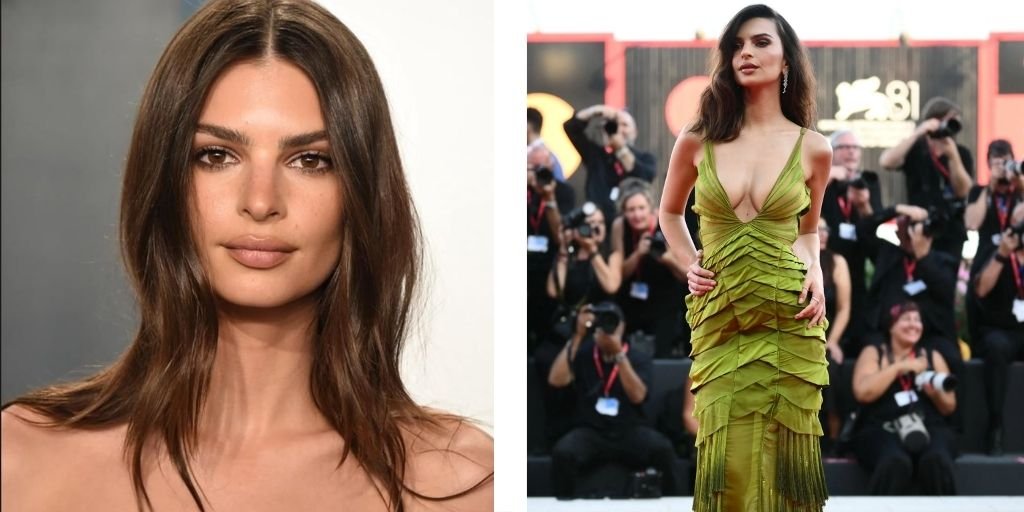
Emily Ratajkowski is a name that has appeared across fashion magazines, movie screens, music videos, social media, and publishing. She first became widely recognized as a model, but her career has never stayed inside one box. Over the years, she has worked in fashion, acting, business, writing, and media while also speaking openly about identity, beauty, women’s rights, and the complicated relationship between a person and their public image.
Born in London in 1991 and raised largely in California, Ratajkowski entered the entertainment world at a young age. Modeling gave her an early platform, while appearances in music videos helped bring her international attention. Her role in Gone Girl later introduced her to a much wider film audience.
But what makes her story interesting is not simply fame. It is the way she has repeatedly tried to define herself instead of allowing other people to decide who she should be. Her journey is a little like changing lanes on a busy highway: modeling was one lane, acting another, and writing and entrepreneurship opened entirely different routes.
Early Life and Family Background
Emily O’Hara Ratajkowski was born on June 7, 1991, in London, England, to American parents Kathleen Balgley and John David Ratajkowski. Her mother was a professor and writer, while her father worked as a painter and art teacher. Although she was born in England, she grew up primarily in Encinitas, California, near San Diego.
Growing up around art and education gave her an environment that was different from the stereotypical celebrity childhood. Her father’s career exposed her to visual art, while her mother’s academic background gave her a connection to literature and education.
She also spent time traveling during her childhood, including periods in places such as Ireland and Mallorca. These experiences gave her an international perspective at an early age.
Before modeling became her main career, Ratajkowski was interested in performance. Acting, theater, ballet, and other creative activities were among the interests she explored while growing up.
At 14, she signed with Ford Models. Her parents were reportedly cautious about the idea of their daughter entering the entertainment industry so young, but modeling eventually became an important part of her professional life.
Her early career is important because it shows that her rise was not an overnight event. Long before international magazine covers and Hollywood premieres, she was learning how the fashion and entertainment industries worked.
The Beginning of Her Modeling Career
Ratajkowski’s modeling career developed steadily during her teenage years. She appeared in commercial and editorial work before becoming known internationally.
One important early milestone was her appearance on the cover of treats! magazine in 2012. That work helped increase attention around her and eventually contributed to opportunities in music videos and fashion.
Modeling can look glamorous from the outside, but the profession requires much more than appearance. Models have to understand photography, posing, clothing, lighting, movement, and the expectations of different creative teams.
Ratajkowski quickly developed a distinctive image. Her confidence in front of the camera became one of the qualities associated with her public persona.
As her profile increased, she began appearing in major fashion publications and campaigns. Her work eventually included prominent magazine covers and collaborations connected with major fashion photographers and brands. Her official website lists work associated with publications such as Vogue, Allure, Harper’s Bazaar, Glamour, Marie Claire, and others.
She also became part of the Sports Illustrated Swimsuit issue in 2014 and later made her professional runway debut for Marc Jacobs at New York Fashion Week in 2015.
These achievements helped establish that she was not simply a viral personality. She was becoming a recognizable figure within the professional fashion industry.
The “Blurred Lines” Breakthrough
For many people around the world, the biggest turning point in Ratajkowski’s career came in 2013.
She appeared in Robin Thicke’s music video for “Blurred Lines,” alongside other performers and models. The video became a major cultural talking point, and its popularity helped make Ratajkowski internationally recognizable.
The song itself became a huge commercial success, while the video attracted enormous attention because of its provocative presentation.
Suddenly, a model who had been working in fashion became a celebrity whose name was known far beyond the fashion world.
This kind of breakthrough can be both an opportunity and a challenge. On one hand, millions of people become aware of you. On the other, the public may begin associating you with one particular image.
Ratajkowski would spend much of her later career challenging that limitation.
Rather than allowing the music video to become the complete definition of her career, she continued pursuing fashion, acting, business, writing, and other creative opportunities.
That decision became one of the central themes of her public identity: Who gets to decide what a woman represents — the audience, the industry, or the woman herself?
Acting Career and Gone Girl
Ratajkowski had actually appeared on screen before her international modeling breakthrough. One of her early television roles was Tasha on the Nickelodeon series iCarly.
However, her major Hollywood opportunity arrived with David Fincher’s psychological thriller ** Gone Girl ** in 2014.
In the film, she played Andie Fitzgerald, a young woman connected to Ben Affleck’s character, Nick Dunne. The movie was adapted from Gillian Flynn’s bestselling novel and starred Affleck and Rosamund Pike.
For Ratajkowski, the role represented an important transition. She was no longer appearing only in fashion-related projects or music videos. She was now part of a major studio film directed by one of Hollywood’s most respected filmmakers.
Gone Girl was critically successful and gave her career additional credibility. Rotten Tomatoes lists the movie among her highest-rated film credits.
The experience also demonstrated something important about her ambitions. Acting had been an interest before fame arrived, so Hollywood was not simply a random side project.
After Gone Girl, she continued taking acting roles.
Movies, Television and Screen Work
Following Gone Girl, Ratajkowski appeared in several films and television projects.
In 2015, she appeared as herself in Entourage. That same year, she starred as Sophie in We Are Your Friends, a film centered on electronic dance music and featuring Zac Efron.
She later appeared in projects including I Feel Pretty, Cruise, In Darkness, Welcome Home, and Lying and Stealing.
Her screen work has covered different genres, from comedy and romance to thrillers and drama.
She has also appeared in television projects, including The Spoils Before Dying, Easy, and History of the World, Part II.
Her acting career may not have followed the traditional route of a performer who begins with small theater roles and gradually becomes a movie star. Instead, she entered the public eye through modeling and then moved toward acting.
That unusual path has shaped how audiences view her. Some people discovered her through fashion, others through music, and still others through film or writing.
Fashion Influence and Personal Style
Fashion has remained one of the strongest parts of Ratajkowski’s public identity.
Her style often combines classic fashion with modern confidence. She has appeared at red-carpet events, fashion shows, magazine shoots, and promotional campaigns wearing everything from elegant gowns to casual streetwear.
Her modeling career has also connected her with major fashion publications and photographers. Her official portfolio includes work for international editions of Vogue and other well-known magazines.
One reason her fashion presence remains noticeable is her willingness to experiment. She does not always follow one predictable style formula.
Some appearances are minimalist. Others are bold. Some focus on traditional elegance, while others challenge conventional expectations.
This flexibility has helped her maintain relevance in an industry where trends change rapidly.
Fashion, in her case, is not simply about clothing. It is also about communication. What someone wears can become a statement about confidence, identity, culture, or even independence.
For Ratajkowski, that connection between appearance and identity has become especially important throughout her career.
Entrepreneurship and Inamorata
Ratajkowski expanded beyond modeling and acting when she launched her own fashion business.
In 2017, she launched Inamorata, a fashion brand initially associated with swimwear.
This was an important step because it moved her from being the face of products to becoming a person involved in creating and directing a brand.
That distinction matters.
A model typically represents a product created by someone else. An entrepreneur has to think about the product itself, customers, branding, marketing, design, and business strategy.
Inamorata allowed Ratajkowski to build a business around her understanding of fashion and personal style.
The brand also fit naturally with her existing public image. She had already developed a large audience interested in fashion and lifestyle, which gave the business a ready-made community of potential customers.
Her entrepreneurial work demonstrates how modern celebrity careers have changed. Today, public figures can use their visibility to create businesses rather than depending entirely on traditional entertainment jobs.
Ratajkowski has followed that broader path, combining celebrity with entrepreneurship and creative direction.
Writing and the Book My Body
Perhaps one of the most significant changes in Ratajkowski’s career came when she became an author.
Her book ** My Body ** was published by Metropolitan Books in 2021. It is a collection of essays examining topics including beauty, sexuality, modeling, motherhood, power, and ownership of one’s image.
The book developed from ideas she had already explored publicly.
In 2020, her essay “Buying Myself Back” was published by New York magazine. According to Macmillan, the essay received more than one million views within its first 24 hours and became the magazine’s most-read piece of the year.
This was a major moment because it showed another side of her career.
For years, people had discussed her appearance. With writing, she was able to discuss her own experiences in her own words.
That difference is powerful.
A photograph can show someone to millions of people, but it cannot necessarily explain what that person thinks or feels. Writing gives the subject a different kind of control.
In My Body, Ratajkowski explores the complicated relationship between beauty and power. She questions what it means to make a living from one’s image while also trying to maintain ownership of that image.
The book helped shift public conversations about her beyond fashion and celebrity culture.
Feminism, Identity and Public Conversations
Ratajkowski has frequently spoken about feminism, women’s rights, sexuality, and the right to control one’s own image.
Her views have attracted both support and criticism. That is hardly surprising because conversations about sexuality and feminism can be complicated.
Her public position often challenges the idea that a woman must choose between being confident in her sexuality and being taken seriously.
This has been one of the recurring questions surrounding her career: Can someone embrace their appearance while still demanding control over how others interpret them?
Ratajkowski’s answer has generally been connected to personal autonomy.
Her writing and public discussions have explored how women can be celebrated for their appearance while simultaneously being reduced to that appearance.
This tension is especially relevant in an age of social media.
A person can post a photograph by choice, yet that photograph can quickly become part of a larger online conversation beyond their control. Images can be copied, discussed, criticized, or commercially reused.
Ratajkowski has used her own experiences to discuss these larger issues.
Her public advocacy has also included work connected to women’s health organizations and feminist causes.
Whether people agree with every position she takes or not, she has become part of an important cultural conversation about women, media, beauty, and ownership.
Social Media and the Modern Celebrity
Social media has played a major role in Ratajkowski’s relationship with her audience.
Unlike older generations of celebrities who depended heavily on magazines, television, and newspapers to communicate with fans, today’s public figures can speak directly to millions of people.
Ratajkowski has used social platforms to share fashion, family moments, professional projects, opinions, and aspects of her everyday life.
That direct connection has advantages.
There is no editor deciding exactly what message reaches the audience. A celebrity can publish something immediately and respond to public conversations in real time.
But there is also a downside.
Social media can make the boundary between public and private life extremely thin.
Ratajkowski’s career illustrates this perfectly. Her image has been a major part of her professional success, but she has also written about the problems that can occur when other people believe they have ownership over that image.
This is one reason her career remains interesting in the modern media environment. She is both a participant in celebrity culture and a critic of some of its expectations.
Personal Life and Motherhood
Ratajkowski’s personal life has also received considerable public attention.
She married film producer Sebastian Bear-McClard in 2018, and the couple had one child, a son named Sylvester Apollo Bear. Their marriage ended in divorce in 2022.
Motherhood became another subject she explored publicly, particularly through her writing.
Becoming a parent can change the way a person thinks about identity, privacy, relationships, and the future. For someone whose career has been built heavily around public visibility, those questions can become even more complicated.
Ratajkowski has continued to work while navigating motherhood and a highly public career.
Her approach reflects a broader change in how modern women in entertainment are represented. They are not necessarily expected to have only one identity.
A person can be a parent, entrepreneur, model, actor, writer, and public figure at the same time.
The challenge is balancing all of those roles without allowing one to completely erase the others.
Emily Ratajkowski’s Lasting Influence
So, what is Ratajkowski’s lasting contribution?
It would be easy to say modeling. It would also be easy to say acting. But her broader influence is more complicated.
She represents a generation of celebrities who built careers across several industries at once.
She began as a model, became internationally famous through a music video, moved into Hollywood, created a fashion business, wrote a bestselling book, participated in public debates, and built a direct relationship with a large online audience.
Her career shows how fame can evolve.
In previous decades, a celebrity might have been primarily known as an actor, singer, athlete, or model. Today, the lines are much less clear.
Ratajkowski’s story is therefore not only about one woman. It also reflects the changing nature of celebrity itself.
Her journey demonstrates the importance of adaptability. When one opportunity appeared, she did not simply repeat the same formula forever. She explored new areas.
That is perhaps the strongest lesson from her career.
Fame may open a door, but it does not tell you where to go next.
Conclusion
Emily Ratajkowski’s career is much broader than the image that first made her famous. From her early modeling work and international breakthrough in “Blurred Lines” to Gone Girl, fashion entrepreneurship, writing, and cultural conversations, she has continued to expand her identity.
Her story also raises questions about beauty, fame, ownership, and personal freedom. She has experienced the benefits of living in the public eye while openly discussing some of its difficulties.
Perhaps that is what makes her journey so compelling. She has spent much of her career being photographed, watched, and discussed, yet she has also worked to become the person telling her own story.
In a world where celebrities can become famous overnight, building a lasting identity is much harder. Ratajkowski’s career shows that reinvention can be just as important as the breakthrough that made someone famous in the first place.
FAQs About Emily Ratajkowski
1. Who is Emily Ratajkowski?
Emily Ratajkowski is an American model, actress, writer, entrepreneur, and public figure. She became internationally recognized through modeling and her appearance in Robin Thicke’s “Blurred Lines” music video before expanding into film, fashion, business, and publishing.
2. What movie made Emily Ratajkowski famous as an actress?
One of her most important early film roles was Andie Fitzgerald in David Fincher’s Gone Girl, released in 2014. The film helped introduce her to a wider movie audience and became one of the best-known projects in her acting career.
3. What is Emily Ratajkowski’s book called?
Her book is called My Body. Published in 2021, it is a collection of essays exploring her experiences with modeling, beauty, sexuality, motherhood, power, and ownership of her image.
4. Did Emily Ratajkowski start her own fashion brand?
Yes. Ratajkowski launched Inamorata in 2017, initially developing it as a swimwear-focused fashion business. The company became another part of her career beyond modeling and acting.
5. Why is Emily Ratajkowski influential?
Her influence comes from the combination of fashion, entertainment, entrepreneurship, writing, and social commentary. Rather than remaining associated with only one profession, she has used her public platform to explore questions about identity, women’s rights, beauty, sexuality, and control over personal image




