
Jodie Foster: Amazing Life, Career, Movies, TV Shows & Legacy
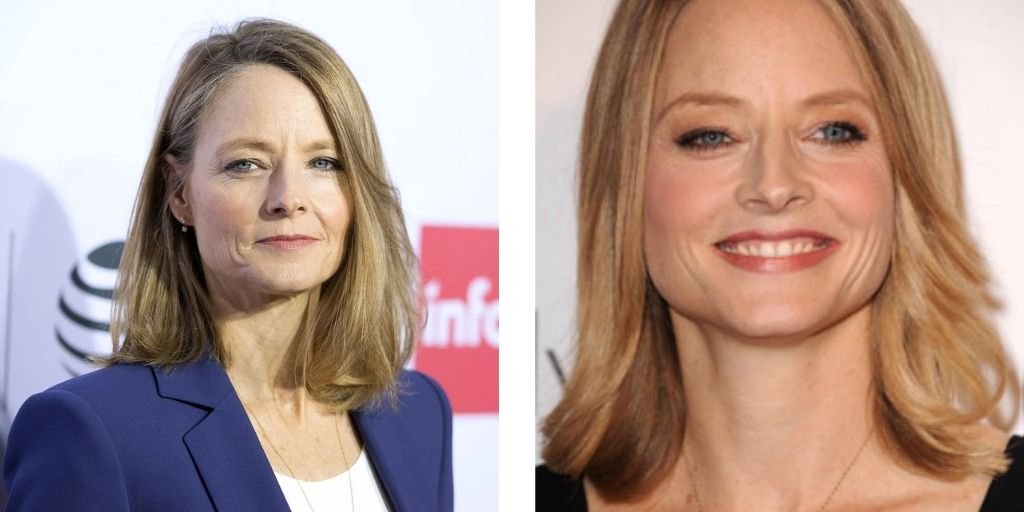
Jodie Foster is one of those rare Hollywood figures whose career has never been defined by a single role. From appearing in commercials as a child to becoming an acclaimed actress, director, and producer, she has spent decades building a reputation for thoughtful choices and memorable performances. But what makes her journey so interesting? It is the way she moved from child stardom into serious adult cinema while also developing a successful career behind the camera.
Her story includes breakthrough performances, award-winning films, television work, directing projects, and a determination to keep learning. Rather than simply following Hollywood trends, she has often chosen challenging characters and stories. Her career is like a long film with several acts: each chapter reveals a different side of her talent.
Early Life and Childhood in Los Angeles
Jodie Foster was born Alicia Christian Foster on November 19, 1962, in Los Angeles, California. She grew up in a family environment that encouraged her early involvement in entertainment. Her mother, Evelyn “Brandy” Foster, played an important role in managing her early career.
Foster began working in front of the camera when she was very young. She appeared in commercials and television programs, gaining experience at an age when many children were still focused entirely on school and play.
That early exposure helped her understand the demanding nature of show business. She learned how auditions worked, how productions operated, and how to perform in front of cameras.
However, being a successful child performer can be complicated. A young actor has to balance education, family life, friendships, and an unusual level of public attention. Foster managed to continue her education while building a career.
Her intelligence and curiosity were also noticeable beyond acting. She eventually attended Yale University, where she studied literature. Education became an important part of her identity and demonstrated that she wanted a life beyond simply being a Hollywood performer.
The Beginning of Her Acting Career
Foster’s professional career developed rapidly during the 1960s and 1970s. She appeared in television shows and films while still a child, gradually taking on more substantial parts.
One of the notable early films in her career was Napoleon and Samantha (1972), where she appeared alongside Michael Douglas and Johnny Whitaker. She continued working steadily, gaining experience with different directors and performers.
Another memorable early project was Freaky Friday (1976), a family comedy in which Foster played Annabel Andrews. The film became an important part of her transition from child performer toward more mature roles.
Yet it was not simply the number of movies that mattered. Foster was beginning to demonstrate that she could handle characters with personality, conflict, and emotional depth.
She also worked with respected filmmakers and actors, giving her an education that could not be learned from a classroom alone. Every production became another opportunity to understand storytelling.
Taxi Driver and a Major Breakthrough
One of the most important turning points in Foster’s career came with Taxi Driver, Martin Scorsese’s 1976 psychological drama.
In the film, Foster played Iris, a young runaway caught in a dangerous world. The role was dramatically different from the lighter material she had previously performed.
The movie starred Robert De Niro as Travis Bickle and became one of the most discussed American films of its era.
Foster’s performance attracted significant attention. Because of her age, the production required careful arrangements and professional safeguards. Her older sister, Connie, served as a body double for certain scenes.
The role demonstrated something important: Foster was capable of taking on serious material and standing alongside major adult performers.
The film also became a major cultural reference point, and Foster’s performance remains one of the defining achievements of her early career.
For a young actor, that kind of role could easily become a permanent label. Foster, however, continued moving forward rather than allowing one successful character to define her entire professional identity.
Education and Life at Yale
While many young performers might have focused entirely on Hollywood, Foster took another path.
She enrolled at Yale University in the early 1980s and studied literature. Her time at Yale was important because it gave her space to develop outside the entertainment industry.
Imagine someone spending their childhood on movie sets and then entering a university environment where they could simply be a student. That contrast must have been significant.
Foster continued acting during parts of her college years, but education remained an important priority.
She graduated from Yale in 1985. Her academic experience later became part of the broader story of a performer who wanted to understand not only acting but also ideas, language, culture, and storytelling.
Her education also helped reinforce the public perception that she was unusually serious about intellectual pursuits. More importantly, it gave her another foundation on which to build a long career.
The Accused and an Academy Award
Foster reached another major milestone with The Accused (1988), directed by Jonathan Kaplan.
The film dealt with sexual violence, the legal system, and the struggle for justice. Foster played Sarah Tobias, a woman seeking accountability after a traumatic assault.
The material was difficult and emotionally demanding. Foster’s performance received widespread critical recognition, and she won the Academy Award for Best Actress for the role.
The victory established her as one of the leading dramatic performers of her generation.
What made the achievement particularly notable was the contrast between her earlier image as a child performer and the mature, demanding role she had taken on.
Rather than relying on glamour or conventional movie-star appeal, she built her performance around emotional intensity and character development.
The film remains an important part of her career because it showed how she could use her visibility as a performer to participate in serious storytelling.
The Silence of the Lambs and Clarice Starling
In 1991, Foster starred as Clarice Starling in The Silence of the Lambs, directed by Jonathan Demme.
The film was adapted from Thomas Harris’s novel and featured Anthony Hopkins as the brilliant but terrifying Hannibal Lecter.
Clarice is a young FBI trainee investigating a series of murders. She is intelligent, determined, and still developing her confidence within a male-dominated professional environment.
Foster’s performance brought emotional realism to the character. Clarice is not portrayed as someone who already has every answer. Instead, viewers watch her learn, investigate, question, and confront frightening situations.
The movie became a huge success and earned major awards. Foster won her second Academy Award for Best Actress for the performance.
The Silence of the Lambs also became one of the rare films to win the Academy Awards for Best Picture, Director, Actor, Actress, and Adapted Screenplay.
Clarice Starling became one of Foster’s most recognizable characters. Decades later, the role remains closely associated with her career.
Other Memorable Movies
Foster’s filmography extends far beyond her two Oscar-winning performances.
She appeared in Maverick (1994), a Western comedy starring Mel Gibson and James Garner. The movie allowed her to display a lighter and more playful side.
She later starred in Contact (1997), based on the novel by Carl Sagan. Foster played Dr. Ellie Arroway, a scientist searching for evidence of intelligent life beyond Earth.
The role suited Foster’s ability to portray characters driven by curiosity and determination. Contact also gave audiences a thoughtful science-fiction story focused as much on humanity and belief as on technology.
Another important project was Panic Room (2002), directed by David Fincher. Foster played Meg Altman, a mother trapped inside a specially designed room during a home invasion.
The movie demonstrated her ability to carry a tense thriller through a largely contained performance.
She also appeared in films such as Flightplan, Inside Man, The Brave One, Carnage, Elysium, and Hotel Artemis.
Across these projects, her roles varied considerably. Some were dramatic, some suspenseful, some comedic, and others connected to science fiction or social themes.
That variety has been one of the defining characteristics of her career.
Becoming a Director
Acting was only one part of Foster’s ambitions.
She began directing feature films with Little Man Tate in 1991. The film starred Foster as a single mother raising a gifted child and explored questions about intelligence, family, and belonging.
Her next major directing project was Home for the Holidays (1995), a family comedy-drama starring Holly Hunter and Robert Downey Jr.
Directing requires a different set of skills from acting. An actor concentrates primarily on a character’s performance, while a director must think about the entire production.
Where should the camera be placed? How should the scene move? What tone should the actors create? How should editing, music, lighting, and performances work together?
Foster gradually developed a career behind the camera that became almost as interesting as her work in front of it.
She later directed The Beaver (2011), starring Mel Gibson, and Money Monster (2016), featuring George Clooney and Julia Roberts.
Her directing career demonstrated that she was interested not only in performing stories but also in shaping them.
Television Work and Directing Later in Her Career
Although Foster is strongly associated with movies, she has also become an important television director.
As television entered a period of increasingly ambitious storytelling, Foster directed episodes of several major series.
Her television directing credits include episodes of Black Mirror, Orange Is the New Black, House of Cards, Tales from the Loop, and True Detective, among others.
Directing television can be particularly demanding because individual episodes must fit within an established world while still having their own rhythm and emotional identity.
Foster’s experience as an actor likely gave her a valuable perspective when communicating with performers. She understood what it felt like to stand on the other side of the camera.
Her continued work in television also showed that her career was not limited to the traditional movie-star path.
Awards and Professional Recognition
Foster has received some of the entertainment industry’s most significant honors.
She has won two Academy Awards for Best Actress, for The Accused and The Silence of the Lambs.
She has also received nominations and honors from organizations such as the Golden Globes and other major film institutions.
In 2013, she received the Cecil B. DeMille Award, recognizing her outstanding contributions to the world of entertainment.
In 2021, Foster won the Golden Globe for Best Supporting Actress for her role in The Mauritanian.
Her career recognition reflects several different aspects of her work: acting, directing, producing, and her long-term contribution to cinema.
Perhaps the most interesting element is that her career has continued evolving rather than simply repeating the same formula.
Personal Life and Public Image
Foster has generally maintained a relatively private approach to her personal life.
She has two sons, Charles and Kit, and has often kept family matters away from the constant attention that can accompany celebrity.
She publicly acknowledged her sexuality during a 2013 Golden Globes acceptance speech, after years of intense public speculation.
In 2014, Foster married photographer and actress Alexandra Hedison.
Unlike some celebrities whose private lives become central to their public image, Foster has often allowed her professional work to speak for itself.
That privacy has been part of her public identity. She has remained a recognizable Hollywood figure without making every aspect of her life available to the public.
Jodie Foster’s Lasting Legacy
What makes Foster’s career remarkable is not simply the awards or famous films. It is the longevity and variety.
She began as a child performer, became a major dramatic actress, studied at Yale, won two Oscars, directed feature films, produced projects, and later became a respected television director.
Few careers follow such a broad path.
Her work also demonstrates that Hollywood success does not have to mean remaining in one category. An actor can become a filmmaker. A child star can become an established adult performer. A famous actress can step behind the camera and create stories from another perspective.
For many viewers, Foster’s career is a reminder that a long professional life can be built through curiosity and reinvention.
Her legacy is therefore larger than any single character. Clarice Starling may remain one of her most recognizable performances, but it represents only one chapter in a much bigger story.
Conclusion
Jodie Foster’s career has crossed generations, genres, and creative roles. From early television appearances and Taxi Driver to The Accused, The Silence of the Lambs, Contact, and her work as a director, she has repeatedly challenged herself. Her journey shows how talent can develop when it is combined with education, curiosity, discipline, and a willingness to explore new creative paths.
Rather than being remembered only as an actress, Foster has established herself as a filmmaker and a lasting figure in American cinema. Her career continues to offer audiences a remarkable example of reinvention.
Frequently Asked Questions
1. Who is Jodie Foster?
Jodie Foster is an American actress, director, and producer known for films including Taxi Driver, The Accused, The Silence of the Lambs, Contact, and Panic Room.
2. How many Academy Awards has Jodie Foster won?
She has won two Academy Awards for Best Actress, for The Accused in 1989 and The Silence of the Lambs in 1992.
3. What is Jodie Foster’s most famous role?
One of her most famous roles is FBI trainee Clarice Starling in The Silence of the Lambs. Her performance earned her an Academy Award for Best Actress.
4. Has Jodie Foster directed movies?
Yes. She has directed several films, including Little Man Tate, Home for the Holidays, The Beaver, and Money Monster.
5. Did Jodie Foster attend university?
Yes. Foster attended Yale University and graduated in 1985 with a degree in literature.




