
Diane Keaton: Amazing Life, Career, Movies, Style & Legacy
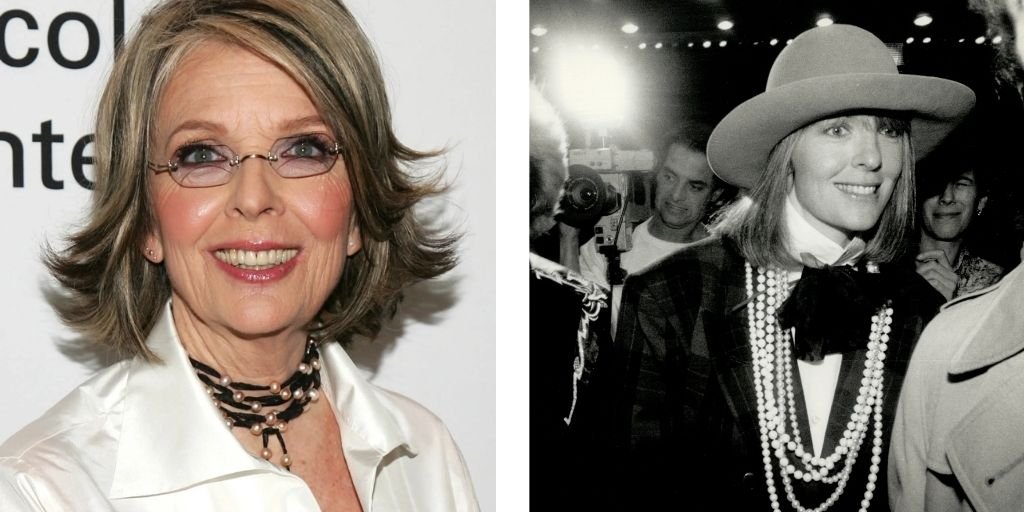
Diane Keaton is one of those rare Hollywood stars whose name immediately brings a certain feeling to mind. She has made audiences laugh, cry, think, and sometimes simply smile at the way she approaches life. From serious dramas to romantic comedies, she has built a career that has lasted for decades while remaining unmistakably her own.
Her journey includes unforgettable performances in films such as The Godfather, Annie Hall, Manhattan, Reds, Baby Boom, Father of the Bride, The First Wives Club, Something’s Gotta Give, and Book Club. She has also become famous for her distinctive fashion, love of hats, photography, architecture, and her thoughtful approach to aging.
But what makes her story especially interesting? It is not simply the number of movies she has made. It is the way she has continually reinvented herself without losing the personality that made audiences notice her in the first place.
Early Life and Childhood
Diane Hall Keaton was born on January 5, 1946, in Los Angeles, California. Growing up in Southern California gave her an early connection to the world of entertainment, but becoming a major Hollywood actress was not something that happened overnight.
As a young woman, she developed an interest in acting and eventually studied at Santa Ana College before moving toward theater. Her stage work became an important part of her early development because live performance demanded confidence, timing, and the ability to connect with an audience.
That experience helped shape the performer audiences would later see on screen.
A different kind of Hollywood dream
Many aspiring actors imagine success as a straight road: study acting, get discovered, become famous. Keaton’s career was more like a winding road with several unexpected turns.
Her theatrical background gave her an opportunity to develop her craft before becoming a major film star. She eventually moved to New York and became involved with the stage production of Hair, an experience that placed her closer to the professional acting world.
Broadway would soon become an important stepping stone.
Broadway and the Beginning of Her Acting Career
Keaton’s breakthrough on Broadway came with Play It Again, Sam, written by Woody Allen. Her work in the production attracted attention and helped establish an artistic relationship with Allen that would continue for years.
The transition from theater to film can be difficult. A stage actor has to project emotions to a large room, while a film actor may need to communicate an entire feeling through a tiny facial expression.
Keaton proved capable of making that transition.
Her early performances demonstrated something that would become central to her career: she could be funny without turning every moment into a joke.
That quality became one of her greatest strengths.
Diane Keaton and The Godfather
In 1972, Keaton appeared as Kay Adams in Francis Ford Coppola’s The Godfather. The film became one of the most influential American movies of its era, and Keaton’s role placed her alongside Marlon Brando, Al Pacino, Robert Duvall, James Caan, and other major performers. The Academy’s own historical material lists Keaton among the principal cast.
Kay is not a gangster. She is an outsider who gradually becomes connected to the Corleone family and Michael Corleone’s increasingly complicated life.
That position makes the character fascinating.
The importance of Kay
Kay provides an important perspective on the world surrounding Michael. She begins with expectations about family, love, and ordinary life, but those expectations are challenged as Michael’s world becomes darker.
Keaton’s performance is controlled rather than flashy. She does not need to dominate every scene to make the character memorable.
She returned as Kay in The Godfather Part II, where the character’s relationship with Michael becomes even more complicated. The Academy’s program for the film describes Kay as Michael’s unhappy wife and identifies Keaton among the cast.
These performances helped establish her as a serious dramatic actress.
Annie Hall and an Oscar-Winning Performance
If The Godfather introduced Keaton to a huge international audience, Annie Hall helped define her as a star.
Released in 1977, Annie Hall became a major part of her career. Keaton played the title character, a woman whose personality, humor, insecurity, independence, and unusual fashion became central to the movie.
At the 50th Academy Awards in 1978, Keaton won the Academy Award for Actress in a Leading Role for Annie Hall. The Academy records confirm the victory, with Keaton listed ahead of nominees including Anne Bancroft, Jane Fonda, Shirley MacLaine, and Marsha Mason.
The film itself also won Best Picture, while receiving awards for directing and screenplay.
Why Annie Hall mattered
Annie Hall was more than a romantic-comedy character.
She felt different from the polished female characters audiences were accustomed to seeing. She could be awkward, funny, thoughtful, uncertain, confident, and contradictory.
In many ways, Keaton’s performance made imperfection attractive.
Her clothes also became closely associated with the character. Loose-fitting jackets, ties, trousers, vests, and hats became part of a look that influenced fashion well beyond the movie.
A Remarkable Run of Movies
Following Annie Hall, Keaton continued working across genres.
She appeared in films such as Interiors, Manhattan, Reds, Shoot the Moon, and The Little Drummer Girl. Her role in Reds earned her another Academy Award nomination for Actress in a Leading Role at the 1982 ceremony.
This period demonstrated that she was not dependent on one type of character.
She could move between comedy and drama while maintaining a recognizable screen presence.
Reds
In Reds, Keaton portrayed journalist and writer Louise Bryant opposite Warren Beatty. The film explored politics, journalism, relationships, and revolutionary ideals.
Her performance was dramatic and emotionally demanding, showing another side of her abilities.
Manhattan
Her work in Manhattan continued her collaboration with Woody Allen and placed her in another sophisticated relationship drama.
Rather than repeating the Annie Hall formula, Keaton continued exploring characters with different emotional circumstances.
Romantic Comedies and Mainstream Success
During the 1980s and 1990s, Keaton increasingly became associated with successful mainstream movies.
One notable example was Baby Boom, where she played J.C. Wiatt, a successful career woman whose life changes dramatically after becoming responsible for a baby.
The movie allowed Keaton to combine humor with a relatable question: What happens when the life you carefully planned suddenly changes?
That question remains relevant decades later.
She later appeared in Father of the Bride, playing opposite Steve Martin. The movie became a popular family comedy and introduced Keaton to another generation of viewers.
She also appeared in The First Wives Club, alongside Goldie Hawn and Bette Midler.
The movie became especially memorable for its friendship-centered story and its portrayal of women rebuilding their lives after difficult relationships.
Something’s Gotta Give and a Later Career
Keaton continued to demonstrate that age did not have to mean disappearing from leading roles.
In 2003, she starred in Something’s Gotta Give opposite Jack Nicholson. Her performance earned her another Academy Award nomination for Actress in a Leading Role at the 2004 ceremony.
The film mixed romance, comedy, family relationships, and questions about growing older.
A different kind of romantic heroine
Keaton’s character, Erica Barry, is not presented as a stereotypical young romantic lead. She is an established woman with her own career and emotional history.
That distinction helped make the film particularly appealing to mature audiences.
Keaton demonstrated that romance could remain interesting, funny, and meaningful later in life.
The Family Stone, Because I Said So and Other Films
Keaton continued taking roles that explored family relationships.
The Family Stone gave her the opportunity to play the mother at the center of a complicated family gathering. The film balanced comedy with emotional drama.
She later appeared in Because I Said So, another comedy built around family relationships and a strong mother-daughter dynamic.
Throughout these films, Keaton often played women who were independent but emotionally complicated.
That became one of the most recognizable elements of her career.
Book Club and a New Generation of Fans
In 2018, Keaton starred in Book Club with Jane Fonda, Candice Bergen, and Mary Steenburgen.
The movie focused on four longtime friends whose lives change after reading a provocative book.
Its appeal came partly from its central idea: friendship, romance, curiosity, and personal growth do not belong to one particular age group.
Keaton’s involvement helped reinforce her connection with audiences who had followed her career for decades while also introducing her to younger viewers.
She returned for Book Club: The Next Chapter. The Academy’s records list Keaton alongside Fonda, Bergen, and Steenburgen among the film’s actresses.
Diane Keaton’s Unique Fashion Style
Talking about Keaton without discussing fashion would leave out a major part of her public identity.
Her style has always been distinctive.
She is particularly associated with hats, tailored jackets, trousers, ties, vests, long coats, and layered clothing. Instead of following every fashion trend, she developed a recognizable personal aesthetic.
Fashion as self-expression
For Keaton, clothing often appears to be less about fitting into a standard image and more about creating a personal identity.
Her approach can be compared to an artist developing a signature brushstroke. You might not know the designer or brand, but you can recognize the person wearing it.
The connection between Keaton and menswear-inspired clothing became especially visible after Annie Hall, whose costume design became an important part of the film’s cultural impact.
Her style has remained part of her celebrity identity for decades.
Architecture, Photography and Other Interests
Keaton’s creative interests extend beyond acting.
She has developed a strong interest in architecture, historic properties, photography, and design. These interests have contributed to her image as someone who enjoys creative projects outside the traditional Hollywood spotlight.
Her appreciation for architecture is especially notable because it reflects an interest in preservation and visual history.
For Keaton, an old building can tell a story in much the same way a movie can.
The walls, windows, furniture, photographs, and surrounding landscape can all reveal something about the people who lived there.
This wider creative curiosity has helped make her career feel broader than acting alone.
Diane Keaton’s Personal Life and Family
Keaton has generally maintained a private approach to many aspects of her personal life.
She has never been defined solely by marriage or by a conventional Hollywood family narrative. Instead, her public identity has largely centered on her work, creative interests, and family.
She became a mother through adoption, welcoming daughter Dexter and later son Duke.
Motherhood became another important part of her life and has occasionally influenced the way she discusses family, responsibility, and personal priorities.
Rather than presenting one fixed idea of what adulthood should look like, Keaton has often followed her own path.
Awards, Recognition and Career Milestones
Keaton’s awards history reflects the range of her career.
Her most famous competitive Oscar achievement came with Annie Hall, for which she won Actress in a Leading Role at the 1978 Academy Awards.
She also received Academy Award nominations for Reds, Marvin’s Room, and Something’s Gotta Give. The Academy records document the nominations for Reds in 1982, Marvin’s Room in 1997, and Something’s Gotta Give in 2004.
These nominations span several decades.
That longevity is important.
Many actors have periods when they dominate Hollywood and then gradually disappear from major productions. Keaton’s career has followed a different pattern. She has repeatedly found opportunities in comedy, drama, romance, family films, and ensemble productions.
Why Diane Keaton Remains Relevant
Why does Keaton continue to attract attention after such a long career?
Perhaps the simplest answer is that she never completely separated herself from her individuality.
She did not need to become the same kind of celebrity as everyone else.
Her voice, humor, clothing, acting style, interests, and willingness to play women with real flaws created an identity audiences could recognize.
She also helped broaden the image of what a female movie star could look like at different stages of life.
Her characters are often allowed to be imperfect. They can make mistakes. They can fall in love. They can change careers, rebuild relationships, become mothers, experience disappointment, or discover something new about themselves.
That human quality is one reason her movies continue to connect with viewers.
Diane Keaton’s Lasting Legacy
Diane Keaton’s legacy is not limited to one Oscar, one movie, or one fashion trend.
It is built from decades of work.
From Kay Adams in The Godfather to Annie Hall, Louise Bryant in Reds, J.C. Wiatt in Baby Boom, Erica Barry in Something’s Gotta Give, and her role in Book Club, she has created characters that represent different stages and experiences of life.
Her career is like a long-running book with chapters written in completely different styles. Some chapters are funny. Others are dramatic. Some are romantic, while others are deeply personal. Yet the same distinctive voice runs through all of them.
For audiences, that may be the most enduring part of her appeal.
Diane Keaton did not simply spend decades in Hollywood. She created a career that allowed her to remain unmistakably herself.
Conclusion
Diane Keaton’s story is ultimately a story about individuality, creativity, and longevity. From Broadway to major Hollywood productions, she built a career by taking characters seriously while never being afraid of humor or vulnerability.
Her Academy Award-winning performance in Annie Hall remains a defining achievement, while films such as The Godfather, Reds, Baby Boom, Father of the Bride, The First Wives Club, Something’s Gotta Give, and Book Club demonstrate the remarkable variety of her work.
Her fashion has become almost as recognizable as her acting, and her interests in architecture, photography, and design have added further dimensions to her public identity.
Most importantly, Keaton has shown that a career does not have to follow a predictable formula. You can change direction, explore new interests, take different kinds of roles, and continue creating long after others expect you to slow down.
That may be the most valuable lesson in her remarkable Hollywood journey.
FAQs
1. What is Diane Keaton best known for?
Diane Keaton is best known for films including Annie Hall, The Godfather, The Godfather Part II, Reds, Baby Boom, Father of the Bride, The First Wives Club, Something’s Gotta Give, and Book Club.
2. Did Diane Keaton win an Academy Award?
Yes. Diane Keaton won the Academy Award for Actress in a Leading Role for Annie Hall at the 50th Academy Awards in 1978.
3. What role did Diane Keaton play in The Godfather?
Keaton played Kay Adams, who becomes Michael Corleone’s wife. She appeared in both The Godfather and The Godfather Part II.
4. Why is Diane Keaton famous for wearing hats?
Hats became an important part of Keaton’s recognizable personal style, while her menswear-inspired clothing was particularly associated with her appearance in Annie Hall and her fashion identity over the years.
5. What are some of Diane Keaton’s most popular movies?
Some widely recognized films from her career include The Godfather, Annie Hall, Manhattan, Reds, Baby Boom, Father of the Bride, The First Wives Club, Something’s Gotta Give, The Family Stone, and Book Club.




