
Frances McDormand: 10 Powerful Chapters of Life, Career, Movies & Legacy
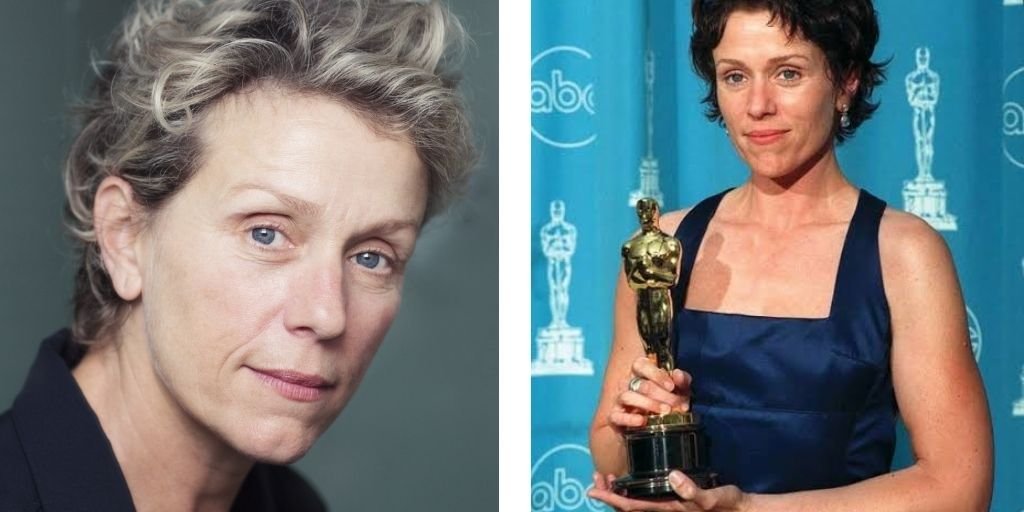
Frances McDormand has built a career that feels refreshingly different from the usual Hollywood story. Rather than chasing glamorous roles or trying to fit a familiar image of a movie star, she has often chosen complicated, ordinary, funny, stubborn, and deeply human characters. That choice has made her one of the most respected performers of her generation.
From Fargo to Three Billboards Outside Ebbing, Missouri and Nomadland, her performances have earned major awards and lasting admiration. The Academy’s official records show Oscar nominations for Mississippi Burning, Fargo, Almost Famous, North Country, Three Billboards, and Nomadland, with wins for Fargo, Three Billboards, and Nomadland.
But what makes her career so interesting? It is not simply the number of awards. It is the way she disappears into characters while still bringing a recognizable honesty to the screen.
Early Life and the Road Toward Acting
Frances Louise McDormand was born on June 23, 1957, in Chicago, Illinois. She was adopted and grew up in a family connected to the Disciples of Christ ministry. Because of her father’s work, her childhood involved moving between different places before the family eventually settled in Pennsylvania.
Her interest in acting became serious during high school. One important early experience came when she played Lady Macbeth in a school production. The role exposed her to the emotional power of theater and helped point her toward a professional career.
She later attended Bethany College in West Virginia, where she studied theater. After graduation, she continued her education at the Yale School of Drama, one of America’s well-known institutions for theatrical training.
Think of acting as learning a musical instrument. Natural talent can help, but training teaches you how to control the instrument. For McDormand, theater education gave her a strong foundation for the demanding career that followed.
From Theater to Her First Film Role
After Yale, McDormand worked in theater and began building professional experience. Her transition into film came through an unexpected connection.
She became friends with fellow actress Holly Hunter, whom she knew from Yale. Through Hunter, McDormand met Joel and Ethan Coen. The brothers were preparing their first feature film, Blood Simple, and McDormand was cast in the leading role.
The film, released in 1984, introduced audiences to a performer who did not seem interested in conventional Hollywood polish. Her approach was grounded, direct, and believable.
This collaboration with the Coen brothers would become one of the defining professional relationships of her career.
Over the years, she appeared in several Coen projects, and the partnership helped create some of the most memorable characters in American independent and mainstream cinema.
Building a Distinctive Acting Style
What makes McDormand’s performances stand out?
One answer is restraint.
She rarely needs to announce what a character is feeling. Instead, she often lets a facial expression, pause, movement, or simple line of dialogue do the work.
Her characters can be stubborn without becoming cartoonish. They can be emotional without becoming overly dramatic. They can be funny without appearing to tell jokes.
That balance is difficult.
A performer can sometimes disappear behind costumes, accents, makeup, or spectacular action scenes. McDormand often does something almost opposite. She allows the character’s personality to become the center of attention.
Her filmography includes dramas, comedies, crime stories, independent films, television projects, and ensemble productions. Among her notable credits are Mississippi Burning, Miller’s Crossing, Short Cuts, Primal Fear, Almost Famous, North Country, Burn After Reading, Moonrise Kingdom, Olive Kitteridge, Three Billboards Outside Ebbing, Missouri, and Nomadland.
The Breakthrough of Fargo
If one role transformed McDormand’s career, it was Marge Gunderson in Fargo.
Released in 1996 and directed by Joel Coen, Fargo combines crime, dark humor, violence, and ordinary Midwestern life. McDormand plays Marge, a pregnant police chief investigating a series of increasingly disturbing crimes.
At first glance, Marge might seem like a relatively simple character. She is polite, professional, friendly, and practical.
But that simplicity is exactly what makes her memorable.
Marge does not need to act like a stereotypical action hero. She investigates patiently, asks questions, notices details, and keeps going. Her everyday personality becomes a source of strength.
McDormand’s performance earned her the Academy Award for Best Actress. The Academy’s official database records the 1996 nomination and win for her portrayal of Marge Gunderson.
The role became a defining moment because it showed that a quiet, unconventional character could carry a major film.
Almost Famous and a Wider Range
McDormand did not simply repeat the Fargo formula.
In 2000, she appeared in Cameron Crowe’s Almost Famous, playing Elaine Miller, the mother of aspiring young journalist William Miller.
The film follows a teenager who gets the opportunity to write about a rock band while traveling with them. McDormand’s character represents the protective parent who worries about her son’s safety while also trying to understand his ambitions.
The performance demonstrated another side of her talent.
Instead of playing a police officer or a crime-related character, she created someone recognizable to families everywhere: a mother who can be loving, controlling, intelligent, funny, and anxious at the same time.
She received an Academy Award nomination for supporting actress for the role.
The film also became an important part of her career because it showed how naturally she could fit into an ensemble cast without losing her identity as a performer.
North Country and Serious Drama
In 2005, McDormand appeared in North Country, a drama starring Charlize Theron.
She played Glory Dodge, a character involved in the story of women working in a difficult mining environment. The film dealt with workplace harassment and the challenges faced by women who challenged an established culture.
McDormand’s performance earned another Academy Award nomination for supporting actress.
This part of her career is important because it highlights how frequently she chooses characters with emotional weight rather than simply selecting roles designed to make her look glamorous.
Her filmography shows a willingness to play people who feel as though they could exist outside the movie.
That quality has become one of her trademarks.
Olive Kitteridge and Television Success
McDormand’s achievements were not limited to cinema.
In 2014, she starred in the HBO miniseries Olive Kitteridge, based on Elizabeth Strout’s Pulitzer Prize-winning novel.
The title character is complicated. Olive is intelligent and perceptive, but she can also be difficult, blunt, lonely, and emotionally challenging. The story examines relationships, aging, family, grief, and everyday life in a small New England community.
McDormand’s performance earned her an Emmy Award for outstanding lead actress in a limited series or movie. The production itself received seven Emmy Awards.
The project demonstrated her ability to sustain a character across a longer story rather than relying on a two-hour film structure.
Olive is not designed to be universally lovable. Instead, she is human.
And perhaps that is one reason McDormand’s performances connect so strongly with viewers: she is willing to let characters remain imperfect.
Three Billboards Outside Ebbing, Missouri
Another major turning point came with Three Billboards Outside Ebbing, Missouri.
McDormand played Mildred Hayes, a mother whose daughter has been murdered. Frustrated by the lack of progress in the investigation, Mildred rents three billboards to publicly challenge local authorities.
The character is angry, determined, sarcastic, wounded, and unpredictable.
It would have been easy to make Mildred a simple symbol of grief or justice. Instead, the film gives her contradictions. She can be courageous and cruel. She can be compassionate and confrontational.
McDormand’s performance earned her another Academy Award for Best Actress. The Academy’s records list the 2017 nomination and win.
Her acceptance speech also drew attention to the issue of inclusion in Hollywood. She used the moment to highlight the idea of an “inclusion rider,” a contractual provision intended to encourage greater diversity in film productions.
The role reinforced her reputation for choosing emotionally demanding material.
Nomadland and a Different Kind of Performance
In 2020, McDormand starred in Nomadland, directed by Chloé Zhao.
She played Fern, a woman who travels through the American West after losing the conventional stability of home and employment.
Unlike many traditional Hollywood stories, Nomadland is quiet. There are long stretches where little happens in the conventional sense. Instead, the film focuses on landscapes, conversations, temporary jobs, memories, and the people Fern encounters.
McDormand’s performance is deliberately understated.
Fern does not constantly explain herself. Viewers learn about her through small moments.
That approach fits the film perfectly.
McDormand won the Academy Award for Best Actress for the role. The film also won Best Picture, and McDormand was among its producers.
The Academy’s records also note that McDormand became the third woman, after Barbra Streisand and Oprah Winfrey, to receive both an acting nomination and a Best Picture nomination in the same year.
Nomadland therefore represents more than another successful performance. It illustrates how McDormand’s career developed from acting into broader creative involvement.
Working With the Coen Brothers
Any discussion of McDormand’s career would be incomplete without discussing Joel and Ethan Coen.
Their professional relationship began with Blood Simple and continued across several projects.
McDormand appeared in films connected to the Coens including Blood Simple, Raising Arizona, Miller’s Crossing, Fargo, The Man Who Wasn’t There, Burn After Reading, and Hail, Caesar!.
The relationship has been unusual because the Coens’ films often mix humor with darkness, and McDormand is particularly effective in that territory.
Her performances can carry both sides at once.
She can make an ordinary conversation funny without turning it into a comedy routine. She can appear calm during an unsettling situation without making the scene feel unrealistic.
That is a rare skill.
Her Life Beyond the Screen
McDormand’s personal life has also been closely connected to the film world.
She married filmmaker Joel Coen in 1984. Together, they have raised their family while maintaining careers in the entertainment industry.
Their son, Pedro McDormand Coen, was adopted from Paraguay.
McDormand has generally maintained a relatively private approach to her personal life compared with many major Hollywood celebrities. This privacy has allowed much of the public conversation around her to remain focused on her work.
That distinction is increasingly unusual in an entertainment culture where an actor’s private life can sometimes become almost as important as their films.
For McDormand, the performances usually remain the main story.
Awards and Career Recognition
McDormand’s award history is remarkable.
Her Academy Award nominations include:
- Mississippi Burning — Supporting Actress
- Fargo — Leading Actress, winner
- Almost Famous — Supporting Actress
- North Country — Supporting Actress
- Three Billboards Outside Ebbing, Missouri — Leading Actress, winner
- Nomadland — Leading Actress, winner
The Academy’s official database also records her Best Picture recognition as a producer of Nomadland and her Best Picture producing nomination for Women Talking.
Her career also includes television recognition, including the Emmy for Olive Kitteridge.
Yet awards alone do not explain her importance.
Some actors become associated with one iconic character. McDormand has created several.
Marge Gunderson feels completely different from Mildred Hayes. Fern feels different again. Elaine Miller is another personality altogether.
It is almost like watching the same painter use completely different canvases. The artist’s hand may be recognizable, but every finished picture tells another story.
Frances McDormand’s Acting Legacy
What will people remember about McDormand?
Her awards will certainly be part of the answer. So will Fargo, Three Billboards, Nomadland, and the other films that shaped her career.
But her larger legacy may be her approach to acting.
She has shown that a leading woman does not need to fit a single Hollywood image. She can be older, ordinary-looking, outspoken, awkward, funny, angry, tired, powerful, vulnerable, or contradictory.
She can play characters who are not designed to be immediately likable.
That is important because real people are complicated.
McDormand’s career repeatedly asks audiences to look beyond surface appearance. Her characters often begin as familiar types and then reveal unexpected layers.
She also demonstrates the value of choosing challenging material. Instead of building her career around one formula, she has moved between independent cinema, major productions, television, theater, comedy, drama, and filmmaking.
For aspiring actors, there is an especially useful lesson here: a career does not have to be built by constantly trying to become more famous. Sometimes it is built by becoming more interesting.
Why Frances McDormand Still Matters
Frances McDormand’s importance comes from the combination of talent, longevity, and artistic choices.
She has worked with celebrated filmmakers, earned major acting awards, taken on difficult characters, and continued to explore stories that do not always follow traditional Hollywood patterns.
Her performances are often memorable because they feel lived-in.
When she plays someone, we can imagine that person existed before the movie began and will continue living after the credits roll.
That is one of the greatest compliments an actor can receive.
Rather than simply showing audiences what a character is feeling, McDormand often makes viewers discover it themselves. She trusts the audience.
And perhaps that is why her strongest performances continue to stay with people long after the screen goes dark.
Conclusion
Frances McDormand has created a remarkable career by choosing substance over convention. From her early theater training and Blood Simple debut to Fargo, Almost Famous, Olive Kitteridge, Three Billboards Outside Ebbing, Missouri, and Nomadland, she has repeatedly demonstrated an ability to make complicated people feel real. Her three Best Actress Oscars and other major honors reflect a career filled with memorable work.
Her legacy is not simply about trophies. It is about the characters she has brought to life and the freedom she has shown in choosing them. For audiences, her films offer something more lasting than glamour: they offer people who feel human.
FAQs About Frances McDormand
1. Who is Frances McDormand?
Frances McDormand is an American actress and producer known for acclaimed performances in films and television. Her best-known roles include Marge Gunderson in Fargo, Mildred Hayes in Three Billboards Outside Ebbing, Missouri, and Fern in Nomadland.
2. How many Oscars has Frances McDormand won?
She has won three Academy Awards for Best Actress: for Fargo, Three Billboards Outside Ebbing, Missouri, and Nomadland.
3. What is Frances McDormand’s most famous movie?
Fargo is one of her most famous films and features her Oscar-winning performance as police chief Marge Gunderson. Other major films include Three Billboards Outside Ebbing, Missouri, Nomadland, and Almost Famous.
4. Did Frances McDormand win an Emmy?
Yes. She won an Emmy for her lead performance in the miniseries Olive Kitteridge, which was based on Elizabeth Strout’s novel.
5. Who is Frances McDormand married to?
Frances McDormand is married to filmmaker Joel Coen, one half of the Coen brothers filmmaking team. Their professional relationship has also resulted in several notable film collaborations.




