
Viola Davis: Inspiring Life, Career, Movies & Legacy
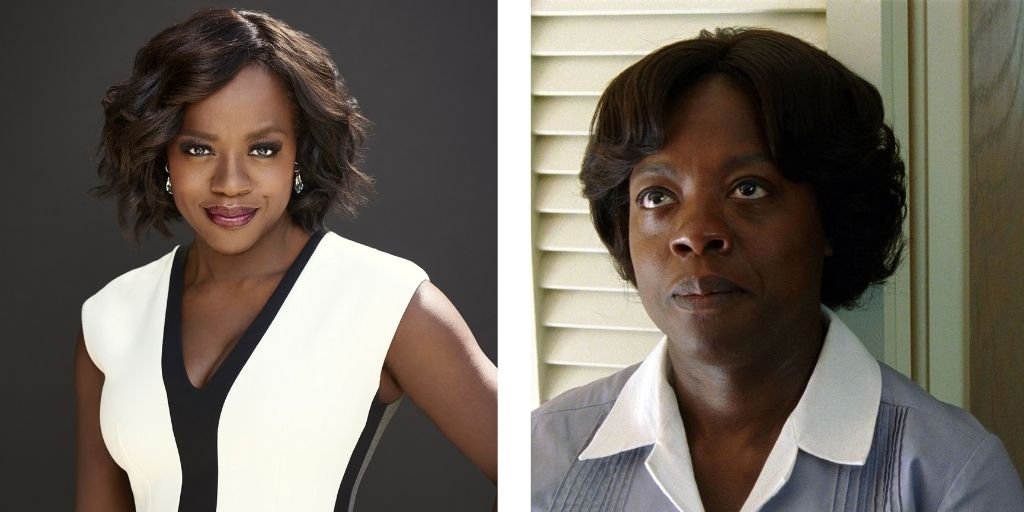
Viola Davis is more than an award-winning actress. She is a performer whose career has opened doors between theater, television, film, and publishing while bringing complicated characters to life with remarkable emotional depth. Born on August 11, 1965, in St. Matthews, South Carolina, Davis grew up in Rhode Island and eventually trained at The Juilliard School. Her journey from a financially difficult childhood to international recognition is one of persistence, talent, and a willingness to tell stories that matter.
Over the years, audiences have seen her in films such as Doubt, The Help, Fences, Ma Rainey’s Black Bottom, The Woman King, and Air, as well as the television drama How to Get Away with Murder. She has also earned major honors across entertainment, including an Academy Award, two Tony Awards, an Emmy, and a Grammy for the audiobook of her memoir Finding Me.
Her career is like a bridge built one strong performance at a time. Each role has connected her to a new audience while allowing her to remain closely tied to the craft that first inspired her: acting.
Early Life and Childhood
Growing up in Rhode Island
Although Davis was born in South Carolina, her family moved to Rhode Island, where she spent much of her childhood. Her early years were not filled with the comfort and opportunities often associated with Hollywood success. Financial hardship was part of her upbringing, and she has spoken openly about the difficult experiences that shaped her understanding of herself and the world around her.
Movies became an important escape. Watching performers on screen allowed her to imagine lives beyond her immediate circumstances. For a young girl facing challenges, storytelling could offer something powerful: the possibility of another future.
She discovered acting while still young, and what began as an interest gradually became a serious ambition. Rather than treating performance as a passing hobby, she worked toward developing the discipline necessary to make it a career.
Finding a voice through acting
Davis attended Rhode Island College, where she earned a theater degree in 1988. She later attended The Juilliard School, graduating in 1993. Her formal training gave her a foundation for the demanding work that followed.
Training did not guarantee fame. It gave her tools. The real challenge would be finding opportunities where those tools could be used.
That distinction is important when looking at her career. Talent may open a door, but persistence is often what keeps someone walking through it.
Viola Davis and the Beginning of Her Acting Career
Theater became her foundation
Davis entered professional acting through theater, a world where performers cannot hide behind editing, camera angles, or multiple takes. On stage, the actor has to connect directly with the audience.
Her Broadway debut came in 1996 in August Wilson’s Seven Guitars. The production gave her an early opportunity to work with one of America’s most respected playwrights and helped establish her reputation as a serious stage performer. She received a Tony nomination for her performance.
Her relationship with Wilson’s work would become an important part of her career.
In 2001, she appeared in King Hedley II and won the Tony Award for Featured Actress in a Play. Almost a decade later, she returned to Wilson’s Fences, playing Rose Maxson opposite Denzel Washington. Her performance earned her another Tony Award, this time for Actress in a Play.
These theater achievements were not simply early decorations on a résumé. They demonstrated that Davis could carry emotionally demanding material and create characters who felt like complete human beings.
Breakthrough in Hollywood
The power of Doubt
Davis had already appeared in numerous films and television productions before her breakthrough recognition, but Doubt became a particularly important moment.
Released in 2008, the film featured Davis as Mrs. Miller, the mother of a young boy at the center of a troubling situation involving a Catholic school. Her screen time was relatively brief, but the scene became one of the film’s most memorable moments.
That performance earned Davis her first Academy Award nomination for Best Supporting Actress.
Why was the performance so effective?
Part of the answer lies in restraint. Davis did not need endless dialogue to communicate fear, love, uncertainty, and determination. Her face, voice, pauses, and physical presence carried enormous emotional weight.
Sometimes the smallest scene can leave the largest mark.
A major role in The Help
In 2011, Davis starred as Aibileen Clark in The Help. Set in Mississippi during the Civil Rights era, the film explored relationships between Black domestic workers and white families.
Davis’s performance received widespread recognition and earned her an Academy Award nomination for Best Actress.
The role was significant, but Davis later expressed reservations about the way the story represented the voices of the domestic workers. Her reflections demonstrated an important part of her career philosophy: appearing in a successful film is not necessarily the same thing as believing a story has completely represented the people at its center.
That perspective would continue to influence her choices as both an actress and producer.
Becoming Annalise Keating
The role that changed television
In 2014, Davis began playing Annalise Keating in How to Get Away with Murder. The ABC legal drama created by Peter Nowalk and produced within Shonda Rhimes’ television world gave her a character unlike many conventional television leads.
Annalise was brilliant, complicated, powerful, vulnerable, and deeply imperfect. She was a professor and defense attorney, but the series repeatedly showed the person behind the professional image.
Davis brought enormous emotional range to the role.
In 2015, she won the Primetime Emmy Award for Outstanding Lead Actress in a Drama Series for playing Annalise. The Television Academy records the victory as part of the show’s awards history.
The Television Academy has also described Davis’s 2015 achievement as the first win by a Black actress in that category.
Her Emmy acceptance speech became an important cultural moment because she spoke about opportunity and representation in the entertainment industry.
A character audiences could not easily define
One reason Annalise remained compelling was that she was never presented as simply good or bad.
She could be confident and frightened. She could be compassionate and angry. She could make smart decisions and terrible ones.
That complexity made the character feel closer to real life.
People are rarely one thing all the time, and Davis understood that. Her performance allowed viewers to see Annalise not merely as a television lawyer, but as a person carrying years of emotional history.
Major Movies in Viola Davis’s Career
Fences
Fences represents one of the most important connections between Davis’s theater career and her film career.
Davis had already won a Tony for playing Rose Maxson on Broadway in 2010. She reprised the role in the 2016 film adaptation, directed by and starring Denzel Washington.
Rose is a wife and mother dealing with a marriage filled with disappointment, secrecy, and difficult choices. Davis gave the character an enormous emotional presence.
Her work earned the Academy Award for Best Supporting Actress at the 2017 Oscars. The Academy identifies Fences as her winning performance.
The achievement also created a rare connection between stage and screen. The Tony Awards note that Davis became one of the performers who won a Tony and later an Oscar for the same role.
Ma Rainey’s Black Bottom
In 2020, Davis starred as the legendary blues singer Ma Rainey in Ma Rainey’s Black Bottom, another adaptation of August Wilson’s work.
The movie placed her alongside Chadwick Boseman in a story about race, music, ambition, exploitation, and artistic control.
Davis received an Academy Award nomination for Best Actress for the role. The 2021 Academy Awards records list her among the nominees for Actress in a Leading Role.
Her transformation into Ma Rainey was striking because she did not simply imitate a historical performer. She created a character with authority, humor, frustration, confidence, and vulnerability.
The Woman King
Davis later took the lead in The Woman King, an action drama inspired by the Agojie, the all-female military unit of the West African Kingdom of Dahomey.
The film gave audiences another side of her abilities. Instead of focusing primarily on courtroom drama or family conflict, the movie required physical preparation and a commanding screen presence.
Her performance as General Nanisca showed that she could move comfortably into action while still grounding the character in emotional history.
Air
In Air, Davis portrayed Deloris Jordan, the mother of basketball legend Michael Jordan. The film dramatized the story behind Nike’s relationship with the young athlete.
According to reporting about the film’s production, Michael Jordan specifically wanted Davis to portray his mother.
Her performance gave the character an important role in the story rather than treating her simply as a background figure.
Viola Davis as a Producer
Creating opportunities through JuVee Productions
Davis and her husband, actor Julius Tennon, co-founded JuVee Productions in 2011. The company was created to develop and produce projects across film, television, theater, and digital media, with an emphasis on opportunities for underrepresented artists.
This move was important because Davis understood a problem that many performers experience: actors do not always control which stories get made.
Acting allows a person to step into an existing story. Producing allows that person to have a greater influence over which stories reach the screen.
For Davis, production became another way to expand representation.
Projects connected to the company have included The Woman King, demonstrating how her work behind the scenes can complement her performances in front of the camera.
Finding Me and Her Personal Story
Writing about the person behind the performer
In 2022, Davis published her memoir, Finding Me. The book explores her childhood, family experiences, struggles, ambitions, acting career, and personal growth.
Rather than presenting success as a straight road, the memoir examines the complicated journey behind it.
The audiobook became especially important in her career. Davis narrated the work herself, allowing listeners to hear her story directly from her own voice.
In 2023, she won the Grammy Award for Best Audio Book, Narration, and Storytelling Recording for Finding Me. The Recording Academy lists the victory in its official awards record.
That Grammy completed her collection of the four major American entertainment awards commonly represented by the acronym EGOT: Emmy, Grammy, Oscar, and Tony.
The achievement was remarkable not simply because of the awards themselves, but because each one came from a different part of her creative career.
Her Emmy came from television.
Her Oscar came from film.
Her Tonys came from theater.
Her Grammy came from storytelling through an audiobook.
Together, they form a picture of an artist who refused to remain in one lane.
Awards and Historic Achievements
A career across four major entertainment awards
Davis’s awards history illustrates how unusual her career has been.
Her two Tony Awards came for King Hedley II in 2001 and Fences in 2010.
Her Emmy came in 2015 for How to Get Away with Murder.
Her Academy Award came in 2017 for Fences.
Her Grammy arrived in 2023 for Finding Me.
She therefore became an EGOT winner, joining a relatively small group of entertainers who have won all four awards.
But awards alone do not explain her influence.
Her performances have also contributed to broader conversations about race, representation, women, aging, beauty, opportunity, and the kinds of characters that receive serious attention in Hollywood.
In 2025, the Television Academy inducted Davis into its Hall of Fame, adding another major recognition to her television career.
Representation and Cultural Impact
Why her roles matter
Davis has repeatedly discussed the importance of opportunity in the entertainment industry.
Her 2015 Emmy speech addressed the lack of substantial roles for women of color and emphasized the connection between representation and opportunity.
This has become an important part of how her career is understood.
Representation is not simply about placing different faces on a screen. It also concerns the depth of the characters being offered.
Is the character allowed to have flaws?
Can she be ambitious?
Can she be romantic?
Can she be angry?
Can she make mistakes?
Can she be the center of the story?
Davis’s career has repeatedly challenged narrow ideas about what a leading woman should look or sound like.
Her characters often feel fully human rather than designed to fit a single stereotype.
That is one reason her work has resonated with audiences far beyond individual movies and television shows.
Family, Marriage, and Life Beyond Acting
Her family life
Davis married actor Julius Tennon in 2003. The couple later adopted their daughter, Genesis.
While Davis is a highly visible public figure, she has also spoken through her memoir about the personal experiences that shaped her.
This balance between public success and private history is central to understanding Finding Me. Her story is not simply about awards or premieres. It is also about identity, family, childhood, self-worth, and learning to understand one’s own past.
Her personal story helps explain why storytelling has such a powerful place in her career.
She has often treated acting as more than pretending to be someone else. For her, performance can be a way of exploring human experience.
The Lasting Legacy of Viola Davis
An artist who expanded the definition of success
What will people remember about Davis decades from now?
Certainly, they will remember Rose Maxson, Annalise Keating, Ma Rainey, Aibileen Clark, Nanisca, and many other characters.
They will remember her Oscar, Emmy, Tonys, and Grammy.
They will remember Finding Me.
But her legacy is likely to be broader than a list of credits.
Davis has shown that an actor can move between theater, television, film, publishing, and production without losing the connection to serious storytelling.
Her career also demonstrates that success does not always arrive quickly. Her most celebrated achievements came after years of theater work, supporting roles, auditions, setbacks, and persistence.
That may be one of the most relatable parts of her story.
A career can look like an overnight success from the outside while actually taking decades to build.
Davis’s journey is a good example of that reality.
Her work has also helped create space for more complicated portrayals of Black women. Through both acting and producing, she has participated in a larger movement toward stories where underrepresented characters are not simply supporting figures but central human beings with their own ambitions and conflicts.
In that sense, her legacy is like a stage after the curtain rises: once one performer steps forward, others can see where they might stand.
Conclusion
Viola Davis’s career is a story of persistence, artistic discipline, and the search for meaningful stories. From a difficult childhood in Rhode Island to prestigious theater stages, major Hollywood films, television success, publishing, and producing, she has built a career across multiple forms of entertainment.
Her EGOT achievement brought together decades of work: Tony Awards for theater, an Emmy for television, an Oscar for film, and a Grammy for her memoir audiobook.
Yet the most interesting part of her story may not be the awards. It is the determination behind them. Davis has repeatedly shown that powerful storytelling can come from complicated lives, imperfect characters, and voices that have not always received enough space.
For audiences, her career offers more than entertainment. It offers a reminder that a person’s starting point does not have to determine where the journey ends.
FAQs About Viola Davis
1. Who is Viola Davis?
Viola Davis is an American actress, producer, and author known for films such as Fences, Doubt, The Help, Ma Rainey’s Black Bottom, and The Woman King, as well as the television series How to Get Away with Murder. She is also an EGOT winner.
2. What awards has Viola Davis won?
Davis has won two Tony Awards, an Emmy Award, an Academy Award, and a Grammy Award. Her Grammy win for the audiobook of Finding Me completed her EGOT achievement.
3. What movie won Viola Davis an Oscar?
Davis won the Academy Award for Best Supporting Actress for her performance as Rose Maxson in the 2016 film Fences.
4. What is Viola Davis’s memoir called?
Her memoir is titled Finding Me. Published in 2022, it explores her childhood, personal experiences, acting career, and journey toward self-understanding. The audiobook, narrated by Davis, won the 2023 Grammy for Best Audio Book, Narration, and Storytelling Recording.
5. Why is Viola Davis important to television history?
Davis made television history when she won the 2015 Emmy for Outstanding Lead Actress in a Drama Series for How to Get Away with Murder. The Television Academy identifies her as the first Black actress to win that category.




