
Doja Cat: The Bold Journey of a Genre-Bending Music Star
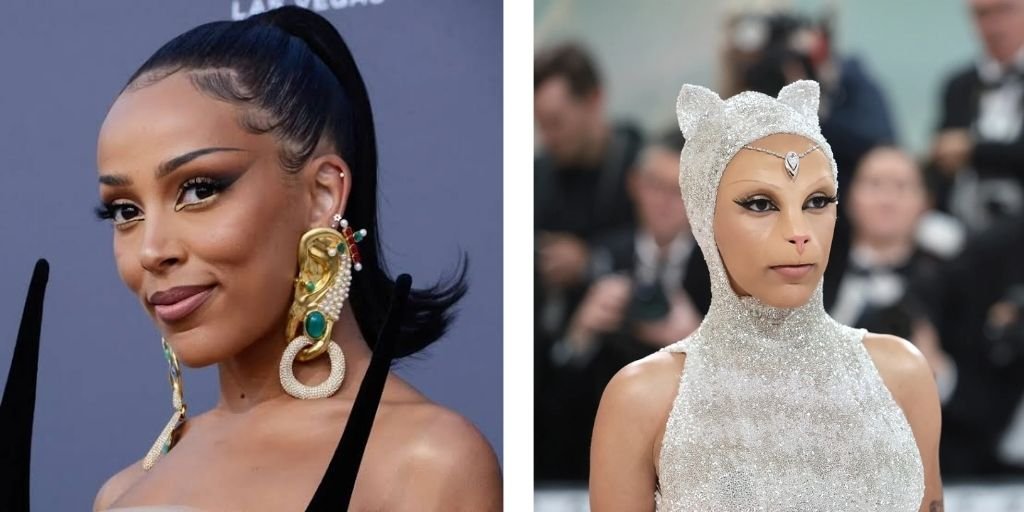
Doja Cat has built a career around refusing to stay in one box. One moment, she can deliver a catchy pop hook; the next, she can switch into sharp rap verses or experiment with a darker, more unusual sound. That ability to change direction has become one of the defining features of her career.
Born Amala Ratna Zandile Dlamini, the artist developed an online following before becoming a major mainstream name. Songs such as “Say So,” “Kiss Me More,” “Need to Know,” “Woman,” and “Paint the Town Red” helped establish her as a versatile performer. Her Grammy record also reflects that range, with nominations spanning pop, rap, and major general-field categories.
But what makes her story interesting is not simply the number of successful songs she has released. It is the way she has repeatedly reinvented her sound, appearance, and artistic identity.
1. Who Is Doja Cat?
Doja Cat is an American singer, rapper, songwriter, and performer known for blending hip-hop, pop, R&B, and other influences. Her music often moves between playful melodies and confident rap performances, giving her a sound that can appeal to different audiences.
Her artistic personality is equally important. Rather than presenting one fixed image, she has frequently experimented with fashion, visuals, humor, music videos, and stage performances.
That flexibility has helped her remain culturally visible in an industry where musical trends can change quickly.
Think of her career like a colorful wardrobe. Instead of wearing the same outfit every day, she keeps changing the style while still remaining recognizable.
2. Early Life and Musical Beginnings
Doja Cat was born on October 21, 1995, in Los Angeles, California. She grew up around creative influences, including dance, music, and art.
As a teenager, she became interested in making music and began sharing songs online. The internet became an important part of her early development because it allowed her to experiment without depending entirely on traditional music-industry routes.
Her early work showed an artist who was comfortable playing with different sounds. That willingness to experiment would later become one of the most recognizable characteristics of her career.
Instead of following a single musical formula, she explored rap, melodic singing, electronic sounds, R&B influences, and pop structures.
3. The Breakthrough With “Mooo!”
One of the earliest moments that brought widespread internet attention to Doja Cat was “Mooo!”.
The song was deliberately playful and unusual. Its humorous presentation helped it spread online and introduced many listeners to her personality as well as her music.
Why did it matter?
Because audiences were able to see that she was not interested in taking herself too seriously all the time. The internet allowed her creativity and humor to become part of her artistic identity.
This period demonstrated something important about modern music: sometimes a strange or unexpected idea can travel farther than a carefully predictable one.
4. From Early Releases to Mainstream Success
Doja Cat continued developing her sound through projects including Amala and later Hot Pink.
Her breakthrough became much larger when “Say So” reached a huge audience. The song combined a smooth retro-inspired sound with a modern pop structure, making it accessible to listeners who might not normally follow rap music.
The track became especially associated with social-media culture, where music can gain momentum through short-form videos and user-created trends.
Her growing popularity demonstrated that she could move between internet culture and mainstream music without completely losing the personality that attracted early fans.
5. “Planet Her” and a New Level of Stardom
The release of Planet Her represented another major stage in Doja Cat’s career.
The project included songs such as “Kiss Me More,” “Need to Know,” and “Woman.” It also featured collaborations with artists including SZA, The Weeknd, Ariana Grande, and others.
“Kiss Me More,” featuring SZA, became particularly important to her international profile. The Recording Academy lists it among Doja Cat’s Grammy-nominated recordings, including nominations for Record of the Year and Song of the Year.
Planet Her also showed how comfortably she could combine commercial pop songwriting with hip-hop and R&B elements.
Rather than sounding like a collection built around one formula, the album offered several different moods.
6. Her Rap Skills and Musical Versatility
Although some casual listeners first discovered Doja Cat through pop-oriented songs, rapping has always been an important part of her artistic identity.
Her verses can be playful, provocative, confident, humorous, or aggressive depending on the track. She has also demonstrated an ability to change her vocal delivery within the same project.
That versatility is one reason it can be difficult to place her neatly into one genre.
The Recording Academy’s records reflect this range. Her Grammy nominations have included categories such as Best Rap Song, Best Melodic Rap Performance, Best Pop Solo Performance, Record of the Year, and Album of the Year.
Her career therefore sits at the intersection of several musical worlds rather than belonging completely to just one.
7. “Scarlet” and a Darker Artistic Direction
After the bright and futuristic atmosphere associated with Planet Her, Doja Cat moved toward a noticeably darker presentation with Scarlet.
The project included “Attention,” “Paint the Town Red,” and “Agora Hills.”
“Paint the Town Red” became particularly notable because it showcased a more rap-focused side of her music while still maintaining a memorable hook.
The visual identity surrounding this period was also more intense. Her artwork, fashion, performances, and videos contributed to an atmosphere that felt different from some of her earlier work.
This shift illustrated her willingness to challenge expectations.
An artist who has already found commercial success could simply repeat the same formula. Doja Cat instead used another chapter of her career to explore a different creative direction.
8. Fashion, Visuals, and Public Image
Music is only one part of Doja Cat’s public identity.
Her fashion choices have frequently attracted attention because she treats appearance as another form of artistic expression. She has appeared in dramatic, futuristic, glamorous, humorous, and unconventional looks.
Her music videos similarly emphasize visual storytelling.
For Doja Cat, a song is often more than an audio recording. The performance, clothing, makeup, choreography, artwork, and video can all contribute to the overall idea.
This approach is especially relevant in today’s entertainment environment, where fans often encounter artists through photographs, short videos, interviews, and social platforms before hearing an entire album.
Her visual creativity helps make individual eras of her career feel distinct.
9. Awards, Grammy Recognition, and Major Collaborations
Doja Cat’s career has received substantial recognition from the Recording Academy.
According to the Grammy’s artist page, she has one Grammy win and 19 nominations listed on her profile. Her nominations include work from “Say So,” “Kiss Me More,” “Woman,” “Vegas,” “Need to Know,” “Attention,” and “Paint the Town Red.”
Her collaboration with SZA on “Kiss Me More” became one of the most significant award-recognized moments of her career. The song was nominated across several major categories.
Collaborations have also helped show the breadth of her musical connections. Working with different performers allows her to enter new musical spaces while bringing her own style to the recording.
Rather than functioning like a solo journey from beginning to end, her discography is partly a story of creative partnerships.
10. Social Media and Her Connection With Fans
Doja Cat’s relationship with online culture has been an important part of her career from the beginning.
Her early rise through internet platforms helped establish a connection with audiences who appreciated both her music and personality. Over time, social media became a place where fans could observe her humor, fashion choices, artistic experiments, and reactions to popular culture.
This relationship can be complicated, however.
When an artist is highly visible online, every joke, photograph, comment, or creative experiment can receive immediate attention. The same platforms that help build a career can also create intense scrutiny.
Doja Cat has experienced both sides of this environment, demonstrating how modern celebrity increasingly exists at the intersection of entertainment and constant digital conversation.
11. What Makes Her Music Stand Out?
Perhaps the clearest explanation is variety.
Doja Cat can move from a soft melodic performance to a rap-heavy verse without making the transition feel completely disconnected. She can create something playful one year and something darker the next.
Her music also benefits from memorable hooks. A strong chorus can make a song immediately recognizable, while her rapping gives her space to demonstrate another side of her personality.
This combination makes her catalog difficult to summarize with one word.
Is she a rapper?
Yes.
Is she a pop artist?
Also yes.
Does she use R&B, electronic, alternative, and other influences?
Absolutely.
That mixture is part of the reason her music has reached such a broad audience.
12. Doja Cat’s Continuing Influence and Legacy
It is too early to describe Doja Cat’s complete legacy because her career is still developing. However, her influence can already be discussed through her approach to genre, internet culture, fashion, and artistic reinvention.
She represents a generation of artists who can build an audience online, move into mainstream music, collaborate across genres, and use visual media as an essential part of their identity.
Her career also demonstrates how unpredictable modern music can be. A song that begins as an internet curiosity can eventually become a major commercial recording. A rapper can become a pop star without abandoning rap. A performer can completely change an era’s visual identity while remaining recognizable.
That adaptability may be one of the most important lessons from her career so far.
Conclusion
Doja Cat’s journey is a story of experimentation, transformation, and musical range. From her early internet presence and the viral energy of “Mooo!” to the mainstream success of “Say So,” “Kiss Me More,” “Woman,” and “Paint the Town Red,” she has continually explored different sides of her creativity.
Her Grammy recognition reflects the wide range of her work, while her albums demonstrate an artist who does not appear interested in remaining creatively still.
For listeners, that unpredictability is part of the experience. You may think you know what a Doja Cat project will sound like, only to discover something completely different when the next chapter arrives.
FAQs About Doja Cat
1. Who is Doja Cat?
Doja Cat is an American singer, rapper, songwriter, and performer known for combining pop, rap, R&B, and other musical influences.
2. What is Doja Cat’s real name?
Her real name is Amala Ratna Zandile Dlamini.
3. What song made Doja Cat widely famous?
“Say So” was one of the major songs that helped turn her into a mainstream international star, following earlier internet success with music such as “Mooo!”
4. What is Doja Cat’s most famous album?
Planet Her is among her most widely recognized albums. It produced major songs including “Kiss Me More,” “Need to Know,” and “Woman.”
5. Has Doja Cat won a Grammy?
Yes. The Recording Academy currently lists Doja Cat with one Grammy win and 19 nominations on her artist profile.




