
Application Mobile DualMedia: Complete Guide to Mobile App Development, Features, Benefits, and Future
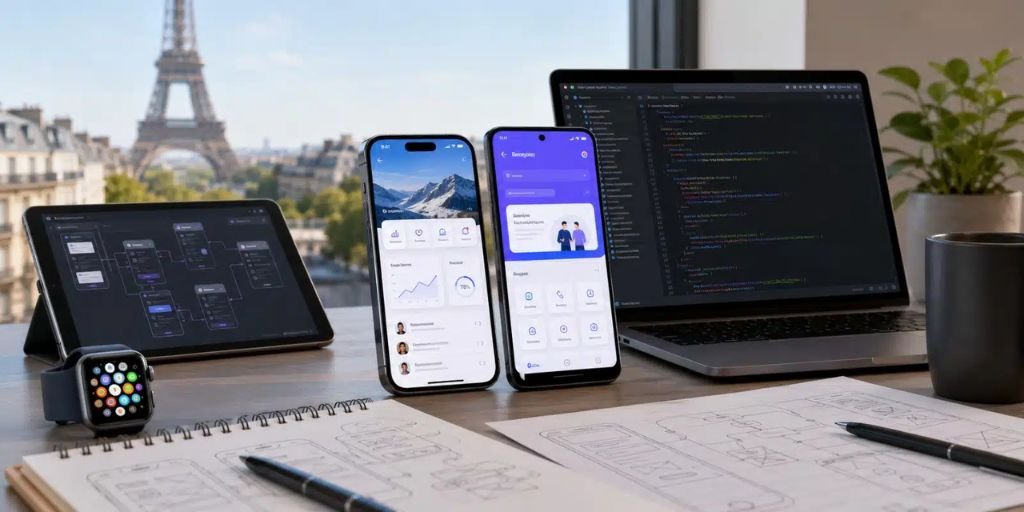
In a world where smartphones have become part of everyday life, mobile applications are no longer limited to simple tools. People use apps to shop, communicate, learn, work, watch videos, listen to music, manage businesses, and access services. This growing demand has made professional mobile app development an important part of modern digital strategy.
The phrase “Application Mobile DualMedia” is commonly associated with DualMedia, a Paris-based digital agency specializing in mobile and web development. DualMedia describes its work as covering iPhone, iPad, Android, cross-platform development, mobile publishing, business applications, and related digital services. Its official website says the agency has been operating since 2000 and has completed more than 200 mobile projects.
But what does that actually mean for someone interested in mobile applications? How does an agency turn an idea into a working app? What technologies can be used, what does the development process involve, and what should businesses consider before investing?
Let’s explore these questions in detail.
What Is Application Mobile DualMedia?
At its simplest, Application Mobile DualMedia refers to DualMedia’s expertise and services in designing and developing mobile applications. It is important to distinguish this from the idea of a generic “dual media” application that combines two types of media.
DualMedia presents itself as a digital agency offering custom mobile development for organizations, businesses, startups, and other clients. Its mobile services include applications for Apple’s ecosystem, Android applications, business tools, mobile publishing, and cross-platform solutions.
This distinction matters because people searching for the phrase may have different intentions. Someone could be looking for a company capable of creating a mobile application, while another person might simply be searching for information about an application that works with multiple types of digital content.
The agency’s approach is centered on creating solutions according to a project’s requirements rather than treating every application the same way. That is an important principle because a retail application, an internal business tool, and a media platform may require completely different designs and technical structures.
Think of mobile development like building a house. You wouldn’t use exactly the same plan for a small studio apartment and a large family home. The same principle applies to applications: the purpose determines the structure.
DualMedia’s Mobile Development Services
One of the notable aspects of DualMedia’s offering is the range of mobile services available under one organization.
According to its published information, these include iPhone development, iPad development, Android development, Android porting, startup development, business applications, digital publishing, mobile web development, and Apple Watch development.
Each service can solve a different problem.
An iPhone application may be appropriate when a business primarily serves Apple users. An Android application can provide access to Google’s much larger mobile ecosystem. A cross-platform project may make sense when an organization wants to reach both audiences efficiently.
Business applications are another important category. Instead of creating an app for the general public, a company might need a tool for sales representatives, technicians, managers, or field employees.
DualMedia’s published portfolio includes examples involving brands and organizations such as Audi, Seat, Vacheron Constantin, Etam, and others.
This variety illustrates how mobile software can be adapted to very different industries.
iOS, Android, and Cross-Platform Development
Choosing a mobile platform is one of the earliest decisions in an application project.
iOS development focuses on Apple’s devices, including iPhone and iPad. Native development can provide strong integration with Apple’s operating system and hardware.
Android development, meanwhile, targets a much broader range of smartphones and tablets. Android’s flexibility makes it especially important for organizations that want to reach users across many manufacturers and device categories.
There is also cross-platform development. Instead of maintaining completely separate applications for each operating system, developers can use technologies such as React Native or Flutter to build applications that work across platforms.
DualMedia says it works with native technologies such as Swift and Kotlin as well as cross-platform technologies including React Native and Flutter. The company also describes progressive web applications as another option when a native application is not necessary.
So, which option is best?
There isn’t one universal answer.
A graphics-intensive application may benefit from native development. A business that wants to control costs while supporting iOS and Android might consider cross-platform development. The right decision depends on functionality, budget, performance expectations, target users, and long-term plans.
How a Mobile Application Project Begins
A successful application normally begins long before a developer writes the first line of code.
The first stage is understanding the problem.
What does the application need to accomplish? Who will use it? What problem does it solve? Why would someone download it instead of using a website or an existing application?
DualMedia describes its consulting and project support process as covering areas such as opportunity analysis, functional and technical specifications, UX auditing, interface design, development, testing, publication, and post-launch support.
This planning stage can save considerable time later.
Imagine starting a road trip without knowing the destination. You might still drive somewhere, but you’ll probably waste fuel and time. A well-defined mobile project works in much the same way: clear objectives provide the roadmap.
Businesses should therefore define the core purpose before discussing advanced features.
A simple first version that solves one important problem can sometimes be more valuable than an overloaded application containing dozens of poorly implemented features.
User Experience and Interface Design
A technically impressive application can still fail if people find it difficult to use.
That is why user experience, commonly called UX, is an important part of mobile development.
Good UX means users should be able to understand what an application does without needing a manual. Buttons should be easy to find. Navigation should feel natural. Important information should not be buried under unnecessary menus.
Visual design also matters.
Typography, spacing, icons, images, colors, animations, and screen layouts all contribute to how an application feels.
DualMedia states that its process includes UX and interface design and emphasizes creating solutions centered around the end user.
This user-first approach is particularly important on smartphones because screen space is limited. A desktop website can display large menus and multiple panels. A phone requires much more discipline.
The best mobile interfaces often feel almost invisible. You don’t notice the design because everything seems to be where you expect it to be.
Business Applications and Real-World Uses
Mobile software is not only about entertainment.
Companies increasingly use applications to improve internal operations and customer experiences.
A business application might allow sales employees to access product information while visiting customers. A technician could use an application to receive service requests and record completed work. A manager might use a mobile dashboard to monitor operations.
DualMedia specifically highlights business applications for areas such as sales teams and maintenance technicians. Its portfolio also includes applications designed for commercial assistance, training, customer services, and product presentation.
This is where custom software can become particularly useful.
Instead of forcing employees to work around a generic tool, an organization can design a solution around its actual workflow.
For customers, mobile applications can provide features such as:
- Account management
- Product catalogs
- Loyalty programs
- Reservations
- Notifications
- Customer support
- Digital payments
- Personalized recommendations
- Event information
The possibilities are broad, but the most successful applications generally have one thing in common: they make something easier.
Testing, Security, and Quality Assurance
Nobody wants an application that crashes when they need it most.
Testing is therefore a critical stage of development.
A professional mobile project may involve functional testing, performance testing, security testing, compatibility testing, and testing on physical devices.
DualMedia’s published mobile-development information describes testing across iOS and Android devices and includes functional, performance, and security testing among its quality-assurance activities.
Testing is especially important because mobile users have different devices, operating-system versions, screen sizes, connection speeds, and hardware capabilities.
Security deserves equal attention.
Applications may process account details, payment information, business data, photographs, location information, or other sensitive content. Developers therefore need to consider authentication, secure communication, permissions, data protection, and appropriate privacy practices.
A polished interface means little if the underlying application cannot protect its users.
Publishing an Application on App Stores
Building an application is only part of the journey.
The software also needs to reach users.
For iPhone and iPad applications, this generally means preparing the application for Apple’s App Store. Android applications can be distributed through Google Play and other channels where appropriate.
DualMedia says it supports the submission process for Apple’s App Store and Google Play. It also describes services involving app-store optimization, analytics, and post-launch updates.
Publishing requires attention to technical and store requirements.
Developers need appropriate application information, screenshots, descriptions, icons, privacy details, and compliance with the relevant platform’s rules.
But publication should not be treated as the finish line.
In many ways, it is the beginning of the next phase.
Once users start interacting with an application, developers can identify problems, analyze behavior, improve performance, and introduce useful features.
Maintenance and Updates After Launch
Mobile operating systems continue to change.
A device that works perfectly today may behave differently after an operating-system update. Security requirements evolve. Third-party services change. Users request new features.
For that reason, mobile applications need ongoing maintenance.
DualMedia describes post-launch support involving corrective maintenance, new features, operating-system updates, performance monitoring, analytics, and continued development.
This long-term perspective is important for businesses calculating the real cost of an application.
The initial development budget is only one part of the investment. Companies should also consider hosting, maintenance, security, analytics, support, marketing, and future development.
A mobile application is more like a garden than a finished painting. It needs continued attention if you want it to remain healthy and useful.
How Much Can Mobile App Development Cost?
Cost is one of the first questions businesses ask.
Unfortunately, there is no universal price.
A basic application with a few screens and limited functionality may require a relatively modest investment. A complex platform with user accounts, payment systems, real-time communication, external APIs, dashboards, advanced security, and multiple platforms can cost substantially more.
DualMedia’s recently published information says that its projects can range from simpler MVPs to complex applications requiring significantly larger budgets, while emphasizing that the final cost depends on project scope and requirements.
Several factors influence the price:
Number of platforms: iOS, Android, or both.
Design complexity: Simple interfaces generally require less design and development work than highly customized experiences.
Backend requirements: Applications that depend on servers, databases, APIs, accounts, and real-time data need additional infrastructure.
Third-party integrations: Payment systems, CRM platforms, analytics tools, maps, and other services can increase development complexity.
Security: Applications processing sensitive information may require additional security measures and testing.
Maintenance: Continued updates and support create ongoing costs.
Rather than asking only, “How cheap can we make this application?”, businesses should ask, “What investment will create a reliable product that users actually want?”
That question usually leads to better decisions.
Why Businesses Consider DualMedia
Choosing a development partner is about more than technical skills.
A company needs communication, planning, design, testing, project management, and long-term support.
DualMedia presents itself as an agency offering a complete process from strategic consulting through design, development, testing, publication, and ongoing support. It also states that its team is based in Paris and that it works with startups, businesses, and larger organizations.
Its website reports more than 25 years of experience, over 200 completed mobile projects, and more than 10 million downloads and visits associated with its mobile work.
Those figures provide useful context, but businesses should still evaluate an agency based on their own requirements.
A good evaluation should include:
- Relevant portfolio examples
- Development methodology
- Communication process
- Technical expertise
- Security practices
- Estimated timeline
- Maintenance options
- Ownership of source code
- Documentation
- Total project cost
The cheapest proposal isn’t automatically the best one. Similarly, the most expensive proposal isn’t automatically superior.
The goal is to find a development partner whose capabilities match the project’s needs.
The Future of Mobile Applications
Mobile applications are continuing to evolve alongside smartphones, wearable devices, artificial intelligence, cloud services, and connected products.
Future applications are likely to become more personalized and integrated.
Artificial intelligence can help applications provide smarter recommendations, automate repetitive tasks, understand natural language, and analyze large amounts of information.
Wearable technology can extend mobile experiences beyond the smartphone. DualMedia also lists Apple Watch development among its services.
Cross-platform technologies are also likely to remain important because businesses want to reach users on multiple devices without unnecessarily duplicating development work.
At the same time, expectations will continue to rise.
People want applications that are fast, intuitive, secure, accessible, and reliable. They have little patience for complicated registration processes, excessive notifications, slow loading times, or confusing navigation.
The future of mobile development, therefore, isn’t simply about adding more features. It is about making technology more useful while reducing the effort required from the user.
Conclusion
Application Mobile DualMedia is best understood in the context of DualMedia’s professional mobile development services rather than as one universally recognized standalone application. The agency provides services spanning iOS, Android, cross-platform development, business applications, mobile publishing, design, testing, app-store publication, and ongoing support.
For businesses considering a mobile project, the most important lesson is simple: start with the user’s problem, not the technology. A successful application should have a clear purpose, an intuitive interface, reliable performance, appropriate security, and a realistic long-term maintenance plan.
Whether the goal is to serve customers, support employees, launch a startup product, or create a specialized digital experience, careful planning can turn a basic idea into a useful mobile solution.
FAQs
1. What is Application Mobile DualMedia?
The phrase generally refers to DualMedia’s mobile application development services. The agency develops solutions for iPhone, iPad, Android, cross-platform environments, business use cases, and other mobile projects.
2. Does DualMedia develop both iOS and Android applications?
Yes. DualMedia lists iPhone and Android development among its services and also offers cross-platform development using technologies such as React Native and Flutter.
3. How long does it take to develop a mobile application?
The timeline depends on complexity. A relatively simple MVP can take considerably less time than a large business platform involving multiple integrations, advanced functionality, and extensive testing. DualMedia’s published guidance indicates that complete projects can range from several months to considerably longer for complex applications.
4. How much does a DualMedia mobile application cost?
There is no single fixed price. Development costs depend on the number of platforms, features, design requirements, integrations, security needs, testing, and ongoing support. A detailed project assessment is necessary before establishing a meaningful budget.
5. Does DualMedia provide support after an application is launched?
Yes. DualMedia describes post-launch services including maintenance, operating-system updates, performance monitoring, analytics, ASO, and new feature development.