
George Washington: The Life, Leadership, and Legacy of America’s First President
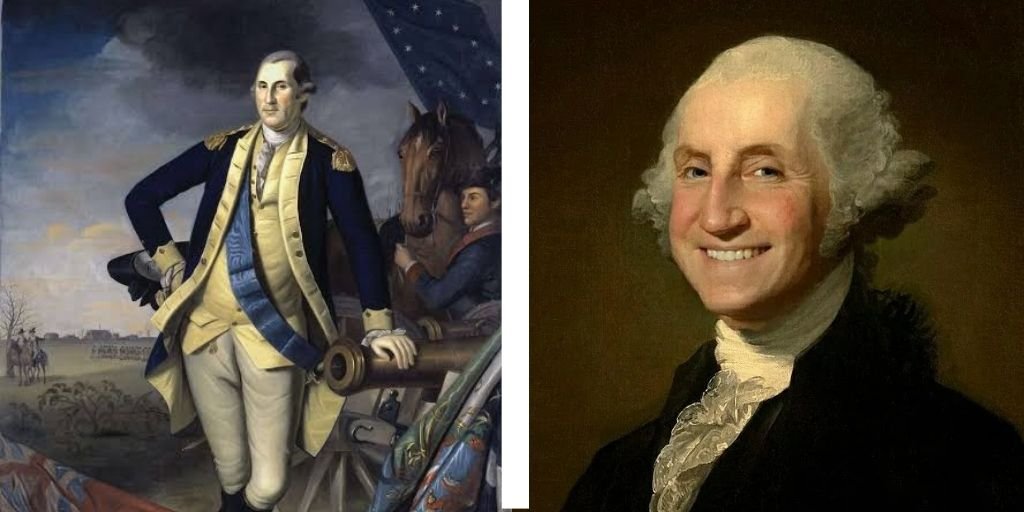
George Washington is one of the most recognizable names in American history. His image appears on the one-dollar bill, his portrait is carved into Mount Rushmore, and countless schools, streets, cities, and monuments carry his name. But behind these familiar symbols was a complicated man who lived through one of the most important periods in the development of the United States.
Washington was a military commander, farmer, political leader, and statesman. He helped lead the American colonies through the Revolutionary War, played a major role in creating the United States Constitution, and became the nation’s first president. His life stretched from the colonial era into the early years of the new republic.
Why did Washington become such an important figure? His success was not simply the result of winning battles or holding public office. He became influential because he understood that a new country needed more than independence. It needed stability, institutions, public confidence, and leaders willing to place the future of the nation above personal ambition.
His story is therefore much larger than a list of dates and achievements. It is a story about leadership, responsibility, sacrifice, political disagreement, slavery, and the difficult process of building a nation.
Early Life and Family Background
George Washington was born on February 22, 1732, in Westmoreland County, Virginia, then part of the British colonies in North America. He belonged to a family connected with Virginia’s landowning class, although the Washington family was not among the wealthiest families in the colony.
His father, Augustine Washington, was a planter and landowner. His mother, Mary Ball Washington, raised George and his siblings after Augustine died in 1743.
Washington did not attend college, which was not unusual for young men in colonial Virginia. Instead, his education came through private tutors, practical experience, reading, and work. Mathematics and surveying became particularly important skills in his early life.
As a teenager, Washington developed an interest in surveying and land. This profession introduced him to Virginia’s expanding frontier and gave him valuable knowledge about geography and property.
At the age of 17, he became a surveyor for Culpeper County. The work required traveling through undeveloped areas, measuring land, creating maps, and dealing with difficult terrain. These experiences helped him become familiar with the western regions of Virginia.
Washington also began acquiring land of his own. His interest in agriculture and property would remain central to his life.
His childhood did not immediately suggest that he would become president. In many ways, Washington’s early years were preparation for a future he could not yet imagine.
George Washington and the French and Indian War
Washington entered military life while still a young man. In 1752, he became a major in the Virginia militia. His first major military experiences came during the French and Indian War, part of the larger conflict between Britain and France over territory and influence in North America.
In 1754, Washington led an expedition into the Ohio Country. His encounter with French forces at Jumonville Glen contributed to the opening of hostilities in the region.
Washington later surrendered at Fort Necessity. Although the episode was not a military victory, it gave him valuable experience and increased his reputation.
During the war, Washington served with British forces and learned about military organization, discipline, logistics, and command. He also experienced the harsh realities of frontier warfare.
His military career was not free from mistakes. In fact, his early failures became part of his education as a commander. Like a student learning through difficult examinations, Washington developed his leadership partly by confronting errors and setbacks.
By the end of the conflict, he had developed a reputation as a determined and capable officer.
He resigned from military service in 1758 and returned to Virginia. For a time, his life seemed likely to revolve around farming and private affairs rather than national politics.
That would change dramatically within two decades.
Mount Vernon and Life as a Planter
In 1759, Washington married Martha Custis, a wealthy widow who brought considerable property and resources into the marriage. Together, they lived at Mount Vernon, Washington’s estate along the Potomac River in Virginia.
Mount Vernon became one of the most important places in Washington’s life.
Washington managed the estate as a large agricultural operation. Tobacco was an important crop, but he eventually diversified into wheat and other agricultural products. He experimented with farming techniques, livestock management, crop rotation, and estate organization.
His life as a planter also reveals one of the most troubling realities of his world: Washington was a slaveholder.
Enslaved people worked at Mount Vernon and on other properties associated with Washington. They performed agricultural labor, domestic work, skilled trades, and other tasks. Washington benefited financially from a system that denied enslaved people freedom and basic human rights.
This part of his history cannot be separated from his public legacy.
Washington’s views about slavery changed over the course of his life. He became increasingly uncomfortable with the institution, particularly in his later years, but he did not free the people he personally enslaved during his lifetime. His will provided for their emancipation after Martha’s death.
This contradiction is important when considering his legacy. Washington could support liberty for a new nation while participating in a system that denied liberty to many people living within that nation.
The Road to the American Revolution
During the 1760s and early 1770s, tensions between Britain’s government and the American colonies increased.
Parliament imposed taxes and regulations that many colonists opposed. Arguments over taxation, representation, trade, and political authority gradually transformed into a broader dispute about the relationship between Britain and its American colonies.
Washington initially sought political change rather than complete separation from Britain. He was part of Virginia’s colonial political establishment and had served as a member of the House of Burgesses.
However, events moved rapidly.
The Boston Massacre, Boston Tea Party, Intolerable Acts, and growing conflict between colonial leaders and the British government intensified tensions.
Washington attended the First Continental Congress in 1774 as a delegate from Virginia. By this point, he had become an important figure among colonial leaders.
When fighting began at Lexington and Concord in April 1775, the political dispute had become an armed conflict.
The Continental Congress needed a commander for the newly created Continental Army.
Washington was selected.
The decision was significant for several reasons. Washington had military experience, came from Virginia, and could help unite different colonies behind the revolutionary cause.
In June 1775, Congress appointed him Commander in Chief of the Continental Army.
Leading the Continental Army
Washington faced an enormous challenge.
The Continental Army was poorly equipped compared with Britain’s professional forces. Soldiers often lacked sufficient clothing, food, ammunition, and training. Enlistments expired, money was limited, and communication between different regions was difficult.
Britain possessed one of the world’s most powerful military establishments.
So how could an inexperienced American army possibly win?
Washington understood that he did not always need to destroy the British Army in a traditional military sense. He needed to keep the American army alive long enough for the revolutionary cause to survive.
His strategy therefore depended heavily on persistence.
The American forces suffered serious defeats, particularly during the New York campaign of 1776. Washington’s army was pushed across New Jersey, and the revolutionary movement appeared to be in danger.
Then came a crucial moment.
Washington crossed the Delaware River on Christmas night in 1776 and attacked Hessian forces at Trenton the following morning. The victory boosted American morale.
Another victory followed at Princeton.
These successes did not end the war, but they demonstrated that the Continental Army could continue fighting.
Washington’s leadership during the difficult winter at Valley Forge in 1777–1778 also became legendary. The army faced shortages, illness, cold, and hardship. Yet the force survived.
The arrival of Baron Friedrich Wilhelm von Steuben helped improve training and discipline. The army gradually became more organized and capable.
Washington’s greatest strength was not that he won every battle. He did not. His greatest contribution was keeping the revolutionary army together.
The Alliance With France and Victory at Yorktown
The American Revolution changed significantly when France entered the war against Britain.
The French alliance provided military assistance, money, supplies, troops, and naval support. French involvement made the conflict much more difficult for Britain.
Washington continued to command American forces while working with French military leaders.
The decisive campaign came in Virginia in 1781.
British forces under General Charles Cornwallis established themselves at Yorktown. American and French forces surrounded the British position while the French navy helped prevent British reinforcement by sea.
Washington and his allies conducted a siege.
In October 1781, Cornwallis surrendered.
The surrender at Yorktown did not technically end all fighting immediately, but it effectively destroyed Britain’s ability and political willingness to continue the major war effort.
The Treaty of Paris was signed in 1783, formally recognizing American independence.
After years of war, Washington faced another important decision.
He could have attempted to hold onto military power.
Instead, he resigned his commission.
This decision became one of the defining moments of his reputation.
Washington returned to private life at Mount Vernon. His voluntary surrender of military authority strengthened the idea that the military should remain subordinate to civilian government.
The Constitutional Convention and a New Government
Independence created a new problem.
The United States existed, but its government was weak under the Articles of Confederation. The national government lacked many powers needed to manage finances, trade, defense, and relations among the states.
Washington became increasingly concerned about the nation’s political and economic problems.
In 1787, representatives gathered in Philadelphia for the Constitutional Convention. Washington was chosen to preside over the meeting.
The Constitution created a stronger federal government with separate branches and a system of checks and balances.
Washington did not write the Constitution himself, but his presence gave the convention prestige and stability.
The Constitution was eventually ratified by the states.
In 1789, the new government began operating.
The country now needed a president.
Once again, Washington became the obvious choice.
George Washington as the First President
George Washington was inaugurated as the first president of the United States on April 30, 1789, in New York City.
The position was completely new.
There was no established American presidency to copy. Washington therefore had to create many traditions and expectations that later presidents would inherit.
He selected a cabinet that included influential figures such as Thomas Jefferson and Alexander Hamilton. These men disagreed sharply about the future direction of the country, but Washington attempted to manage competing viewpoints.
During his presidency, the federal government established important financial and administrative systems.
Hamilton promoted a national financial program, including federal assumption of state debts and the creation of a national bank. Jefferson and his allies worried that the federal government was becoming too powerful.
Washington supported the creation of a federal government strong enough to function effectively, but he also understood that political divisions could threaten the young republic.
His administration faced the Whiskey Rebellion in 1794. Farmers in western Pennsylvania resisted a federal tax on distilled spirits. Washington personally led militia forces toward the region, demonstrating that the new government had the authority to enforce federal law.
The rebellion ended without a major battle.
The event sent an important message: the new republic was not simply a loose collection of states. The federal government had real authority.
Washington’s Foreign Policy and Neutrality
Foreign affairs presented another major challenge.
The French Revolution began in 1789, and France soon became involved in war with European powers, including Britain.
Many Americans sympathized with France because France had supported the United States during the Revolutionary War.
Others believed the United States should avoid becoming involved in European conflicts.
Washington chose neutrality.
His Neutrality Proclamation of 1793 declared that the United States would remain neutral in the European conflict.
This was controversial. Some Americans believed the country had a moral obligation to support France. Others believed neutrality was necessary for the survival of the young nation.
Washington’s administration also negotiated Jay’s Treaty with Britain in 1794.
The treaty attempted to resolve several issues left over from the Revolutionary War and reduce the possibility of another conflict between the United States and Britain.
The agreement was unpopular among many Americans, particularly supporters of Jefferson.
Yet Washington believed maintaining peace was more important than satisfying every political faction.
Farewell Address and Retirement
Washington chose not to seek a third presidential term.
This was an extraordinary decision because there was no constitutional rule at the time limiting presidents to two terms.
His retirement helped establish an important political tradition.
In his Farewell Address of 1796, Washington warned Americans about excessive political division and permanent alliances with foreign powers. He also emphasized the importance of national unity.
His departure from office demonstrated another principle that became central to American political culture: presidential power should not become permanent.
Washington returned to Mount Vernon in 1797.
Although he was no longer president, he remained a respected national figure.
He continued managing his estate and maintained correspondence with political leaders.
His retirement was not entirely peaceful, however. Political conflicts continued to grow, especially between Federalists and Democratic-Republicans.
Washington occasionally commented on national affairs, but he largely remained outside active political office.
Death and the Growth of His Legacy
Washington died on December 14, 1799, at Mount Vernon.
He was 67 years old.
His death shocked the young nation. Public mourning took place throughout the United States.
Over time, Washington’s reputation grew.
Americans began building monuments and naming institutions after him. His birthday became associated with national remembrance and eventually became part of Presidents’ Day celebrations.
Washington’s image also became deeply connected with American money and national symbolism.
The Washington Monument in Washington, D.C., was constructed in his honor. His likeness was also included on Mount Rushmore alongside Thomas Jefferson, Abraham Lincoln, and Theodore Roosevelt.
But historical memory can sometimes simplify complicated people.
Washington was a revolutionary leader who fought for independence but owned enslaved people. He promoted republican government but belonged to a wealthy social class. He valued unity but lived during a period of intense political disagreement.
Understanding these contradictions does not require ignoring his accomplishments. Instead, it allows us to understand history more honestly.
What Made Washington an Effective Leader?
Washington’s leadership style was different from that of a modern politician.
He was not known as the greatest public speaker of his generation. He did not create a political party around himself. He often relied on patience, reputation, personal discipline, and careful judgment.
Several qualities stand out.
Persistence was perhaps his greatest strength. Washington experienced military defeats, political criticism, financial difficulties, and enormous pressure, yet he continued working toward long-term goals.
Self-control was another important characteristic. He understood that emotional decisions could create serious consequences.
Delegation also mattered. Washington surrounded himself with talented people and allowed them to contribute, even when they disagreed.
Symbolism was equally powerful. His decision to surrender military authority after the Revolution showed that he did not intend to become a military ruler.
Think of Washington’s leadership as the foundation of a house. A foundation may not be the most visible part of the structure, but if it is weak, everything built above it becomes unstable.
His role was often less about creating dramatic moments and more about providing stability during uncertain times.
George Washington’s Legacy in Modern America
Washington’s influence can still be seen throughout the United States.
Washington, D.C., is named after him. The state of Washington carries his name, as do countless schools, universities, roads, bridges, parks, counties, and public buildings.
His portrait appears on the one-dollar bill and the quarter.
Mount Vernon remains an important historic site where visitors can learn about Washington’s life, household, agricultural operations, and the people who lived and worked there.
At the same time, modern historians have expanded the discussion around Washington’s life.
Instead of presenting him simply as a flawless national hero, historians examine his military decisions, political beliefs, economic interests, relationship with slavery, treatment of Native Americans, and changing views throughout his lifetime.
This approach gives the public a fuller understanding of the man.
Washington mattered because he stood at the beginning of the American experiment. He helped lead the fight for independence, participated in creating the constitutional system, and established expectations for the presidency.
His greatest legacy may therefore be less about individual achievements and more about precedent.
He demonstrated that a leader could hold enormous authority and then willingly give it up.
For a new republic, that example mattered enormously.
Conclusion
George Washington’s life was closely connected to the birth of the United States. From his early work as a surveyor to his military service, leadership during the Revolutionary War, presidency, and retirement at Mount Vernon, he experienced nearly every major stage of America’s transformation from colony to independent nation.
His legacy is powerful, but it is not simple. Washington’s accomplishments existed alongside serious contradictions, particularly his ownership of enslaved people and his place within colonial society. Recognizing these realities makes his story more complete rather than less important.
Washington helped create traditions that shaped American government for generations. He showed the value of persistence during crisis, civilian control of the military, peaceful transfers of power, and national leadership during periods of division.
His story reminds us that history is rarely made by perfect people. It is made by real people facing difficult choices, living within the limitations and beliefs of their time. That is what makes Washington’s life worth studying today.
Frequently Asked Questions
1. When was George Washington born?
George Washington was born on February 22, 1732, in Westmoreland County, Virginia. At the time, Virginia was part of the British colonies in North America.
2. Why is George Washington important in American history?
Washington played a central role in the American Revolution, served as Commander in Chief of the Continental Army, presided over the Constitutional Convention, and became the first president of the United States. His actions helped establish important traditions for the new nation.
3. How long was George Washington president?
Washington served two presidential terms, from 1789 to 1797. He voluntarily left office after two terms, helping establish a tradition that influenced American presidents for generations.
4. Did George Washington own enslaved people?
Yes. Washington enslaved people at Mount Vernon and on other properties. His relationship with slavery changed over time, and his will provided for the emancipation of the people he personally enslaved after Martha Washington’s death.
5. Where did George Washington die?
George Washington died at Mount Vernon, Virginia, on December 14, 1799. He was 67 years old and was buried at his estate.


