
Nelson Mandela: The Inspiring Life, Legacy, and Leadership of a Global Icon
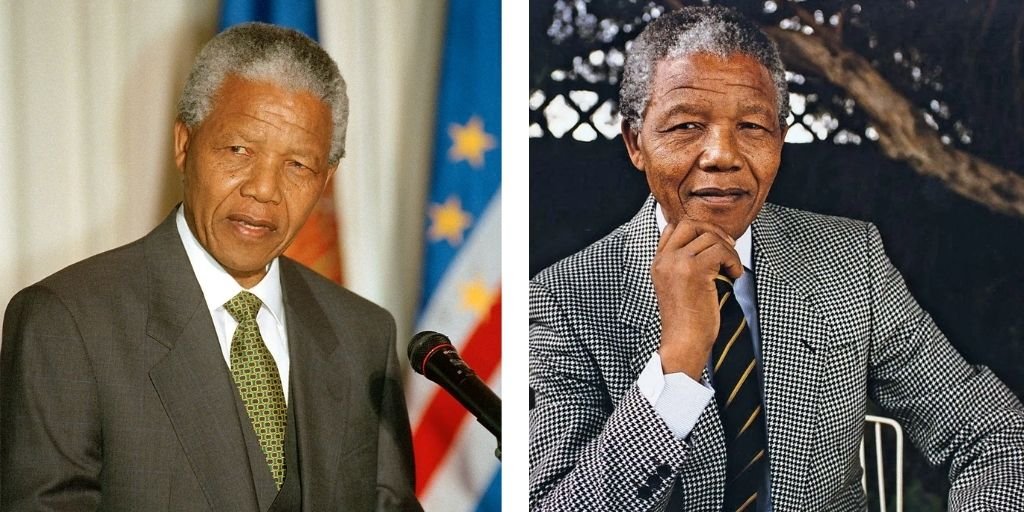
Nelson Mandela was more than a political leader. He became a symbol of courage, equality, forgiveness, and hope for millions of people around the world. His journey from a young boy in rural South Africa to the country’s first Black president is one of the most remarkable stories of the modern era.
What makes his life so powerful? Mandela faced discrimination, imprisonment, political pressure, and enormous personal sacrifices, yet he continued working toward a society in which people could live with equal rights and dignity. He spent 27 years behind bars, but prison did not destroy his vision. Instead, it became part of a journey that eventually helped transform South Africa.
His story is not simply about politics. It is about how one person can remain committed to a principle even when the road ahead seems almost impossible. Mandela’s life offers lessons about leadership, patience, resilience, reconciliation, and the importance of standing against injustice.
Early Life and Childhood
Nelson Rolihlahla Mandela was born on July 18, 1918, in the village of Mvezo in the Transkei region of South Africa. He was born into the Thembu royal family, and his father, Gadla Henry Mphakanyiswa, served as a local chief and adviser to the Thembu king.
Although Mandela was connected to traditional leadership, his childhood was not one of luxury. He grew up in a rural community where customs, storytelling, family relationships, and community responsibilities played an important role.
The name “Rolihlahla” is often explained as meaning “pulling the branch of a tree,” while it was also colloquially associated with the idea of a troublemaker. Later in life, the name Nelson became widely known around the world.
After his father’s death, Mandela was placed under the guardianship of Jongintaba Dalindyebo, the acting regent of the Thembu people. This experience exposed him to traditional decision-making and discussions about community affairs.
Mandela later recalled how local leaders would gather and discuss important issues. These meetings influenced his understanding of leadership. He observed that a good leader did not simply give orders. Instead, a leader listened to different opinions before making a decision.
That lesson stayed with him throughout his life.
Education and the Development of His Political Ideas
Education became an important part of Mandela’s early development. He attended local schools before studying at institutions including Clarkebury and Healdtown.
He later attended the University of Fort Hare, one of the few higher-education institutions in South Africa open to Black students at the time. His studies exposed him to new ideas and introduced him to young people who would later become important figures in African politics.
Mandela eventually moved to Johannesburg, where his political awareness grew considerably. He encountered the realities of racial segregation and the increasingly restrictive system that would become known as apartheid.
He studied law and eventually worked in the legal profession. Together with Oliver Tambo, he established a law practice that provided legal assistance to Black South Africans who often faced discrimination within the legal system.
Law gave Mandela another perspective on inequality. He could see how legislation was being used not simply to regulate society but to restrict the rights and opportunities of an entire population.
For Mandela, education was therefore not only about obtaining qualifications. It became a tool for understanding society and challenging injustice.
Mandela and the Struggle Against Apartheid
Apartheid became South Africa’s official system of racial segregation after the National Party came to power in 1948. Under apartheid laws, people were classified by race, and Black South Africans faced severe restrictions on where they could live, work, study, travel, and participate politically.
The system affected nearly every part of daily life.
Mandela joined the African National Congress (ANC) in the 1940s and became increasingly involved in organized resistance. Along with other activists, he helped build the ANC Youth League, which promoted a more energetic approach to challenging racial discrimination.
At first, Mandela strongly supported nonviolent resistance. Campaigns included protests, boycotts, strikes, and civil disobedience.
However, government repression became increasingly severe. Peaceful demonstrations were met with arrests and violence, and political organizations faced bans and restrictions.
After the Sharpeville massacre in 1960, in which police killed demonstrators protesting apartheid-era pass laws, Mandela and other leaders concluded that the resistance movement needed to reconsider its methods.
Mandela became involved in the formation of Umkhonto we Sizwe, commonly known as the MK, the armed wing associated with the ANC. Its initial strategy focused on sabotage against government and economic infrastructure while attempting to avoid loss of life.
This period remains an important and complicated part of Mandela’s history. His transformation from a supporter of nonviolent protest into an advocate of armed resistance reflected the extreme political circumstances of the time.
Arrest, Trial, and 27 Years in Prison
Mandela was arrested in 1962 and later sentenced to imprisonment. During the Rivonia Trial, he and other defendants faced serious charges connected with their activities against apartheid.
In 1964, Mandela was sentenced to life imprisonment.
He spent many years at Robben Island, where prisoners faced harsh conditions and forced labor. Mandela was separated from his family and denied the ordinary freedoms most people take for granted.
Imagine losing nearly three decades of your life behind prison walls. For many people, such an experience might create bitterness or despair. Mandela’s response was different.
Prison became a test of discipline and determination.
He continued studying, communicating with other prisoners, and maintaining his political principles. He also developed relationships with some prison officials, demonstrating a belief that even people on opposite sides could communicate.
His ability to maintain dignity under extreme circumstances became one of the defining features of his public image.
Mandela was not simply waiting for freedom. He was preparing himself for what might come after freedom.
The Long Road to Freedom
By the 1980s, pressure against apartheid was growing both inside and outside South Africa. International sanctions, political activism, economic pressure, domestic protests, and changing geopolitical circumstances all contributed to increasing pressure on the South African government.
Mandela remained imprisoned, but his name became increasingly recognizable around the world.
In 1985, President P. W. Botha offered Mandela conditional freedom if he would renounce armed struggle. Mandela rejected the offer because he believed freedom should not require him to abandon the principles of the movement.
Behind the scenes, discussions between Mandela and government representatives continued.
Eventually, the political environment changed. F. W. de Klerk became president in 1989 and began taking steps toward dismantling apartheid. Political organizations were unbanned, and negotiations toward a democratic system began.
On February 11, 1990, Nelson Mandela walked out of Victor Verster Prison as a free man.
The image of Mandela raising his fist as he walked beside Winnie Madikizela-Mandela became one of the most recognizable moments of the twentieth century.
But freedom was not the end of his work.
It was the beginning of an even greater challenge.
Mandela’s Leadership and the Birth of a Democracy
South Africa faced an enormous problem. Apartheid had divided communities for generations, and political violence threatened to derail the transition toward democracy.
Mandela understood that simply replacing one group of leaders with another would not be enough.
Negotiations between political groups eventually led to the country’s first democratic elections based on universal adult suffrage in 1994.
The African National Congress won the election, and Mandela became South Africa’s first Black president on May 10, 1994.
His inauguration was watched around the world.
What made his presidency particularly significant was his emphasis on reconciliation. Mandela understood that millions of white South Africans were afraid of what political change might mean. At the same time, millions of Black South Africans wanted justice after decades of oppression.
How could these two realities exist together?
Mandela promoted a vision of national unity rather than revenge.
His leadership can be compared to rebuilding a damaged bridge. The structure had been badly weakened by decades of conflict, and simply removing one side would not repair it. Both sides needed a way to cross toward a shared future.
The Truth and Reconciliation Process
One of the most important initiatives associated with South Africa’s transition was the Truth and Reconciliation Commission.
The commission was established to investigate serious human rights violations committed during the apartheid period. Victims could tell their stories, while perpetrators could seek amnesty under specific conditions.
The process was painful and controversial, but it reflected Mandela’s broader belief that South Africa needed to confront its past without allowing the past to permanently control its future.
Reconciliation did not mean forgetting.
It meant acknowledging what happened and trying to create a society capable of moving forward.
Mandela’s approach demonstrated an important distinction between forgiveness and denial. Forgiveness, in his political philosophy, was not necessarily about pretending that injustice had never happened. Instead, it could be part of creating conditions for peaceful coexistence.
This became one of the most influential aspects of his international legacy.
Mandela and the Power of Symbolic Leadership
Mandela understood the importance of symbols.
One famous example came during the 1995 Rugby World Cup, which South Africa hosted. Rugby had historically been strongly associated with the white minority, while many Black South Africans viewed the national team, the Springboks, as a symbol of apartheid-era identity.
Mandela chose to use the sport as an opportunity for unity.
When he appeared wearing a Springbok jersey during the final, the gesture carried enormous political and emotional meaning.
The moment showed that leadership does not always happen through speeches or legislation. Sometimes a simple symbolic action can communicate an entire political message.
Mandela also encouraged South Africans to imagine themselves as part of one nation rather than separate racial communities.
That message was particularly important in a country emerging from decades of division.
Mandela’s Presidency and Major Priorities
Mandela served as president from 1994 to 1999. His government faced enormous challenges, including poverty, unemployment, inequality, housing shortages, and the long-term consequences of apartheid.
The new democratic government introduced policies designed to expand access to housing, electricity, water, education, healthcare, and other basic services.
Mandela also supported efforts to strengthen South Africa’s international position.
His presidency was relatively short, and he made the decision not to seek a second term. He handed the presidency to Thabo Mbeki in 1999.
This decision itself became part of his legacy.
In many countries, political leaders attempt to remain in power for as long as possible. Mandela’s willingness to step aside reinforced the principle that democratic institutions should be stronger than any individual politician.
His departure from office demonstrated another form of leadership: knowing when to leave.
Life After the Presidency
Mandela did not disappear from public life after leaving the presidency.
Instead, he continued working on humanitarian issues, especially those involving children, poverty, HIV/AIDS, and education.
The Nelson Mandela Foundation was established to support his ongoing work and preserve his legacy.
He also became involved in campaigns addressing HIV/AIDS, an issue that was especially significant in South Africa. In 2005, Mandela publicly announced that his son Makgatho had died from AIDS-related illness, using the moment to challenge the stigma surrounding the disease.
This was characteristic of Mandela’s willingness to use his public platform for issues that affected ordinary people.
He also supported the Elders, an independent group of global leaders established to address major international challenges.
Even as he grew older, Mandela remained a symbol of moral authority.
However, it is important to remember that he was not perfect. Like every historical figure, Mandela made controversial decisions and faced criticism. Understanding his complete life requires looking at both his achievements and the difficult choices he made.
That makes his story more meaningful, not less.
Mandela’s Philosophy of Forgiveness and Resilience
Perhaps the greatest lesson from Mandela’s life is resilience.
He experienced imprisonment, political conflict, family separation, personal loss, and enormous public pressure. Yet he continued to believe that a different South Africa was possible.
His approach to forgiveness is particularly powerful.
Mandela recognized that hatred could become another kind of prison. If he remained consumed by anger toward those who had imprisoned him, he would still be controlled by the system he had fought against.
Forgiveness offered another path.
This does not mean Mandela believed people should ignore injustice. Quite the opposite. He believed that societies must acknowledge wrongdoing. But he also recognized that a nation cannot build a peaceful future if every political decision is driven by revenge.
His resilience was like a tree that survives a powerful storm. The wind may bend its branches, but strong roots allow it to remain standing.
That metaphor captures much of Mandela’s character.
Mandela’s Global Influence
Nelson Mandela’s influence extended far beyond South Africa.
He became a global symbol of the struggle against racial discrimination and authoritarianism. Universities, governments, charities, schools, and international organizations continue to study his life and leadership.
In 1993, Mandela and F. W. de Klerk received the Nobel Peace Prize for their work toward peacefully ending apartheid and establishing the foundations of a democratic South Africa.
Mandela also received numerous other international honors throughout his lifetime.
In 2009, the United Nations General Assembly declared July 18 as Nelson Mandela International Day. The day encourages people to dedicate time to community service and positive social action.
The message is simple: changing society does not always require holding political office. Ordinary people can contribute through education, volunteering, helping vulnerable communities, and standing against discrimination.
This is perhaps why Mandela remains relevant to younger generations.
His story connects a historical struggle with a universal question: What can one person do when confronted with injustice?
Mandela’s Legacy in the Modern World
Nelson Mandela died on December 5, 2013, at the age of 95.
His death was mourned internationally, with leaders and citizens remembering a man who had become one of the world’s most recognizable advocates for freedom and reconciliation.
Yet his legacy remains larger than statues, streets, monuments, books, and photographs.
Mandela’s greatest legacy may be the idea that political leadership can combine strength with compassion.
He demonstrated that courage does not always mean refusing to compromise. Sometimes courage means entering a difficult negotiation because peace requires it.
He also demonstrated that forgiveness can be a strategic and moral choice without requiring people to forget the past.
At the same time, South Africa’s continuing challenges remind us that one leader cannot solve every problem. Poverty, inequality, unemployment, and social divisions did not disappear after apartheid ended.
That is an important lesson too.
Historical change is rarely a single event. It is more like building a house brick by brick. A leader may help lay the foundation, but generations of people must continue the work.
What We Can Learn From Nelson Mandela
Mandela’s life provides lessons that remain useful in everyday life.
Stand for what matters.
Mandela spent decades pursuing political equality because he believed the cause was larger than himself. His example reminds us that meaningful change often requires patience.
Learn to listen.
His early exposure to traditional meetings influenced his understanding of leadership. Listening does not mean agreeing with everyone. It means taking other perspectives seriously.
Do not allow hardship to define you.
Prison changed Mandela’s circumstances, but it did not determine his future. Difficult experiences can shape a person without completely controlling who that person becomes.
Understand the value of reconciliation.
Conflict can easily become a cycle. Breaking that cycle requires people to imagine a future beyond retaliation.
Use influence responsibly.
Mandela used his international reputation to draw attention to important social issues. Influence becomes meaningful when it helps others.
Know when to step aside.
His decision not to seek a second presidential term demonstrated respect for democratic institutions.
Most importantly, Mandela’s story teaches us that progress can take time. Sometimes the most important victories are not immediate. They may take years—or even decades—to become visible.
Conclusion
Nelson Mandela’s life remains one of the most powerful stories of courage and transformation in modern history. From his childhood in rural South Africa to his years as a political prisoner and later his presidency, his journey crossed enormous political and personal challenges.
His greatest achievement was not simply becoming president. It was helping a deeply divided nation imagine a different future.
Mandela showed that resilience can survive imprisonment, that leadership can include humility, and that reconciliation can sometimes be more powerful than revenge. His legacy continues to encourage people to challenge discrimination, defend human dignity, and work toward peaceful change.
His life leaves us with a lasting question: when circumstances seem impossible, will we give up—or will we continue working toward something better?
That may be the most enduring lesson of Nelson Mandela.
FAQs About Nelson Mandela
1. Who was Nelson Mandela?
Nelson Mandela was a South African anti-apartheid leader, political activist, and statesman. He became the country’s first Black president in 1994 after decades of racial segregation and political conflict.
2. How long was Nelson Mandela imprisoned?
Mandela spent 27 years in prison. Much of this time was spent on Robben Island, although he was later transferred to other prisons. His imprisonment became a major part of his international identity as a symbol of resistance to apartheid.
3. Why is Nelson Mandela famous?
Mandela is famous for his role in fighting apartheid, helping negotiate South Africa’s transition to democracy, becoming its first Black president, and promoting reconciliation between communities that had been divided by racial discrimination.
4. What did Nelson Mandela believe about forgiveness?
Mandela believed that reconciliation could help South Africa escape a cycle of hatred and revenge. He supported confronting the country’s painful history while working toward peaceful coexistence and a shared national future.
5. What is Nelson Mandela’s greatest legacy?
His greatest legacy is often associated with freedom, equality, reconciliation, resilience, and democratic leadership. His life continues to inspire people around the world to oppose injustice while seeking peaceful solutions to deep social divisions.


