Mickey Mouse: The Timeless Character Who Became a Global Icon
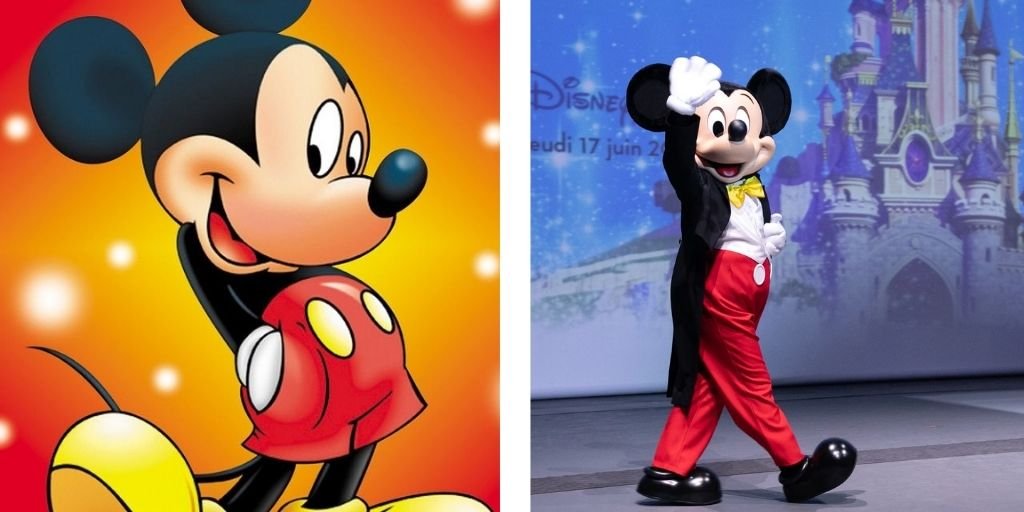
Mickey Mouse is more than a cartoon character. For generations of viewers, he has represented laughter, imagination, adventure, and the simple joy of storytelling. With his round ears, white gloves, red shorts, and cheerful personality, he is instantly recognizable in almost every corner of the world.
But how did a small animated mouse become such a powerful cultural symbol? His journey began in the early days of animation and grew into one of the most remarkable stories in entertainment history. From short films and theme parks to television, merchandise, video games, and modern digital media, his influence has reached far beyond the screen.
This article explores the history, personality, cultural impact, business legacy, and continuing popularity of this famous character while looking at why audiences continue to connect with him after nearly a century.
The Beginning of an Unforgettable Character
The story begins in the 1920s, when Walt Disney and his creative team were experimenting with animated films. Walt Disney had already worked with an earlier character, Oswald the Lucky Rabbit, but circumstances surrounding the character led him to develop something new.
That new creation was a cheerful mouse who would eventually become known as Mickey.
The character first appeared in the famous 1928 short Steamboat Willie, although two earlier productions, Plane Crazy and The Gallopin’ Gaucho, were produced before it. Steamboat Willie became especially important because synchronized sound helped demonstrate what animation could achieve.
The success was significant. Audiences were not simply watching drawings move across a screen; they were experiencing a character who seemed lively, expressive, and full of personality.
That distinction mattered.
Animation at the time was developing rapidly, and Mickey arrived when audiences were becoming fascinated by the possibilities of this new form of entertainment. His exaggerated movements and playful behavior made him easy to understand even without complicated dialogue.
In many ways, his appeal was wonderfully simple: he was energetic, curious, mischievous, and optimistic.
Why the Character Became So Popular
What makes a fictional character memorable? Appearance certainly matters, but personality often matters even more.
Mickey was designed with a look that was easy to recognize. His circular ears, simple face, distinctive clothing, and expressive body made him visually effective in animation. Even when his image was reduced to a simple silhouette, people could often identify him immediately.
His personality also helped him connect with audiences.
Rather than being presented as a distant hero, he often behaved like an ordinary person placed in unusual situations. He could make mistakes, become excited, get into trouble, and try to solve problems. That made him approachable.
Think of him as an animated friend who could walk into almost any story. Whether he was operating a boat, exploring a strange location, helping another character, or dealing with an unexpected problem, his optimism usually remained at the center.
This flexibility allowed writers and animators to place him in countless different adventures.
Another important factor was emotion. Early animation depended heavily on visual storytelling, so characters needed to communicate feelings through movement. Mickey’s gestures, facial expressions, and physical comedy helped audiences understand what he was thinking without requiring long explanations.
Mickey Mouse and the Golden Age of Animation
As animation developed during the 1930s, Mickey became one of its most recognizable stars. His popularity helped establish animated shorts as an important part of mainstream entertainment.
Films featuring Mickey often combined music, comedy, movement, and visual imagination. These productions demonstrated that animated entertainment could have its own artistic identity rather than simply imitating live-action cinema.
During this period, the character also appeared alongside familiar companions.
Minnie Mouse became an important part of his world, while Donald Duck, Goofy, and Pluto eventually became major personalities in their own right. Together, these characters created a recognizable universe that could support many different types of stories.
Mickey’s role also evolved.
In his earliest appearances, he was often a mischievous figure whose adventures were driven by physical comedy. Over time, his personality became more wholesome and polished. He increasingly represented friendliness, courage, determination, and good humor.
That evolution helped him remain suitable for family audiences.
The character’s popularity was also supported by theatrical distribution. Before television became a household staple, moviegoers could encounter animated shorts in theaters. This gave Mickey an opportunity to reach audiences who might never have encountered animation through another medium.
The Evolution of Mickey’s Design
One of the most fascinating parts of his history is how his appearance changed.
The earliest version looked noticeably different from the character most people recognize today. Animation techniques, artistic preferences, and audience expectations all influenced his design.
Over the decades, artists refined his proportions, facial expressions, clothing, and movement.
His appearance became cleaner and more rounded. His eyes and face were adjusted, while his body became more polished and expressive. Later productions could use color, improved sound, more sophisticated animation, and new production technologies.
Yet the designers faced an interesting challenge: How do you modernize a famous character without losing what makes him recognizable?
It is similar to renovating an old house. You can improve the rooms, technology, and structure, but if you remove every familiar feature, it no longer feels like the same home.
Mickey’s designers generally preserved the essential visual ingredients while allowing the character to adapt to changing artistic styles.
That balance has been one of the secrets behind his longevity.
The Role of Mickey in Disney’s Growing Empire
Mickey did not remain confined to short films.
As the Disney company expanded, the character became increasingly connected with a much larger entertainment business. He appeared in books, comic strips, toys, clothing, posters, television programs, games, and countless other products.
His image became a symbol associated with the Disney brand itself.
The connection became particularly visible at Disney theme parks. Mickey became one of the most recognizable characters guests could meet, photograph, and interact with.
For many children, seeing the character in person transformed something they had watched on a screen into a real-world experience.
That emotional connection is powerful.
A child may first discover Mickey through an animated program. Later, they might see him on a birthday cake, a backpack, a toy, or a family trip. Eventually, the character can become connected to personal memories rather than simply entertainment.
This is one reason his commercial importance has been so enduring.
Mickey Mouse in Television and Popular Culture
Television changed entertainment dramatically, and Mickey successfully moved into the new medium.
His presence on television introduced the character to families who might not regularly visit movie theaters. Disney programming helped establish him as a familiar household figure.
Over the years, he appeared in numerous television productions and animated series, often alongside other Disney characters.
Television also changed the way audiences experienced fictional characters. Instead of seeing a character only when a new theatrical short was released, viewers could encounter familiar personalities regularly.
This repetition strengthened recognition.
Mickey also became part of popular culture beyond traditional entertainment. His ears became a recognizable visual symbol, and his image appeared in everything from fashion to advertising-inspired collectibles.
Even people who had never watched a particular Mickey cartoon could often identify him instantly.
That level of recognition is rare.
Many fictional characters become popular for a decade or two and then gradually disappear from public attention. Mickey’s image, by contrast, has remained remarkably durable.
Minnie Mouse and Mickey’s Wider Character Family
Mickey’s world would not be complete without the supporting characters who helped give it personality.
Minnie Mouse is especially important. She has developed from an early companion into an established character with her own identity, style, and audience.
Their relationship has become one of the most recognizable partnerships in animation.
Then there are characters such as Donald Duck and Goofy, each bringing a different kind of humor. Donald is often emotional and short-tempered, while Goofy is famously awkward and good-natured.
Pluto adds another dimension as Mickey’s beloved dog.
Together, these characters create contrast. If every character behaved exactly like Mickey, stories would quickly become predictable. Instead, different personalities produce different conflicts and comedic situations.
That ensemble approach has helped Disney storytelling remain flexible.
A Mickey story can be playful, adventurous, musical, sentimental, or purely comedic depending on which characters are involved.
Mickey Mouse in Theme Parks
Few places demonstrate Mickey’s cultural importance more clearly than Disney theme parks.
Visitors can encounter Mickey through attractions, merchandise, decorations, parades, shows, and character appearances. His image is woven into the visual identity of many Disney environments.
Meeting Mickey can also become a memorable family experience.
For a young child, the character may feel like someone they already know. Parents, meanwhile, may have grown up with Mickey themselves. That creates an interesting bridge between generations.
A parent can say, in effect, “I watched this character when I was your age.”
That shared experience gives the character a special emotional value.
Theme parks also demonstrate how fictional characters can become physical experiences. Instead of simply watching a story, visitors enter an environment where the character’s world feels tangible.
Mickey therefore operates on several levels at once: he is a cartoon figure, a brand symbol, a storytelling character, and a memory associated with family experiences.
Merchandise and the Power of a Recognizable Image
Mickey’s image has appeared on an enormous range of consumer products.
Toys, clothing, watches, school supplies, home decorations, collectibles, and accessories have all featured the character. His simple visual design makes him particularly adaptable.
A complicated illustration may not work equally well on a small toy, a shirt, or a logo. Mickey’s recognizable silhouette, however, can be reproduced in many formats.
This is an important lesson in visual communication.
The strongest symbols are often simple enough to be remembered instantly.
Mickey’s ears are perhaps the best example. Two circles can suggest the character without showing his entire face. That visual shorthand has become one of the most recognizable design elements associated with popular entertainment.
For Disney, this recognition has enormous value because it allows the character to function across different markets and generations.
Mickey Mouse and Copyright History
The legal history surrounding Mickey is complicated and often misunderstood.
Copyright protection has played a major role in the character’s commercial history. Different versions of the character have been affected by changes in copyright law and the passage of time.
The public-domain status of the earliest Mickey appearance became a major topic when the copyright term for the relevant work expired in the United States. However, this does not mean that every modern depiction of Mickey is automatically free for anyone to use.
Trademark rights, later versions, branding, and other legal protections can still matter.
This distinction is important for creators and businesses.
A person who wants to use an early version of a character for a creative project needs to consider exactly which version they are using and which rights apply. Copyright and trademark are separate legal concepts, and public-domain status does not erase every possible restriction.
The broader story is fascinating because Mickey has existed long enough to intersect with several generations of intellectual-property law.
The Character’s Influence on Animation
Mickey’s influence reaches beyond his own films.
His success helped demonstrate that animated characters could become long-term entertainment properties. Animation could create recognizable stars capable of returning repeatedly, building audiences, and supporting entire creative ecosystems.
He also helped popularize the idea that animation could combine music, comedy, emotion, and character-driven storytelling.
Modern animation is obviously far more technologically advanced than the productions of the 1920s and 1930s. Digital animation, computer-generated imagery, sophisticated sound design, and advanced visual effects have transformed the industry.
Yet the fundamental idea remains familiar: audiences care about characters.
Technology can make movement more realistic, but a memorable personality is what encourages people to return.
That is part of Mickey’s lasting lesson. The character does not depend on one particular animation technique. His appeal is rooted in recognizable emotion and storytelling.
Why Mickey Still Matters Today
Nearly a century after his first major appearance, Mickey remains relevant because he has continuously adapted.
He has appeared in traditional cartoons, television, games, online media, merchandise, live entertainment, and theme-park experiences. His design has changed, storytelling styles have evolved, and audiences have developed new expectations.
Yet the basic character remains familiar.
That consistency is unusual in popular culture.
Consider how many trends have appeared and disappeared since the late 1920s. Music styles have changed. Movies have changed. Television has changed. Technology has changed. Childhood entertainment has changed dramatically.
Mickey has traveled through all of those eras.
For some people, he represents childhood. For others, he represents Disney itself. For animation fans, he is an important part of the medium’s history. For families, he can represent shared memories.
That broad emotional meaning explains why he remains more than an old cartoon character.
Mickey Mouse as a Symbol of Imagination
At the heart of Mickey’s appeal is imagination.
His stories often take ordinary situations and turn them into playful adventures. A boat, a musical instrument, a workshop, or a simple problem can become the beginning of something much bigger.
That quality makes the character especially appealing to children.
Children naturally transform ordinary objects into imaginary worlds. A cardboard box can become a spaceship. A blanket can become a castle. A backyard can become a jungle.
Mickey’s adventures work in a similar way.
He reminds audiences that entertainment does not always need to be complicated. Sometimes the most effective story begins with curiosity and a willingness to explore.
This may also explain why adults can continue appreciating the character. Beneath the bright colors and comedy is a familiar human idea: life is full of unexpected situations, and a positive attitude can help us navigate them.
The Future of a Nearly Century-Old Character
What comes next for Mickey?
The answer will almost certainly involve continued adaptation.
Future audiences will consume entertainment through technologies that may look very different from traditional television and cinema. Interactive experiences, digital platforms, games, immersive entertainment, and new forms of storytelling will continue to develop.
Mickey’s simple design makes him well suited to such changes.
At the same time, maintaining a connection with the past will remain important. Part of his value comes from history. Every new generation that discovers him becomes part of a much longer cultural story.
The challenge is therefore not simply keeping Mickey visible. It is keeping him meaningful.
If future stories preserve the qualities that made him successful—curiosity, humor, optimism, and emotional accessibility—there is little reason to believe his popularity must end with one particular medium.
Conclusion
Mickey Mouse has traveled an extraordinary journey from the early days of synchronized animation to the modern entertainment world. His success was never based on appearance alone. His recognizable design, flexible personality, memorable companions, and connection with generations of audiences helped transform him into a cultural icon.
He has appeared in films, television, merchandise, games, and theme parks while remaining recognizable through enormous changes in technology and popular culture. More importantly, he has become part of people’s memories.
That may be his greatest achievement.
A cartoon can entertain someone for a few minutes, but a character that becomes part of family traditions and childhood memories can remain meaningful for a lifetime. Mickey has managed to do exactly that.
FAQs
1. When did Mickey Mouse first appear?
Mickey Mouse first appeared in animated productions created in 1928. Steamboat Willie, released that year, became his most famous early appearance and played an important role in popularizing synchronized sound animation.
2. Who created Mickey Mouse?
Mickey was developed by Walt Disney and his creative team. Ub Iwerks played a particularly important role in the character’s early animation and design.
3. Who is Mickey Mouse’s girlfriend?
Minnie Mouse is Mickey’s longtime companion and one of the most famous characters in the Disney universe.
4. Why is Mickey Mouse so famous?
His simple design, expressive personality, memorable animated stories, worldwide merchandising, television appearances, and connection with Disney theme parks all contributed to his extraordinary popularity.
5. Is Mickey Mouse in the public domain?
The earliest version of Mickey associated with Steamboat Willie entered the public domain in the United States after the applicable copyright term expired. However, later versions, trademarks, and other legal protections can still apply, so public-domain status should not be interpreted as meaning every modern Mickey image is unrestricted.