
Donald Duck: The Timeless Disney Character Who Still Makes Us Laugh
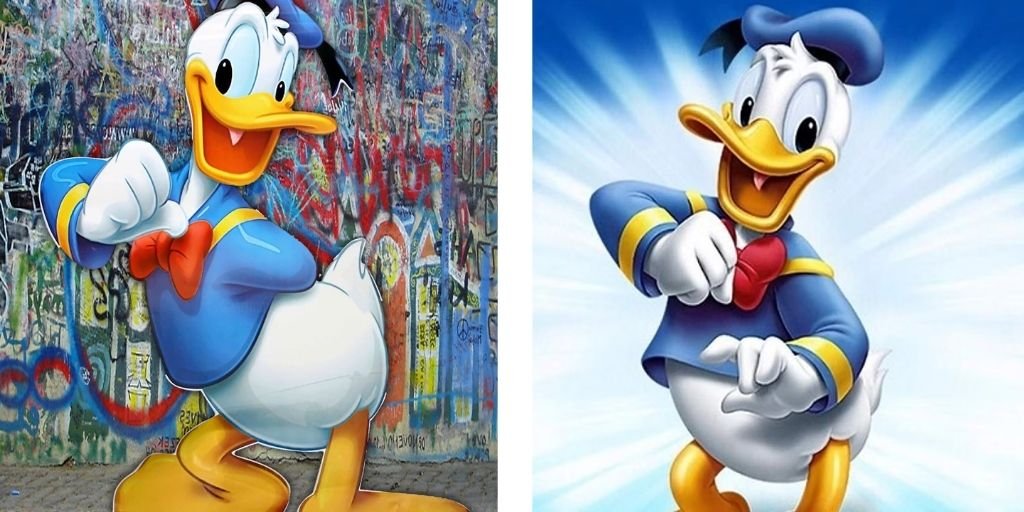
Few cartoon characters have managed to remain popular for generations quite like Donald Duck. With his sailor outfit, short temper, unforgettable voice, and endless collection of comic troubles, Donald has become one of the most recognizable figures in animation.
But why has this funny duck remained so popular for so long? Is it simply his appearance, or is there something more relatable about him?
The answer may be found in his personality. Donald is not perfect. He gets frustrated, makes mistakes, loses his temper, and sometimes finds himself in situations that seem completely out of control. In many ways, his adventures reflect the small struggles of everyday life—only with a lot more laughter.
From his early appearances in animated shorts to his place in Disney history, Donald Duck has developed into much more than a cartoon character. He has appeared in films, television programs, comic books, merchandise, theme parks, and countless stories enjoyed by audiences around the world.
The Beginning of Donald Duck
Donald Duck made his first appearance in The Wise Little Hen, a 1934 animated short produced by Walt Disney Productions. Although the character was not yet the fully developed personality audiences would later know, the basic idea was already there: Donald was energetic, mischievous, and not particularly interested in doing work he did not enjoy.
His unusual voice immediately helped him stand out. Clarence Nash provided the original voice and created the distinctive speech pattern that became one of Donald’s defining characteristics.
At a time when animated characters were becoming increasingly important in popular entertainment, Donald arrived with a personality very different from the calm and optimistic nature often associated with Mickey Mouse.
Donald could be impatient. He could be stubborn. He could become angry over surprisingly small problems. Yet those qualities made him entertaining.
Instead of always being the hero who had everything under control, Donald was often the character desperately trying to keep control while everything around him went wrong.
That difference helped audiences connect with him.
Over time, Disney developed Donald’s personality further, turning him into a central figure in animated shorts and comic stories. His popularity grew rapidly, and he eventually became one of the company’s most important characters.
Why Donald Duck Became So Popular
What makes a cartoon character memorable? A recognizable appearance certainly helps, but personality is often what creates a lasting connection.
Donald has plenty of personality.
His sailor shirt, cap, orange bill, and expressive face make him instantly recognizable. Even without hearing him speak, most people can identify him immediately.
His personality is even more distinctive.
Donald often wants simple things: peace and quiet, a comfortable life, respect from others, or the chance to enjoy himself. Unfortunately, his plans rarely go smoothly.
A small problem can quickly become a major disaster.
Imagine trying to enjoy a quiet afternoon only to have one tiny annoyance ruin your entire day. Donald’s stories often take that familiar experience and turn it into an exaggerated comedy.
This is one reason his humor has remained effective.
Donald also has an emotional quality that makes him different from many other animated characters. He can be happy, nervous, jealous, excited, embarrassed, and angry within a short period.
He is almost like a cartoon pressure cooker. The pressure builds, something goes wrong, and eventually Donald explodes in frustration.
That exaggerated emotional behavior became a major part of his appeal.
Donald Duck’s Famous Personality
Donald is perhaps best known for his temper.
His anger is not usually presented as something frightening. Instead, it becomes a source of comedy. He may shout, stomp around, complain, or become dramatically frustrated when things do not go his way.
Yet there is another side to Donald.
He can be caring and loyal. He often wants to help his friends and family, even if his attempts do not always succeed.
This combination makes him more interesting than a character who is simply “the angry duck.”
Donald can also be competitive. He wants to prove himself and sometimes becomes frustrated when other characters appear more successful.
His rivalry with characters such as Chip and Dale often brings this side of his personality to the surface. What begins as an ordinary situation can become a ridiculous battle of determination.
And then there is his stubbornness.
Donald does not easily give up. Even after making a mistake, he often tries again. Unfortunately, his second attempt can sometimes create an even bigger problem.
That stubborn determination is both his weakness and his strength.
Donald and His Relationship With Mickey Mouse
Donald Duck and Mickey Mouse are two of Disney’s most famous characters, and their friendship has played an important role in Disney history.
Their personalities are noticeably different.
Mickey is generally optimistic, friendly, and confident. Donald is more emotional, impatient, and unpredictable.
That contrast creates excellent comedy.
When Donald becomes frustrated, Mickey may appear more relaxed. When Donald turns a small problem into a major crisis, the difference between the two personalities becomes even more entertaining.
However, their relationship is not simply based on comedy.
They have often been presented as friends who share adventures and support each other. Their different personalities make them work well as a team.
Think of them like two people with completely different approaches to the same problem. One says, “Let’s stay calm,” while the other says, “Everything is going wrong!”
That contrast is part of what makes their interactions memorable.
Donald has also appeared alongside other major Disney characters, including Goofy, creating many memorable combinations of personalities and comedic situations.
Donald Duck and His Family
Donald is not only known for his friendships. His family relationships have also become an important part of his fictional world.
One of the best-known characters connected to Donald is his nephew, Huey, Dewey, and Louie.
The three young ducks are energetic, curious, and often clever enough to create problems for their uncle.
Their relationship is interesting because Donald frequently becomes frustrated by them, yet he clearly cares about them.
The nephews can sometimes outsmart their uncle, especially when Donald’s temper causes him to react before thinking.
This creates a classic comedy formula: Donald wants to maintain order, while the three boys have their own ideas.
Another important character is Daisy Duck.
Daisy is often portrayed as Donald’s romantic partner and one of the few characters capable of standing up to him when his behavior becomes too much.
Their relationship has been used for both comedy and storytelling. Donald may become jealous, impatient, or eager to impress Daisy, while Daisy often expects him to behave better.
These family and friendship connections helped expand Donald’s world beyond simple cartoon shorts.
Donald Duck’s Rivalry With Chip and Dale
Some of Donald’s funniest stories involve his conflicts with Chip and Dale.
The two chipmunks are small, clever, and extremely persistent. Donald, meanwhile, often becomes increasingly frustrated as he tries to protect his home, food, belongings, or personal space.
The humor comes from the imbalance between them.
Donald may have the advantage in size, but Chip and Dale often have the advantage in strategy.
They can turn an ordinary situation into a full-scale comedy battle.
Donald might start with a simple goal such as protecting his garden or enjoying a meal. By the end of the story, his entire environment may be destroyed.
The more frustrated Donald becomes, the more entertaining the situation becomes.
These stories also demonstrate an important feature of classic animation: physical comedy.
Characters chase each other, fall into traps, misunderstand situations, and experience increasingly ridiculous consequences.
There is often little need for complicated dialogue. The visual action tells much of the story.
The Importance of Donald’s Voice
It is impossible to discuss Donald Duck without mentioning his voice.
Donald has one of the most distinctive voices in animation. His speech can be difficult for some people to understand, but that unusual quality became one of his greatest trademarks.
Clarence Nash originally performed the character’s voice and helped establish the sound that audiences associated with Donald for decades.
The voice does more than make Donald recognizable.
It amplifies his personality.
When Donald is angry, his speech becomes part of the joke. When he is excited or confused, the unusual sound adds another layer of comedy.
The voice is almost like a musical instrument. It does not simply communicate words; it communicates emotion.
That is why even a short sound from Donald can immediately identify the character.
For a cartoon character to survive across generations, having such a unique vocal identity is a tremendous advantage.
Donald Duck in Animation and Film
Donald appeared in numerous animated shorts throughout the golden age of American animation.
These productions helped establish his reputation as one of Disney’s leading stars.
Unlike some characters who were primarily designed around adventure or fantasy, Donald’s stories often focused on everyday problems.
He might have difficulty with neighbors, animals, household chores, food, transportation, or his own temper.
The ordinary nature of these situations made them easy for audiences to understand.
Of course, animation transformed these everyday problems into something much larger.
A simple disagreement could become a chaotic chase. A minor inconvenience could result in complete destruction. A normal afternoon could become a ridiculous adventure.
Donald also appeared in larger Disney productions and educational films, demonstrating that his character could work in different formats.
His versatility helped keep him relevant as animation changed.
He could be funny in a two-minute gag, entertaining in a longer story, or useful as a recognizable Disney personality in educational material.
Donald Duck in Comic Books
Donald Duck’s popularity did not remain limited to animation.
Comic books played a major role in expanding his fictional world.
Artists and writers developed new stories involving Donald, his nephews, Daisy, and many other characters.
One particularly influential figure was Carl Barks, whose work helped establish many important elements of the Donald Duck comic universe.
Barks created stories that were funny, adventurous, and surprisingly rich in detail.
His stories also helped develop characters such as Scrooge McDuck, Donald’s wealthy and adventurous uncle.
Through comics, Donald’s world became much larger.
Readers could follow stories involving treasure hunts, family adventures, travel, inventions, mysteries, and humorous everyday situations.
This helped Donald reach audiences who might not regularly watch animated shorts.
The comics also demonstrated that the character could support more complicated storytelling than the short animated format sometimes allowed.
Scrooge McDuck and the Wider Duck Family
Donald is part of a much larger fictional family.
Scrooge McDuck is perhaps the most famous relative connected to him. Known for his enormous wealth, adventurous personality, and famous money bin, Scrooge became a major Disney character in his own right.
The relationship between Donald and Scrooge provides plenty of opportunities for comedy.
Donald often finds himself caught between Scrooge’s ambitions and the mischievous behavior of his nephews.
Huey, Dewey, and Louie also became major characters through comic stories and later television productions.
The larger Duck family gives the character a deeper fictional background.
Instead of existing alone in isolated cartoons, Donald belongs to a network of relatives and friends.
This is similar to building a neighborhood around one house. The more characters and relationships are introduced, the larger the world becomes.
That expanded universe has helped maintain interest in Donald for generations.
Donald Duck’s Cultural Impact
Donald Duck has become much more than an entertainment figure.
He is a symbol of classic animation and one of the most recognizable Disney characters worldwide.
His image has appeared on clothing, toys, books, collectibles, stationery, home goods, and countless other products.
He has also been featured prominently in Disney theme parks and other entertainment experiences.
Part of his cultural impact comes from his longevity.
Many people who first encountered Donald as children eventually introduced him to their own children.
That creates a generational connection.
A parent may remember watching Donald cartoons years ago and then enjoy seeing the same character with their children.
Few entertainment characters achieve that kind of continuity.
Donald has also influenced animation through his distinctive physical comedy, emotional expressions, and unusual vocal performance.
His stories demonstrate how a character does not need to be perfect to be lovable.
In fact, Donald’s imperfections are often the reason audiences enjoy him.
What Donald Duck Can Teach Us
Although Donald is primarily a comedy character, there are surprisingly useful lessons hidden inside his stories.
The first is that perfection is not necessary for connection.
Donald makes mistakes constantly. He becomes frustrated, chooses the wrong approach, and sometimes makes situations worse.
Yet audiences continue to root for him.
That is an important idea in real life. People do not always connect with perfect individuals. Often, they connect with people who are honest about their weaknesses and continue trying.
Another lesson is persistence.
Donald may fail repeatedly, but he rarely stays defeated for long.
He gets back up and tries again.
His stories also remind us about patience.
Of course, Donald is not always the best example of patience himself. That is exactly what makes the lesson funny.
When he loses his temper, things usually become worse.
In real life, reacting too quickly can create the same problem.
Donald turns that truth into comedy.
His adventures essentially ask a simple question: What happens when frustration takes control?
Usually, chaos follows.
Why Donald Duck Still Matters Today
Animation has changed dramatically since Donald first appeared.
Modern cartoons use advanced computer graphics, sophisticated storytelling, and highly detailed visual effects. Yet Donald remains recognizable.
Why?
Because technology can change, but personality does not become outdated.
People still understand frustration.
They still understand jealousy, competition, embarrassment, stubbornness, and the desire to have a peaceful day.
Donald represents those emotions in an exaggerated and humorous form.
His stories also have a timeless quality because they are often built around simple situations.
You do not need to understand complicated technology or current events to enjoy a story about someone trying to protect his lunch from a mischievous animal.
That simplicity is powerful.
Donald Duck is also a reminder of the importance of character design. His appearance is simple enough for a child to recognize, yet expressive enough to communicate emotion.
His sailor outfit, distinctive bill, and animated movements create an instantly recognizable silhouette.
Decades after his introduction, that design remains effective.
The Enduring Legacy of Donald Duck
Donald Duck’s journey from a supporting animated character to a global entertainment icon is remarkable.
He has appeared in cartoons, movies, comics, television programs, merchandise, and theme parks. His relationships with Mickey Mouse, Daisy Duck, Huey, Dewey, Louie, Scrooge McDuck, and other characters have helped create an extensive fictional universe.
But perhaps his greatest achievement is much simpler.
Donald makes people laugh.
He reminds us that life does not always go according to plan. Sometimes the smallest problem becomes the biggest headache. Sometimes we lose our patience. Sometimes we make a mistake and have to start over.
Donald experiences all of those things, but in a world where everything is exaggerated for comedy.
That is why he continues to feel familiar even after so many decades.
He is not simply a duck wearing a sailor suit. He is a character built around emotion, humor, persistence, and imperfection.
And maybe that is the secret of his longevity.
Conclusion
Donald Duck has earned his place among the most memorable cartoon characters in entertainment history. From his early animated appearances to his extensive comic-book adventures and appearances across Disney’s entertainment world, he has entertained generations of audiences.
His short temper, distinctive voice, expressive personality, and endless misadventures make him instantly recognizable. More importantly, his imperfections make him relatable.
Donald does not always get things right—and that is exactly why people continue to enjoy watching him.
In a world that constantly changes, his basic appeal remains wonderfully simple: something goes wrong, Donald tries to fix it, everything becomes even more chaotic, and audiences get to laugh along the way.
Frequently Asked Questions
1. When did Donald Duck first appear?
Donald Duck first appeared in the 1934 animated short The Wise Little Hen. His character was later developed into one of Disney’s most important and recognizable animated stars.
2. Who originally provided Donald Duck’s voice?
Clarence Nash was the original voice actor associated with Donald Duck. He helped establish Donald’s famous and highly distinctive speaking style, which became one of the character’s most recognizable features.
3. Who are Donald Duck’s nephews?
Donald Duck’s three famous nephews are Huey, Dewey, and Louie. They frequently appear in stories with Donald and are known for their curiosity, cleverness, and mischievous behavior.
4. Who is Donald Duck’s girlfriend?
Daisy Duck is generally portrayed as Donald Duck’s romantic partner. Their relationship appears throughout Disney animation, comics, television, and other forms of Disney entertainment.
5. Why is Donald Duck so popular?
Donald remains popular because of his distinctive appearance, unique voice, expressive personality, and relatable flaws. His temper, determination, mistakes, and humorous adventures have allowed audiences across generations to connect with him.