
Bill Clinton: The Remarkable Journey of America’s 42nd President
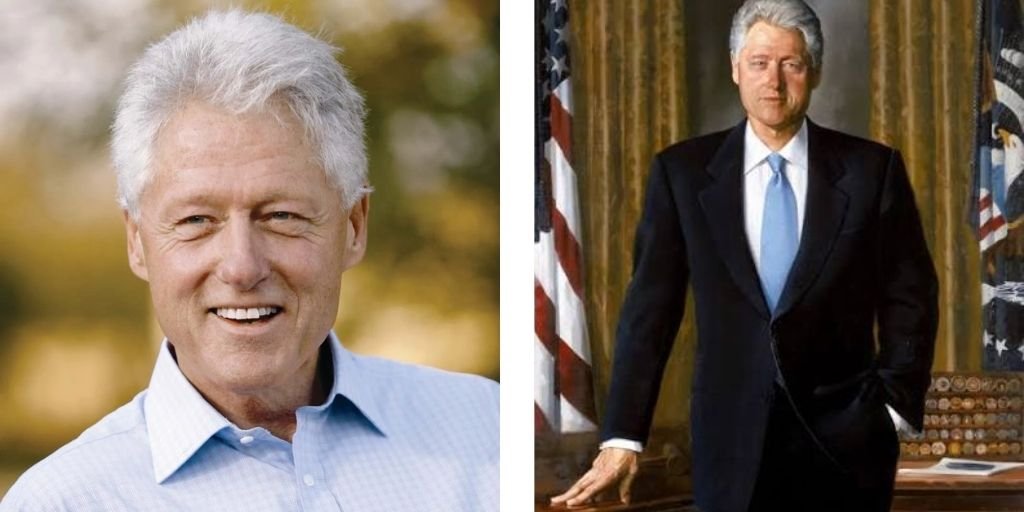
Bill Clinton remains one of the most recognizable American political figures of the modern era. From his childhood in Hope, Arkansas, to the White House and later to international humanitarian work, his life has included remarkable achievements, difficult controversies, political comebacks, and lasting influence.
Born on August 19, 1946, Clinton became the 42nd president of the United States, serving from 1993 to 2001. Before reaching Washington, he built his political career in Arkansas, where he served as attorney general and governor. His presidency was closely associated with economic growth, changing technology, welfare reform, international diplomacy, and a new generation of Democratic politics.
But how did a young man from a small Arkansas town become president? And why does his legacy continue to generate discussion decades after he left office? His story is much bigger than an election victory.
Early Life and Family Background
Bill Clinton was born William Jefferson Blythe III in Hope, Arkansas, on August 19, 1946. His biological father, William Jefferson Blythe Jr., died in a car accident before Clinton was born. His mother, Virginia Cassidy Blythe, later married Roger Clinton, and young Bill eventually adopted the Clinton family name.
His childhood was shaped by his grandparents, who helped raise him while his mother pursued nursing studies. Their influence became an important part of his development. The family lived in a period when racial segregation was still a major reality in the American South, yet Clinton’s grandparents operated their small grocery business in a way that reflected an inclusive outlook toward their customers.
Clinton was also known as a strong student and an enthusiastic reader. Music became another important part of his personality. He learned to play the saxophone and continued to enjoy the instrument throughout his political career.
For Clinton, politics did not begin with a presidential campaign. It began with curiosity about government and public service.
As a teenager, he was selected to participate in Boys Nation, an American Legion program designed to introduce young people to government. During that experience, he met President John F. Kennedy at the White House. The encounter became an important inspiration for his future public career.
That meeting illustrates something interesting about Clinton’s personality. He had an ability to connect personal experiences with larger ambitions. A single childhood encounter with a president became part of the story he later told about why public service mattered to him.
Education and the Beginning of a Political Career
After graduating from high school, Clinton attended Georgetown University, where he studied international affairs. While there, he worked as an intern in the office of Arkansas Senator J. William Fulbright. That experience exposed him to Washington politics and international issues.
After Georgetown, Clinton won a Rhodes Scholarship and studied at Oxford University in England. He later attended Yale Law School, where he earned his law degree in 1973. At Yale, he also met Hillary Rodham, who would later become Hillary Clinton.
His education gave him an unusual combination of political, legal, and international experience.
After law school, Clinton returned to Arkansas and taught law at the University of Arkansas. He also began moving toward elected office.
His first congressional campaign came in 1974, when he challenged Republican incumbent John Paul Hammerschmidt. Clinton lost that election, but the defeat did not end his political ambitions.
Instead, it became an early lesson in political persistence.
In 1976, Clinton was elected Arkansas attorney general. Two years later, he became governor at just 32 years old. His first period as governor was difficult, and he lost his bid for reelection. Yet he returned to the governorship four years later and eventually became one of the country’s most prominent Democratic governors.
His political career was beginning to resemble a long road rather than a straight line.
Governor of Arkansas and the Road to Washington
Clinton served as Arkansas governor for a total of twelve years, with a break after his initial term. His experience in state government became central to the political identity he later brought to Washington.
As governor, he became interested in education, economic development, healthcare, and welfare policy. He also gained a reputation as a politician who could communicate complicated issues in relatively simple language.
That skill mattered.
A politician can have excellent ideas, but if ordinary people cannot understand those ideas, they may never become politically meaningful. Clinton understood the value of conversation, storytelling, and direct engagement.
His time as governor also gave him national exposure. From 1986 to 1987, he served as chairman of the National Governors Association and participated in discussions about education and welfare reform.
By the early 1990s, Clinton believed the United States needed a different political direction. The country was emerging from the Cold War, facing economic concerns, and experiencing rapid changes in technology and society.
In 1991, he decided to seek the Democratic presidential nomination.
His campaign emphasized economic opportunity and a focus on ordinary Americans. Clinton and his running mate, Senator Al Gore, presented themselves as representatives of a younger generation of political leadership.
The campaign eventually succeeded.
On November 3, 1992, Clinton defeated incumbent President George H. W. Bush and independent candidate Ross Perot. At age 46, he became the 42nd president of the United States.
Bill Clinton Enters the White House
Clinton was inaugurated in January 1993.
His arrival represented a generational shift. He was considerably younger than many previous presidents and brought a different political style to the White House.
His administration emphasized the economy, employment, education, healthcare, and domestic investment. The president wanted the government to play a role in creating conditions in which businesses and families could prosper.
One of the major early priorities was reducing the federal deficit.
Clinton supported a major deficit-reduction plan, while his administration also pursued measures involving taxation, trade, education, crime policy, and social programs. His presidency included the Family and Medical Leave Act, the Brady Bill, and the North American Free Trade Agreement (NAFTA), among other major policies.
Not every policy was universally popular.
Healthcare reform, for example, became one of the administration’s most difficult political battles. The effort to create a comprehensive national healthcare plan encountered strong opposition and ultimately failed to become law in its proposed form.
That failure demonstrated an important reality of presidential politics: winning an election and governing effectively are two very different challenges.
The White House is not simply a place where a president announces ideas. It is more like a giant machine with Congress, courts, political parties, interest groups, businesses, states, and voters all pulling in different directions.
Clinton learned this lesson quickly.
The Economy and the Clinton Years
When people discuss the Clinton presidency today, the American economy is often one of the first subjects mentioned.
During the 1990s, the United States experienced a period of strong economic expansion. Employment increased, unemployment declined, and technological development accelerated. The growth of the internet and personal computing transformed businesses and everyday life.
Clinton’s administration placed significant emphasis on fiscal policy and economic growth. His presidency also included the 1997 Balanced Budget Act, reflecting efforts to address federal finances.
The economic story, however, cannot be attributed to one person alone.
Economic performance depends on countless factors, including Federal Reserve policy, private investment, technological innovation, international trade, consumer demand, productivity, and decisions made by Congress.
Still, the Clinton administration’s economic policies became an important part of its political identity.
The administration also promoted trade agreements and technology-related growth. NAFTA, which linked the United States, Canada, and Mexico through a major trade framework, became one of the most debated policies of the period.
Supporters argued that increased trade could expand markets and strengthen economic ties. Critics worried about job losses, industrial change, and the effects of globalization on American workers.
The debate surrounding NAFTA illustrates why Clinton’s legacy cannot be reduced to a simple list of successes and failures. Many of his policies produced both supporters and critics.
The 1996 Election and a Second Term
Despite political challenges, Clinton remained politically resilient.
In the 1994 midterm elections, Republicans gained control of both chambers of Congress, creating a major shift in Washington. Clinton now had to govern with a Congress controlled by the opposing party.
Rather than ending his presidency’s political momentum, the conflict eventually encouraged Clinton to adopt a more centrist style on several issues.
By 1996, Clinton and Gore campaigned for reelection.
They won the election against Republican nominee Bob Dole and third-party candidate Ross Perot. Clinton therefore became the first Democratic president since Franklin D. Roosevelt to win two full terms, according to the historical presidential record. His second inauguration took place in January 1997.
His second term benefited from continued economic expansion, but it also became increasingly dominated by personal and political controversy.
This combination of achievement and scandal would eventually define how many people remembered the final years of his presidency.
Foreign Policy and International Leadership
Although domestic economics received enormous attention, Clinton’s presidency also involved major international events.
The United States remained the world’s most powerful military and economic force after the Cold War. That created opportunities and responsibilities for the Clinton administration.
Clinton became involved in international diplomacy involving Europe, Russia, the Middle East, Asia, Africa, and the Balkans.
His administration supported efforts to promote peace in the Middle East and played a major diplomatic role in the negotiations that eventually produced the Oslo Accords and other agreements involving Israeli and Palestinian representatives.
The administration also faced conflicts in the Balkans, including Bosnia and Kosovo.
Clinton’s approach to foreign policy frequently emphasized alliances, diplomacy, economic relationships, and the use of American influence.
The 1990s were also a period when globalization became increasingly visible. Governments were becoming more economically connected, while the internet made communication faster than ever.
Clinton’s international outlook reflected that changing world.
His administration understood that America’s interests were increasingly connected to events far beyond its borders.
Personal Controversies and Impeachment
No discussion of Clinton’s presidency would be complete without addressing the controversies surrounding his personal life.
His presidency was marked by several investigations and allegations, including questions about his conduct before and during his time in office.
The most famous controversy involved his relationship with Monica Lewinsky, a White House intern.
Clinton initially denied having a sexual relationship with Lewinsky, but later acknowledged an inappropriate relationship. The resulting investigation led to a major political crisis.
In 1998, Independent Counsel Kenneth Starr’s investigation produced a report that was sent to Congress. The House of Representatives eventually approved articles of impeachment against Clinton, accusing him of perjury and obstruction of justice.
In 1999, the Senate held an impeachment trial.
Clinton was acquitted by the Senate and remained in office for the rest of his second term.
The episode deeply affected American politics and public discussion about presidential behavior, privacy, accountability, and the relationship between personal conduct and public responsibility.
For supporters, Clinton’s survival demonstrated political resilience and the ability to continue governing despite extraordinary pressure.
For critics, the scandal represented a serious failure of judgment and integrity.
Both perspectives remain part of the historical record.
Life After the Presidency
When Clinton left office in January 2001, his political career did not end.
Instead, he entered a new phase.
Former presidents often discover that leaving the White House creates a different kind of freedom. They no longer have to manage the federal government every morning, but they can use their experience, networks, and public profile to influence issues they care about.
Clinton established the Clinton Foundation, which became involved in areas including global health, economic opportunity, climate initiatives, and other humanitarian projects. The foundation has described its work as bringing together governments, businesses, nonprofit organizations, and individuals to address major challenges.
One notable area was HIV/AIDS treatment.
The foundation worked with partners to increase access to medicines and healthcare services, particularly in developing countries. Its programs also addressed public health, childhood nutrition, climate concerns, and economic opportunity.
Another major project was the Clinton Global Initiative, launched in 2005. It brought together leaders from government, business, civil society, and other sectors to make commitments around social and economic problems.
According to the Clinton Foundation’s 2020 impact report, CGI commitments were associated with efforts affecting hundreds of millions of people around the world.
The former president had effectively moved from electoral politics into global advocacy.
Bill Clinton and the Clinton Family
Clinton’s public life has always been closely connected with his family.
He married Hillary Rodham in 1975, after meeting her while both were studying at Yale. They later had one daughter, Chelsea Clinton, who was born in 1980.
Hillary Clinton eventually became a major political figure in her own right. She served as a U.S. senator from New York and later as secretary of state. She also became the Democratic presidential nominee in 2016.
Chelsea Clinton has worked in public health, philanthropy, and nonprofit initiatives.
The Clinton family therefore became one of the most prominent political families in modern American life.
This family story is unusual because Bill Clinton’s political career was followed by Hillary Clinton’s own national career. Their partnership combined personal history with public service, although it also attracted intense media attention.
For decades, almost every major development involving the family became a subject of national discussion.
Clinton’s Communication Style and Public Image
One reason Clinton remained politically influential was his ability to communicate.
He often spoke in a conversational manner rather than relying entirely on formal political language. He was known for remembering details about people, engaging audiences directly, and explaining policy through everyday examples.
His communication style helped him appeal to voters who might not have followed politics closely.
Clinton could also connect emotionally with audiences. His speeches often combined statistics, personal stories, humor, and optimism.
His saxophone playing became another recognizable part of his public image. During his presidency, he occasionally played the instrument publicly, reinforcing the impression that he was different from the traditional image of a distant political leader.
In modern political communication, that personal connection is extremely valuable.
People rarely remember every paragraph of a policy document. They remember stories, personalities, moments, and emotions.
Clinton understood that reality exceptionally well.
The Legacy of Bill Clinton
So, how should Bill Clinton ultimately be remembered?
The answer depends heavily on what aspect of his career receives the most attention.
Supporters point to the strong economy of the 1990s, deficit reduction, welfare reform, international diplomacy, technological development, and social programs. They also point to his post-presidential humanitarian work.
Critics highlight controversies involving personal behavior, political compromises, trade policy, foreign interventions, and the scandals that surrounded his administration.
Both sides contribute to a more complete picture.
Clinton’s presidency was neither a perfect success nor a simple failure. It was a complicated period in American history, shaped by economic change, globalization, technological growth, political polarization, and major cultural shifts.
His career can be compared to a long bridge: one end stood in the political world of the Cold War, while the other reached toward the internet-driven, globally connected America of the 21st century.
That is perhaps one reason his presidency remains interesting.
Clinton was a transitional figure. He represented a Democratic Party that was trying to adapt to a changing economy and a changing electorate.
His political approach influenced Democrats who came after him and helped shape debates about the proper role of government, markets, social policy, and international engagement.
Conclusion
Bill Clinton’s journey from Hope, Arkansas, to the White House is one of the most distinctive political stories in modern American history. He overcame early setbacks, built a career as Arkansas governor, won the presidency twice, guided the country through a period of major economic and technological change, survived impeachment, and later devoted much of his public life to philanthropic and international work.
His legacy remains complicated because his achievements and controversies are impossible to separate completely. Yet that complexity is exactly what makes his career worth studying.
More than two decades after he left office, Clinton remains an important figure for understanding American politics, the 1990s, globalization, presidential power, and the changing relationship between politics and popular culture.
Frequently Asked Questions
1. Who was Bill Clinton?
Bill Clinton is an American politician who served as the 42nd president of the United States from 1993 to 2001. Before becoming president, he served as Arkansas attorney general and governor.
2. When was Bill Clinton born?
Bill Clinton was born on August 19, 1946, in Hope, Arkansas.
3. Who was Bill Clinton’s vice president?
Al Gore served as Clinton’s vice president during both of Clinton’s presidential terms. The two campaigned together in 1992 and 1996.
4. Was Bill Clinton impeached?
Yes. The House of Representatives impeached Clinton in 1998 on charges related to perjury and obstruction of justice. However, the Senate acquitted him in 1999, allowing him to remain president.
5. What did Bill Clinton do after leaving the presidency?
After leaving office, Clinton became heavily involved in philanthropic and humanitarian work through the Clinton Foundation. Its initiatives have included global health, climate-related programs, economic opportunity, and other international projects.


