
J.K. Rowling: The Life, Career, Books, and Legacy of a Remarkable Author
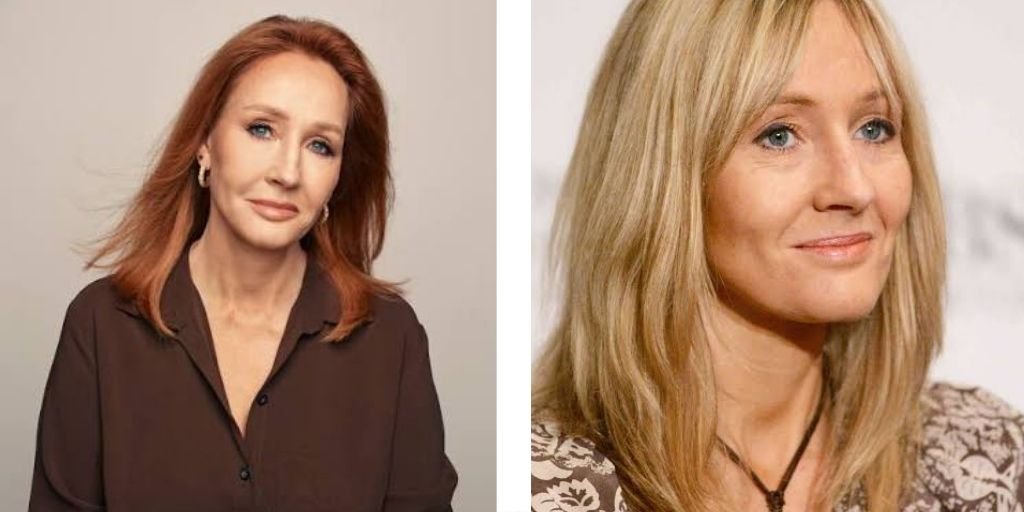
Few modern writers have changed popular culture as dramatically as J.K. Rowling. Her name became closely connected with Harry Potter, Hogwarts, friendship, courage, and a magical world that captured the imagination of millions of readers. Yet her story is much bigger than the success of one book series.
Before Harry Potter became a global phenomenon, Rowling was a woman trying to build a writing career while facing uncertainty and financial difficulties. The idea that eventually became one of the most successful literary franchises in history began during a delayed train journey in 1990. Several years later, Harry Potter and the Philosopher’s Stone was published in Britain, introducing readers to a young wizard whose story would eventually span seven novels.
Today, Rowling is also known for writing crime fiction under the name Robert Galbraith, publishing books for children and adults, supporting charitable causes, and taking public positions on controversial social issues. Her career offers an interesting mixture of literary achievement, business success, philanthropy, and public debate.
1. Early Life and Childhood
J.K. Rowling was born Joanne Rowling on July 31, 1965, in England. She spent part of her childhood in Winterbourne, Gloucestershire, before her family moved to Tutshill near Chepstow when she was nine. Books were an important part of family life, and Rowling developed a love of reading from an early age.
Her interest in storytelling appeared surprisingly early. According to her publisher, Rowling wrote her first story about a rabbit when she was six years old. By the time she was eleven, she had attempted another story involving seven cursed diamonds and their owners.
That early enthusiasm matters because it shows that writing was not simply something Rowling discovered after becoming famous. Storytelling had been part of her imagination for much of her childhood.
She later attended Wyedean Comprehensive School and studied French and Classics at the University of Exeter. Her education in Classics would eventually influence some of the language and magical terminology found in her books. Latin, mythology, ancient history, and European languages all provided useful material for a writer building a fictional world.
For many aspiring writers, childhood creativity disappears as adult responsibilities arrive. Rowling’s journey demonstrates something different: an early fascination with stories can remain meaningful even when life takes a person in unexpected directions.
2. The Train Journey That Changed Everything
Imagine sitting on a train with nothing particularly extraordinary happening around you. Suddenly, an idea appears in your mind: a boy who does not know he is a wizard is about to discover an entirely different world.
That was the beginning of Harry Potter.
In 1990, Rowling was delayed during a train journey from Manchester to London King’s Cross. During the journey, she began developing the idea of Harry Potter. Over the next several years, she planned the seven-book story and created extensive notes about its characters, setting, history, and plot.
The idea did not instantly turn into a bestselling novel. Rowling spent years developing it.
She wrote many of her early notes by hand. The project gradually became more detailed, with Hogwarts, its students, teachers, magical traditions, families, conflicts, and mysteries taking shape.
This is one of the most useful lessons from her early career: a great idea is only the beginning.
A seed can contain the possibility of a huge tree, but someone still has to plant it, water it, and wait. Rowling’s original idea was that seed. Years of planning and writing transformed it into a story capable of reaching readers around the world.
3. Struggles Before Literary Success
The popular image of a bestselling author can make success appear effortless. Rowling’s path was considerably more complicated.
She moved to Edinburgh in 1993 with three chapters of the Harry Potter manuscript and was raising her young daughter, Jessica. She continued writing whenever she could find the time. Eventually, she completed the manuscript and began submitting the opening chapters to literary agents.
The road to publication was not immediate.
Eventually, an agent requested the rest of the manuscript. That response became an important turning point. Rowling later described the letter requesting the complete manuscript as one of the best letters she had ever received.
The completed book was accepted for publication by Bloomsbury while Rowling was training as a teacher. Harry Potter and the Philosopher’s Stone was published in Britain in 1997.
The first print run was modest compared with what came later. Bloomsbury’s educational material notes that the initial hardback printing consisted of only 500 copies.
That number is almost unbelievable when compared with the eventual scale of the series.
The story that started with hundreds of copies would ultimately become a worldwide publishing phenomenon.
4. The Harry Potter Phenomenon
The first Harry Potter novel introduced readers to Harry, Ron Weasley, Hermione Granger, Hogwarts School of Witchcraft and Wizardry, and a magical society existing alongside the ordinary world.
The combination was powerful.
The story had fantasy, mystery, humor, friendship, danger, family relationships, school life, and coming-of-age themes. Readers could enjoy the magic while also recognizing familiar emotions.
Harry might be facing a dangerous magical creature, but he was also dealing with homework, friendships, insecurity, unfairness, and the challenge of figuring out who he wanted to become.
The series eventually grew into seven novels:
- Harry Potter and the Philosopher’s Stone
- Harry Potter and the Chamber of Secrets
- Harry Potter and the Prisoner of Azkaban
- Harry Potter and the Goblet of Fire
- Harry Potter and the Order of the Phoenix
- Harry Potter and the Half-Blood Prince
- Harry Potter and the Deathly Hallows
The seventh book was published in 2007, completing a ten-year publishing journey that began with the first novel in 1997.
According to Bloomsbury, the books have now sold more than 600 million copies and have been translated into 85 languages.
That level of international reach is unusual even among bestselling authors.
The books did not simply become popular in one country. They crossed languages, cultures, and generations.
5. Why the Harry Potter Stories Became So Popular
What made the books work so well?
There is no single answer.
One reason is the gradual expansion of the world. The first story begins with a relatively simple discovery: Harry learns that he is a wizard. But the world becomes larger with every book.
Readers discover new characters, locations, magical objects, family histories, creatures, traditions, and secrets.
Another important element is character development.
Harry changes as he grows older. So do Ron and Hermione. Their friendship experiences disagreements, fears, jealousy, loss, and reconciliation. They do not remain exactly the same people they were when the story began.
The books also deal with serious ideas.
Friendship: Harry’s relationships repeatedly help him survive difficult situations.
Courage: Characters are often required to act despite fear.
Choice: The stories suggest that a person’s decisions can matter as much as their abilities.
Loss: Death and grief become increasingly important as the series progresses.
Prejudice: The fictional world contains social divisions and attitudes toward people from different backgrounds.
Power: The books repeatedly ask what happens when individuals become obsessed with control.
This mixture helped the novels appeal to both younger readers and adults.
The magical setting was like a doorway. Once readers walked through it, they found stories about very human experiences.
6. From Books to Movies and a Global Franchise
The Harry Potter story eventually expanded beyond printed pages.
The seven novels became eight major motion pictures, creating another enormous cultural phenomenon. Bloomsbury describes the films as major successes, while Rowling’s official website notes that the franchise also expanded through companion books, Fantastic Beasts films, and the stage production Harry Potter and the Cursed Child.
The movies introduced Hogwarts and its characters to audiences who may not have read the books.
Actors including Daniel Radcliffe, Emma Watson, and Rupert Grint became closely associated with Harry, Hermione, and Ron. Meanwhile, performers such as Alan Rickman, Maggie Smith, Robbie Coltrane, and others helped give the fictional world a distinctive screen identity.
The franchise expanded into merchandise, attractions, games, stage productions, theme-park experiences, audiobooks, illustrated editions, and other forms of entertainment.
It became much more than a collection of novels.
For many people, Harry Potter became part of their childhood memories. Some readers who first encountered the books as children later introduced them to their own families.
That is one reason the series has remained culturally relevant decades after the publication of its first installment.
7. Life Beyond Harry Potter
It would be easy to assume that Rowling’s career ended creatively with Harry Potter and the Deathly Hallows. It did not.
She continued writing in several different directions.
One of her most notable projects is the Cormoran Strike crime-fiction series, published under the pseudonym Robert Galbraith. The series allowed Rowling to work within the detective genre rather than children’s fantasy.
Writing under another name also created some distance from the enormous expectations surrounding her most famous work.
Rowling has also written books outside the Potter universe.
These include The Casual Vacancy, an adult novel, along with children’s works such as The Ickabog and The Christmas Pig.
In 2020, The Ickabog was initially published online in serialized form during the COVID-19 pandemic before appearing as a book. Rowling’s royalties from the project were directed toward charitable purposes through her charitable trust.
She has therefore demonstrated an interest in moving between genres rather than remaining permanently attached to one fictional universe.
8. Companion Books and the Wider Wizarding World
Rowling also expanded the Harry Potter universe through companion works.
Three notable titles are:
- Quidditch Through the Ages
- Fantastic Beasts and Where to Find Them
- The Tales of Beedle the Bard
These books were produced in connection with charitable fundraising.
Fantastic Beasts and Where to Find Them eventually inspired a film series centered on magizoologist Newt Scamander.
The universe was also expanded through the stage play Harry Potter and the Cursed Child, created by Rowling with playwright Jack Thorne and director John Tiffany.
This expansion illustrates an important aspect of modern publishing.
A successful story no longer has to remain inside a single format. A fictional world can move from novels to cinema, theater, digital platforms, games, merchandise, and live experiences.
Rowling’s creation became an example of how a literary property can develop into a broad entertainment ecosystem.
9. Philanthropy and Lumos
Rowling’s career has also included substantial charitable activity.
She is the founder and Life President of Lumos, an organization focused on ending the institutionalization of children and helping vulnerable young people access family-based care and support.
The origins of Lumos are connected to a newspaper article Rowling read about children living in institutions. The organization was founded in 2005 and takes its name from the light-producing spell in the Harry Potter universe.
Her charitable work extends beyond Lumos.
Through her charitable trust, Volant, Rowling has supported various humanitarian causes. She has also supported initiatives connected with women, children, and vulnerable communities.
In Scotland, the Anne Rowling Regenerative Neurology Clinic was founded in memory of her mother and supports research and treatment relating to neurological conditions. Lumos also notes that Rowling funded and co-founded Beira’s Place, a sexual violence support service for women in Edinburgh, in 2022.
Whatever one’s opinion of Rowling’s public controversies, her philanthropic activities form an important part of her professional story.
10. Awards, Honors, and Literary Recognition
Rowling’s achievements have been recognized through numerous awards and honors.
She has received the OBE for services to children’s literature and philanthropy. She has also received the Companion of Honour, France’s Légion d’Honneur, Spain’s Prince of Asturias Award, Denmark’s Hans Christian Andersen Award, and other distinctions.
Her awards reflect the extraordinary cultural impact of her writing.
Yet perhaps the most meaningful measure of her success is not a trophy or title.
It is the number of people who discovered reading through Harry Potter.
The series arrived at a time when concerns about children’s reading habits were common. The books became unusually successful among young readers and helped make reading feel exciting to millions of children.
Libraries, classrooms, bookshops, and families all became part of the phenomenon.
11. Controversies and Public Debate
A complete discussion of Rowling’s public life also needs to acknowledge the controversy surrounding some of her public statements on sex, gender, and women’s rights.
Since 2019, Rowling has made a series of statements on these issues that have generated intense debate. Critics have accused her of promoting views they consider harmful to transgender people, while Rowling has described her position as a defense of sex-based rights and women’s protections.
The controversy has affected public discussion surrounding her work and relationships with some people associated with the Harry Potter franchise.
This is an important distinction: the literary legacy of Harry Potter and the public debate surrounding its creator are related, but they are not identical subjects.
Readers can discuss the books, their themes, and their cultural importance while also recognizing that Rowling has become a controversial public figure.
For a general audience, this context matters because modern celebrity is rarely limited to professional achievements. Social media allows writers, actors, musicians, and other public figures to communicate directly with millions of people, meaning their personal and political views can become part of their public identity.
Rowling’s experience is an especially prominent example of that phenomenon.
12. J.K. Rowling’s Lasting Legacy
So, what is J.K. Rowling’s lasting legacy?
It depends partly on what aspect of her career you examine.
As a writer, she created one of the most commercially successful children’s series in history. The seven Harry Potter novels have sold more than 600 million copies and reached readers in 85 languages, according to Bloomsbury.
As a storyteller, she demonstrated the power of combining fantasy with familiar human emotions.
As a business figure, she helped create a literary property that expanded into film, theater, publishing, digital entertainment, and other media.
As a philanthropist, she has supported charitable organizations and founded Lumos, which focuses on vulnerable children and family-based care.
As a public figure, she has also become part of significant cultural debates.
Her legacy, therefore, is complicated but undeniably substantial.
Harry Potter is no longer simply a series of children’s books. It has become a cultural reference point. Hogwarts, Quidditch, Hermione, Dumbledore, and many other elements of the fictional world are recognizable far beyond the original readership.
And perhaps that is the most remarkable part.
A story imagined during a delayed train journey eventually became a world shared by hundreds of millions of readers.
Conclusion
J.K. Rowling’s journey is a story of imagination, persistence, extraordinary success, philanthropy, and controversy. From writing stories as a child to developing the Harry Potter universe and becoming one of the world’s best-known authors, her career has had a remarkable reach.
The Harry Potter books remain her defining achievement, but her work extends into crime fiction, children’s literature, film, theater, and charitable activity. At the same time, her public statements have made her a controversial figure whose cultural influence reaches far beyond literature.
Whatever the future holds, it is difficult to deny the scale of the mark she has left on modern popular culture. Her story reminds aspiring writers of a simple idea: sometimes an ordinary moment can contain the beginning of something extraordinary.
FAQs
1. Who is J.K. Rowling?
J.K. Rowling is a British author best known for creating the Harry Potter series. She has also written crime novels under the name Robert Galbraith and several books for children and adults.
2. When was the first Harry Potter book published?
Harry Potter and the Philosopher’s Stone was first published in the United Kingdom in 1997 by Bloomsbury.
3. How many Harry Potter books did J.K. Rowling write?
The original Harry Potter story consists of seven novels, beginning with Harry Potter and the Philosopher’s Stone and ending with Harry Potter and the Deathly Hallows in 2007.
4. What is J.K. Rowling’s pen name?
For her crime-fiction novels, Rowling writes under the pseudonym Robert Galbraith.
5. What charity did J.K. Rowling establish?
Rowling founded Lumos, an international organization focused on ending the institutionalization of children and promoting family-based care.


