
Helen Keller: The Remarkable Life, Courage, and Legacy of an Inspiring Woman
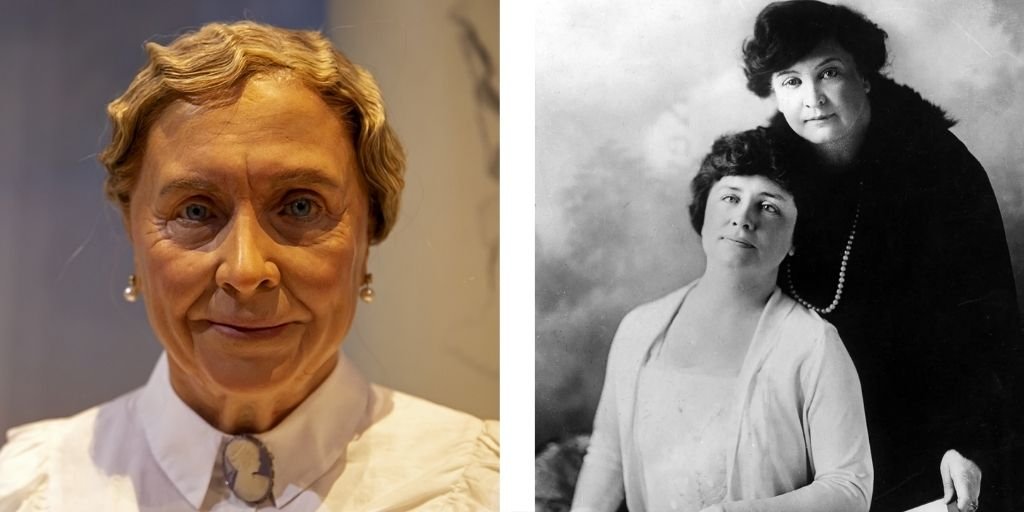
Helen Keller remains one of the most remarkable figures in modern history. Born in 1880, she lost both her sight and hearing as a young child, yet she went on to become an author, lecturer, educator, activist, and advocate for people with disabilities. Her life story is often presented as a story of overcoming hardship, but that description does not tell the whole story.
Keller’s achievements were not the result of determination alone. Her education, especially her relationship with teacher Anne Sullivan, played a crucial role. Together, they developed ways for Keller to communicate and understand the world around her. From there, she pursued formal education and eventually became an internationally known public figure.
What makes her story especially meaningful is that she did not simply overcome personal challenges. She used her public voice to speak about education, disability rights, poverty, women’s rights, and social justice. Her journey reminds us that a person’s circumstances may shape their path, but they do not necessarily define the destination.
Early Life and Childhood
Helen Adams Keller was born on June 27, 1880, in Tuscumbia, Alabama. Her family lived on Ivy Green, a property that later became closely associated with her childhood and legacy.
As a baby, Keller developed normally. However, when she was about 19 months old, she became seriously ill. The illness left her deaf and blind. The exact medical cause has never been established with certainty, although historical accounts have suggested possibilities such as scarlet fever or meningitis.
For a young child, losing the ability to see and hear created enormous difficulties. Keller could still experience the world through touch, smell, taste, and movement, but communicating with other people became extremely challenging.
Her family developed a limited system of signs that Keller used to communicate basic needs. She was intelligent and curious, but she had no conventional way to express many of the thoughts forming in her mind.
Imagine having a room full of ideas but no door through which to let them out. That is one way to understand the frustration Keller experienced during her early childhood.
Her behavior sometimes became difficult to manage. She could become angry when people failed to understand what she wanted. Her family recognized that she needed specialized education and began searching for help.
That search eventually changed her life.
Anne Sullivan Arrives and Changes Everything
In 1887, Anne Mansfield Sullivan arrived at the Keller family home. Sullivan was only 20 years old, but she brought experience, patience, and a strong belief that Keller could learn.
Sullivan had experienced serious vision problems herself and understood something about living with disability. She had also studied at the Perkins School for the Blind in Boston.
Her first challenge was communication.
Sullivan began spelling words into Keller’s hand using manual sign language. At first, Keller did not understand that the movements represented objects and ideas. Sullivan continued patiently, spelling words such as “doll” and “water” into her hand.
The breakthrough came at the famous water pump.
Sullivan placed Keller’s hand under running water while spelling the corresponding word into her other hand. Keller suddenly understood that the repeated pattern represented the substance flowing over her fingers.
This was far more than learning one word. It was the discovery that everything around her could have a name.
Once that connection was established, Keller’s learning accelerated dramatically. She wanted to know the names of objects, people, and ideas. She began learning hundreds of words and gradually developed more sophisticated communication skills.
Sullivan’s role cannot be separated from Keller’s success. Their relationship became one of the most important educational partnerships in history.
Education and the Pursuit of Knowledge
After learning to communicate, Keller wanted more education. She studied at the Perkins School for the Blind and later attended the Wright-Humason School for the Deaf and Horace Mann School for the Deaf in New York.
Her education was demanding. Keller had to learn through touch and other adapted methods. Reading involved embossed books and, later, Braille. Communication required considerable effort.
She eventually entered Radcliffe College, which was associated with Harvard University. In 1904, she graduated with a Bachelor of Arts degree.
Her graduation was a major achievement. At a time when educational opportunities for women were already limited, Keller completed a rigorous college education while being both deaf and blind.
Her experience demonstrates an important point: accessibility can make education possible, but opportunity must also be matched by determination, support, and appropriate teaching methods.
Keller did not simply receive an education. She actively pursued it.
She read widely, studied languages, explored philosophy, and developed an interest in literature and social issues. Her intellectual curiosity extended far beyond the subjects required for formal education.
The Story Behind The Story of My Life
One of Keller’s best-known works is The Story of My Life, published in 1903.
The book describes her childhood, education, relationship with Sullivan, and development as a writer. It provides readers with an unusually personal look at the challenges she faced and the moments that shaped her thinking.
The book became an important part of her legacy because it showed readers that disability did not prevent intellectual growth or emotional depth.
Keller later wrote numerous books, essays, and articles. Her writing covered subjects ranging from personal experiences to political and social issues.
Her literary work also helped change public perceptions. Rather than being viewed simply as someone who had overcome a personal tragedy, Keller emerged as a thoughtful writer with strong opinions about the world around her.
That distinction matters.
Her life was not only about what she could accomplish despite blindness and deafness. It was also about what she believed, what she questioned, and what kind of society she wanted to see.
A Career as a Writer and Public Speaker
Keller became a professional writer and lecturer, traveling extensively and speaking to audiences in the United States and abroad.
Public speaking presented obvious challenges. Keller could not hear an audience in the conventional way, yet she developed methods of communicating effectively.
Anne Sullivan remained an important part of this process, helping interpret conversations and situations when necessary. Later, Keller worked with other assistants as her career developed.
Her public appearances attracted enormous attention.
People were fascinated by her ability to communicate and by the depth of her knowledge. However, Keller increasingly used that attention for causes that went beyond her personal story.
She spoke about education, disability, poverty, workers’ rights, women’s equality, and other social questions.
In this sense, her disability became only one part of her identity. She wanted audiences to listen to her ideas rather than merely marvel at her abilities.
Her career demonstrated that communication is not limited to one method. Human beings can exchange ideas through speech, writing, touch, technology, interpretation, and countless other means.
Helen Keller and Disability Advocacy
Keller became a prominent advocate for people who were blind or visually impaired.
She supported organizations that worked to improve education and employment opportunities for people with disabilities. She also traveled to meet people and raise awareness about their experiences.
At the time, many disabled people faced severe social barriers. Limited education, poor employment opportunities, institutionalization, and public misunderstanding were common problems.
Keller challenged those attitudes.
She argued that society should not assume that disabled people were incapable simply because they experienced physical or sensory limitations.
Her advocacy helped move public discussion toward a broader understanding of accessibility and opportunity.
Today, concepts such as inclusive education, assistive technology, accessible workplaces, and disability rights are widely discussed. Keller lived in an era when many of these ideas were far less developed.
Her work helped contribute to a growing movement that viewed disabled people as citizens entitled to education, independence, dignity, and participation.
Her Political and Social Views
Keller’s public life extended far beyond disability advocacy. She became involved in several progressive causes, including women’s suffrage, labor rights, pacifism, and socialism.
Some of her political positions were controversial during her lifetime.
It is important to remember this when studying her history. Keller was not simply an inspirational figure who encouraged people to “never give up.” She was an intellectually engaged person who formed opinions about difficult political and economic questions.
She criticized social inequality and expressed concern about poverty and working conditions.
Her political activism sometimes caused critics to focus less on her achievements and more on her beliefs. Keller, however, continued to speak publicly about the subjects she considered important.
Her willingness to engage with controversial issues makes her legacy more complicated—and arguably more interesting.
A historical figure should not be reduced to a motivational quote. Keller was a complete human being with convictions, disagreements, changing ideas, and strong passions.
Helen Keller’s Relationship With Anne Sullivan
The relationship between Keller and Anne Sullivan is one of the central stories of Keller’s life.
Sullivan was not merely a teacher who arrived, taught a few lessons, and disappeared. She became a lifelong companion, interpreter, collaborator, and friend.
Their partnership lasted for decades.
Sullivan helped Keller access books, communicate with other people, participate in education, and navigate public life. Keller, in turn, developed into an independent thinker and advocate.
Their relationship was not always effortless. Like any long partnership, it involved challenges and difficult moments. Yet the trust between them remained remarkably strong.
Sullivan’s influence demonstrates the importance of effective teaching. A good teacher does more than transfer information. A good teacher can help someone discover how to learn.
For Keller, Sullivan opened the door to language.
Once that door opened, Keller walked through it with extraordinary determination.
Challenges, Criticism, and Misconceptions
Keller’s life is sometimes presented as a simple inspirational story: a child loses sight and hearing, meets a teacher, learns to communicate, attends college, and becomes famous.
While those events are true, the simplified version leaves out important realities.
Keller faced continuing difficulties throughout her life. Communication was never effortless. Reading and writing required adapted methods. Public appearances depended on preparation and assistance.
She also experienced criticism.
Some critics questioned whether she was genuinely capable of independent intellectual thought because she relied on others for communication and access to information. Such assumptions reflected widespread misconceptions about deafblind people.
The criticism also highlights a broader issue: dependence in one area does not mean dependence in every area.
Many people use tools, assistants, interpreters, transportation, or technology while still making independent decisions about their lives.
Keller’s example is especially valuable because it challenges the mistaken idea that independence means doing everything alone.
True independence can also mean having the resources necessary to make your own choices.
Her Later Years and International Influence
Keller remained active for much of her adult life.
She traveled internationally, met political leaders, visited schools and institutions, wrote extensively, and supported organizations serving blind people.
Her international travels helped bring attention to disability and education in countries around the world.
She also became an important cultural symbol. Books, films, plays, documentaries, and educational programs introduced new generations to her story.
The 1962 film The Miracle Worker, based on the relationship between Keller and Sullivan, helped popularize their early story for a global audience.
Keller received numerous honors during her lifetime. She met presidents and prominent public figures and became one of the most recognizable advocates for people with disabilities.
Yet she continued to emphasize action rather than admiration.
She did not want her story to become merely a sentimental tale. Her work showed that awareness should lead to practical changes in education, employment, accessibility, and social attitudes.
The Enduring Legacy of Helen Keller
Helen Keller died on June 1, 1968, at the age of 87.
Her death marked the end of a remarkable life, but her influence continued.
Today, her name is associated with courage, education, accessibility, advocacy, and perseverance. Schools teach her story, organizations continue to honor her work, and her writings remain available to readers around the world.
But perhaps her greatest legacy is the way she changed the conversation about disability.
Keller demonstrated that people should not be judged solely by what they cannot do.
Her life also reminds us that achievement is rarely the work of one person alone. Keller’s accomplishments were supported by teachers, family members, friends, assistants, educators, organizations, and communities.
This is an important lesson for modern society.
Accessibility is not charity. It is a way of creating opportunities for people to participate fully.
Think of a staircase beside a building. If someone cannot use the stairs, telling them to “try harder” does not solve the problem. Providing an accessible entrance changes the situation entirely.
Keller’s story continues to encourage society to remove barriers rather than simply admire people for overcoming them.
What We Can Learn From Helen Keller Today
There are many lessons in Keller’s life, but perhaps the most important is that potential can exist even when others fail to recognize it.
She was once a child who could not communicate conventionally. With appropriate education and support, she became a college graduate, writer, lecturer, and activist.
Her life also teaches us to value curiosity.
Keller constantly wanted to learn. She asked questions, read books, studied ideas, and explored subjects beyond her immediate experiences.
Another lesson is the importance of persistence.
Progress did not happen overnight. Learning language was difficult. Education was demanding. Public communication required effort. Advocacy involved criticism.
Yet Keller continued.
Finally, her life encourages us to think beyond personal success.
She could have focused entirely on her own accomplishments. Instead, she used her public position to advocate for others.
That may be the most powerful part of her legacy. Success becomes more meaningful when it creates opportunities for other people.
Conclusion
Helen Keller’s life was extraordinary not because she never faced limitations, but because she refused to allow those limitations to become the entire definition of her life. Through education, writing, public speaking, and activism, she became an influential voice for millions.
Her partnership with Anne Sullivan helped unlock the world of language, while her own determination carried her far beyond childhood education. She became a writer, graduate, advocate, and international figure who challenged assumptions about disability and human potential.
More than a century after her graduation, Keller’s story still raises an important question: What might people accomplish if society gave them the opportunity, tools, education, and support they needed?
That question is perhaps the most enduring part of her legacy.
Frequently Asked Questions
1. Who was Helen Keller?
Helen Keller was an American author, lecturer, educator, and activist who became deaf and blind as a young child. She later learned to communicate, graduated from college, wrote numerous works, and advocated for disability rights and social causes.
2. How did Helen Keller learn to communicate?
She learned through the guidance of Anne Sullivan, who spelled words into Keller’s hand using manual signs. The famous breakthrough occurred at a water pump when Keller connected the word Sullivan spelled with the water flowing over her hand.
3. Did Helen Keller attend college?
Yes. Keller attended Radcliffe College and graduated in 1904 with a Bachelor of Arts degree. She became one of the first deafblind people to earn a college degree.
4. What did Helen Keller advocate for?
Keller advocated for improved opportunities for blind and disabled people. She also became involved in causes concerning women’s rights, labor, poverty, pacifism, and social equality.
5. Why is Helen Keller still remembered today?
She is remembered for her achievements as a writer and public speaker, her relationship with Anne Sullivan, and her lifelong advocacy. Her story continues to influence discussions about education, accessibility, disability, and human potential.


