
Robin Williams: The Extraordinary Life, Career, and Legacy of a Comedy Legend
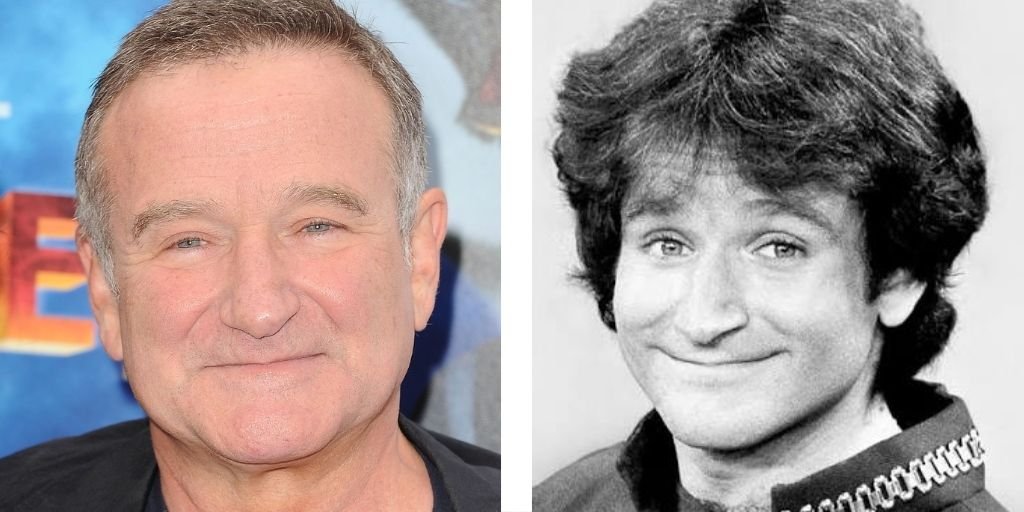
Robin Williams had a rare ability to make people laugh, think, and sometimes even cry within the same performance. His energetic voice, lightning-fast improvisation, unforgettable characters, and deeply human performances made him one of the most beloved entertainers of his generation. Whether audiences discovered him through television, stand-up comedy, family films, or serious dramas, there was usually something about Williams that felt personal.
His career stretched across decades and genres. He could play a lovable father in one film, a troubled professor in another, and then step onto a stage and create an entire world from almost nothing. Yet behind the laughter was a complicated and thoughtful person whose life included remarkable achievements as well as painful struggles.
Looking back at his work today, it becomes clear that his influence was much larger than comedy alone. He showed how humor could connect strangers, comfort families, challenge expectations, and reveal the emotional truth behind a character.
1. Early Life and the Beginning of a Remarkable Journey
Robin McLaurin Williams was born on July 21, 1951, in Chicago, Illinois. He grew up in a financially comfortable family, but his childhood was not necessarily a straightforward path toward becoming a performer.
As a young person, Williams was known for being imaginative and energetic. He eventually attended Juilliard School in New York, where he studied acting and developed his skills alongside other talented performers. His time there helped shape his understanding of character, movement, voice, and performance.
Comedy eventually became the place where his personality could fully explode.
Instead of delivering jokes in a predictable manner, Williams often seemed to discover them in real time. His mind moved quickly from one idea to another, creating voices, impressions, characters, and unexpected observations.
That ability became one of the defining features of his career.
His rise also demonstrated an important lesson about creative careers: talent may open the door, but persistence and experimentation often determine how far someone travels through it.
2. From Stand-Up Comedy to Television Stardom
Before becoming a major movie star, Williams built a reputation as a stand-up comedian.
His performances were famously energetic. He could move between accents, impressions, physical comedy, social observations, and absurd ideas at remarkable speed. Watching him perform could feel less like listening to a traditional comedian and more like watching several characters compete for the microphone.
His major television breakthrough came with Mork & Mindy, where he played Mork, an eccentric alien from the planet Ork.
The character was perfect for Williams because it allowed him to use his improvisational talents. Mork’s strange perspective on everyday human life gave Williams an opportunity to turn ordinary situations into comedy.
The show became a major success and transformed him into a household name.
But Williams did not remain comfortable with simply being known as a television comedian. He wanted to explore what else he could do.
That desire would become important throughout his career.
3. The Extraordinary Range of His Acting Career
One of the most impressive things about Williams was his range.
Many performers become strongly associated with one particular style. Williams could have easily been remembered only as a manic comedian, but he repeatedly challenged that image.
He appeared in comedies such as Mrs. Doubtfire, The Birdcage, and Jumanji. These projects allowed him to entertain audiences of different ages while showcasing his gift for physical humor and character work.
At the same time, he took on serious dramatic roles.
His performance as John Keating in Dead Poets Society became particularly memorable. Keating was an inspiring English teacher who encouraged students to think independently and appreciate the possibilities of life. Williams brought warmth and enthusiasm to the character without turning him into a simple motivational figure.
His work in Good Will Hunting revealed another side of his abilities. As Sean Maguire, a therapist carrying his own emotional wounds, Williams gave a restrained and deeply affecting performance.
The role earned him an Academy Award for Best Supporting Actor.
His career was like a large musical instrument with many different sounds. He could play the loudest note imaginable, but he also knew when silence would be more powerful.
4. The Films That Made Him Beloved Around the World
Williams appeared in numerous films, but several became especially important to his legacy.
Mrs. Doubtfire
In Mrs. Doubtfire, Williams played Daniel Hillard, a divorced father who disguises himself as an elderly British housekeeper so he can spend more time with his children.
The premise allowed Williams to demonstrate his comic talents, but the story also explored divorce, parenting, responsibility, and family relationships.
The film worked because the humor had emotional consequences. Beneath the jokes was a father trying desperately to remain connected to his children.
Dead Poets Society
Dead Poets Society gave Williams a role that continues to resonate with audiences.
John Keating encourages his students to look beyond routine and think for themselves. The film’s message about individuality, education, friendship, and making meaningful use of life has remained powerful.
Williams’ performance was passionate without losing tenderness.
Good Will Hunting
In Good Will Hunting, Williams showed that he could communicate enormous emotion without relying on constant comedy.
Sean Maguire is damaged, intelligent, compassionate, and imperfect. His relationship with Will Hunting becomes one of the emotional centers of the film.
The performance earned Williams his Academy Award and demonstrated that his dramatic abilities were every bit as significant as his comic reputation.
Aladdin
Williams also became the voice of the Genie in Disney’s Aladdin.
The character allowed him to combine voices, musical performance, improvisation, impressions, and physical comedy through animation.
For many younger viewers, the Genie became their introduction to his work. Even years later, the character remains one of the most recognizable animated performances associated with him.
5. Why His Comedy Felt So Different
What made Williams’ comedy special?
Speed was certainly part of it, but speed alone does not create great comedy.
Williams had an extraordinary ability to make connections between unrelated ideas. He could begin with a simple observation and rapidly build an entire comic scenario around it.
Improvisation was central to his approach. Rather than treating a performance as a fixed collection of jokes, he often allowed his imagination to determine where the moment would go.
He was also willing to look ridiculous.
That matters because comedy often requires vulnerability. Williams could exaggerate his expressions, voices, movements, and reactions without worrying about appearing polished every second.
His performances frequently felt spontaneous even when they were carefully prepared.
For audiences, this created the exciting feeling that anything could happen next.
6. The Human Being Behind the Laughter
It is easy to remember a performer through their most entertaining moments. Yet Williams’ life cannot be understood only through laughter.
He was intensely creative and curious. He supported charitable causes and participated in humanitarian efforts, including work connected with organizations helping disadvantaged people and communities.
His friendships with fellow performers were also well known. He developed strong relationships within the entertainment world and was often described as generous toward other comedians and actors.
At the same time, his private life contained struggles that were not always visible to audiences.
This contrast is important.
A person can make millions of people laugh and still experience profound personal difficulties. Public success does not automatically eliminate private pain.
Williams’ story reminds us that entertainers are people first. The smile seen on a screen cannot tell us everything happening behind it.
7. His Struggles and the Importance of Compassion
Williams openly experienced periods of addiction and later faced significant health challenges.
His struggles with substance abuse became part of his public story, but reducing his life to addiction would be unfair and incomplete. He sought treatment and worked to rebuild his life.
In his later years, he experienced neurological illness that was eventually identified as Lewy body dementia. The condition can affect thinking, movement, mood, sleep, and other aspects of daily life.
Williams died on August 11, 2014, at his home in California at the age of 63.
His death shocked people around the world.
Many fans struggled to understand how someone who had spent so much of his life bringing happiness to others could have experienced such suffering.
The answer is not simple.
His story encourages a broader understanding of mental and physical health. It also highlights the importance of compassion rather than judgment when people face challenges that outsiders cannot fully see.
8. His Influence on Comedy and Popular Culture
Williams influenced generations of comedians and performers.
His willingness to improvise became a defining part of his reputation. He demonstrated that a performer could move between structured material and spontaneous creativity without losing an audience.
His influence also reached beyond stand-up.
Actors saw how he could combine comedy with dramatic depth. Voice performers saw how much personality could be placed into an animated character. Television performers saw how an unconventional personality could become the center of a successful series.
His characters also became part of popular culture.
Mork’s colorful personality, Mrs. Doubtfire’s disguise, the Genie’s energetic voice, and John Keating’s inspirational classroom presence all remain recognizable.
That is a remarkable achievement.
A career may last decades, but only certain performances become cultural memories shared by people who grew up in completely different generations.
9. Awards, Recognition, and Professional Achievements
Williams received numerous awards and nominations throughout his career.
Among the most significant was his Academy Award for Best Supporting Actor for Good Will Hunting. He also received multiple Academy Award nominations during his career.
His work was recognized by organizations across film, television, and comedy.
However, awards tell only part of the story.
A trophy can confirm that an industry admired someone’s work, but it cannot measure how many people laughed with a performer, found comfort in a movie, or were inspired by a character.
For Williams, audience connection was perhaps the most lasting form of recognition.
His movies continue to be watched, quoted, discussed, and introduced to new generations.
10. Robin Williams as a Family Entertainer
Although some of Williams’ comedy was intended for adults, he became particularly beloved by families.
Films such as Jumanji, Mrs. Doubtfire, and Aladdin allowed children and adults to enjoy his work at different levels.
A child might laugh at a funny voice or exaggerated expression. An adult might recognize the deeper themes involving parenting, responsibility, loss, or relationships.
That multi-layered quality helped his films remain relevant.
Good family entertainment often works like a picture book: children see one story on the surface while adults discover another underneath.
Williams was particularly skilled at creating that kind of experience.
His performances could be silly without being empty and emotional without becoming inaccessible.
11. His Lasting Legacy
More than a decade after his death, Williams remains a familiar name to audiences around the world.
His films continue to appear on streaming services, television schedules, and home collections. Younger audiences continue discovering his performances, often without having experienced his original rise to fame.
That is one sign of a lasting legacy.
Another is the continued discussion surrounding his work.
People still talk about the lessons of Dead Poets Society. They still remember the emotional scenes in Good Will Hunting. Families still revisit Mrs. Doubtfire. Animation fans continue to celebrate the Genie.
His career also leaves behind a larger message about artistic freedom.
Williams never fit comfortably into one category. He could be a comedian, dramatic actor, voice performer, improviser, television star, and serious storyteller.
His greatest strength may have been his refusal to stay in one box.
12. Remembering the Man Beyond the Characters
When people remember Robin Williams, they often begin with a character.
They remember the Genie.
They remember Mrs. Doubtfire.
They remember Mork.
They remember John Keating.
But the deeper legacy is the performer who brought those characters to life.
Williams understood that laughter could be more than entertainment. It could create a moment of connection between strangers. It could help audiences approach difficult subjects. It could make a painful story easier to face.
His life was not perfect, and neither was his career. There were personal struggles, professional disappointments, and difficult chapters.
Yet that makes his story more human, not less meaningful.
His work reminds us that creativity can coexist with vulnerability. A person can be extraordinarily talented while still needing compassion and support.
That may be one of the most important lessons his life leaves behind.
Conclusion
Robin Williams left behind a body of work that continues to make audiences laugh, think, and feel. From his breakthrough on Mork & Mindy to unforgettable performances in Mrs. Doubtfire, Dead Poets Society, Aladdin, and Good Will Hunting, he demonstrated an extraordinary ability to move between comedy and drama.
His legacy is not simply about being funny. It is about connection.
He showed that humor could carry emotion, that dramatic performances could contain warmth, and that a performer did not have to choose between making people laugh and making them think.
Years after his passing, his work remains alive because the emotions behind it are universal. People still want to laugh, belong, grow, forgive, and find meaning.
That is why Robin Williams remains much more than a celebrated entertainer. He remains a powerful part of modern film and comedy history.
Frequently Asked Questions
1. Who was Robin Williams?
Robin Williams was an American comedian, actor, and voice performer known for his improvisational comedy and wide-ranging film career. He became famous through Mork & Mindy and later starred in films including Mrs. Doubtfire, Dead Poets Society, and Good Will Hunting.
2. What was Robin Williams’ most famous role?
There is no single answer because he played many iconic characters. The Genie in Aladdin, Mrs. Doubtfire, Mork, John Keating, and Sean Maguire are among his most recognized performances.
3. Did Robin Williams win an Academy Award?
Yes. Williams won the Academy Award for Best Supporting Actor for his performance as Sean Maguire in Good Will Hunting.
4. What happened to Robin Williams?
Robin Williams died on August 11, 2014, at the age of 63. He had experienced several personal and health difficulties, including Lewy body dementia, a neurological condition that was identified around the time of his death.
5. Why is Robin Williams still remembered today?
He remains remembered because of his exceptional comedy, memorable characters, dramatic performances, and emotional connection with audiences. His films continue to introduce his work to new generations.


