
Celine Dion: 10 Powerful Moments That Made Her a Music Legend
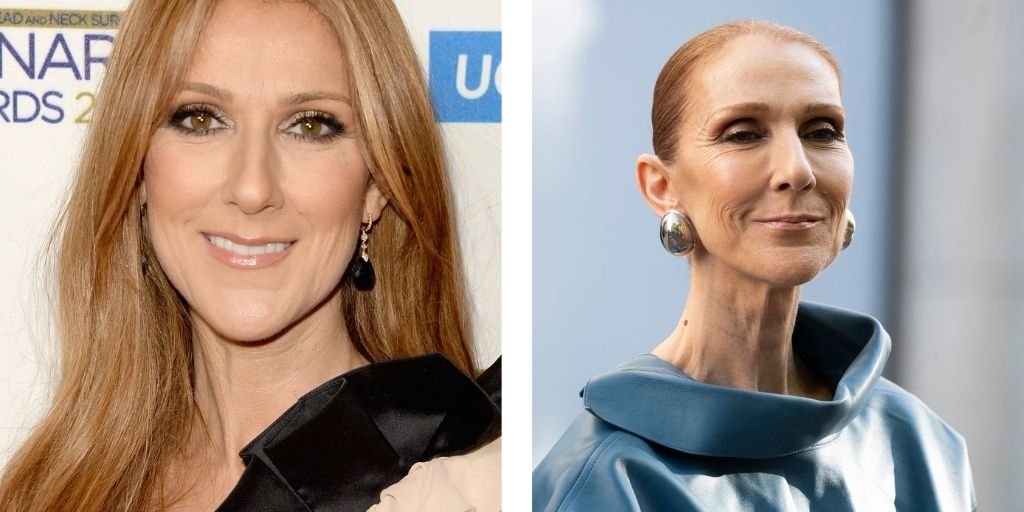
Celine Dion is one of those rare singers whose voice can make a quiet room feel enormous. Whether you discovered her through a romantic ballad, a movie soundtrack, a Las Vegas performance, or a television appearance, there is something instantly recognizable about the way she sings. Her career has crossed languages, generations, countries, and musical styles.
Born in Charlemagne, Quebec, in 1968, Dion began performing professionally while still young. She eventually became one of the world’s best-known recording artists, earning major awards and creating songs that became part of popular culture. Her breakthrough in the English-speaking market came through songs such as “Where Does My Heart Beat Now,” “Beauty and the Beast,” and “The Power of Love.” Later, “My Heart Will Go On” turned her into a global superstar.
But her story is much bigger than one famous song. It includes years of preparation, family support, musical ambition, international success, personal loss, and an extraordinary relationship with her audience. In recent years, her career has also entered a new chapter as she has dealt publicly with stiff-person syndrome and gradually returned to the stage. In September 2026, Reuters reported that she began a 26-concert Paris residency, marking a major live-performance return after a lengthy absence.
So, what makes her journey so memorable? Let’s take a closer look.
Early Life and a Family Filled With Music
Celine Marie Claudette Dion was born on March 30, 1968, in Charlemagne, Quebec, Canada. She was the youngest of 14 children in a large French-Canadian family. Music was not simply something she discovered later in life; it was part of her childhood environment.
Her family operated a small piano bar, giving the young singer an opportunity to perform in front of people. Imagine learning to command an audience before you have even fully understood what a professional career means. That early experience helped shape her confidence.
Her parents, Adhémar Dion and Thérèse Dion, encouraged music within the family. Celine began singing publicly as a child, and her talent quickly became noticeable.
At only 12 years old, she recorded a demonstration with the help of her brother and mother. The recording eventually reached music manager René Angélil. He recognized something special in the young singer and became an important figure in her professional development.
That early relationship changed the direction of her life.
Rather than treating singing as a childhood hobby, Dion began working toward a serious career. She recorded music in French and gradually built a reputation in Quebec and other French-speaking markets.
Building a Career in French Music
Before becoming an international English-language superstar, Dion had already established herself as a successful French-language performer.
During the 1980s, she released several French albums and participated in major musical competitions. Her victory at the 1988 Eurovision Song Contest, representing Switzerland with “Ne partez pas sans moi,” helped increase her international profile.
At this point, she was already an accomplished performer, but the wider English-speaking world had not yet experienced the full force of her voice.
Dion understood that international success would require more than talent. She needed to communicate with a much larger audience.
She therefore worked on improving her English and eventually made an important transition into English-language pop music.
Her first English-language album, Unison, arrived in 1990. The album included “Where Does My Heart Beat Now,” which became a significant hit in the United States. According to the Recording Academy, the song reached the Top 5.
This was the beginning of a remarkable new chapter.
The Breakthrough With Beauty and the Beast
One of Dion’s most important early international moments came with “Beauty and the Beast,” her 1991 duet with Peabo Bryson.
The song was associated with Disney’s animated film Beauty and the Beast and introduced her voice to millions of listeners who might never have encountered her earlier French-language work.
The recording was more than another successful single. It showed that Dion could move naturally into the world of major English-language pop and film music.
The song also earned her first Grammy Award. The Recording Academy records her 1992 Grammy win for Best Pop Performance by a Duo or Group With Vocal for the duet.
For a singer still developing her international identity, this was a major turning point.
Soon, bigger opportunities followed.
The Power of Love and Global Recognition
Dion’s career continued to grow through the early and middle 1990s. One of the songs that helped define this period was “The Power of Love.”
Her version became a major hit and gave listeners another example of her ability to turn a powerful ballad into a deeply emotional performance.
Why did these songs work so well?
Part of the answer was her voice. Dion could move from soft, intimate passages to huge climaxes without making the transition feel artificial. Her performances often sounded as if the emotion was physically rising through the music.
Her success also came from careful song selection and strong production. She worked with some of the industry’s most established writers, producers, musicians, and performers.
Her album Falling Into You became another important milestone. It won the Grammy for Album of the Year at the 39th Annual Grammy Awards.
By the middle of the 1990s, Dion was no longer simply a successful singer from Canada. She had become a major international recording artist.
My Heart Will Go On and the Titanic Era
Then came the song that would change everything.
“My Heart Will Go On” became the signature song associated with James Cameron’s Titanic. Released in connection with the 1997 film, it became one of the most recognizable movie songs in modern popular culture.
The song was written by James Horner and Will Jennings, while Dion supplied the vocal performance that became inseparable from the movie’s emotional identity.
The success was extraordinary.
At the 1998 Academy Awards, Titanic won Best Original Song for “My Heart Will Go On,” alongside its many other awards. The Academy notes that Titanic received 14 nominations and won 11 Oscars.
At the 1999 Grammy Awards, the recording won Record of the Year and Best Female Pop Vocal Performance for Dion. The song also received the Grammy for Song of the Year, which is awarded to the songwriters.
The achievement illustrates something important about Dion’s career: she did not simply record a hit. She became the voice attached to a cultural moment.
For many listeners, hearing the opening notes immediately brings back images of Titanic, Jack and Rose, the ocean, and the emotional ending of the film.
That is the power of music when it becomes connected to memory.
A Voice That Became Her Signature
What makes Celine Dion’s singing style so recognizable?
Her vocal power is certainly part of it, but there is more to her technique. She is known for control, clarity, emotional phrasing, sustained notes, and an ability to build a song gradually.
Think of her voice like a powerful wave. It can begin quietly, gather momentum, and eventually fill the entire musical space.
Her performances often combine technical control with emotional storytelling.
Songs such as “Because You Loved Me,” “It’s All Coming Back to Me Now,” “The Power of Love,” “All by Myself,” and “That’s the Way It Is” demonstrate different sides of her musical identity.
She has also recorded numerous duets and collaborations. Her Grammy history includes work with artists such as Andrea Bocelli, Barbra Streisand, Peabo Bryson, and others. The Recording Academy lists five Grammy wins and 16 nominations for Dion through the 2026 awards.
Her voice became more than a technical instrument. It became a recognizable emotional signature.
Las Vegas and a New Kind of Superstar Career
Dion also played an important role in changing how major recording artists approached Las Vegas.
Her residency at Caesars Palace became a major part of her career. Instead of depending entirely on traditional touring, she created a long-running theatrical performance that allowed audiences to travel to one location to see her.
The model became highly influential in modern entertainment.
Las Vegas gave Dion the opportunity to combine singing, staging, production, musicianship, and visual presentation in a controlled environment. Rather than performing only for one night in a city, she could develop a show and repeatedly refine it.
For fans, the experience became something closer to attending a major concert production than visiting a traditional casino performance.
This period reinforced another quality that had already defined her career: professionalism.
Dion was known for taking her performances seriously. Even when the setting changed, she continued to treat the stage as a place where she needed to deliver for the audience.
Family, Love, and Personal Loss
Behind the global fame was also a deeply personal story.
René Angélil played a major role in Dion’s career from her youth onward. Their professional relationship eventually became a romantic partnership, and they married in 1994.
Together they had three sons.
Dion has spoken publicly over the years about the importance of family and motherhood. While millions knew her as a performer, family life remained an important part of her identity away from the stage.
In January 2016, Angélil died after a long battle with cancer. Dion lost her husband and longtime manager within the same period in which she was also dealing with the death of her brother Daniel.
The losses were deeply personal.
Yet Dion continued to perform and work.
Her experience shows that public success does not remove ordinary human pain. A person can perform before thousands of people one night and still return home carrying grief that no audience can see.
That contrast has become an important part of the way many fans understand her.
Albums, Songs, and Musical Legacy
Dion’s discography covers several decades and multiple languages.
Her French-language work remains an important part of her artistic identity, while her English-language albums introduced her to a massive international audience.
Among the albums and projects associated with her career are Unison, The Colour of My Love, Falling Into You, Let’s Talk About Love, These Are Special Times, A New Day Has Come, Taking Chances, and Courage.
Her catalog includes romantic ballads, inspirational songs, pop tracks, Christmas music, film themes, and dramatic vocal performances.
Some songs became especially important to her legacy:
“My Heart Will Go On” — The defining Titanic theme and one of the most recognizable movie songs ever recorded.
“The Power of Love” — A major early English-language hit that demonstrated her ability to deliver a dramatic ballad.
“Because You Loved Me” — A heartfelt song connected with the film Up Close & Personal.
“It’s All Coming Back to Me Now” — A theatrical and emotionally intense recording that became one of her signature performances.
“That’s the Way It Is” — A more upbeat example of her ability to move beyond traditional power ballads.
The Recording Academy has highlighted many of these songs when looking back at her career and musical influence.
Health Challenges and the Courage to Step Away
In 2022, Dion publicly revealed that she had been diagnosed with stiff-person syndrome, a rare neurological condition.
The condition affected her ability to perform, and her career had to change dramatically.
In 2023, her team announced the cancellation of the remaining dates of the Courage World Tour. The announcement explained that she was receiving treatment and was unable to prepare for and perform the remaining shows.
For an artist whose career had been built around live performance, stepping away from the stage was a major change.
Her 2024 documentary I Am: Celine Dion provided viewers with a more personal look at this period. The official announcement described the film as an intimate exploration of her life and her efforts to continue performing while dealing with stiff-person syndrome.
The documentary was released globally on Prime Video in June 2024, accompanied by a soundtrack featuring songs from across her career.
Rather than presenting fame as an effortless journey, the documentary showed another side of life as a performer: sometimes the body sets limits even when the passion to perform remains strong.
The Paris Olympics and Her Return to the Stage
In July 2024, Dion made an emotional live return during the opening ceremony of the Paris Olympics.
She performed Édith Piaf’s “L’Hymne à l’Amour” from the Eiffel Tower, marking her first live performance since March 2020. Reuters reported that her return followed the period in which stiff-person syndrome had forced her to cancel her planned concerts.
The performance carried significance beyond entertainment.
For many viewers, it represented a singer returning to something that had defined her life.
The Olympics stage also provided an extraordinary setting. Instead of a regular concert venue, Dion was performing during one of the world’s largest international sporting events.
Her appearance reminded audiences that a comeback does not always happen on the schedule we expect.
Sometimes, it takes years.
Celine Dion’s 2026 Paris Comeback
Dion’s live career entered another important chapter in 2026.
Reuters reported in September 2026 that she began a 26-concert residency in Paris, marking a major return to regular live performances after a six-year hiatus associated with her health challenges.
The residency takes place in Nanterre, near Paris, and represents a much more sustained stage commitment than a single special appearance.
For longtime fans, the moment carries obvious emotional weight.
Her 2024 Olympic performance showed that she could return to a major stage. The 2026 Paris residency represents another step: returning to a concert environment where audiences come specifically to hear her perform.
It is also a reminder that careers do not always follow a straight line.
Dion’s journey can be viewed almost like a long road. There have been spectacular climbs, difficult turns, unexpected stops, and new beginnings. The road has not always been easy, but the destination has never been only fame. Music has remained central to her identity.
Why Celine Dion Still Matters
Why does her music continue to connect with people?
One reason is emotional simplicity.
Her songs often deal with experiences that almost everyone understands: love, heartbreak, hope, gratitude, memory, loss, and perseverance.
You do not need to know every detail of her career to understand the emotion in a song.
Another reason is longevity.
Dion has remained relevant across multiple eras of popular music. She began her career in a period dominated by physical records and traditional television appearances. She later became a major CD-era superstar, a Las Vegas headliner, a digital-era performer, and eventually a figure whose career was documented through streaming platforms and social media.
That ability to remain connected with audiences across changing technology is remarkable.
Her story also resonates because it combines extraordinary achievement with very human challenges.
She has experienced international success, awards, sold-out performances, family joys, devastating losses, and serious health difficulties.
Through it all, her relationship with music has remained central.
The Lasting Legacy of Celine Dion
Celine Dion’s legacy cannot be reduced to one song, one award, or one performance.
Yes, “My Heart Will Go On” is an enormous part of her cultural identity. Yes, her Grammy wins and international achievements are important. But her broader contribution comes from the way she connected powerful singing with emotional storytelling.
She helped bring French-Canadian talent to a global audience. She demonstrated that a singer could move successfully between languages and musical markets. She became a major figure in soundtrack music and helped establish the modern Las Vegas residency as an important part of a superstar career.
Most importantly, she created music that people attached to their own lives.
A song can become the soundtrack to a wedding, a breakup, a road trip, a childhood memory, or a difficult period. That is when an artist moves beyond entertainment.
The music becomes personal.
Celine Dion has spent decades creating those moments.
Her career is still developing, too. Her return to live performance in Paris in 2026 shows that her story has not simply ended with the achievements of the past.
For fans who grew up listening to her, that return carries nostalgia. For younger listeners discovering her today, it offers an opportunity to understand why her voice became so influential.
Perhaps that is the most fitting way to describe her legacy: a voice that traveled across generations and continued to find people wherever they were.
Conclusion
Celine Dion’s journey is a story of talent, determination, family, music, heartbreak, resilience, and reinvention. From a musical family in Quebec to international stages, Grammy victories, Titanic, Las Vegas, documentary filmmaking, the Olympics, and her 2026 Paris return, her career has covered an extraordinary range of experiences.
Her greatest achievement may not be a particular award or record. It may be the emotional connection she has created with listeners around the world.
When her voice rises over a familiar melody, people remember where they were, who they loved, what they lost, and what they hoped for.
That is a rare gift.
And after decades in the spotlight, Celine Dion remains one of the most recognizable voices in popular music.
Frequently Asked Questions
1. Who is Celine Dion?
Celine Dion is a Canadian singer born on March 30, 1968, in Charlemagne, Quebec. She became internationally famous through English-language pop music after establishing herself as a French-language performer.
2. What is Celine Dion’s most famous song?
“My Heart Will Go On,” the theme from Titanic, is widely regarded as her signature recording. It won major awards, including Record of the Year and Best Female Pop Vocal Performance at the 1999 Grammy Awards.
3. How many Grammy Awards has Celine Dion won?
The Recording Academy currently lists Celine Dion with five Grammy wins and 16 nominations through the 2026 Grammy Awards.
4. Why did Celine Dion stop touring?
Dion paused her concert career after revealing that she had been diagnosed with stiff-person syndrome. The condition affected her ability to perform, and her remaining Courage World Tour dates for 2023 and 2024 were cancelled.
5. Is Celine Dion performing again?
Yes. After her appearance at the 2024 Paris Olympics, Dion returned to regular live performances with a 26-concert Paris residency begin




