
Barack Obama: The Life, Leadership, and Lasting Legacy of America’s 44th President
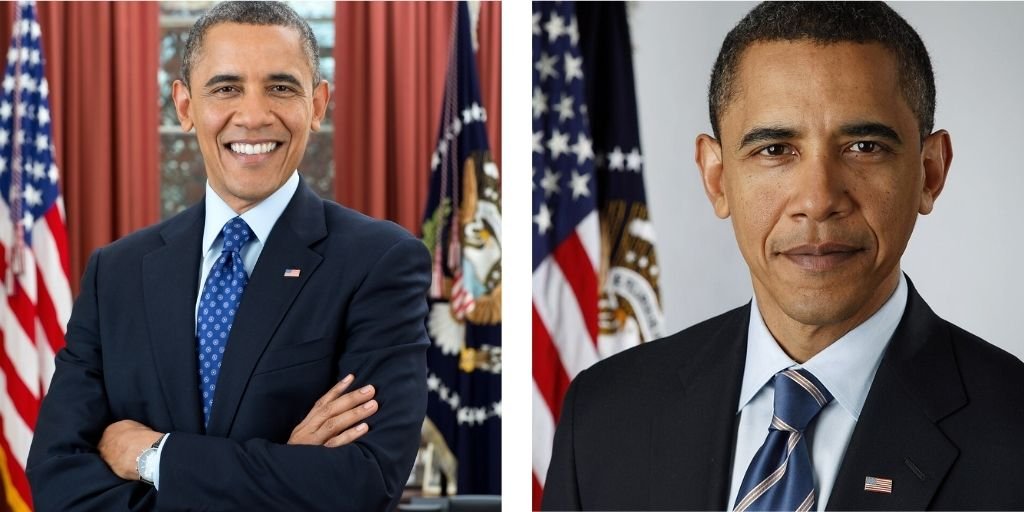
Barack Obama is one of the most recognizable political figures of the modern era. His journey from a multicultural childhood to the White House is a remarkable story of ambition, public service, political change, and personal resilience. As the 44th president of the United States, he entered office at a moment when the country faced a severe economic crisis, wars overseas, and deep political divisions.
But what makes his story especially interesting is that his influence extends beyond the eight years he spent in the Oval Office. His speeches, books, family life, political ideas, and approach to leadership continue to shape public conversations. For many people, his presidency represented a major change in American politics and culture.
So, who is Barack Obama beyond the familiar image of the president delivering speeches from behind a podium? His life offers a much broader story—one involving education, identity, community organizing, law, family, and an extraordinary rise in public life.
1. Early Life and Family Background
Barack Hussein Obama II was born on August 4, 1961, in Honolulu, Hawaii. His father, Barack Obama Sr., was from Kenya, while his mother, Stanley Ann Dunham, was from Kansas. Growing up in a family with different cultural backgrounds gave Obama an unusual perspective from an early age.
His parents separated when he was young, and his father later returned to Kenya. Obama spent part of his childhood in Hawaii and several years in Indonesia with his mother and stepfather. These experiences exposed him to different cultures, languages, religions, and communities.
Rather than growing up with a simple or predictable identity, Obama had to think deeply about where he belonged. Those experiences later influenced the way he discussed race, nationality, culture, and the American experience.
After returning to Hawaii, he attended Punahou School, a respected private school in Honolulu. He eventually moved to California for college and later transferred to Columbia University in New York City.
His early life was not a straight road toward political fame. In fact, nothing guaranteed that he would become a national leader. His path was more like a winding road, with education and personal experiences gradually shaping the direction he would take.
2. Education and the Development of His Ideas
Education played an important role in Obama’s development.
After graduating from Columbia University in 1983, he worked in New York before moving to Chicago. There, he became involved in community organizing on the city’s South Side.
Community organizing gave him an opportunity to work directly with residents dealing with unemployment, housing problems, and other social challenges. Instead of looking at public issues only from a political or academic perspective, he encountered them through everyday conversations with ordinary people.
That experience was important because it taught him the value of listening.
Obama later attended Harvard Law School, where he became president of the Harvard Law Review. His achievement attracted national attention, particularly because he was the first Black person to serve as president of the prestigious publication.
After law school, he returned to Chicago and worked as a civil rights attorney. He also taught constitutional law at the University of Chicago Law School.
These experiences combined education with practical public service. They helped develop the calm, analytical style that later became one of his trademarks.
3. From Illinois Politics to the U.S. Senate
Obama’s political career began in Illinois.
In 1996, he was elected to the Illinois State Senate. During his years in state politics, he worked on issues including healthcare, ethics, criminal justice, and support for low-income families.
His national breakthrough came in 2004.
That year, Obama delivered the keynote address at the Democratic National Convention. His speech attracted enormous attention because it emphasized national unity rather than presenting America as permanently divided into opposing groups.
His message connected with millions of viewers and transformed him from a relatively little-known Illinois politician into a national political figure.
Later that year, he won election to the U.S. Senate from Illinois.
His time in the Senate was relatively short compared with many presidents who had spent decades in national politics. Yet during those years, he developed a national reputation and began building the political organization that would eventually support his presidential campaign.
4. The Historic Presidential Campaign of 2008
In 2007, Obama announced his campaign for the presidency.
The Democratic primary quickly became one of the most closely watched political contests in American history. His major opponent was Senator Hillary Clinton, who entered the race with substantial political experience and name recognition.
Obama’s campaign emphasized themes such as hope, change, participation, and grassroots organizing.
One of the campaign’s major strengths was its ability to attract large numbers of volunteers and small donors. Technology and social media also played an increasingly important role in connecting supporters and organizing events.
Obama ultimately secured the Democratic nomination and selected Senator Joe Biden as his running mate.
In the general election, he faced Republican Senator John McCain.
The election took place during a serious financial crisis. The economy was weakening, financial institutions were under pressure, and many Americans were worried about employment, housing, and retirement savings.
Obama won the election and became the first Black president of the United States.
His victory was historically significant. It represented a major moment in America’s long and complicated history involving race and political representation.
5. Entering the White House During an Economic Crisis
Obama was inaugurated on January 20, 2009.
He entered office during one of the most difficult economic periods in modern American history. The financial crisis had already damaged banks, businesses, housing markets, and household finances.
One of the administration’s major early initiatives was the American Recovery and Reinvestment Act of 2009. The legislation was designed to stimulate economic activity through government spending, tax provisions, and investment.
The administration also dealt with the ongoing crisis in the American automobile industry.
Companies such as General Motors and Chrysler had faced severe financial difficulties. Government assistance and restructuring efforts became part of the broader response to the economic emergency.
The recovery took time, and debates about government spending, taxation, regulation, and economic policy remained highly political.
Supporters argued that the administration helped stabilize the economy and encouraged recovery. Critics questioned the scale of government intervention and the long-term consequences of federal spending.
The debate reflected a larger question: How much should government do when private markets are facing extraordinary pressure?
6. Healthcare Reform and the Affordable Care Act
Healthcare became one of the defining issues of Obama’s presidency.
Before the reform, millions of Americans lacked health insurance or struggled with expensive coverage. The administration worked with Congress to develop a major healthcare reform package.
The result was the Affordable Care Act, commonly known as the ACA or Obamacare, signed into law in 2010.
The law introduced several important changes. It created marketplaces where people could shop for insurance, expanded Medicaid eligibility in participating states, and established protections related to pre-existing conditions.
The law was controversial from the beginning.
Supporters considered it an important step toward expanding healthcare access. Opponents argued that it increased government involvement and created regulatory and financial burdens.
The political fight over healthcare continued for years. Nevertheless, the legislation became one of the most recognizable achievements associated with Obama’s presidency.
Its effects extended beyond his administration and remained part of American political debates long afterward.
7. Foreign Policy, National Security, and Global Affairs
Obama inherited two major wars when he became president: the conflicts in Iraq and Afghanistan.
His administration worked toward reducing America’s military involvement in Iraq while continuing operations in Afghanistan. National security remained a major concern throughout his presidency.
One of the most significant events occurred in May 2011, when U.S. forces conducted the operation that killed Osama bin Laden in Pakistan.
The operation was a major moment for Obama’s presidency and became an important part of his national security record.
His administration also dealt with challenges involving Iran, Russia, Syria, China, and other countries.
The Iran nuclear agreement, formally known as the Joint Comprehensive Plan of Action, was reached in 2015. The agreement sought to limit Iran’s nuclear activities in exchange for sanctions relief.
Obama’s foreign policy was not universally praised. Supporters viewed his approach as emphasizing diplomacy and international cooperation, while critics argued that the administration sometimes appeared too cautious or inconsistent.
Foreign policy rarely offers simple answers. Every decision can involve competing risks, and Obama’s presidency demonstrated just how complicated international leadership can be.
8. Climate Change and Environmental Policy
Climate change became another important part of Obama’s presidential agenda.
His administration supported efforts to reduce greenhouse gas emissions and increase cooperation on environmental issues.
In 2015, the United States played an important role in the Paris Agreement, an international effort aimed at addressing climate change.
The administration also introduced environmental regulations intended to reduce pollution from power plants and improve energy efficiency.
At the same time, Obama’s environmental policies faced opposition from industries, lawmakers, and political groups concerned about regulation and economic effects.
The debate surrounding energy and climate policy continues today, showing that environmental decisions made during his presidency had consequences far beyond his time in office.
9. Barack Obama and Michelle Obama: A Powerful Partnership
Barack Obama’s public story cannot easily be separated from his family life.
He married Michelle Robinson in 1992. Michelle, who became known around the world as Michelle Obama, was a lawyer and later served as one of America’s most influential first ladies.
The couple have two daughters, Malia and Sasha.
During their years in the White House, the Obama family attracted enormous public attention. Yet they generally worked to give their daughters as normal a childhood as possible despite living under constant media scrutiny.
Michelle Obama also developed her own public initiatives, including campaigns focused on children’s health, nutrition, and education.
The couple’s relationship became an important part of their public image. They were often portrayed as a modern political family that balanced demanding careers with parenting and public responsibilities.
Their partnership also demonstrated that political leadership is rarely an individual journey. Behind every presidency is a network of family members, advisers, staff, supporters, and communities.
10. Speeches, Books, and Cultural Influence
Obama became known for his public speaking long before leaving office.
His speeches often relied on storytelling, repetition, optimism, and calls for civic participation. Rather than focusing only on political statistics, he frequently connected public issues to personal experiences and individual lives.
His writing also played a major role in his public identity.
His memoir Dreams from My Father, published in 1995, explored his family history, childhood, identity, and search for belonging. Later, The Audacity of Hope presented his thoughts about American politics, values, and citizenship.
After leaving the White House, he published A Promised Land, the first volume of his presidential memoirs.
His books became international bestsellers and offered readers a more personal look at his experiences.
Beyond politics, Obama also became involved in film, media, and cultural projects through Higher Ground, the production company he founded with Michelle Obama.
This expansion into storytelling illustrates something important about modern leadership: influence no longer ends when a person leaves political office.
11. Life After the Presidency
Obama left office on January 20, 2017, when Donald Trump was inaugurated as his successor.
Unlike some former presidents, Obama largely avoided becoming a constant presence in day-to-day political combat immediately after leaving office. Instead, he focused on writing, public speaking, charitable initiatives, and work through the Obama Foundation.
The foundation has supported leadership development and civic engagement programs.
The Obama Presidential Center is also being developed in Chicago, where Obama’s political journey began. The center is intended to become a major institution dedicated to his presidential records, public engagement, and community programs.
Obama has continued to speak publicly about democracy, civic participation, leadership, and social issues.
His post-presidential years demonstrate how former presidents can continue influencing society without holding elected office.
12. Barack Obama’s Legacy and Continuing Influence
Assessing a presidency is never as simple as creating a list of accomplishments.
Every president leaves behind supporters and critics. Obama is no exception.
Supporters often point to healthcare reform, economic recovery, the killing of Osama bin Laden, climate initiatives, diplomatic agreements, and the symbolic importance of electing America’s first Black president.
Critics point to issues such as drone warfare, immigration enforcement, political polarization, and the limits of some of his policy promises.
His presidency also took place during a period when American political divisions became increasingly visible.
Perhaps Obama’s most enduring legacy is therefore broader than individual policies. His career demonstrated how quickly political expectations could change and how powerful grassroots participation, technology, storytelling, and personal identity could become in modern politics.
For millions of people, his election represented progress that earlier generations might have considered extremely difficult to imagine.
For others, his presidency generated disappointment because the country remained divided over race, economics, healthcare, foreign policy, and the role of government.
Both perspectives are part of understanding his historical importance.
Conclusion
Barack Obama’s journey from Honolulu to the White House remains one of the most remarkable political stories of the 21st century. His life combined education, community work, law, politics, family, and public communication in a way that eventually carried him to the presidency.
His eight years in office brought major changes as well as intense controversy. He faced economic uncertainty, wars, healthcare debates, environmental challenges, and a deeply divided political environment.
Whether someone views his presidency positively, negatively, or somewhere in between, his historical significance is difficult to ignore. His story shows how personal experience can influence leadership and how one political career can become part of a much larger national conversation.
Obama’s influence did not end when he left the White House. Through writing, public speaking, philanthropy, and civic projects, he continues to participate in American public life.
Ultimately, his legacy is still being written. History, like a long book, often needs several chapters before readers can fully understand what a particular era meant.
FAQs About Barack Obama
1. When was Barack Obama born?
Barack Obama was born on August 4, 1961, in Honolulu, Hawaii.
2. What number president was Barack Obama?
Barack Obama was the 44th president of the United States. He served two terms, from 2009 to 2017.
3. What is Barack Obama best known for?
He is best known for becoming the first Black president of the United States, his healthcare reform, his response to the 2008 financial crisis, and his approach to domestic and international affairs.
4. Who is Barack Obama’s wife?
His wife is Michelle Obama. They married in 1992 and have two daughters, Malia and Sasha.
5. What did Barack Obama do after leaving the presidency?
After leaving office, Obama continued writing, speaking publicly, supporting civic and leadership programs, and working with the Obama Foundation and other cultural and charitable initiatives.


