
David Letterman: The Legendary Late-Night Host Who Changed American Television
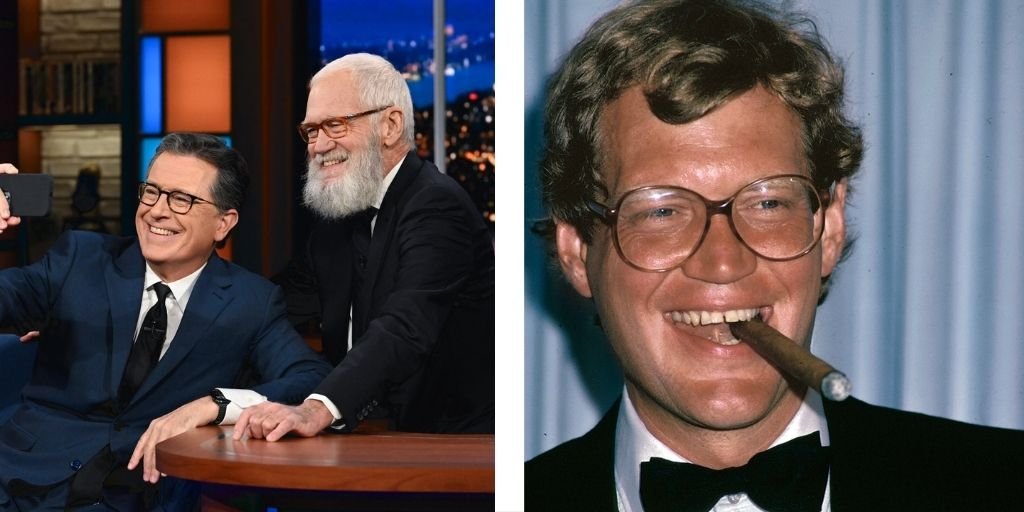
David Letterman is more than a familiar face from late-night television. For decades, he represented a different kind of comedy—clever, awkward, unpredictable, sarcastic, and often wonderfully strange. His style did not depend entirely on polished jokes or celebrity glamour. Instead, he found humor in everyday situations, uncomfortable conversations, absurd ideas, and the unexpected reactions of his guests.
From his groundbreaking work on Late Night with David Letterman to his long run on The Late Show, Letterman became one of the most recognizable television personalities in American entertainment. Even after stepping away from traditional late-night television, he continued to interview famous people and explore interesting subjects through streaming programs.
So, what made him so influential? Why did audiences continue watching him for so many years? The answer lies in his ability to make television feel spontaneous. He treated the studio almost like a playground, where anything could happen.
1. Early Life and the Road to Comedy
David Michael Letterman was born on April 12, 1947, in Indianapolis, Indiana. His childhood was relatively ordinary, but his future career would be anything but ordinary.
Letterman developed an early interest in broadcasting. While attending Ball State University in Muncie, Indiana, he studied telecommunications and gained experience working in radio. Those early broadcasting opportunities helped him understand an important part of entertainment: connecting with an audience without necessarily relying on a script.
Radio also taught him how to use his voice and personality. He could make an observation sound funny simply through timing and delivery. That skill would later become one of the defining characteristics of his television career.
After college, Letterman worked in Indianapolis television and radio before moving to Los Angeles. Like many aspiring entertainers, he spent years trying to establish himself.
The journey was not instant.
He worked as a writer, comedian, and performer, gradually building relationships within the entertainment industry. His humor was unusual for mainstream television. Instead of presenting himself as a perfectly polished entertainer, he often appeared intentionally uncomfortable, dry, or unpredictable.
That quality eventually became his greatest strength.
2. Breaking Into the Entertainment Industry
Letterman’s move to Los Angeles placed him closer to the center of American comedy. He began performing stand-up and writing for television programs.
One important opportunity came when he became a writer and performer on The Tonight Show Starring Johnny Carson. Carson was one of the most influential figures in American late-night television, and appearing on his program could dramatically raise a comedian’s profile.
Letterman’s appearances attracted attention because he did not perform like a traditional television comedian.
He could be deadpan one moment and completely ridiculous the next.
His delivery often made simple observations surprisingly entertaining. Rather than forcing every moment into a conventional punchline, he allowed awkward pauses and unusual situations to become part of the joke.
That approach made him stand out.
The relationship between Letterman and Carson also became important to Letterman’s career. Carson’s support helped establish him as a serious late-night talent and positioned him for an opportunity that would change television comedy.
3. Late Night with David Letterman Created a New Formula
In 1982, Letterman began hosting Late Night with David Letterman on NBC.
The program immediately felt different from the established late-night format.
Traditional talk shows often followed a predictable structure: opening monologue, celebrity interviews, musical performances, and a closing segment. Letterman certainly used some of these ingredients, but he treated them differently.
He was willing to make the studio itself part of the comedy.
The show often turned ordinary objects into entertainment.
A desk could become part of a gag. A random person could become an unexpected participant. A strange costume, unusual prop, or silly competition could suddenly become the center of attention.
Letterman also became known for recurring comedy features. Some were deliberately pointless, and that was precisely why audiences enjoyed them.
His program influenced an entire generation of comedians, writers, television producers, and talk-show hosts. It demonstrated that late-night television did not always need to look polished and predictable.
Sometimes, the uncertainty was the entertainment.
It was almost like watching a skilled jazz musician improvise. The basic structure existed, but the most memorable moments could come from unexpected places.
4. The Unique Comedy Style That Defined His Career
What exactly was Letterman’s comedy style?
It is difficult to place it into a single category.
His humor included satire, sarcasm, observational comedy, absurdism, parody, physical comedy, and deliberately awkward exchanges.
One of his greatest skills was creating tension and then allowing the audience to laugh at it.
For example, during interviews, he might ask a celebrity an apparently simple question and then follow it with an unexpected remark. Instead of treating famous guests with complete seriousness, he sometimes reminded viewers that celebrities were simply people sitting in a studio.
That approach helped make his interviews feel less formal.
Awkwardness became part of the performance.
Letterman also had a distinctive relationship with his audience. He did not always behave like a host who needed everyone’s approval. He could challenge expectations and occasionally even make fun of the conventions of television itself.
His facial expressions became part of his comedy.
Sometimes a reaction said more than a joke.
This style influenced later television personalities who adopted a more conversational and self-aware approach to entertainment.
5. Letterman and the Art of the Late-Night Monologue
The opening monologue became one of the most recognizable parts of Letterman’s programs.
Political jokes, celebrity observations, news stories, cultural trends, and everyday frustrations could all become material.
But his delivery was different from many traditional hosts.
He often used understatement rather than excessive enthusiasm.
That contrast made the jokes work.
A ridiculous statement delivered with a completely serious expression could be funnier than someone obviously trying to get a laugh.
His writers also played a major role. Late-night comedy is a collaborative process, and Letterman’s programs featured talented teams who helped create jokes, sketches, lists, characters, and recurring segments.
The monologue therefore became more than a series of jokes. It was a daily snapshot of American culture filtered through Letterman’s unusual perspective.
6. The Top Ten List and Other Memorable Segments
One of Letterman’s most enduring contributions to late-night television was the Top Ten List.
The concept was simple: present ten humorous answers or observations based on a particular theme.
Its simplicity was part of its appeal.
The list could be about almost anything—politics, celebrities, holidays, sports, food, television, or completely ridiculous subjects.
The format became so recognizable that it eventually became part of American popular culture.
Letterman also used unusual games and stunts to keep his programs unpredictable. Some involved celebrities participating in silly activities, while others relied on visual comedy.
The unexpected was often the point.
This helped separate his programs from conventional talk shows. Viewers could tune in expecting an interview with a famous actor but end up watching something completely unrelated.
That unpredictability created a sense that anything might happen.
7. Moving to The Late Show and Becoming a Television Institution
In 1993, Letterman moved from NBC to CBS to host The Late Show with David Letterman.
The move was significant because CBS wanted to compete directly with NBC’s powerful late-night presence.
Letterman inherited a major television platform and faced enormous expectations.
Instead of simply copying what had worked before, he brought much of his established personality to the new program.
The show quickly became one of the major institutions of American late-night television.
For many viewers, Letterman’s desk, suit, glasses, dry humor, and distinctive laugh became familiar parts of their evening routine.
Over the years, he interviewed presidents, actors, musicians, athletes, authors, comedians, business leaders, and countless other personalities.
Some interviews were thoughtful.
Others were hilarious.
Some became memorable precisely because they did not go according to plan.
That mixture was central to Letterman’s appeal.
8. His Relationship With Celebrity Guests
Celebrity interviews can easily become repetitive.
A movie star arrives, promotes a new project, answers predictable questions, and leaves.
Letterman often tried to break that pattern.
He might ask about an unusual personal interest, react to an unexpected answer, or simply allow the conversation to wander.
His interviews were often less about promotion and more about personality.
That distinction helped produce memorable television.
Letterman could make an experienced celebrity look nervous, relaxed, silly, serious, or unexpectedly honest.
He also interviewed people who were not traditionally considered entertainment figures. This expanded the range of subjects that could fit naturally into a late-night program.
His interview style could be challenging, but it could also be warm.
The public sometimes saw only the sarcastic side of his personality. However, his long career demonstrated that he could also listen carefully and allow guests to tell meaningful stories.
9. David Letterman’s Influence on Modern Comedy
Letterman’s influence reaches far beyond the programs he personally hosted.
Many modern comedians and television hosts were influenced by his willingness to experiment.
He helped demonstrate that a host did not need to behave like a traditional entertainer at every moment.
The host could be part comedian, part interviewer, part observer, and part participant.
That idea became increasingly important as comedy evolved.
Late-night programs began incorporating more unconventional sketches, street segments, recurring characters, internet culture, political satire, and spontaneous interactions.
Letterman helped create an environment where those ideas could flourish.
His influence can also be seen in comedians who use awkward pauses, dry observations, anti-jokes, absurd situations, and unconventional interviews.
In that sense, his career resembles a bridge between two eras of television.
He came from the traditional broadcast world but helped push it toward the more experimental style that audiences would later see across cable television, online platforms, podcasts, and streaming services.
10. Leaving Traditional Late-Night Television
After more than three decades as a late-night host, Letterman announced that he would leave The Late Show.
His final episode aired on May 20, 2015.
The ending represented the close of a remarkable chapter in television history.
Letterman had spent decades appearing in people’s homes almost every night. For many viewers, he was not simply a television personality. He was part of their daily routine.
His retirement also created an unusual situation.
What happens when someone who has spent decades making fun of television decides to stop appearing on television every night?
Letterman largely stepped away from the traditional late-night schedule.
Stephen Colbert eventually took over The Late Show.
But retirement did not mean Letterman disappeared.
Instead, he found another way to communicate with audiences.
11. My Next Guest Needs No Introduction and a New Chapter
In 2018, Letterman returned to the interview format with Netflix’s My Next Guest Needs No Introduction with David Letterman.
The series gave him a different environment from traditional late-night television.
There was no requirement to produce a nightly monologue.
There was more room for extended conversations.
The program also allowed Letterman to travel and meet people in different environments.
Rather than relying entirely on a studio desk, the series could explore a guest’s world.
This gave viewers a different side of Letterman’s personality.
He remained funny and occasionally sarcastic, but he also appeared more reflective.
The change was important because it showed that his appeal was not limited to late-night jokes.
At the heart of his career was curiosity.
He wanted to know how people thought, what they experienced, and what made their stories interesting.
That quality became particularly valuable as he grew older.
Instead of competing with younger hosts for the loudest joke or fastest monologue, Letterman increasingly became a conversational interviewer.
12. Letterman’s Personal Life and Public Image
Although Letterman’s professional life has been highly visible, he has generally maintained a more complicated relationship with fame than many celebrities.
His public image has often been built around irony.
He could make fun of his own television persona while simultaneously being one of the most recognizable people on television.
His marriage to Regina Lasko and his role as a father have also become parts of his life away from the spotlight.
Letterman has spoken at different times about the challenges and responsibilities that come with fame.
This is one reason his career feels more human than the image of a flawless celebrity.
He has experienced enormous success, but his public story has also included controversy, personal challenges, and periods of reflection.
Rather than presenting himself as perfect, he has often used humor to acknowledge life’s contradictions.
13. Why David Letterman’s Legacy Still Matters
Television changes constantly.
Audiences move from broadcast networks to cable, streaming platforms, social media, podcasts, and short-form video.
Yet Letterman’s influence remains recognizable.
Why?
Because good comedy is not limited to a particular screen.
His most important contribution was not one specific joke or segment. It was the idea that television could be strange, personal, spontaneous, and self-aware.
He showed that a host could embrace silence.
He showed that an awkward moment could become a great moment.
He showed that an ordinary object could become a comedy prop.
Most importantly, he trusted the audience.
He did not always explain the joke.
He allowed viewers to figure things out for themselves.
That approach may seem simple, but it takes confidence.
A late-night host is a little like a guide taking an audience through a crowded city at night. The guide can follow the main road, or suddenly turn down an unexpected street. Letterman’s greatest strength was his willingness to take that turn.
Conclusion
David Letterman’s career represents one of the most important chapters in American late-night television. From his early broadcasting ambitions in Indiana to his years at NBC and CBS and his later work in streaming, he repeatedly challenged conventional ideas about what a talk show could be.
His humor was distinctive, his interviews could be unpredictable, and his willingness to experiment helped influence modern comedy. While many television personalities become associated with one era, Letterman’s work crossed generations.
His greatest legacy may be the freedom he gave future entertainers to be unusual. He proved that audiences could enjoy something that felt less polished and more spontaneous. Even after leaving the nightly late-night format, his curiosity and conversational style continued to connect with viewers.
For anyone interested in American television, comedy, broadcasting, or popular culture, his career offers an important lesson: sometimes the most memorable entertainment happens when you stop trying to make everything perfect.
FAQs About David Letterman
1. Who is David Letterman?
David Letterman is an American television host, comedian, writer, and producer best known for his long-running late-night programs Late Night with David Letterman and The Late Show with David Letterman. He became famous for his dry humor, unusual comedy segments, celebrity interviews, and unconventional approach to television.
2. When did David Letterman retire from late-night television?
Letterman retired from traditional late-night television in 2015. His final episode of The Late Show with David Letterman aired on May 20, 2015, ending a television hosting career that had lasted for more than three decades.
3. What made David Letterman’s comedy style different?
His comedy often combined sarcasm, observational humor, absurd situations, awkward pauses, satire, and unexpected reactions. Instead of making every moment look perfectly rehearsed, he often allowed spontaneity and discomfort to become part of the entertainment.
4. Did David Letterman return to television after retirement?
Yes. Letterman returned to the screen through Netflix’s interview series My Next Guest Needs No Introduction with David Letterman. The program gave him an opportunity to have longer and more personal conversations with prominent guests.
5. What is David Letterman best known for?
He is best known for transforming late-night talk television through his unconventional comedy, memorable interviews, the Top Ten List, unusual sketches, and his long-running programs on NBC and CBS. His influence can still be seen in modern comedy and interview-based entertainment.


