
Geena Davis: An Inspiring Life, Career, Movies, and Legacy
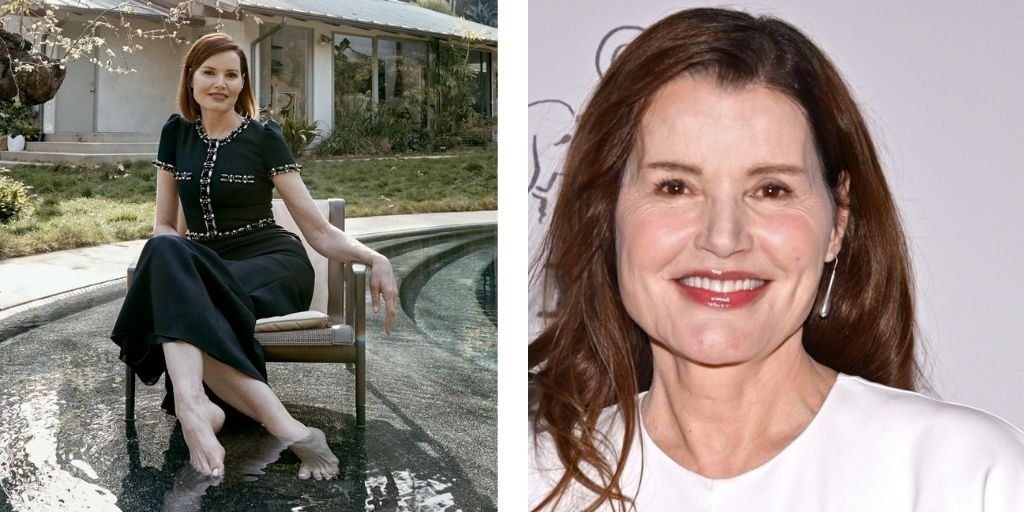
Geena Davis is more than a familiar face from Hollywood. Over several decades, she has built a career that connects acting, comedy, drama, television, advocacy, and work on gender representation in entertainment. From her breakthrough roles in the 1980s to memorable films such as Thelma & Louise, A League of Their Own, and The Long Kiss Goodnight, her career has continued to attract audiences across generations.
What makes her story especially interesting is the way she moved beyond simply appearing on screen. She became involved in examining how women and girls are represented in film and television, turning personal experience in entertainment into a broader conversation about opportunity and visibility.
Early Life and Background
Geena Davis was born on January 21, 1956, in Wareham, Massachusetts. Growing up, she developed interests that extended beyond the performing arts. Her background included music, education, and an active curiosity about the world around her.
She attended New England College before transferring to Boston University, where she studied drama. At a time when many aspiring actors were trying to find a route into Hollywood, Davis was developing skills that would later help her handle very different kinds of characters.
A Different Route to Hollywood
Before becoming a major movie star, Davis worked as a model. Modeling gave her an early connection to the entertainment industry, but acting eventually became her central focus.
Her transition from modeling to acting is an important part of her story. Looking back, it is easy to imagine Hollywood success as a straight road, but careers rarely work that way. Hers was more like a winding path, with unexpected turns eventually leading to some of the most recognizable films of her generation.
The Beginning of Her Acting Career
Davis made her film debut in Tootsie in 1982, appearing alongside Dustin Hoffman. The movie became one of the most celebrated comedies of its era, and the experience helped introduce Davis to a much larger audience.
She followed it with roles that demonstrated her ability to work in different genres. Rather than becoming identified with only one type of character, she gradually showed that she could move between comedy, drama, romance, adventure, and suspense.
Building a Hollywood Identity
One of the interesting things about Davis’s early career is how quickly she moved toward substantial roles. Her performances were not simply about being the attractive supporting character. She increasingly received opportunities to create personalities with their own motivations and stories.
Her work in The Fly in 1986 was particularly significant. The science-fiction horror film, directed by David Cronenberg, paired her with Jeff Goldblum and gave her a dramatically different environment from the lighter roles associated with her earlier work.
That ability to change direction became one of the defining features of her career.
Breakthrough Success in Thelma & Louise
Few movies are as closely connected with Davis’s career as Thelma & Louise. Released in 1991 and directed by Ridley Scott, the film starred Davis as Thelma and Susan Sarandon as Louise.
The story follows two women whose weekend trip becomes a life-changing journey. What begins as an escape from everyday routines develops into a dramatic exploration of friendship, independence, fear, and freedom.
Why the Film Became So Memorable
The power of Thelma & Louise came from its characters. The two women were not presented simply as accessories to a male-centered story. Their choices, conflicts, hopes, and fears drove the narrative.
Davis’s portrayal of Thelma was particularly effective because the character changes throughout the film. She begins as a sheltered and uncertain woman but gradually becomes more confident and decisive.
The movie also became part of larger conversations about women in cinema. Its famous ending remains one of the most recognizable moments in American film.
For Davis, the role helped establish her as a leading actress capable of carrying emotionally complicated material.
A League of Their Own and a New Kind of Heroine
In 1992, Davis appeared in A League of Their Own, directed by Penny Marshall. The film was inspired by the real-life All-American Girls Professional Baseball League that operated during World War II.
Davis played Dottie Hinson, a talented baseball player whose natural ability places her at the center of the story.
The movie combined comedy, sports, friendship, family relationships, and historical themes. It also featured Tom Hanks, Rosie O’Donnell, Lori Petty, and Madonna.
Learning the Game
Davis’s preparation for the role became part of the story behind the movie. She trained extensively to improve her baseball skills, demonstrating that the physical side of the performance was taken seriously.
The result was convincing enough to make Dottie feel like a genuine athlete rather than an actor simply pretending to play.
The film’s famous phrase, “There’s no crying in baseball,” became part of popular culture, but the movie offered much more than memorable comedy.
It showed women competing seriously in a professional sporting environment at a time when many men were away serving in World War II.
Exploring Comedy, Drama, and Action
After establishing herself as a leading actress, Davis continued to explore different genres.
She appeared in The Accidental Tourist, a 1988 romantic drama that earned her an Academy Award for Best Supporting Actress. Her performance as Muriel Pritchett demonstrated her ability to combine humor with emotional depth.
She later appeared in films such as Stuart Little, The Long Kiss Goodnight, and Beetlejuice, showing an impressive range.
The Long Kiss Goodnight
In The Long Kiss Goodnight (1996), Davis played Samantha Caine, a woman who discovers that her apparently ordinary life may conceal a dangerous past.
The movie allowed Davis to take on a physically demanding action role. She worked with Samuel L. Jackson, and the film combined mystery, suspense, action, and dark humor.
It was another example of Davis refusing to remain inside one particular Hollywood category.
Why should an actress be limited to romance or comedy simply because those were the roles she had already played? Davis’s career repeatedly challenged that assumption.
Television Success and Commander in Chief
Davis also made an important impact on television.
In 2005, she starred in the ABC series Commander in Chief, playing Mackenzie Allen, a fictional woman who becomes president of the United States.
The series explored the pressures surrounding political leadership, family life, public expectations, and the challenges faced by a woman occupying the highest office in the country.
A Significant Television Role
The show arrived during a period when television was increasingly willing to place women at the center of large-scale political and dramatic stories.
Davis received a Golden Globe Award for her performance, recognizing her work as the fictional president.
Although the series had a relatively short run, it became another notable entry in her career because of the unusual nature of the role.
Her performance demonstrated that Davis could carry a television drama while playing a character dealing with both personal and institutional pressures.
Geena Davis and Representation in Entertainment
One of the most important chapters of Davis’s life began when she started focusing heavily on representation in entertainment.
She became interested in how often women and girls appeared on screen, what kinds of characters they were given, and how those portrayals might influence audiences.
The Geena Davis Institute
In 2004, she founded the Geena Davis Institute on Gender in Media.
The organization studies representation in entertainment and advocates for greater inclusion, particularly for women and girls.
Its work has involved research into the presence and portrayal of different groups in film, television, and other media.
Davis has frequently discussed how entertainment can shape the way people understand the world. If children repeatedly see certain people taking leadership roles while others are shown mainly in supporting positions, those patterns can become familiar expectations.
Her approach treats media almost like a mirror. But a mirror does not only reflect society—it can also influence what people imagine society should look like.
Her Influence Beyond Acting
Davis’s work outside traditional acting has become an important part of her public legacy.
She has spoken about representation, opportunity, stereotypes, and the importance of creating more varied characters.
Changing the Conversation
Her advocacy does not mean that every character must fit a particular formula. Instead, the broader argument is about giving creators and audiences a wider range of possibilities.
A young viewer should be able to see women as athletes, scientists, leaders, adventurers, parents, comedians, villains, heroes, and ordinary people.
That idea connects naturally with several roles Davis has played herself. Dottie Hinson is an athlete. Thelma experiences a dramatic transformation. Samantha Caine becomes an action heroine. Mackenzie Allen occupies a position of political leadership.
These characters are very different, and that variety is part of what makes her career notable.
Awards and Professional Recognition
Davis has received significant recognition throughout her career.
Her Academy Award win for The Accidental Tourist remains one of her most important acting achievements. She has also received Golden Globe recognition, including for Commander in Chief.
Her work has been celebrated not only through traditional acting awards but also through recognition connected with advocacy and representation.
A Career Built on Variety
Awards can capture a moment, but they do not necessarily explain an entire career.
Davis’s professional story is better understood through the variety of roles she has taken. She has played comic characters, dramatic characters, athletes, action figures, parents, and fictional political leaders.
That range has helped keep her work recognizable even as Hollywood has changed around her.
Personal Interests and Life Beyond the Screen
Davis has also pursued interests outside acting.
She has been involved in archery and participated in competitive archery. Her interest became particularly notable when she competed in the Olympic trials for archery in 1999.
That chapter of her life is a fascinating reminder that celebrities can have serious interests away from their primary profession.
More Than a Hollywood Career
Her life demonstrates that professional identity does not have to remain fixed.
An actor can become an advocate. A performer can become involved in research. A Hollywood figure can discover an entirely different passion and pursue it seriously.
That flexibility is one reason Davis’s story continues to interest people who may know her primarily from one particular movie.
Geena Davis’s Lasting Legacy
What will people remember most about Geena Davis?
For some viewers, it will be Thelma & Louise. For others, it will be A League of Their Own, The Long Kiss Goodnight, Beetlejuice, or Commander in Chief.
For many, however, her legacy extends beyond individual performances.
An Actress Who Expanded Her Role
Davis used her visibility in entertainment to ask questions about the industry itself.
Her career represents several different eras of Hollywood, while her advocacy reflects an ongoing discussion about representation in media.
That combination makes her story unusual. She did not simply accumulate film and television credits. She also became involved in examining the larger system in which those stories are created.
Her career can be viewed like a book with several chapters. Acting is one chapter, comedy another, dramatic work another, and advocacy another. None completely replaces the others; together, they create the larger story.
Conclusion
Geena Davis has built a career that reaches far beyond a list of movies and television credits. From her early work in Hollywood to acclaimed performances in The Accidental Tourist, Thelma & Louise, A League of Their Own, and The Long Kiss Goodnight, she has repeatedly explored different kinds of characters.
Her work in television, including Commander in Chief, added another dimension to her career, while her founding of the Geena Davis Institute on Gender in Media gave her a significant role in conversations about representation.
Her story remains interesting because it combines entertainment, personal ambition, changing opportunities, and advocacy. Whether audiences remember her as Thelma, Dottie, Samantha, or another character entirely, her contribution to popular culture has continued to reach new generations.
FAQs About Geena Davis
1. Who is Geena Davis?
Geena Davis is an American actress, producer, and advocate known for films including Thelma & Louise, A League of Their Own, The Accidental Tourist, Beetlejuice, and The Long Kiss Goodnight. She has also worked extensively on gender representation in entertainment.
2. What movie made Geena Davis widely famous?
Several films contributed to her fame, but Thelma & Louise became one of the defining movies of her career. Her performance as Thelma was widely recognized and helped establish her as a major leading actress.
3. Did Geena Davis win an Academy Award?
Yes. Davis won the Academy Award for Best Supporting Actress for her performance in The Accidental Tourist.
4. What is the Geena Davis Institute?
The Geena Davis Institute on Gender in Media is an organization founded by Davis that focuses on research and advocacy concerning gender representation and inclusion in entertainment.
5. What is Geena Davis known for besides acting?
Beyond acting, Davis is known for her work in gender representation and media advocacy. She has also pursued archery and competed in the U.S. Olympic archery trials in 1999.




