
Hillary Clinton: A Remarkable Journey Through American Politics
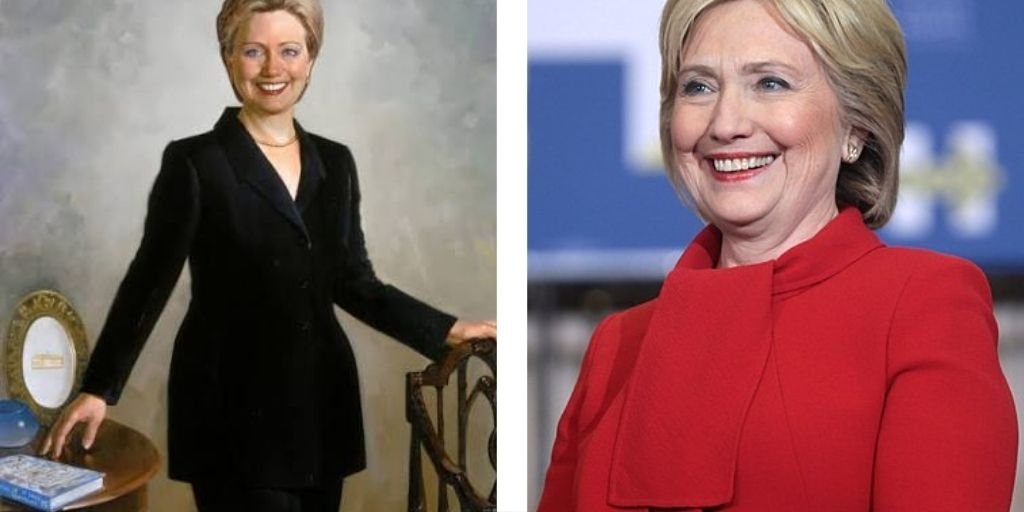
Hillary Clinton is one of the most recognizable and influential figures in modern American public life. Over several decades, she has worked as a lawyer, first lady, senator, secretary of state, presidential candidate, author, and advocate. Few American political figures have experienced such a wide range of public roles.
Her career has also been unusually complicated. Supporters have praised her experience, determination, and work on issues affecting families and children. Critics have questioned many of her decisions and political positions. Through elections, policy debates, controversies, and changing political eras, she has remained a major part of the national conversation.
But who is Hillary Clinton beyond the headlines? How did she move from a young woman interested in public service to becoming the first woman nominated for president by a major U.S. political party? Her story is not simply about one election. It is a long journey through American politics, law, diplomacy, and public life.
Early Life and Education
Hillary Diane Rodham was born on October 26, 1947, in Chicago, Illinois. She grew up in a middle-class family in suburban Park Ridge, where she developed an early interest in education, politics, and community service.
As a young person, Clinton was influenced by her parents in different ways. Her father, Hugh Rodham, operated a small business, while her mother, Dorothy Howell Rodham, had a difficult childhood and encouraged her daughter to become independent and ambitious.
Clinton was active in school and developed a strong interest in public affairs. During her college years at Wellesley College, she became increasingly involved in political discussions and student activities.
Her experience at Wellesley was particularly important because it helped shape her understanding of leadership. Rather than simply observing political events, she became interested in how institutions worked and how ordinary citizens could influence them.
After graduating from Wellesley in 1969, she attended Yale Law School. At Yale, she met Bill Clinton, who would later become her husband and the 42nd president of the United States.
Her legal education gave her another perspective on public policy. Law taught her to examine problems through institutions, evidence, rules, and competing arguments. Those skills would remain important throughout her career.
Marriage to Bill Clinton and the Beginning of Public Life
Hillary Rodham and Bill Clinton married in 1975. Their partnership became one of the most famous political partnerships in American history.
Before entering the White House, Clinton built her own professional identity. She worked as a lawyer and became involved in issues involving children and families. Her career was not simply an extension of her husband’s political ambitions.
When Bill Clinton became governor of Arkansas, Hillary Clinton also became a prominent public figure in the state. She continued her professional work while participating in public initiatives.
One of the most notable aspects of her early career was her interest in improving children’s welfare and access to education. She served as chair of the Arkansas Educational Standards Committee and became involved in efforts aimed at improving educational opportunities.
During these years, Clinton was already challenging traditional expectations about political spouses. The typical image of a governor’s wife was often centered on ceremonial responsibilities and social appearances. Clinton instead maintained a professional career and participated directly in policy discussions.
This approach would become even more significant when she entered the White House.
First Lady of the United States
In 1993, Bill Clinton became president, and Hillary Clinton became first lady.
Her role was different from that of many previous first ladies. She maintained a strong interest in policy rather than limiting herself to ceremonial duties.
President Clinton appointed her to lead the Task Force on National Health Care Reform. The effort became one of the most controversial projects of the early Clinton administration.
The proposed health care plan attempted to expand access to health insurance and change the way the American health system operated. However, it faced opposition from Republicans, some Democrats, medical organizations, insurers, and other interest groups.
The proposal ultimately failed to become law.
The episode was an important lesson in American politics. It demonstrated how difficult major policy reform can be, particularly when a proposal affects a huge industry and millions of people.
Clinton later focused on other initiatives, including children’s health and adoption and foster care issues.
She became particularly associated with the Children’s Health Insurance Program, or CHIP, which was created during the Clinton administration to help provide health coverage to children in families who earned too much to qualify for Medicaid but struggled to afford private insurance.
Her years as first lady also exposed her to intense political scrutiny. She became a frequent subject of political criticism, media coverage, and public debate.
The experience would shape her approach to politics for years to come.
Life in the U.S. Senate
After Bill Clinton left the presidency in 2001, Hillary Clinton began a new chapter.
She was elected to the U.S. Senate from New York in 2000 and took office in January 2001. Her election was historically significant because she became the first woman to represent New York in the Senate.
Many people expected her Senate career to focus primarily on national political issues. Instead, she also developed a reputation for working on matters affecting her state.
She supported funding for New York following the September 11 attacks and became involved in issues concerning first responders, transportation, health care, and economic development.
Her Senate career also expanded her foreign-policy experience. She served on the Senate Armed Services Committee and other important committees.
Over time, Clinton became a more experienced legislator. Her political identity continued to develop independently from her husband’s presidency.
Her Senate years also demonstrated an important feature of her career: she was willing to change positions and adapt politically when circumstances changed.
For some observers, this represented pragmatism. For others, it raised questions about political consistency.
Either way, her time in the Senate helped prepare her for one of the biggest political challenges of her life.
The 2008 Presidential Campaign
In 2007, Hillary Clinton announced her campaign for the Democratic nomination for president.
At the beginning, she was widely viewed as one of the strongest candidates in the field. She had name recognition, political experience, a powerful fundraising network, and years of public service behind her.
However, the Democratic primary became highly competitive.
Barack Obama emerged as a powerful challenger. His campaign attracted large numbers of younger voters and presented a message centered on political change and a new generation of leadership.
Clinton and Obama competed through a long series of primary contests.
The campaign was intense. Clinton won many important states and demonstrated strong support among working-class and older Democratic voters. Obama, meanwhile, built an effective national organization and accumulated enough delegates to secure the nomination.
Clinton eventually suspended her campaign and endorsed Obama.
Although she had lost the nomination, the campaign changed American political history. It demonstrated that a woman could compete seriously for the presidency and become a leading contender for a major-party nomination.
The political story did not end there.
Secretary of State
After Obama won the presidency, he nominated Hillary Clinton to serve as secretary of state.
She became the 67th secretary of state in January 2009.
This position placed her at the center of American foreign policy during a period marked by wars, diplomatic challenges, terrorism, political unrest, and shifting international relationships.
Clinton traveled extensively during her tenure, meeting world leaders and representing the United States abroad.
She promoted what became known as a broader diplomatic approach, emphasizing alliances, economic relationships, and engagement alongside traditional security policy.
Her tenure included major developments involving Asia, the Middle East, Europe, Russia, and other regions.
One of the ideas associated with her foreign-policy approach was the “pivot” or “rebalance” toward Asia, reflecting the growing importance of the region to American economic and strategic interests.
She also promoted women’s rights and human rights as components of U.S. diplomacy.
Her years as secretary of state increased her international profile considerably. She became one of the most recognizable American diplomats in the world.
At the same time, her tenure was not free of controversy. The 2012 attack on U.S. facilities in Benghazi, Libya, became a major political issue, with Republicans and congressional investigators heavily scrutinizing the administration’s handling of security and its public response.
Clinton accepted responsibility for some aspects of the State Department’s security shortcomings, while investigations produced extensive debate over the broader circumstances.
The controversy would follow her into the 2016 presidential campaign.
The 2016 Presidential Election
Hillary Clinton announced her second campaign for president in 2015.
This time, she entered the Democratic primary as the establishment favorite. Her main challenger was Senator Bernie Sanders, who attracted strong support among progressive and younger voters.
Clinton ultimately won the Democratic nomination.
Her historic achievement was enormous: she became the first woman nominated for president by a major American political party.
The general election against Republican nominee Donald Trump became one of the most closely watched political contests in American history.
Clinton campaigned on experience, government competence, and continuing many policies associated with the Obama administration. Trump presented himself as an outsider who wanted to challenge the political establishment.
The campaign became deeply divisive.
Clinton faced continuing controversy over her use of a private email server while serving as secretary of state. The issue became a major part of the election conversation, particularly after the FBI investigated the matter.
Her campaign also faced questions about political trust, establishment politics, and her long history in Washington.
Trump, meanwhile, generated enormous enthusiasm among his supporters but also faced substantial criticism for his rhetoric and political style.
On Election Day, Clinton received nearly 66 million votes, more than Trump nationally. However, Trump won the Electoral College and therefore the presidency.
The result was a historic disappointment for Clinton and her supporters.
It also produced years of debate about polling, campaign strategy, electoral geography, media coverage, and the Electoral College.
Political Controversies and Public Debate
It is impossible to discuss Clinton’s career without addressing controversy.
Her public life has included numerous investigations, political attacks, and media controversies. Some involved legitimate questions about government decisions, while others became heavily politicized.
The email controversy remained particularly important during the 2016 election. Critics argued that Clinton’s decision to use a private email system created security and transparency concerns. Supporters argued that the issue was exaggerated for political purposes.
The Clinton Foundation also received extensive scrutiny. The organization has worked on issues including global health, economic opportunity, and community development, but critics raised questions about donors and potential conflicts of interest.
Another major controversy involved the Benghazi attack.
Congressional investigations examined what happened before, during, and after the attack and questioned decisions made by the State Department and the Obama administration.
Clinton’s defenders argued that investigations repeatedly failed to establish the most serious allegations made against her. Critics maintained that important failures remained.
This illustrates a broader reality of modern politics: public figures can become symbols of larger political conflicts. Once that happens, individual controversies can become part of a much bigger debate about trust, ideology, institutions, and partisan identity.
Life After the 2016 Election
After the election, Clinton did not disappear from public life.
She wrote books, gave speeches, supported political and charitable causes, and continued discussing democracy and public policy.
Her memoir about the 2016 election offered her perspective on the campaign and its outcome.
She also remained active in Democratic politics, although she did not become the party’s dominant figure after 2016.
Clinton continued speaking about issues such as women’s rights, voting rights, democratic institutions, and international affairs.
She became particularly outspoken about concerns regarding political polarization and threats to democratic norms.
For many supporters, she became an example of perseverance. For many critics, she remained a symbol of establishment politics.
Both interpretations demonstrate how strongly she has influenced American political culture.
Hillary Clinton’s Influence on Women in Politics
One of Clinton’s most lasting contributions may be the example she provided for women seeking political office.
Before her presidential campaigns, women had already served as governors, senators, cabinet officials, and members of Congress. Yet the presidency remained a particularly powerful symbol.
In 2016, Clinton came closer than any woman before her to becoming president through the traditional major-party nomination process.
Her campaign also brought conversations about gender and leadership into millions of American homes.
What qualities do voters expect from male politicians compared with female politicians? How should women behave when they are ambitious? Are women judged differently for being confident, emotional, assertive, or cautious?
These questions were repeatedly raised during her campaigns.
Her career therefore represents more than an individual political biography. It is also part of the broader history of women expanding their presence in American government.
Think of political progress like a long bridge. Clinton did not build the entire bridge herself, but she became one of the most visible people to cross a section that earlier generations had struggled to reach.
Books, Advocacy, and Public Legacy
Clinton has written several books throughout her career, offering insight into her personal experiences, political beliefs, and public service.
Her memoirs and other publications have allowed her to communicate directly with readers rather than relying entirely on news coverage.
She has also remained involved in advocacy.
Her interests have included children’s welfare, women’s rights, health care, education, economic opportunity, and democratic participation.
Her work has received both praise and criticism, depending on the political perspective of the observer.
That is perhaps unavoidable for someone who has spent decades near the center of American political life.
Clinton’s legacy is therefore complicated.
Supporters remember a determined public servant who broke barriers and advocated for families, women, and children. Critics remember policy failures, political controversies, and what they see as an example of Washington’s established political class.
A balanced assessment should recognize both the accomplishments and controversies.
Hillary Clinton’s Place in American History
Hillary Clinton’s historical importance does not depend on whether someone agrees with her politics.
She held several major public positions and participated in important moments in American history.
She was a first lady who pursued policy rather than remaining exclusively ceremonial. She became a U.S. senator and later served as secretary of state. She competed for the presidency twice and became the first woman nominated for president by a major American political party.
Her career also reflects the changing expectations surrounding political families.
When she entered public life, political spouses were often expected to play supporting roles. Clinton helped redefine what that role could look like.
At the same time, her career reveals the challenges facing political figures who remain in public view for decades.
Every speech, decision, association, and controversy can become part of the historical record.
Her story is therefore still being evaluated.
Future generations may judge her differently from today’s political audiences because historical perspective often changes how complicated figures are understood.
Conclusion
Hillary Clinton’s life has been defined by ambition, public service, controversy, resilience, and historic achievements. From her childhood in Illinois to the U.S. Senate, State Department, and presidential campaigns, she has occupied an extraordinary place in American public life.
She has been celebrated as a trailblazer and criticized as a symbol of political establishment. Both perspectives have influenced how the public understands her.
Whatever one’s political views may be, her impact is difficult to ignore. Her career helped change expectations about women in American leadership and remains an important chapter in the country’s political history.
Perhaps the most interesting part of her story is that it is still being written by historians, voters, critics, and citizens who continue to debate what her career ultimately meant.
FAQs About Hillary Clinton
1. Who is Hillary Clinton?
Hillary Clinton is an American lawyer, politician, author, and former first lady who served as a U.S. senator from New York and as secretary of state. She was also the Democratic Party’s presidential nominee in 2016.
2. When was Hillary Clinton born?
Hillary Clinton was born on October 26, 1947, in Chicago, Illinois.
3. Was Hillary Clinton ever president of the United States?
No. Clinton won the national popular vote in the 2016 presidential election but did not win enough Electoral College votes to become president.
4. What position did Hillary Clinton hold under Barack Obama?
Clinton served as the 67th secretary of state from 2009 until 2013 during Obama’s first presidential administration.
5. Why is Hillary Clinton historically significant?
Clinton is historically significant because she held several major public offices and became the first woman nominated for president by a major U.S. political party. Her career also contributed to the changing role of women in American politics.


