
John Lennon: The Extraordinary Life, Music, and Legacy of a Cultural Icon
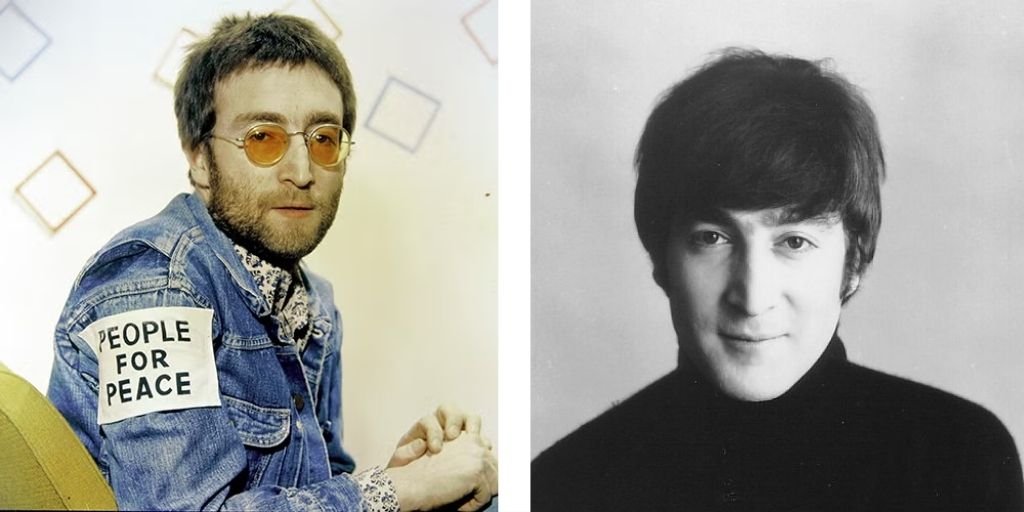
John Lennon remains one of the most recognizable figures in modern music. As a founding member of The Beatles, he helped transform popular music and became part of a cultural movement that reached far beyond the recording studio. His songs could be playful, emotional, political, romantic, and deeply personal, sometimes all at once.
But who was the man behind the famous glasses, distinctive voice, and unforgettable songs? Lennon’s story was filled with remarkable success, difficult experiences, changing beliefs, love, controversy, and creativity. His life was relatively short, yet his influence continues to be felt decades after his death.
From his childhood in Liverpool to his partnership with Paul McCartney, from Beatlemania to his solo career, Lennon’s journey offers much more than a collection of famous songs. It is the story of an artist who constantly questioned himself and the world around him.
Early Life and Childhood in Liverpool
John Winston Lennon was born on October 9, 1940, in Liverpool, England, during the Second World War. His childhood was shaped by family difficulties and uncertainty. His parents separated when he was young, and Lennon was largely raised by his aunt Mimi and uncle George.
Growing up in Liverpool exposed Lennon to a lively musical environment. The city had a strong connection to American popular music, skiffle, rock and roll, rhythm and blues, and other emerging styles. Like many young people of his generation, Lennon became fascinated by performers who seemed to represent freedom and rebellion.
Music quickly became an important part of his identity.
At school, Lennon was known for his sense of humor, artistic ability, and rebellious personality. He was not always an easy student, but teachers recognized that he had creative potential. Drawing and writing became important outlets for him.
As a teenager, he formed a skiffle group called The Quarrymen. At first, there was no indication that this small local band would eventually become one of the most influential musical groups in history.
Yet sometimes history begins quietly. A small band playing in Liverpool would eventually change the sound of popular music around the world.
Meeting Paul McCartney and the Birth of The Beatles
One of the most important moments in Lennon’s life occurred in 1957, when he met Paul McCartney at a church garden fete in Woolton, Liverpool.
McCartney impressed Lennon with his musical skills, and Lennon invited him to join The Quarrymen. Soon afterward, George Harrison became involved as well.
The group went through several names and lineup changes before eventually becoming The Beatles.
The partnership between Lennon and McCartney became one of the most celebrated songwriting collaborations ever recorded. Their personalities were different, but that difference often made their creative relationship stronger.
Lennon brought a sharp wit, experimental instincts, and an interest in unusual ideas. McCartney often contributed melodic sophistication and a different emotional sensibility. Together, they created songs that could appeal to millions while still feeling personal.
The Beatles also benefited from the energetic management of Brian Epstein and the musical direction of producer George Martin. Their professional support helped turn the young Liverpool musicians into international stars.
The band’s rise was extraordinary. What started in clubs and small venues soon became a global phenomenon.
Beatlemania and Worldwide Fame
By the early 1960s, The Beatles had become a sensation in Britain. Their popularity soon crossed the Atlantic, and their arrival in the United States in 1964 produced one of the most famous moments in entertainment history.
Millions watched their television appearances, bought their records, and copied their hairstyles and clothing.
Lennon became one of the most recognizable faces on Earth.
However, enormous fame came with an unusual price. The Beatles were constantly surrounded by photographers, reporters, fans, security personnel, and industry representatives. Privacy became extremely difficult.
Lennon’s personality also attracted controversy.
In 1966, during an interview, he remarked that The Beatles were “more popular than Jesus” in Britain. The comment caused a major backlash, particularly in the United States. Records were burned, radio stations organized boycotts, and Lennon publicly apologized for the way his words had been understood.
The episode demonstrated an important part of his personality: he was willing to say provocative things, but he also learned that words spoken by a global celebrity could have enormous consequences.
Behind the excitement of Beatlemania, Lennon was also changing as an artist.
The Beatles Become More Experimental
The Beatles’ music did not remain the same throughout their career.
Their early records were largely built around energetic pop and rock songs. Over time, however, Lennon, McCartney, Harrison, and Starr began experimenting with new sounds, recording techniques, instruments, and songwriting approaches.
Albums such as Rubber Soul, Revolver, Sgt. Pepper’s Lonely Hearts Club Band, The Beatles, and Abbey Road demonstrated how dramatically the group had developed.
Lennon played an important role in this transformation.
His songwriting increasingly explored psychological themes, relationships, identity, uncertainty, and social issues. Songs such as “Strawberry Fields Forever” revealed a more introspective side of his writing.
His work could be imaginative and strange one moment and emotionally direct the next.
The Beatles also began using the recording studio as an instrument itself. Instead of simply documenting a live performance, they could layer sounds, experiment with effects, reverse recordings, and explore unfamiliar musical structures.
This creative freedom helped establish the idea that a popular album could be an artistic statement rather than merely a collection of singles.
For Lennon, music was becoming a way to explore ideas.
Love, Relationships, and Personal Change
Lennon’s personal life was complicated and frequently under public attention.
He married Cynthia Powell in 1962, and they had a son, Julian Lennon. Their marriage eventually ended.
Later, Lennon became closely associated with Japanese artist Yoko Ono. Their relationship became one of the most discussed partnerships in popular culture.
Lennon and Ono married in 1969. They collaborated on artistic projects and became increasingly involved in political and peace activism.
Their relationship also influenced Lennon’s music.
Instead of concentrating entirely on The Beatles, Lennon began developing a creative identity that was increasingly independent. He recorded experimental works with Ono and eventually established a significant solo career.
Lennon’s transformation was not always comfortable or predictable. He openly discussed his insecurities, emotional struggles, relationships, and changing worldview.
That vulnerability became one of the defining features of his later work.
“Imagine” and the Message of Peace
Perhaps no Lennon song is more closely associated with peace than “Imagine.”
Released in 1971, the song presented an idealistic vision of a world without many of the divisions that separate people. Its simple piano arrangement and calm vocal delivery made the message accessible to a huge audience.
Why did the song become so powerful?
Part of its strength comes from simplicity. Lennon did not need an elaborate musical arrangement to communicate the central idea. The song invites listeners to imagine a different world rather than simply telling them what to believe.
Over time, “Imagine” became an international anthem associated with peace, humanitarian causes, and hope.
Lennon also recorded many other important solo songs, including “Give Peace a Chance,” “Working Class Hero,” “Jealous Guy,” “Mind Games,” and “Instant Karma!”
His solo work showed that he could continue evolving outside The Beatles.
The Breakup of The Beatles
The Beatles officially separated in 1970, although the group’s internal tensions had been developing for some time.
Financial disagreements, creative differences, management problems, personal relationships, and changing ambitions all contributed to the situation.
Lennon was already moving toward a solo career, while McCartney, Harrison, and Starr were developing their own projects.
For millions of fans, the breakup was heartbreaking.
But from another perspective, it was also a natural consequence of four strong personalities growing in different directions.
Lennon later produced several notable solo albums, including John Lennon/Plastic Ono Band and Imagine. These records were more personal and sometimes more emotionally exposed than much of his earlier work.
His post-Beatles music demonstrated that Lennon did not need the group to remain creatively relevant.
Political Activism and the Peace Movement
During the late 1960s and early 1970s, Lennon became increasingly involved in political activism.
He and Yoko Ono participated in peace campaigns and used their public platform to promote opposition to war. Their “Bed-In” events became famous examples of using celebrity attention to promote a political message.
Lennon’s activism attracted considerable attention from governments and the media.
He was living in the United States during an era of major political tension, including protests against the Vietnam War and broader debates about civil rights and social change.
His political activities also brought scrutiny from U.S. authorities.
For Lennon, music and activism were increasingly connected. He believed that a famous musician could use public attention for something larger than entertainment.
Some people admired this approach, while others considered it naive or overly political.
Whatever one’s opinion, Lennon clearly understood the power of celebrity.
Instead of treating fame as merely a privilege, he attempted to use it as a megaphone.
A New Chapter in New York
Lennon eventually made New York City his home.
The city became an important part of his later life. He and Ono lived at The Dakota, the famous apartment building near Central Park.
In the mid-1970s, Lennon stepped away from the public spotlight for a period. He spent time with his family and focused on raising his son Sean, born in 1975.
This quieter period was significant.
After years of touring, recording, political activity, and constant public attention, Lennon experienced a different kind of life. Domestic responsibilities became more important.
Eventually, however, his creative energy returned.
In 1980, Lennon and Ono released Double Fantasy. The album represented a new chapter, combining Lennon’s songs with Ono’s work.
Lennon appeared to be looking toward the future rather than simply revisiting his past.
His Final Years and Tragic Death
John Lennon’s return to music in 1980 was cut tragically short.
On December 8, 1980, Lennon was fatally shot outside The Dakota in New York City by Mark David Chapman.
He was only 40 years old.
The news shocked people around the world.
Fans gathered in cities across the globe. Radio stations played his music. Public memorials were organized. People who had grown up with The Beatles suddenly had to confront the loss of an artist who had seemed almost larger than life.
Lennon’s death transformed his public image in complicated ways.
He had already achieved extraordinary fame, but his sudden death created a sense of unfinished possibility. What might he have recorded? How might his songwriting have changed? What new causes might he have supported?
Those questions can never be answered.
What remains is the work he left behind.
John Lennon’s Musical Legacy
Lennon’s influence extends far beyond The Beatles.
As a songwriter, he helped demonstrate that popular music could address serious emotional and intellectual subjects without losing its accessibility.
His work influenced rock musicians, singer-songwriters, activists, and artists across generations.
His voice itself became distinctive. It could sound sarcastic, vulnerable, angry, gentle, humorous, or completely detached depending on the song.
Lennon also helped normalize experimentation in mainstream music.
He showed that a successful artist could take creative risks.
His legacy can be found in many areas:
- Songwriting
- Rock music
- Popular culture
- Peace activism
- Experimental recording
- Album-oriented music
- Celebrity activism
- Visual art
- Counterculture
Perhaps the best way to understand his influence is to think of him as a bridge between different worlds. He connected commercial entertainment with artistic experimentation and personal expression with public activism.
That bridge remains important today.
Why John Lennon Still Matters
Why do people continue listening to Lennon decades after his death?
The answer is not simply nostalgia.
His music continues to speak to familiar human experiences: love, loneliness, uncertainty, hope, anger, family, identity, and the desire for a better world.
He was not perfect, and there is no reason to pretend that he was.
Lennon’s life included contradictions. He could promote peace while sometimes behaving aggressively. He could advocate compassion while acknowledging difficult personal behavior. He could be deeply committed to family while having complicated relationships.
These contradictions make his story more human.
Instead of viewing him as a flawless legend, it is more useful to see him as a complicated person who continued changing throughout his life.
His artistic journey resembles a constantly moving river. The direction changed, the surroundings changed, and the water sometimes became turbulent, but it never stopped moving.
That sense of movement is one reason his work remains compelling.
The Enduring Cultural Impact
John Lennon’s image has become part of global culture.
His round glasses, long hair, music, artwork, and association with peace have been reproduced countless times. His songs continue to appear in films, documentaries, concerts, memorials, and public events.
But perhaps his most meaningful legacy is less visible.
He encouraged people to question assumptions.
He encouraged musicians to experiment.
He demonstrated that popular artists could discuss politics, personal emotions, and social concerns.
Most importantly, he reminded audiences that music can be more than entertainment. A song can become a memory, a protest, a comfort, or a shared dream.
That may explain why Lennon’s work continues to attract new listeners who were born long after he died.
Conclusion
John Lennon’s life was short, complicated, creative, and extraordinarily influential. From a Liverpool teenager fascinated by rock and roll to a member of The Beatles and later a successful solo artist, his journey reflected many of the dramatic cultural changes of the twentieth century.
His music continues to inspire because it combines memorable melodies with ideas and emotions that remain relevant. His activism made him a controversial public figure, while his personal life revealed a man who was constantly changing and searching for meaning.
Lennon’s legacy is therefore larger than any single song or photograph. It lives in the musicians he influenced, the listeners who still find comfort in his recordings, and the people who continue to discuss his ideas about peace, love, creativity, and society.
He left the world far too soon, but the conversation surrounding his music never truly ended.
Frequently Asked Questions
1. Who was John Lennon?
John Lennon was an English musician, singer, songwriter, and artist best known as a founding member of The Beatles. He later developed a successful solo career and became associated with peace activism alongside Yoko Ono.
2. What was John Lennon’s most famous song?
“Imagine” is generally considered one of his most famous solo songs. Released in 1971, it became internationally recognized for its message of peace and its vision of a less divided world.
3. When did John Lennon die?
John Lennon was killed on December 8, 1980, in New York City. He was 40 years old.
4. Why was John Lennon important to The Beatles?
Lennon was one of the band’s principal songwriters and vocalists. His creative partnership with Paul McCartney helped produce many of The Beatles’ most influential recordings and contributed significantly to the group’s artistic development.
5. What is John Lennon’s legacy?
His legacy includes influential songwriting, musical experimentation, peace activism, and a lasting impact on popular culture. His work with The Beatles and as a solo artist continues to influence musicians and listeners around the world.


