
Justin Timberlake: From Boy-Band Star to Global Entertainer
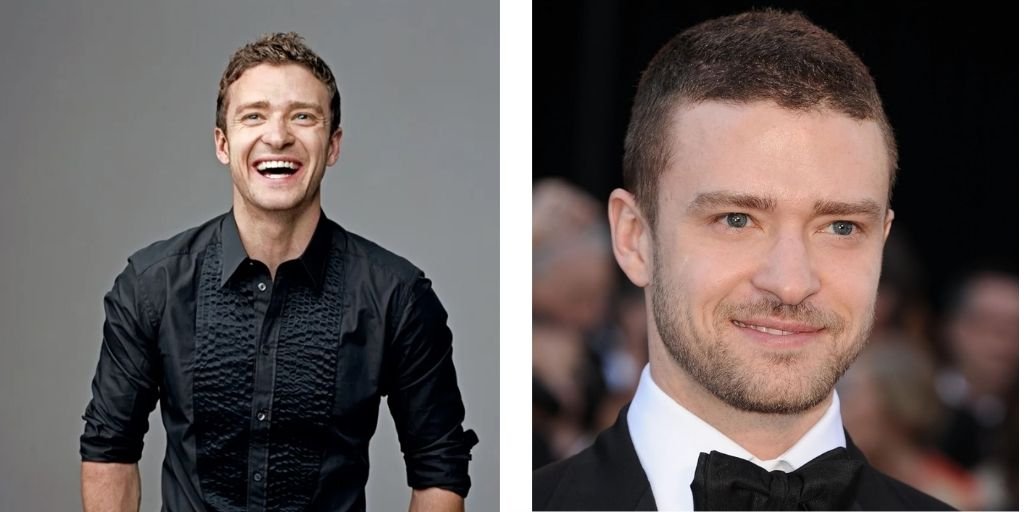
Justin Timberlake
Justin Timberlake has spent decades moving comfortably between music, television, film, dance, and live entertainment. For many people, he first appeared as the young performer from *NSYNC. Others discovered him through solo hits such as “Cry Me a River,” “SexyBack,” “Mirrors,” or “Can’t Stop the Feeling!” Still others know him from movies, comedy sketches, awards shows, or spectacular concert tours.
What makes his career interesting is not simply the number of successful songs or films attached to his name. It is the way he repeatedly reinvented himself. He moved from a teenage pop group into a mature solo career, then expanded into acting and entertainment production while continuing to perform on major stages around the world.
His story is a little like a long-running stage show: the scenery keeps changing, but the central performer remains recognizable. From early television appearances to international tours and later studio projects, Timberlake has built a career based on versatility, performance, and an ability to adapt to changing audiences.
Early Life and the Beginning of a Performing Career
Justin Randall Timberlake was born on January 31, 1981, in Memphis, Tennessee. Growing up in a musical environment helped shape his interest in performance from an early age. Memphis itself has a rich musical heritage, and Timberlake’s early exposure to different styles would later become important to his artistic identity.
Before becoming an international pop star, he appeared on television as a young performer. His early screen experience included Star Search and later The All-New Mickey Mouse Club. The Disney program was particularly important because it placed him among a group of young performers who would eventually become major entertainment figures.
The experience taught Timberlake more than singing. Television required timing, confidence, choreography, acting, and the ability to connect with an audience through a camera. Those skills would become useful throughout his career.
His childhood ambitions might have seemed like those of many talented young performers, but his career developed unusually quickly. Instead of remaining focused on one form of entertainment, he gradually built experience in several areas.
That early versatility became one of his biggest strengths.
The NSYNC Years and Rise to Pop Stardom
Timberlake became internationally famous as a member of *NSYNC, one of the defining boy bands of the late 1990s and early 2000s. The group combined polished harmonies, energetic choreography, youthful personalities, and highly produced pop music.
Songs such as “Bye Bye Bye,” “It’s Gonna Be Me,” and “This I Promise You” helped establish *NSYNC as a major force in popular music. The group sold millions of records and became a cultural phenomenon.
For Timberlake, however, *NSYNC was more than a successful musical project. It was a training ground.
Performing in a group taught him how to share a stage, understand choreography, work with producers, and handle the enormous demands of international fame. He also learned how audiences respond to personality and visual presentation.
The band’s enormous popularity created an interesting challenge. How could a member of one of the world’s most successful pop groups establish a separate identity?
Timberlake’s answer was to take risks.
Rather than simply creating another collection of traditional boy-band songs, he explored R&B, funk, soul, electronic pop, and hip-hop influences. That decision became the foundation of his solo career.
A Powerful Solo Debut With Justified
In 2002, Timberlake released his first solo album, Justified. It represented a major change in image and musical direction.
The album included songs such as “Like I Love You,” “Cry Me a River,” and “Rock Your Body.” Instead of presenting himself primarily as a former boy-band member, Timberlake introduced a more mature sound.
Justified was important because it demonstrated that his popularity was not entirely dependent on *NSYNC. He could stand alone.
“Cry Me a River,” in particular, became one of the defining songs of his early solo career. Its emotional tone and distinctive production showed a performer willing to move beyond lightweight pop.
The album also established a pattern that would continue throughout his career: combining mainstream accessibility with elements of soul, R&B, dance, and contemporary production.
Timberlake’s vocal style was another important part of the transition. He was not trying to become the loudest singer in pop. Instead, he often relied on rhythm, phrasing, falsetto, and controlled delivery.
That approach helped him create an identity that felt different from many of his contemporaries.
FutureSex/LoveSounds and the Reinvention of Pop
If Justified introduced Timberlake as a solo artist, FutureSex/LoveSounds transformed him into a major pop innovator.
Released in 2006, the album included “SexyBack,” “My Love,” “What Goes Around… Comes Around,” and “LoveStoned/I Think She Knows.” The project embraced electronic production, dance rhythms, futuristic sounds, and sleek visual presentation.
“SexyBack” became especially influential. Its unusual vocal treatment and production challenged expectations about what a mainstream pop song could sound like.
The album’s success was not simply about catchy singles. It demonstrated Timberlake’s interest in musical experimentation.
His collaboration with producer Timbaland became especially important during this period. Their partnership created a sound that blended pop accessibility with unusual rhythms and electronic textures.
The official catalog still reflects the album’s broad range, including tracks such as “SexyBack,” “My Love,” “Summer Love,” and “What Goes Around… Comes Around.”
This era also strengthened Timberlake’s reputation as a performer. His music videos, choreography, clothing, and stage presence all became part of the larger artistic package.
He was no longer simply a singer.
He was becoming an entertainer in the classic sense of the word.
Acting, Comedy, and Expanding Beyond Music
One of the most interesting parts of Timberlake’s career is his transition into acting and comedy.
His appearances on Saturday Night Live became particularly memorable. He demonstrated a willingness to make fun of himself, participate in absurd sketches, and embrace comedy rather than protecting the polished image often associated with pop stars.
That ability to laugh at himself made him more relatable to a wider audience.
At the same time, Timberlake developed a film career. He appeared in movies including The Social Network, Friends with Benefits, In Time, Bad Teacher, and Palmer. He also became widely associated with the animated Trolls franchise, where he voiced Branch.
His work in Trolls connected his musical and acting careers particularly well. “Can’t Stop the Feeling!” from the franchise became a major international hit and introduced his music to another generation of listeners.
The song demonstrated his ability to create something cheerful and accessible without abandoning his identity as a performer.
Acting also helped him develop another side of his craft. Music depends heavily on performance and rhythm, while film requires patience, character development, and collaboration. Moving between the two worlds gave Timberlake a broader entertainment vocabulary.
The 20/20 Experience and a More Mature Sound
After a period of musical and acting work, Timberlake returned to the center of the pop conversation with The 20/20 Experience in 2013.
The album represented a more mature and elaborate sound. Songs such as “Suit & Tie,” “Mirrors,” and “Tunnel Vision” combined R&B, soul, pop, and detailed production.
The album’s structure was also notable. Many songs were longer than typical radio singles, allowing musical sections to develop and change.
“Mirrors” became one of Timberlake’s most recognizable songs, combining romantic lyrics with a large-scale production style. “Suit & Tie,” featuring Jay-Z, presented a sophisticated, retro-inspired approach.
The official album track listing includes “Pusher Love Girl,” “Suit & Tie,” “Don’t Hold the Wall,” “Tunnel Vision,” “Mirrors,” and “Blue Ocean Floor.”
A second collection, The 20/20 Experience – 2 of 2, followed later that year. Its songs included “TKO,” “Take Back the Night,” “Drink You Away,” and “Not a Bad Thing.”
Together, the projects showed Timberlake becoming increasingly interested in albums as complete artistic experiences rather than simple collections of singles.
Live Performances and the Art of Entertainment
Timberlake’s reputation as a live performer is a major part of his career.
Why do some singers remain interesting after years in the spotlight while others disappear from public attention? One answer is their ability to create an experience rather than simply reproduce recorded songs.
Timberlake has built performances around choreography, lighting, musicians, dancers, video production, costume changes, and carefully arranged transitions.
His concerts demonstrate the influence of his early experience in television and *NSYNC. Every element has to work together.
The Forget Tomorrow World Tour is a strong example of this approach. Timberlake was credited with conceiving and creating the tour, while the production involved specialists in choreography, lighting, video, stage design, wardrobe, sound, and automation.
This kind of production is closer to a theatrical performance than a simple concert.
The official tour credits reveal how many people are involved in creating the final experience, from musicians and dancers to lighting technicians, video teams, stage managers, and production designers.
For audiences, the result is a show designed to keep the visual and musical energy moving.
Man of the Woods and a Different Creative Direction
In 2018, Timberlake released Man of the Woods, another attempt to explore a different side of his musical personality.
The album drew attention because of its mixture of pop, R&B, electronic production, and more organic influences. The project also presented a more personal image connected to family, home, and nature.
The title itself suggested a shift away from the sleek urban identity associated with some of his earlier work.
Not every creative decision in an artist’s career receives the same response, and Man of the Woods was no exception. Some listeners appreciated its experimentation, while others preferred his earlier sound.
But experimentation is an important part of understanding Timberlake’s career.
He has rarely stayed in exactly the same musical place for long.
The willingness to change can sometimes create disagreement, but it also prevents an artist from becoming trapped by past success.
Everything I Thought It Was and the Next Chapter
Timberlake continued his musical journey with Everything I Thought It Was, released in 2024.
The album marked his sixth studio album and included songs such as “Selfish,” “Drown,” and “No Angels.” His official website identifies the project as his sixth studio album and describes him as a recording artist, producer, songwriter, and actor.
“Selfish” offered a melodic, polished sound that connected with the style audiences had come to associate with his solo work while still fitting into a contemporary pop landscape.
The album also demonstrated that Timberlake remained interested in making new music rather than relying exclusively on nostalgia.
That distinction matters.
For an artist who became famous decades ago, releasing new material is one of the clearest ways to demonstrate continued creative ambition.
His official store continues to feature Everything I Thought It Was alongside earlier albums such as Justified, FutureSex/LoveSounds, The 20/20 Experience, and Man of the Woods.
Influence, Achievements, and Cultural Legacy
Timberlake’s influence can be understood in several different ways.
First, he helped demonstrate that a successful boy-band member could build a credible and commercially powerful solo career.
Second, he became an example of the modern multi-platform entertainer. His career has included recording, songwriting, producing, acting, television, comedy, animation, and live performance.
Third, he helped bring different musical traditions into mainstream pop. His work frequently combines R&B, funk, soul, dance music, electronic production, and contemporary pop.
His collaborations have also been important. Across his career, he has worked with major producers, rappers, singers, musicians, actors, choreographers, and directors.
Perhaps his biggest achievement is longevity.
Pop culture changes extremely quickly. A sound that dominates one decade can feel outdated in the next. Timberlake, however, has repeatedly adjusted his approach.
His career resembles a tree with several branches. The roots are his early musical and television experiences, while the branches extend into solo music, acting, comedy, dance, production, and touring.
That breadth is one reason his name remains familiar to audiences who discovered him at completely different points in his career.
Personal Life, Public Image, and the Reality of Fame
Like many internationally famous entertainers, Timberlake’s personal life has received substantial public attention.
His relationships, family life, career decisions, and public appearances have all been discussed extensively by entertainment media.
This creates an important distinction between the performer people see on stage and the individual living away from the spotlight.
Celebrity culture can make those two worlds difficult to separate.
Timberlake has experienced both the advantages and pressures of long-term fame. Public expectations can change quickly, especially for performers who became famous when they were young.
Over time, audiences have watched him grow from a teenage entertainer into an adult artist, actor, husband, and father.
That evolution is part of what makes his story relatable.
Nobody remains exactly the same person they were at 20. The difference is that most people get to change privately. Famous performers often have to change in front of millions of people.
That can be an enormous challenge.
Why Justin Timberlake Remains Relevant
So, what explains Timberlake’s lasting appeal?
There is no single answer.
His singing ability certainly matters. His dancing matters. His charisma matters. His willingness to experiment matters. His experience in television and film matters. Most importantly, he has repeatedly expanded what audiences expect from him.
He understands that entertainment is not just about one skill.
A great singer can make a good record. A great performer can turn that record into an experience. Timberlake has spent much of his career trying to do both.
His official catalog still presents music from different periods of his career, from Justified and FutureSex/LoveSounds to The 20/20 Experience and Everything I Thought It Was.
That catalog gives listeners a kind of timeline. You can hear the younger artist discovering his voice, the established star experimenting with production, and the mature performer looking back while continuing to create.
His legacy will ultimately depend on how future generations view the entire body of work.
But one thing is already clear: Justin Timberlake’s career cannot be reduced to a single hit, album, movie, or television appearance.
Conclusion
Justin Timberlake’s journey from a young television performer to an *NSYNC member, solo recording artist, actor, comedian, songwriter, producer, and major touring performer is one of modern pop culture’s more remarkable career stories.
His success has come from more than fame. It has required adaptability, discipline, performance ability, and a willingness to explore different creative directions.
From Justified and FutureSex/LoveSounds to The 20/20 Experience, Man of the Woods, and Everything I Thought It Was, his music has continued to evolve. His work in film and television has expanded his audience, while his elaborate tours have reinforced his reputation as a complete entertainer.
Perhaps that is the best way to understand Timberlake. He has never been only a singer. He has built a career around the broader idea of entertainment—and that flexibility has allowed him to remain part of popular culture across multiple generations.
FAQs About Justin Timberlake
1. Who is Justin Timberlake?
Justin Timberlake is an American singer, songwriter, actor, producer, and entertainer. He first became widely known as a member of *NSYNC before establishing a successful solo career and expanding into film, television, comedy, and live performance.
2. What was Justin Timberlake’s first solo album?
His first solo studio album was Justified, released in 2002. The project included well-known songs such as “Cry Me a River,” “Rock Your Body,” and “Like I Love You.”
3. What are some of Justin Timberlake’s most famous songs?
Some of his best-known songs include “Cry Me a River,” “SexyBack,” “My Love,” “What Goes Around… Comes Around,” “Mirrors,” “Suit & Tie,” and “Can’t Stop the Feeling!”
4. Has Justin Timberlake acted in movies?
Yes. Timberlake has appeared in numerous films, including The Social Network, In Time, Friends with Benefits, Bad Teacher, and Palmer. He also voiced Branch in the Trolls animated film series.
5. What is Justin Timberlake’s latest studio album?
His sixth studio album, Everything I Thought It Was, was released in 2024. It includes tracks such as “Selfish,” “Drown,” and “No Angels.”


