
Mark Twain: The Brilliant Storyteller Who Changed American Literature
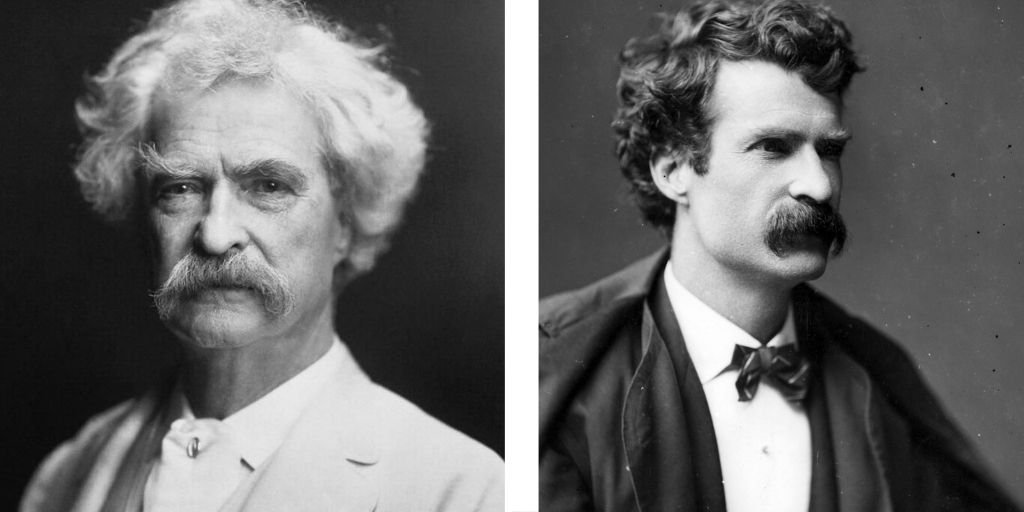
Mark Twain remains one of the most recognizable names in American literature. His stories are funny, adventurous, thoughtful, and often surprisingly modern. Through memorable characters, sharp humor, and an eye for everyday life, he captured the hopes, contradictions, and struggles of nineteenth-century America.
But who was the man behind the famous pen name? What made his writing so influential, and why do readers still return to his books more than a century after his death?
Twain was much more than the author of The Adventures of Tom Sawyer and Adventures of Huckleberry Finn. He was a journalist, humorist, lecturer, traveler, social critic, and one of America’s most distinctive literary voices.
Mark Twain’s Early Life and Family Background
Mark Twain was born Samuel Langhorne Clemens on November 30, 1835, in Florida, Missouri. He was the sixth of seven children born to John Marshall Clemens and Jane Lampton Clemens.
His childhood changed significantly when his family moved to Hannibal, Missouri, when he was still young. Hannibal stood along the Mississippi River, and the river would eventually become one of the most important influences on his imagination.
Growing up in a river town gave Clemens a close view of boats, travelers, merchants, workers, and people from many different backgrounds. The lively environment provided endless material for the young observer.
His father died when Samuel was only eleven. Because the family needed financial support, he left school and began working as a printer’s apprentice. This experience introduced him to newspapers and the world of publishing.
A childhood shaped by the Mississippi
The Mississippi River was more than a geographical feature in Twain’s life. It became almost a character in his imagination. The river represented freedom, movement, danger, opportunity, and change.
Think of it as a giant classroom without walls. Twain learned about people by watching life unfold around the river, and those observations later became the foundation for some of his greatest writing.
How Samuel Clemens Became Mark Twain
Samuel Clemens worked in several printing offices and newspapers before becoming a writer known across the country.
He later became a riverboat pilot on the Mississippi, an occupation that gave him firsthand knowledge of river navigation. During this period, he encountered the expression “mark twain,” a riverboat term referring to a depth of two fathoms, or twelve feet.
Clemens eventually adopted Mark Twain as his professional pen name.
His experiences on the river had a lasting effect on his writing. Years later, when he described the Mississippi and its communities, his descriptions carried the authority of someone who had actually lived that life.
His river career ended when the American Civil War disrupted commercial river traffic. Clemens then moved through several parts of the American West, working as a miner, journalist, and newspaper writer.
These experiences broadened his understanding of American society.
The Rise of a Famous Humorist
Twain’s national reputation grew through journalism and humorous storytelling. One of his early major successes was “The Celebrated Jumping Frog of Calaveras County,” published in 1865.
The story helped establish him as a writer with a distinctive comic voice.
His humor was different from simple jokes. Twain often used exaggeration, irony, understatement, and observations about human behavior. He could make readers laugh while quietly encouraging them to question what they believed.
Humor with a purpose
Twain understood something important: people often listen more carefully when they are entertained.
Instead of delivering a serious lecture about human foolishness, he might create a ridiculous character and let that character expose the problem. His comedy frequently carried a second meaning beneath the surface.
This technique became one of his trademarks.
The Adventures of Tom Sawyer
Published in 1876, The Adventures of Tom Sawyer became one of Twain’s most beloved works.
The novel follows Tom, a mischievous boy growing up beside the Mississippi River. He skips responsibilities, gets into trouble, dreams of adventure, and tries to impress Becky Thatcher.
Tom is not a perfect child, and that is precisely why he feels believable.
Why Tom remains memorable
Most readers can recognize something of childhood in Tom’s behavior. He wants freedom, excitement, friendship, and recognition. He dislikes boring work and constantly searches for something more interesting.
The famous scene in which Tom persuades other boys to pay for the privilege of whitewashing a fence perfectly captures Twain’s understanding of human psychology. Tom turns an unpleasant task into something desirable simply by changing how others perceive it.
The novel is entertaining, but it also offers a vivid picture of small-town American life during the nineteenth century.
Adventures of Huckleberry Finn and Its Lasting Importance
If Tom Sawyer introduced readers to Twain’s youthful world, ** Adventures of Huckleberry Finn ** took his writing into much deeper territory.
Published in book form in 1885, the novel follows Huck Finn as he travels down the Mississippi River with Jim, an enslaved man seeking freedom.
The journey appears adventurous on the surface, but underneath it lies a serious examination of slavery, morality, prejudice, friendship, and personal conscience.
Huck’s moral struggle
Huck has been raised in a society that teaches him certain beliefs about slavery and social responsibility. As he develops a friendship with Jim, however, his personal experience begins to challenge what society has taught him.
That conflict gives the novel much of its emotional power.
The river once again becomes central. It separates Huck and Jim from the communities around them while giving them temporary freedom.
The novel has also generated substantial controversy because of its language, racial stereotypes, and historical context. Modern readers and educators continue to debate how the book should be taught and understood.
Its importance, however, is difficult to ignore. Twain used the voice of a young narrator to expose contradictions within American society.
Twain’s Writing Style and Unique Voice
What makes Twain’s writing immediately recognizable?
One answer is his conversational style. He often wrote as though he were speaking directly to the reader. His prose could sound relaxed, humorous, and informal, even when discussing serious subjects.
He also had an extraordinary ear for dialogue.
His characters did not all speak in the same way. Their language reflected their background, education, region, and personality.
Irony and satire
Twain was particularly skilled at satire. He could take an accepted social idea and push it to an absurd extreme, allowing readers to see its weaknesses.
His criticism extended to politics, religion, social customs, education, business, and human vanity.
Rather than presenting himself as someone who had all the answers, Twain often used humor to make readers think for themselves.
Mark Twain as a Traveler and Observer of the World
Twain’s curiosity was not limited to America. He traveled extensively and turned many of his experiences into books and lectures.
His travels included Europe, the Middle East, and other parts of the world. One of his notable travel books was ** The Innocents Abroad **, published in 1869.
The book became highly successful and showed Twain’s ability to combine travel writing with humor and social observation.
His travel experiences also encouraged him to compare American customs with those of other societies.
A global perspective
Twain did not simply describe landmarks. He paid attention to people.
He noticed their habits, assumptions, manners, and contradictions. His observations could be affectionate, skeptical, or sharply critical.
Travel helped him develop a broader perspective, but it also revealed some of the prejudices common to his era. This is another reason his work benefits from thoughtful historical reading rather than simple admiration or dismissal.
Mark Twain’s Views on Society, Politics, and Human Nature
Twain became increasingly outspoken as he grew older.
He criticized corruption, imperialism, racism, organized hypocrisy, and abuses of power. His political and social writing could be considerably more serious than the humorous image associated with his earlier career.
A sharp critic of hypocrisy
Twain was fascinated by the difference between what people claimed to believe and how they actually behaved.
That theme appears repeatedly throughout his work.
He questioned whether civilization automatically made people wiser or kinder. In many of his stories, supposedly respectable people behave foolishly, while outsiders or children sometimes see uncomfortable truths more clearly.
This skepticism helped make his writing powerful.
Twain understood that society could create rules without necessarily creating justice.
Personal Life, Family, and Financial Difficulties
In 1870, Twain married Olivia Langdon. They had four children, although only three survived infancy.
The family spent years living in Connecticut, where Twain wrote several of his best-known works.
Despite his literary success, his financial life was complicated. Twain invested heavily in inventions and publishing ventures, some of which failed.
Eventually, his financial problems became severe.
Rather than simply accepting the situation, Twain worked to repay his debts. He embarked on extensive lecture tours and continued writing.
The later years
Twain’s later life was marked by both achievement and personal loss. Several members of his immediate family died before him, including his wife Olivia and his daughters Susy and Jean.
These losses contributed to a darker tone in some of his later writings.
Yet Twain continued to write, lecture, and express his opinions.
His public personality remained energetic, even when his private life had become much more difficult.
Mark Twain’s Major Works Beyond His Famous Novels
Although Tom Sawyer and Huckleberry Finn are his best-known books, Twain produced a large body of work.
Among his notable works are:
- The Innocents Abroad
- Roughing It
- The Prince and the Pauper
- A Connecticut Yankee in King Arthur’s Court
- Life on the Mississippi
- The Tragedy of Pudd’nhead Wilson
- The Gilded Age
- The Mysterious Stranger
Each reveals a different side of his imagination.
Life on the Mississippi
Published in 1883, Life on the Mississippi combines memoir, travel writing, history, and reflections on the changing river.
It is particularly valuable because it connects Twain’s personal experiences with his mature understanding of American life.
The Prince and the Pauper
This novel explores identity and social class through two boys who look remarkably alike but live completely different lives.
The story is accessible to younger readers while still raising questions about wealth, poverty, privilege, and justice.
A Connecticut Yankee in King Arthur’s Court
Here Twain uses time travel and fantasy to criticize political and social institutions.
The story demonstrates how he could use an imaginative setting to discuss real-world problems.
Why Mark Twain Still Matters Today
More than a century after his death, Twain remains an important literary figure.
Why?
Because the subjects he explored have not disappeared.
People still struggle with prejudice, inequality, political manipulation, social pressure, hypocrisy, and the conflict between personal conscience and public expectations.
His humor also remains accessible. A reader does not need to be a literature specialist to appreciate a clever Twain anecdote.
A bridge between entertainment and criticism
Twain’s greatest strength may be his ability to make serious ideas entertaining.
His stories work like a mirror. You may begin by laughing at a character, only to realize that the character’s behavior resembles something familiar in your own society.
That is one reason his writing has survived.
His work has influenced generations of American writers and helped shape the tradition of distinctly American storytelling.
Mark Twain’s Legacy in American Culture
Mark Twain died on April 21, 1910, in Redding, Connecticut.
By that point, he had become an international celebrity.
His white suit, distinctive mustache, humor, lectures, and unmistakable personality had turned him into a cultural icon as well as a literary figure.
His influence can be found in American fiction, journalism, comedy, satire, and popular culture.
Libraries, schools, museums, and literary organizations continue to preserve his work and study his life.
His hometown of Hannibal remains strongly associated with Twain because of the connection between the community and the fictional worlds of Tom Sawyer and Huckleberry Finn.
A complicated legacy
Twain’s legacy is not completely simple.
Some of his language and descriptions reflect the racial attitudes of nineteenth-century America, while other parts of his writing strongly criticize racism and injustice. Readers therefore need to approach his work with historical awareness.
That complexity does not make his writing less valuable. In many ways, it makes it more worth discussing.
Twain’s books encourage us to examine how language, culture, morality, and power interact.
What We Can Learn From Mark Twain
Perhaps the most useful way to understand Twain is not simply to memorize his biography or list his books.
Instead, ask what his work teaches us.
First, curiosity matters. Twain constantly observed the world around him.
Second, humor can reveal truth. A joke can sometimes expose hypocrisy more effectively than a lecture.
Third, questioning society is important. Twain did not automatically accept traditions simply because they were old.
Fourth, ordinary people can tell extraordinary stories. His characters often came from everyday communities rather than royal courts or heroic legends.
Finally, Twain reminds us that great writing does not always need complicated language.
His strongest passages often sound like a person telling you a story across a table.
That accessibility is part of his genius.
Conclusion
Mark Twain was far more than a famous American author. He was a keen observer of people, a master of humor, an adventurous traveler, and a determined critic of society. His experiences along the Mississippi, his journalism, his travels, and his personal struggles all helped shape the writer he became.
From Tom Sawyer’s childhood adventures to Huck Finn’s moral journey, Twain created characters and stories that continue to invite laughter, debate, and reflection.
His legacy survives because his central questions remain relevant: How should we decide what is right? Why do people follow society’s rules? What happens when personal experience challenges accepted beliefs?
More than a century later, those questions still deserve answers.
FAQs About Mark Twain
1. Who was Mark Twain?
Mark Twain was the pen name of Samuel Langhorne Clemens, an American author, humorist, journalist, lecturer, and social critic best known for The Adventures of Tom Sawyer and Adventures of Huckleberry Finn.
2. Why did Samuel Clemens use the name Mark Twain?
He adopted the name “Mark Twain,” a phrase associated with Mississippi River navigation. It referred to a water depth of two fathoms, or twelve feet.
3. What is Mark Twain’s most famous book?
Adventures of Huckleberry Finn is generally regarded as one of his most important and influential works, while The Adventures of Tom Sawyer remains one of his most popular.
4. What was Mark Twain known for?
Twain was known for his humor, storytelling, satire, memorable characters, travel writing, and criticism of social and political hypocrisy.
5. Why is Mark Twain still important today?
His work continues to matter because it explores themes such as freedom, prejudice, morality, social pressure, inequality, and human behavior—issues that remain relevant to modern readers.


