
Michelle Williams: 12 Inspiring Chapters of Her Life, Career, Movies & Legacy
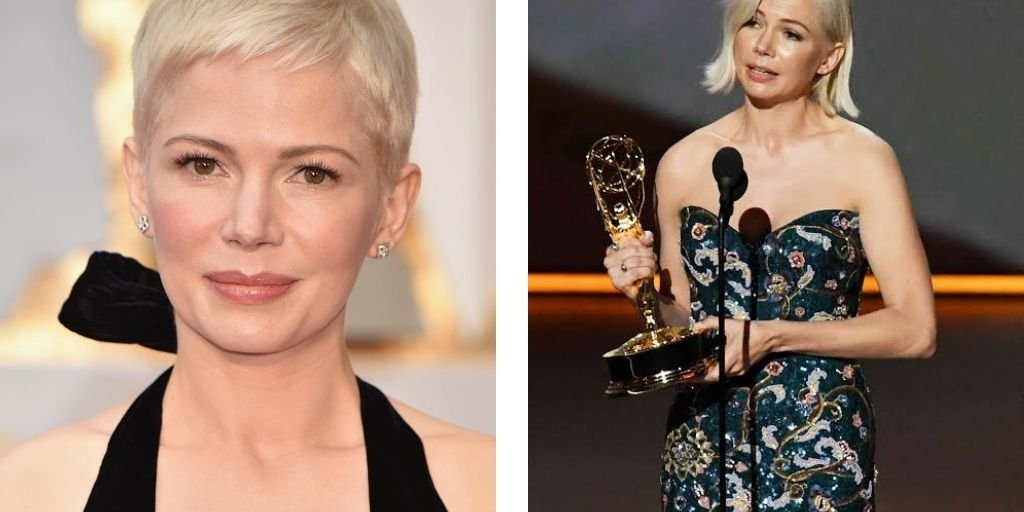
Michelle Williams has built a career that is difficult to fit into one simple description. She first became widely known as Jen Lindley on Dawson’s Creek, but instead of staying in the world of teen television, she gradually moved toward independent cinema, major Hollywood productions, television, and Broadway. Along the way, she developed a reputation for choosing emotionally demanding characters and bringing a quiet intensity to them.
Born on September 9, 1980, in Kalispell, Montana, Williams began acting professionally as a teenager. Her film debut came in Lassie in 1994, followed by television appearances and supporting roles before her breakthrough on Dawson’s Creek.
What makes her story particularly interesting is the way her career developed. Rather than treating fame as the destination, she often seemed to treat acting like a journey—one role leading to another, with each character opening a different door.
Early Life and the Beginning of an Acting Dream
Michelle Ingrid Williams was born in Montana and grew up in a family that eventually moved to Southern California. As a young girl, she became interested in acting after seeing other children around her pursuing small entertainment jobs. That early curiosity soon became something much more serious.
Her first screen appearance came with Lassie, giving her an early opportunity to experience professional filmmaking. She continued working through the 1990s, appearing in television programs and films while developing her craft.
The entertainment industry can be difficult for young performers because early success can create expectations about what they should become. Williams, however, gradually began looking beyond conventional teenage roles. Her choices would eventually take her toward smaller, character-focused productions.
That decision became one of the defining features of her career.
The Dawson’s Creek Years and Television Stardom
For many viewers, Michelle Williams will always be connected with Dawson’s Creek. The teen drama premiered in 1998 and became an important part of late-1990s and early-2000s television culture.
Williams played Jen Lindley, a character with emotional complexity and a troubled past. The role gave her substantial exposure and introduced her to a large television audience.
For a young actor, becoming recognizable through a popular series can be both an opportunity and a challenge. Audiences may begin to associate the performer permanently with one character.
Williams appeared determined not to let that happen.
While Dawson’s Creek helped establish her name, she continued exploring film projects outside mainstream teen entertainment. This willingness to move in a different direction became increasingly important as her career developed.
Moving Toward Independent Films
After gaining television recognition, Williams began choosing films that offered her different kinds of characters. Projects such as Dick, Me Without You, Prozac Nation, and The Station Agent demonstrated her interest in stories that were more intimate and character-driven.
The Station Agent became particularly significant in establishing her connection with independent cinema. She was no longer simply the young actress audiences knew from television. She was developing an identity as a serious film performer.
Why does this matter?
Hollywood often rewards familiarity, but acting careers can grow when performers are willing to take risks. Williams repeatedly chose roles that allowed her to explore complicated emotions rather than simply appear glamorous or likable.
Her career during this period was like building a house one brick at a time. Each smaller film added another layer to her reputation.
Brokeback Mountain: The Breakthrough
The major turning point came with Ang Lee’s Brokeback Mountain in 2005. Williams played Alma, the wife of Heath Ledger’s character, Ennis Del Mar. The film became a major critical and commercial success, and Williams received her first Academy Award nomination for Best Supporting Actress.
Her performance was powerful partly because the character had to communicate enormous emotional pain without always saying exactly what she felt.
This became a recurring feature of Williams’ work: the ability to make silence meaningful.
The success of Brokeback Mountain changed the way the industry viewed her. She was now firmly established as a film actress capable of handling serious dramatic material.
The movie also became an important milestone in the careers of its principal cast members and director, remaining one of the most discussed films of the 2000s.
Personal Loss and a Return to Work
Williams experienced a deeply difficult period in her personal life following her relationship with Heath Ledger. The two had a daughter together, and they separated in 2007. Ledger died in 2008.
Public attention surrounding such a tragedy can be overwhelming, especially for someone who values privacy. Williams continued raising her daughter while maintaining her professional career.
Instead of allowing her public identity to be defined entirely by tragedy, she continued acting and returned to demanding creative work.
This period also highlighted something that would become a recurring characteristic of her public life: a strong separation between her professional work and her private world.
Wendy and Lucy, Blue Valentine and Artistic Growth
Williams’ work in independent cinema continued with films such as Wendy and Lucy, directed by Kelly Reichardt. The movie premiered in the Un Certain Regard section at Cannes in 2008, adding to Williams’ growing association with serious independent filmmaking.
She later starred opposite Ryan Gosling in Blue Valentine, a difficult relationship drama released in 2010.
Her performance earned an Academy Award nomination for Best Actress. The film examined a relationship through both affection and emotional breakdown, requiring Williams and Gosling to portray characters at very different points in their lives.
This was an important moment because it showed that Williams was not simply successful in supporting roles. She could carry a complicated story as a leading performer.
Her choices also suggested that she was more interested in emotional truth than conventional movie-star formulas.
Becoming Marilyn Monroe in My Week with Marilyn
One of the most demanding transformations of Williams’ career came with My Week with Marilyn in 2011.
She portrayed Marilyn Monroe, one of the most recognizable figures in entertainment history. Playing someone so famous creates a unique challenge. Viewers already have their own image of Monroe, so an actor has to recreate the public figure while also finding the person behind the image.
Williams approached the character through vulnerability as well as glamour.
Her performance received an Academy Award nomination for Best Actress and won her a Golden Globe.
The role demonstrated her range. She had moved from a teenage television character to an emotionally complex supporting role in Brokeback Mountain, then to independent dramas and finally to one of the most recognizable women in Hollywood history.
Hollywood Productions and The Greatest Showman
Although Williams remained closely associated with independent cinema, she also became part of large-scale productions.
She played Glinda in Oz the Great and Powerful, expanding into fantasy filmmaking. Later, she appeared in The Greatest Showman, a musical that became one of her more commercially successful films. She also joined the superhero world through Venom and its sequel, Venom: Let There Be Carnage.
These projects demonstrated that her career could operate on two different levels.
On one side were intimate dramas with small casts and restrained storytelling. On the other were major productions with elaborate sets, large audiences, and substantial commercial expectations.
That balance helped make her filmography unusually varied.
Manchester by the Sea and The Fabelmans
In 2016, Williams appeared in Manchester by the Sea as Randi Chandler, the former wife of Casey Affleck’s character. Her performance earned an Academy Award nomination for Best Supporting Actress.
The film dealt heavily with grief, guilt, family relationships, and emotional distance. Williams’ contribution was relatively limited in screen time compared with the central character, but her scenes carried considerable emotional weight.
Several years later, she worked with Steven Spielberg on The Fabelmans. Williams played Mitzi Fabelman, a mother navigating family changes and personal dissatisfaction.
The role brought her another Academy Award nomination, this time for Best Actress. It became her fifth Oscar nomination.
Across these performances, a pattern becomes clear: Williams often gravitates toward characters whose emotions are complicated rather than straightforward.
Broadway, Fosse/Verdon and Television Success
Williams has also made important contributions to stage acting. In 2014, she played Sally Bowles in the Broadway revival of Cabaret. In 2016, she starred as Una in Blackbird, earning a Tony Award nomination for Best Actress in a Play.
Her stage career showed another side of her abilities. Theater demands a different kind of discipline because performers cannot rely on multiple takes or editing.
Then came Fosse/Verdon in 2019.
Williams portrayed Broadway legend Gwen Verdon opposite Sam Rockwell as choreographer and director Bob Fosse. Her performance earned her a Primetime Emmy Award for Outstanding Lead Actress in a Limited Series or Movie and a Golden Globe.
The role was another example of Williams transforming herself for a demanding real-life character.
Awards, Recognition and Career Achievements
Williams’ awards history reflects the breadth of her work. She has received five Academy Award nominations for Brokeback Mountain, Blue Valentine, My Week with Marilyn, Manchester by the Sea, and The Fabelmans.
She has also received major recognition from the Golden Globes and Television Academy.
More recently, her work in Dying for Sex brought another significant chapter to her television career. The Golden Globes list Williams as the 2026 winner for Best Performance by a Female Actor in a Limited Series, Anthology Series, or a Motion Picture Made for Television for the series.
The Television Academy also lists her as a 2025 Emmy nominee for Outstanding Lead Actress in a Limited or Anthology Series or Movie for Dying for Sex.
Her career therefore stretches across film, television, and theater rather than being limited to one medium.
Acting Style, Legacy and Influence
What makes Michelle Williams memorable?
For many viewers, it is the emotional precision of her performances. She rarely needs exaggerated gestures to communicate what a character is feeling. A pause, expression, or change in tone can sometimes do the work of an entire speech.
Her career also demonstrates the value of variety.
She has played fictional characters, historical figures, mothers, wives, performers, dramatic leads, supporting characters, fantasy figures, and comic-book characters. She has worked with filmmakers such as Ang Lee, Martin Scorsese, Kelly Reichardt, and Steven Spielberg, while also building an important stage career.
Her legacy is not simply about awards or famous films. It is also about the freedom to move between different kinds of storytelling.
For aspiring actors, there is an especially useful lesson here: a career does not have to follow a straight line.
Williams’ journey from teen television to independent cinema, blockbuster filmmaking, Broadway, and acclaimed television is a reminder that artistic growth can happen through experimentation.
Conclusion
Michelle Williams has created a career defined by range, patience, and emotionally challenging performances. From Dawson’s Creek to Brokeback Mountain, Blue Valentine, My Week with Marilyn, Manchester by the Sea, The Greatest Showman, Fosse/Verdon, The Fabelmans, and Dying for Sex, she has continually explored new territory.
Her story is more than a collection of movies and awards. It is the story of an actress who kept developing rather than allowing early fame to determine her future. Like an artist adding new colors to a painting, Williams has continued expanding the emotional and creative range of her work.
FAQs
1. Who is Michelle Williams?
Michelle Williams is an American actress born on September 9, 1980, in Kalispell, Montana. She became widely known through Dawson’s Creek before developing a major film, television, and theater career.
2. What movies is Michelle Williams best known for?
Some of her best-known films include Brokeback Mountain, Blue Valentine, My Week with Marilyn, Manchester by the Sea, The Greatest Showman, Venom, and The Fabelmans.
3. How many times has Michelle Williams been nominated for an Oscar?
She has received five Academy Award nominations: two for supporting roles and three for leading roles.
4. Did Michelle Williams win an Emmy Award?
Yes. She won the Primetime Emmy for Outstanding Lead Actress in a Limited Series or Movie for playing Gwen Verdon in Fosse/Verdon in 2019.
5. Has Michelle Williams worked on Broadway?
Yes. She played Sally Bowles in Cabaret and starred as Una in Blackbird. Her performance in Blackbird earned her a Tony Award nomination for Best Actress in a Play.




