
Vladimir Putin: 12 Powerful Facts About Russia’s Long-Serving Leader
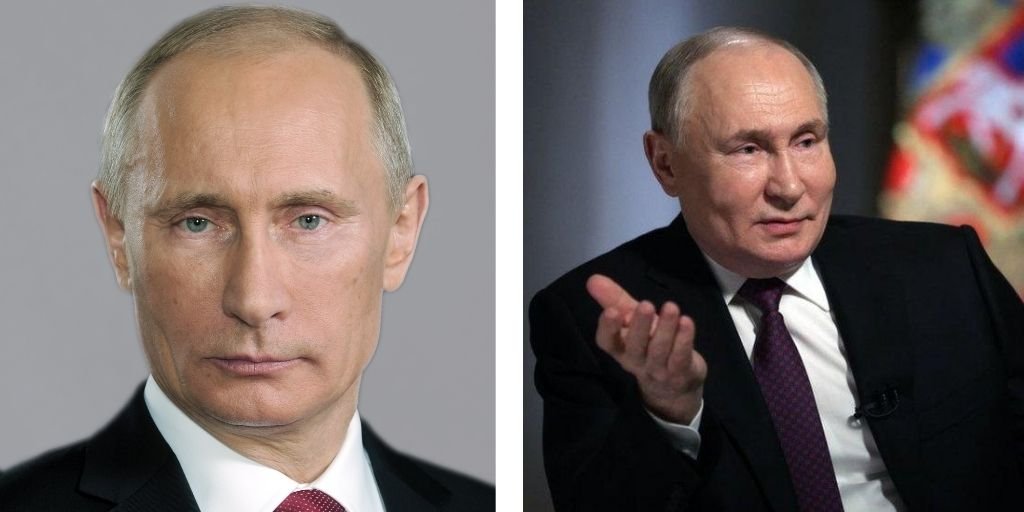
Vladimir Putin is one of the most recognizable and controversial political figures of the modern era. For more than two decades, his name has been closely connected with Russia’s domestic politics, military strategy, economy, and relationship with the rest of the world. Supporters describe him as a leader who restored national confidence and strengthened the Russian state. Critics argue that his government has weakened political competition, restricted independent media, and pursued an increasingly confrontational foreign policy.
So, who is Vladimir Putin beyond the headlines? His journey from a young man in Soviet Leningrad to the most powerful figure in Russia is a story shaped by intelligence work, political change, economic transformation, and major international conflicts.
This article explores his early life, rise to power, leadership style, domestic policies, foreign relations, the war in Ukraine, personal interests, and the questions surrounding his political legacy.
1. Early Life and Family Background
Vladimir Vladimirovich Putin was born on October 7, 1952, in Leningrad, now known as Saint Petersburg. He grew up during the Soviet era, a period when the Soviet Union was one of the world’s two major superpowers.
His childhood was relatively modest. Putin’s family lived in a communal apartment, a common arrangement in the Soviet Union at the time. His father had served in the Soviet military, while his mother was a homemaker.
Growing up in postwar Leningrad appears to have influenced his understanding of discipline, security, and national strength. The city itself carried enormous historical importance. It had survived the devastating Siege of Leningrad during World War II, an experience that remained deeply embedded in Soviet and later Russian national memory.
As a young person, Putin developed an interest in martial arts and eventually became involved with judo. The sport became more than a hobby. Discipline, patience, timing, and the ability to remain calm under pressure are qualities frequently associated with his public image.
He later attended Leningrad State University, where he studied law and graduated in 1975. According to the official Kremlin biography, he later earned an advanced degree in economics.
His early life therefore combined several influences: Soviet patriotism, legal education, physical discipline, and an interest in state service.
2. From Law Student to KGB Officer
After graduating from university in 1975, Putin began working for the Soviet security service, the KGB.
The KGB was one of the most powerful institutions in the Soviet Union. It was responsible for intelligence gathering, counterintelligence, internal security, and other state-security functions.
Putin’s career included foreign intelligence work. From 1985 to 1990, he was stationed in East Germany and worked in Dresden.
The experience was important because it exposed him to life outside the Soviet Union while still keeping him within the security apparatus. He witnessed the final years of the Cold War and the dramatic changes taking place across Eastern Europe.
The collapse of communist governments in Eastern Europe and the eventual dissolution of the Soviet Union transformed Putin’s professional environment.
He left active KGB service in the early 1990s and returned to civilian political work.
This background would later become one of the defining features of his leadership style. Unlike many politicians who entered government through elections, law, business, or party organizations, Putin developed his early professional identity inside the security establishment.
That experience helped shape his approach to information, institutions, loyalty, and state power.
3. The Move Into Politics
After leaving the KGB, Putin became involved in local government in Saint Petersburg.
He worked with Anatoly Sobchak, a prominent reform-minded politician who became mayor of the city. Putin initially worked on international relations and later became a senior deputy in the city administration.
His administrative career brought him into contact with business leaders, politicians, and officials at a time when Russia was undergoing enormous change.
The Soviet economic system was disappearing. Private businesses were emerging. Political institutions were being rebuilt. At the same time, corruption, organized crime, inflation, and economic hardship were major problems.
In 1996, Putin moved to Moscow.
His rise through the federal government was surprisingly rapid. He held several administrative positions before becoming director of the Federal Security Service, or FSB, in 1998. The FSB was the principal successor organization to the Soviet KGB’s domestic security functions.
In March 1999, Putin became Secretary of the Security Council.
A few months later, President Boris Yeltsin appointed him prime minister.
At the time, few people outside Russia expected Putin to become one of the world’s longest-serving national leaders.
Yet the political situation changed dramatically before the end of the year.
4. How Vladimir Putin Became President
On December 31, 1999, Boris Yeltsin unexpectedly resigned as president.
Putin became acting president.
This was the turning point that placed him at the center of Russian politics.
He subsequently won the presidential election held in March 2000 and officially became president in May.
Russia at that time was struggling with political instability, economic problems, and the consequences of the turbulent 1990s. Many Russians were frustrated with what they viewed as years of uncertainty and declining national influence.
Putin presented himself as a leader capable of restoring order.
His message resonated with many voters.
During his first presidency, the federal government became more centralized. The Kremlin increased its influence over regional governments and political institutions.
Putin also emphasized the idea of a strong state.
To supporters, this represented a necessary correction after the instability of the Yeltsin years. To critics, it represented the beginning of a system in which political power became increasingly concentrated around the presidency.
This disagreement remains central to how Putin is viewed today.
5. Russia Under Putin: Stability and Centralization
Putin’s first years in office coincided with rising energy revenues. Oil and natural gas were extremely important to the Russian economy, and favorable global prices provided the government with greater financial resources.
During the 2000s, Russia experienced substantial economic growth compared with the difficult years immediately following the Soviet collapse.
Wages and pensions improved for many citizens, and the government was able to rebuild some state institutions.
For many Russians, the period became associated with greater predictability.
But economic improvement was accompanied by political centralization.
The Kremlin strengthened control over national television and increased its influence over regional politics. Opposition groups and independent political figures continued to operate, but the political environment became increasingly difficult for serious challengers.
This is where interpretations of Putin’s leadership begin to differ sharply.
Supporters see centralization as a way of preventing Russia from returning to the disorder of the 1990s.
Critics see it as part of the development of an increasingly authoritarian political system.
Both perspectives are important when trying to understand his long political career.
6. The 2008–2012 Period and the Putin–Medvedev Arrangement
Russia’s constitution limited presidents to two consecutive terms at the time.
After serving two presidential terms, Putin did not simply disappear from politics.
Instead, Dmitry Medvedev became president in 2008, while Putin became prime minister.
This period is often described as a political partnership, although Putin remained widely regarded as the more powerful figure.
The arrangement allowed Putin to remain at the center of Russian decision-making while formally respecting the constitutional limit on consecutive presidential terms then in force.
In 2012, Putin returned to the presidency.
The presidential term had also been extended from four years to six years beginning with the 2012 election cycle.
His return triggered large demonstrations in Moscow and other cities, reflecting growing opposition to his political system.
Nevertheless, Putin remained firmly in control.
He won another presidential election in 2018 and then again in 2024.
The Kremlin’s official biography records his 2024 election victory and his inauguration on May 7, 2024.
The political system surrounding him had by then become one of the most durable leadership structures in contemporary international politics.
7. Constitutional Changes and the Question of Political Longevity
One of the most important developments in Putin’s later career was Russia’s constitutional reform process in 2020.
The amended constitutional framework retained a formal limit of two presidential terms, but special provisions reset the calculation for the incumbent president. This allowed Putin to seek additional terms after his previous service.
The amended constitution states that the president is elected for a six-year term and includes a two-term limitation, while the 2020 amendments created the special arrangement that made further candidacy possible for Putin.
Why does this matter?
Because it changed the potential timeline of Russian leadership.
Instead of necessarily leaving office after the end of his existing period, Putin became eligible to continue seeking presidential office.
This development reinforced a broader characteristic of his political system: the presidency has remained the central institution around which major national decisions are organized.
For supporters, continuity can provide stability.
For critics, such continuity can reduce political competition and make leadership succession less predictable.
8. Foreign Policy and Russia’s Return to Global Power Politics
Putin has consistently argued that Russia should be treated as a major global power.
His foreign policy has often emphasized national sovereignty, military strength, strategic independence, and opposition to what Moscow describes as excessive Western influence.
Russia’s relationship with the United States and European countries deteriorated significantly during Putin’s presidency.
Several events contributed to this decline, including disputes over NATO expansion, Russia’s war with Georgia in 2008, the annexation of Crimea in 2014, Russia’s intervention in Syria, accusations of interference in foreign elections, and the full-scale invasion of Ukraine in 2022.
Putin’s supporters argue that Russia has been defending its strategic interests in a world dominated by Western institutions.
Western governments and many international organizations have instead viewed several of Russia’s actions as violations of international norms and national sovereignty.
This disagreement is not simply about one leader.
It reflects a larger argument about what the post-Cold War international order should look like.
Putin’s Russia has increasingly sought closer relationships with countries outside the traditional Western alliance system, including China, India, Iran, and other states across Asia, Africa, and the Middle East.
The result has been a more divided geopolitical environment.
9. Putin and the War in Ukraine
No issue has had a greater impact on Putin’s international legacy than Russia’s war against Ukraine.
Russia launched its full-scale invasion of Ukraine in February 2022, following years of conflict between Russia and Ukraine and the earlier seizure of Crimea by Russia in 2014.
The war has produced enormous human, economic, and political consequences.
Ukraine has received substantial military and financial assistance from Western countries. Russia has faced extensive sanctions, while Moscow has increasingly redirected trade toward countries outside the Western economic system.
By 2026, the conflict remains unresolved.
Recent reporting indicates that diplomatic efforts have continued but have struggled to overcome major disagreements, including territorial questions and the future security arrangement in Europe. Reuters reported in August 2026 that Ukrainian officials expected further technical talks but did not anticipate an immediate breakthrough.
At the same time, the military conflict continues to affect both countries.
Ukraine has increasingly used drones against Russian military and economic infrastructure, while Russia continues missile and drone attacks against Ukrainian targets.
Reuters reported in August 2026 that Russia was also dealing with disruptions to parts of its fuel production following attacks on refineries.
For ordinary people, the war is much more than a geopolitical argument. It means displaced families, destroyed infrastructure, military casualties, economic pressure, and uncertainty about the future.
It is also likely to remain one of the defining factors in how Putin’s presidency is judged by history.
10. Putin’s Leadership Style and Public Image
Putin has cultivated a distinctive public image.
He is frequently presented as physically active, disciplined, serious, and comfortable with military and security issues.
His participation in judo, outdoor activities, and carefully managed public events has contributed to this image.
But political image is only one part of leadership.
Putin’s governing style places great emphasis on centralized decision-making and loyalty.
His background in intelligence has also contributed to his reputation for secrecy and careful information management.
Supporters admire these qualities.
Critics argue that the same characteristics contribute to a political environment where transparency and open competition are limited.
One useful way to understand Putin’s system is to imagine a large organization where one executive has gradually gained influence over nearly every major department. Even if different officials run individual areas, the central leader remains the person everyone watches before making major decisions.
That analogy helps explain why Putin’s role is so important to understanding modern Russia.
The Kremlin’s official website currently identifies Putin as Russia’s president and continues to publish his meetings, government activities, and security-related decisions.
11. Personal Interests, Family, and Life Outside Politics
Although Putin is one of the world’s most visible political figures, relatively little of his private life is publicly accessible compared with that of many Western politicians.
He was married to Lyudmila Putina, and they have two daughters, Maria and Katerina. The Kremlin’s official biography lists the two daughters and confirms his 1952 birth date and professional history.
Putin has also maintained a strong connection with sports.
Judo has been particularly important to his public identity. He has spoken publicly about the discipline and values associated with martial arts.
His interest in outdoor activities, including skiing and other physical pursuits, has also been incorporated into his carefully managed public image.
However, it is important to distinguish between a political leader’s public presentation and the private person behind it.
With leaders who have remained in power for decades, the public often sees only selected parts of their lives.
This makes Putin’s personal image an interesting example of how modern political communication works.
12. Economic Policy, Sanctions, and Russia’s Changing World
The Russian economy has undergone major changes during Putin’s years in power.
Energy exports have historically played an enormous role. Oil and gas revenues helped support government finances and living standards during parts of the 2000s and 2010s.
However, Russia’s economic relationship with Europe changed dramatically after the invasion of Ukraine.
Western sanctions targeted banks, companies, technology, individuals, and major areas of trade.
Russia responded by increasing economic ties with countries outside the Western bloc.
China became particularly important as a major trading partner, while India and other countries also remained significant buyers of Russian energy.
The sanctions have not simply produced one straightforward outcome.
They have created serious challenges for Russia, but they have also encouraged Moscow to develop alternative payment systems, supply chains, trade routes, and industrial capacity.
In 2026, the economic picture remains complicated.
Reuters reported that Gazprom, Russia’s major natural-gas company, continued to face a transformed European market while benefiting from domestic demand and stronger energy prices in some periods.
The Russian government has also continued presenting the economy as resilient despite sanctions and wartime pressures.
For ordinary Russians, however, economic resilience at the national level does not necessarily mean every household experiences the same benefits.
Inflation, employment, consumer prices, government spending, and access to imported goods can all affect daily life differently.
Conclusion
Vladimir Putin’s political career is difficult to summarize with a single label.
He is a former intelligence officer who became one of the longest-serving leaders in modern Russia. He rose during a period of national uncertainty, built a highly centralized political system, benefited from years of strong energy revenues, and transformed Russia’s relationship with the outside world.
To his supporters, he represents stability, sovereignty, and the restoration of Russian influence.
To his critics, he represents political centralization, reduced democratic competition, and an aggressive foreign policy.
His role in the war in Ukraine has made these disagreements even sharper.
Whatever judgment history ultimately makes, one point is difficult to dispute: Putin has profoundly influenced Russia and international politics. His decisions have affected not only Russian citizens but also European security, global energy markets, diplomatic relationships, and the broader balance of power.
As Russia continues navigating war, sanctions, economic change, and relations with both Western and non-Western powers, the question of Putin’s legacy will remain central.
The most important story, however, is not simply the story of one man. It is the story of how political institutions, national identity, economic interests, and international rivalry can combine to shape the direction of an entire country.
FAQs About Vladimir Putin
1. Who is Vladimir Putin?
Vladimir Putin is a Russian politician and former intelligence officer who has served as president of Russia for multiple periods. He first became president in 2000, served as prime minister from 2008 to 2012, returned to the presidency in 2012, and won another presidential election in 2024.
2. When was Vladimir Putin born?
Vladimir Putin was born on October 7, 1952, in Leningrad, which is now called Saint Petersburg, Russia. He studied law at Leningrad State University before beginning his career in the Soviet security service.
3. Was Vladimir Putin a KGB officer?
Yes. Putin joined the KGB after graduating from university in 1975. He worked in Soviet security and foreign intelligence, including a period in East Germany from 1985 to 1990.
4. How long has Vladimir Putin been involved in Russian national leadership?
Putin has been at the center of Russian national politics since becoming prime minister in 1999. He served as president from 2000 to 2008, prime minister from 2008 to 2012, and president again from 2012 onward. He was elected again in 2024.
5. Why is Vladimir Putin controversial?
Putin is controversial because his government has pursued a highly centralized political model while Russia has become involved in major international conflicts. His domestic political record, relations with opposition groups, treatment of independent media, and foreign policy—particularly Russia’s war against Ukraine—have generated extensive international criticism. At the same time, he retains significant support inside Russia and among some international audiences who view his policies as protecting Russian sovereignty and national interests.


