
Whitney Houston: 10 Powerful Facts About Her Life, Music, Career & Legacy
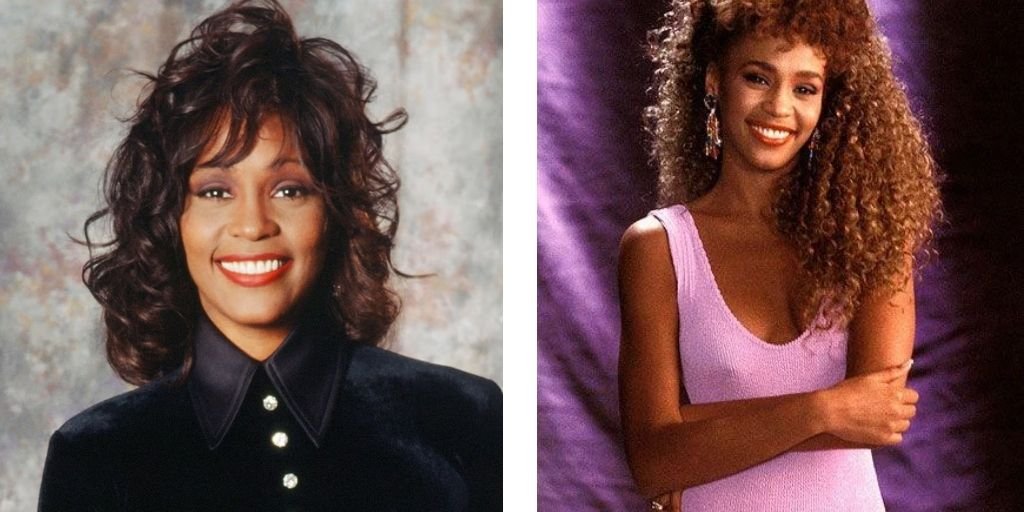
Whitney Houston was one of those rare singers whose voice could make a familiar song feel completely new. From her early years in New Jersey to her rise as an international superstar, she built a career that crossed pop, R&B, gospel, film, and television. Her story was filled with extraordinary success, personal struggles, memorable performances, and a lasting influence on generations of artists.
What made her special? It was not simply the size of her voice. Houston could combine technical control with emotion, allowing listeners to feel the meaning behind the words. Her career also showed how quickly fame can transform a person’s life. Behind the glamorous photographs and sold-out concerts was a complicated human story.
Early Life and Musical Family
Whitney Elizabeth Houston was born on August 9, 1963, in Newark, New Jersey. Music was already deeply connected to her family. Her mother, Cissy Houston, was a successful gospel and soul singer, while her cousin Dionne Warwick became an internationally recognized performer. Through her family, Whitney was surrounded by professional musicians from a young age.
Growing up in a musical environment gave her an unusual foundation. She learned about singing not only from formal experience but also by watching talented people around her. Gospel music became particularly important to her development. The church offered a place where she could practice expressing emotion through her voice.
As a teenager, Houston began performing more seriously. She sang backup and worked with established musicians before becoming a solo recording artist. Modeling also gave her early exposure to the entertainment industry.
A Voice Taking Shape
Even before worldwide fame arrived, people noticed something different about Houston’s singing. Her voice could move from soft and intimate passages to powerful high notes without losing its emotional quality.
That combination eventually became one of her trademarks. She did not treat singing simply as a technical exercise. She used phrasing, timing, tone, and dynamics to tell a story.
The Beginning of a Remarkable Recording Career
Houston’s professional breakthrough came when she signed with Arista Records and began working with legendary music executive Clive Davis. Her self-titled debut album, Whitney Houston, was released in 1985.
The album initially developed gradually, but its success eventually became enormous. Songs such as “Saving All My Love for You,” “How Will I Know,” and “Greatest Love of All” introduced her to audiences around the world.
Her appeal crossed traditional musical boundaries. Pop listeners appreciated the polished production, while R&B and gospel audiences recognized the roots behind her powerful delivery.
The album became a major commercial success and established Houston as a new force in popular music.
From New Artist to Superstar
Her second album, Whitney, arrived in 1987 and confirmed that the first album’s success was not a one-time event. It produced several major hits, including “I Wanna Dance with Somebody (Who Loves Me),” “Didn’t We Almost Have It All,” and “So Emotional.”
Houston became the first female artist to debut at number one on the Billboard 200 with Whitney. Her success also helped demonstrate that a singer with strong gospel and R&B foundations could become a dominant pop artist without abandoning vocal sophistication.
Whitney Houston’s Extraordinary Singing Style
Why do people still talk about Houston’s voice decades later?
One reason is versatility. She could sing quietly without sounding weak and loudly without losing control. Her use of melisma, vocal runs, vibrato, sustained notes, and changes in dynamics gave her performances a distinctive character.
But technique alone does not explain her impact.
Emotion Behind the Technique
Houston understood that a beautiful voice needs something meaningful to communicate. A technically perfect performance can sometimes feel distant. Houston’s best recordings rarely had that problem.
She could make a love song sound vulnerable, a gospel-inspired performance sound uplifting, and an anthem feel enormous.
Her musical background helped her bridge different traditions. Gospel shaped her sense of phrasing and emotional intensity, while pop production gave her music broad commercial appeal.
In a way, her voice worked like a bridge between musical worlds. It connected church traditions, soul, R&B, and mainstream pop in a way that reached millions of listeners.
Major Songs That Defined Her Career
Houston recorded many memorable songs throughout her career. Some became cultural landmarks, while others remain popular with listeners discovering her work for the first time.
“Greatest Love of All” became closely associated with her early career. Its message of self-belief gave the song a life beyond the charts.
“I Wanna Dance with Somebody (Who Loves Me)” showed another side of Houston. Instead of focusing on a dramatic ballad, the track presented her as an energetic pop performer. Its bright production and infectious chorus helped make it one of her signature songs.
“One Moment in Time” became another important recording. Written for the 1988 Summer Olympics in Seoul, the song captured the inspirational style that audiences associated with Houston.
The Power of a Ballad
Houston’s ballads were particularly important to her reputation.
Songs such as “Saving All My Love for You,” “Didn’t We Almost Have It All,” and “All the Man That I Need” gave her opportunities to use her voice with greater emotional freedom.
Rather than simply singing the melody, she often built a performance gradually. A restrained beginning could eventually develop into a dramatic vocal climax.
That sense of musical storytelling was one of the reasons her recordings remained recognizable.
Acting Career and The Bodyguard
Houston did not limit herself to music. In 1992, she made her major film debut in The Bodyguard, starring alongside Kevin Costner.
The movie combined romance, drama, and music. Houston played Rachel Marron, a successful singer who becomes the target of threats and hires a bodyguard for protection.
The film became a major international success, but its soundtrack became an even larger phenomenon.
Houston recorded several songs for the project, including “I Will Always Love You,” originally written and recorded by Dolly Parton.
“I Will Always Love You”
Houston’s version transformed the song into one of the most recognizable recordings in modern popular music.
The performance begins with restraint before expanding into an extraordinary vocal climax. Her interpretation demonstrated how arrangement and vocal delivery can completely reshape an existing composition.
The soundtrack to The Bodyguard became one of the best-selling soundtracks in history, and Houston won multiple major awards connected with the project.
Her film career continued with Waiting to Exhale and The Preacher’s Wife, among other projects.
Awards, Records, and Historic Achievements
Houston’s career produced an extraordinary list of awards and achievements.
She won multiple Grammy Awards, American Music Awards, Billboard Music Awards, and other honors. Her commercial success was particularly notable during the 1980s and 1990s, when albums and singles competed for attention in an increasingly global music market.
She also became one of the best-selling recording artists of her generation.
Breaking Barriers
Houston’s success carried cultural importance as well. At a time when racial barriers remained visible in mainstream entertainment, she achieved enormous crossover success on pop radio and television.
Her appearances on major platforms helped broaden opportunities for other Black artists.
This did not happen in isolation. Many singers and musicians had already challenged the industry’s boundaries. Houston nevertheless became one of the most visible examples of an African American female artist achieving extraordinary mainstream popularity.
Her influence can be seen in the careers of many vocalists who followed.
Personal Life and Public Attention
Fame brought Houston enormous attention, but it also removed much of the privacy that ordinary people take for granted.
Her marriage to singer Bobby Brown became a major subject of media coverage. The couple married in 1992 and had one daughter, Bobbi Kristina Brown.
Their relationship was frequently discussed in newspapers, magazines, television programs, and later documentaries.
Living Under the Spotlight
Houston’s private struggles increasingly became part of public conversation.
She faced substance-abuse problems and periods of professional difficulty. Media coverage often focused intensely on these challenges, sometimes reducing a complicated person to a collection of headlines.
Looking back, it is important to separate documented events from speculation. Addiction, family relationships, fame, and personal decisions are complicated subjects, and simplified stories rarely capture the full reality of someone’s life.
For Houston, the contrast was particularly painful: millions knew her as a seemingly unstoppable superstar, while her private life involved difficulties that could not be solved simply by success.
Career Challenges and Attempts at a Comeback
By the late 1990s and early 2000s, Houston’s career faced significant challenges.
Her musical output became less consistent, and her personal difficulties affected her public image. The entertainment industry that had once celebrated her began paying considerable attention to her struggles.
Yet Houston continued working.
She released Just Whitney… in 2002 and later I Look to You in 2009. The latter was particularly significant because it represented a renewed effort to reconnect with listeners after years of difficulty.
A Return to Music
I Look to You debuted at number one on the Billboard 200.
Its success demonstrated that audiences had not forgotten Houston. The album’s songs addressed themes of resilience, love, faith, and renewal.
Her return was not simply about chart statistics. It reflected the enduring relationship between an artist and an audience that had grown up with her music.
Whitney Houston’s Final Years
Houston continued performing and making public appearances during the final period of her life.
She was also involved in projects that reflected her long connection with film and music. However, her health and personal struggles continued to attract public attention.
On February 11, 2012, Houston died at the age of 48 at the Beverly Hilton Hotel in Beverly Hills, California. The official cause of death was accidental drowning, with heart disease and cocaine use listed as contributing factors in the coroner’s report.
Her death shocked the entertainment world.
A Global Reaction
Tributes appeared across the music industry. Singers, actors, producers, fans, and fellow performers remembered her influence.
The sadness surrounding her death was intensified by the fact that she had been such a major figure for so long. Her career had seemed almost larger than life, making the reality of her death difficult for many people to accept.
Houston’s passing also renewed discussions about addiction, fame, media pressure, and the importance of compassionate conversations about people facing personal struggles.
The Lasting Legacy of Whitney Houston
What does Houston’s legacy look like today?
It can be heard in the singers who cite her as an influence, in vocal performances shaped by her style, and in songs that continue to appear on radio, streaming services, television, and film.
Her influence extends beyond individual vocal techniques.
She helped establish a model for the modern crossover vocalist: an artist who could move between R&B, pop, gospel, film, and international entertainment.
Influence on Later Singers
Many major vocalists have acknowledged Houston’s influence. Her ability to combine vocal power with emotional delivery became an important reference point for singers who came after her.
Her performances also remain useful examples for aspiring musicians. A singer studying her work can learn about breath control, dynamics, phrasing, harmony, and stage presence.
But perhaps her greatest lesson is simpler: singing is communication.
Houston could make listeners feel as though she was speaking directly to them. That connection is difficult to manufacture, and it helps explain why her recordings remain emotionally powerful.
Why Whitney Houston Still Matters
Popular music changes constantly. New sounds appear, technology changes how records are produced, and audiences move toward new performers.
Yet some voices remain.
Houston’s recordings continue to introduce her to younger listeners who were not alive during the height of her career. Her songs have been streamed, performed on talent shows, covered by other musicians, and featured in documentaries and films.
Her story also remains relevant because it contains both extraordinary achievement and human vulnerability.
More Than a Perfect Voice
It would be easy to remember Houston only as the woman behind enormous vocal performances. But her life was more complicated than that.
She was a daughter, mother, wife, actress, performer, businesswoman, and cultural figure. She experienced triumphs that few entertainers reach and struggles that became intensely public.
That combination makes her story worth remembering honestly.
Her legacy does not require pretending that every part of her life was perfect. In fact, acknowledging both her achievements and difficulties gives us a more complete understanding of the person behind the microphone.
Conclusion
Whitney Houston left an extraordinary mark on music and popular culture. Her remarkable vocal ability, memorable recordings, successful acting career, and crossover appeal made her one of the defining entertainers of her generation.
Her life was also a reminder that extraordinary talent does not make someone immune to personal difficulties. Houston’s story contains achievement, pressure, love, struggle, and loss.
Years after her death, her voice remains familiar to millions. Like a song carried across generations, her music continues to find new listeners. Her greatest recordings have become part of popular culture, while her influence can still be heard in contemporary vocal performances.
Ultimately, Whitney Houston’s legacy is not just about how high she could sing. It is about how deeply she could make people feel.
Frequently Asked Questions
1. When was Whitney Houston born?
Whitney Houston was born on August 9, 1963, in Newark, New Jersey.
2. What was Whitney Houston’s most famous song?
“I Will Always Love You,” recorded for The Bodyguard soundtrack, is widely regarded as one of her most famous and recognizable recordings.
3. Was Whitney Houston also an actress?
Yes. Houston had a successful acting career, with The Bodyguard, Waiting to Exhale, and The Preacher’s Wife among her best-known films.
4. When did Whitney Houston die?
Whitney Houston died on February 11, 2012, at the age of 48.
5. Why is Whitney Houston still influential?
Her combination of gospel, R&B, soul, and pop influences, along with her powerful vocal technique and emotional delivery, continues to influence singers and popular music.




