
Jay Leno: The Life, Career, Comedy, Cars, and Legacy of a Television Icon
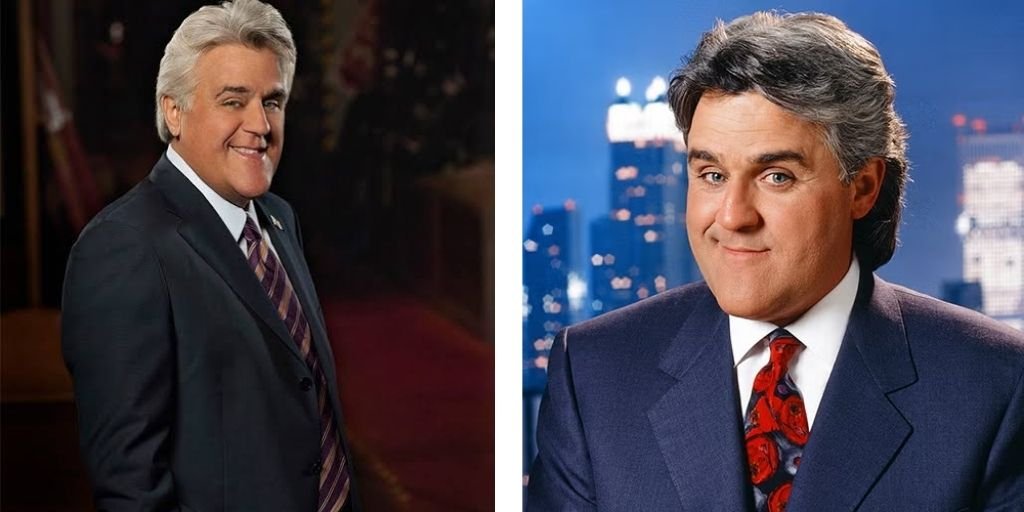
Jay Leno has spent decades making people laugh, talking with some of the world’s most recognizable personalities, and sharing his extraordinary passion for automobiles. For many viewers, his name is closely connected with The Tonight Show, where he became one of the most familiar faces in American late-night television. Yet there is much more to his story than a desk, a microphone, and a nightly monologue.
Born in 1950, Leno built his career through persistence. Long before becoming a household name, he worked his way through comedy clubs and television appearances, developing a reputation as a performer who could keep going night after night. His work ethic became almost as famous as his jokes.
Today, Leno is remembered not only as a comedian and television host but also as an automobile enthusiast, writer, interviewer, and collector. His career is a good example of how success can grow from consistency rather than overnight fame. Like a classic car that becomes more interesting with age, his career has accumulated different chapters, each adding something new to his public image.
Jay Leno’s Early Life and Family Background
James Douglas Muir Leno was born on April 28, 1950, in New Rochelle, New York. His father, Angelo Leno, worked in insurance, while his mother, Cathryn, was a homemaker. The family later moved to Andover, Massachusetts, where Leno spent much of his childhood.
Growing up, Leno was not necessarily the obvious future star that audiences might imagine today. His path was shaped by ordinary experiences, education, work, and an increasing interest in comedy.
He attended Emerson College in Boston and studied speech therapy. While there, he became involved in comedy and helped establish a comedy club in 1973. That experience gave him a place to experiment with material and, more importantly, learn how to communicate with an audience.
That period was important because stand-up comedy is not simply about telling jokes. A comedian has to understand timing, audience reaction, pacing, and delivery. Leno gradually developed those skills through repetition.
His early working life also gave him an appreciation for automobiles. Before achieving major fame, he reportedly worked around Mercedes-Benz and Rolls-Royce automobiles in Boston. His interest in mechanical work would eventually become one of the defining characteristics of his life outside comedy.
The Long Road to Becoming a Stand-Up Comedian
Leno’s success did not happen overnight. During the early stages of his career, he performed extensively in comedy clubs and gradually developed a reputation as an exceptionally hardworking comedian.
According to biographical accounts, he sometimes performed hundreds of nights in a year. That kind of schedule required remarkable discipline. A performer could not simply wait for inspiration; new audiences demanded new material, and every night provided another test.
Leno’s comedy became associated with observations about everyday American life. Rather than relying exclusively on complicated storytelling, he often looked at familiar subjects—family life, politics, celebrities, technology, cars, work, and ordinary frustrations—and found humor in them.
That approach helped make his material accessible to a broad audience.
His television career developed alongside his stand-up work. He appeared on various programs and gradually became a recognizable guest on late-night television. His appearances on The Tonight Show Starring Johnny Carson were particularly important.
In 1987, Leno became one of Carson’s regular guest hosts. This position gave him an opportunity to demonstrate that he could handle a major late-night audience.
For a comedian hoping to reach the top of American television, that was an enormous opportunity.
How Jay Leno Became the Host of The Tonight Show
When Johnny Carson retired in 1992 after nearly three decades as host, American television entered a major transition.
Who would replace one of the most famous late-night hosts in history?
Leno ultimately received the job, despite strong interest from David Letterman, who had hosted Late Night after Carson’s program. The decision became one of the most closely watched television stories of the period. Carson’s final episode aired on May 22, 1992, and Leno took over shortly afterward.
Taking over The Tonight Show was a huge challenge. Carson had created a distinctive television tradition, and viewers naturally compared his successor with him.
Leno, however, developed his own identity.
His opening monologues became the central feature of his program. Each night, he delivered jokes about current events, politics, celebrities, sports, and everyday life. The format was familiar, but Leno’s delivery was his own.
The show also became known for its interviews with actors, musicians, athletes, politicians, and other public figures. Over time, Leno became a major part of American popular culture.
His success was not based on comedy alone. He understood that late-night television was about routine and reliability. Millions of viewers knew what to expect when they turned on the television, and that familiarity became an important part of the show’s appeal.
The Tonight Show Years and Television Success
Leno hosted The Tonight Show from 1992 until 2009, establishing one of the longest and most recognizable runs in the program’s history. He later returned to the chair in 2010 and remained there until 2014.
During those years, the show became a major platform for entertainment and cultural conversation.
Leno’s monologue style was usually straightforward and observational. He often found humor in the headlines of the day. This made the program immediately relevant because the jokes were connected to things viewers were already discussing.
One of the show’s most recognizable features was its ability to mix comedy with celebrity interviews. A Hollywood actor could appear one night, followed by a musician, athlete, politician, or unusual guest.
The program also featured recurring comedy segments. One particularly memorable concept involved humorous newspaper headlines, a feature that became closely associated with Leno’s television persona.
His approach was generally designed for a broad audience rather than a narrow demographic. That helped make him one of the most familiar television personalities of his generation.
In 2000, Leno received a star on the Hollywood Walk of Fame. In 2014, he was inducted into the Television Hall of Fame and received the Kennedy Center’s Mark Twain Prize for American Humor.
These honors reflected his influence beyond a single television program.
The Jay Leno Show and the NBC Television Controversy
One of the most complicated chapters of Leno’s career began in 2009.
NBC had previously announced that Conan O’Brien would eventually succeed Leno as host of The Tonight Show. Leno completed his original run in May 2009 and soon moved into prime time with The Jay Leno Show.
The idea was unusual. Instead of keeping Leno in the traditional late-night position, NBC placed his program at 10 p.m. on weeknights.
However, the experiment did not perform as the network hoped.
The resulting scheduling conflict became one of the most widely discussed television controversies of the era. NBC proposed moving Leno’s program later while also shifting O’Brien’s Tonight Show.
The situation eventually resulted in Leno returning to The Tonight Show in March 2010, while O’Brien left NBC and later began a new program on TBS.
The episode remains an important part of television history because it demonstrated how difficult it can be for networks to manage established stars, changing audiences, contracts, and competing programs.
For Leno, it also created an unusual second chapter behind the same famous desk.
His Second Run on The Tonight Show
Leno’s return to The Tonight Show in 2010 was watched closely by both viewers and the television industry.
He remained at the program until February 2014. When he finally left, he had spent a combined 22 years hosting the show.
His final episode was notably emotional.
Although Leno had said goodbye to the program before, this departure was different. During the farewell, he became visibly emotional while discussing the people who had worked with him over the years. He described the staff as becoming like family, particularly after losing several members of his own family early in his tenure.
It was an appropriate ending for a career defined by consistency.
For more than two decades, Leno had appeared in American homes almost every weeknight. That kind of relationship between a host and an audience is unusual.
Eventually, Jimmy Fallon took over The Tonight Show, marking another generational change in late-night entertainment.
Jay Leno’s Passion for Cars
If comedy is one side of Jay Leno’s public identity, automobiles are the other.
Leno is one of the best-known celebrity automobile collectors, with interests ranging from classic American cars and motorcycles to unusual engineering projects and rare vehicles.
His interest in automobiles goes back long before his television success. His early experience around luxury cars helped develop a practical understanding of vehicles, while his later financial success gave him the opportunity to collect and restore them.
What makes Leno’s collection particularly interesting is its variety.
He has shown interest in vehicles from different eras and countries rather than focusing on a single manufacturer. His collection has included classic automobiles, performance cars, motorcycles, trucks, steam-powered vehicles, and historically significant machines.
For Leno, the appeal is not simply ownership.
He is fascinated by how vehicles work.
That difference matters. Some collectors are primarily interested in rarity or financial value. Leno often approaches cars as mechanical stories. He wants to understand their engineering, history, restoration challenges, and place in automotive culture.
In that sense, his garage is almost like a living museum.
Instead of placing every vehicle behind glass, he frequently enjoys driving, maintaining, repairing, and discussing them.
Jay Leno’s Garage and His Automotive Television Career
Leno’s love of vehicles eventually became the subject of its own television project.
Jay Leno’s Garage began as a web series and later developed into a television program on CNBC. The show focused on cars, motorcycles, restoration, technology, collectors, and the people behind interesting vehicles.
The television series ran on CNBC from 2015 through 2022.
The concept worked because it allowed Leno to combine several of his strengths.
He could interview people.
He could tell stories.
He could make jokes.
And, most importantly, he could talk about cars with genuine enthusiasm.
The show was not simply about expensive automobiles. It explored restoration projects, unusual machines, automotive history, engineering, and the culture surrounding collectors.
Leno’s approach was often conversational. He might speak with a famous actor about a favorite car or talk with a mechanic about the challenges of restoring an old vehicle.
That combination helped introduce automotive subjects to viewers who might never consider themselves serious car enthusiasts.
CBS described the program as covering Leno’s passion for “all things automotive,” including restoration, valuations, and the collector market.
The result was a second television identity that existed independently from his years as a late-night host.
His Books, Writing, and Other Creative Work
Television and stand-up comedy are only part of Leno’s creative career.
He has also written books and humor collections. His 1996 autobiography, Leading with My Chin, offered readers a look at his life and career. He also published material connected with his television comedy and automotive interests.
Writing gave Leno another way to present his humor.
His comedic style works particularly well in short observations because he has long been interested in everyday situations. A newspaper headline, an unusual advertisement, a strange public statement, or a familiar family problem can become the starting point for a joke.
He also wrote about automobiles, including work connected with Popular Mechanics.
This broader creative output shows that his career was never limited to one format. He moved between clubs, television, books, interviews, and automotive media.
Jay Leno as a Stand-Up Performer After Late-Night Television
Leaving The Tonight Show did not mean Leno stopped being a comedian.
Stand-up remained an important part of his professional life throughout his television career and afterward. Even while hosting the program, he continued performing live.
That is significant because stand-up comedy is very different from hosting a television talk show.
A television host has writers, producers, cameras, editors, a studio audience, and a large production team. A stand-up comedian can walk onto a stage with a microphone and little else.
The relationship is much more direct.
Leno’s continued commitment to live performance helped preserve the foundation on which his career had been built.
It also meant he could remain connected with audiences without depending entirely on network television.
This work ethic is one of the clearest themes in his career. He repeatedly returned to the stage, even after achieving a level of fame at which many performers might have chosen to slow down.
His career demonstrates a simple principle: success may open doors, but staying relevant often requires continuing to work.
Jay Leno’s Public Image and Comedy Style
What makes Jay Leno different from many other late-night personalities?
One answer is accessibility.
His comedy generally avoided making the comedian appear superior to the audience. Instead, he often presented himself as another person reacting to the strange events of everyday life.
That approach helped him appeal to a wide demographic.
His physical appearance also became part of his comedic identity. His prominent chin was frequently referenced in his jokes and even became part of the title of his autobiography.
Another important feature was his observational style.
Rather than building his entire career around one fictional character, Leno generally positioned himself as Jay Leno—the comedian commenting on the world around him.
Politics became a frequent source of material, but his monologues covered much more than political stories. Sports, entertainment, technology, family life, consumer products, and news events could all become comedy material.
His style was built for regular television consumption. Viewers did not need to understand an elaborate fictional universe before enjoying a joke.
They simply needed to recognize the situation.
That simplicity was one of his greatest strengths.
Jay Leno’s Personal Life and Philanthropic Side
Leno married Mavis Nicholson in 1980, and their relationship has remained largely private compared with the highly public relationships of many celebrities.
Although he became extremely wealthy through entertainment, Leno developed a reputation for continuing to work rather than completely withdrawing from public life.
He has also been associated with charitable activities and public appearances supporting different causes.
One notable part of his public persona is his connection with working people and mechanical communities. His interest in automobiles has frequently brought him into contact with mechanics, restorers, engineers, collectors, and enthusiasts.
That connection contributes to an image that is somewhat different from the stereotypical Hollywood celebrity.
A famous actor may collect cars because they represent luxury. Leno often talks about cars because he genuinely enjoys the machines themselves.
That enthusiasm has helped make him approachable to automotive audiences.
Jay Leno’s Accidents and Later Years
Leno’s later years have also included several accidents that attracted considerable public attention.
In 2022, he suffered serious burns in a gasoline-related incident while working on a vehicle. He subsequently recovered and returned to public appearances.
In early 2023, reports also emerged that he had suffered injuries in a motorcycle accident, including broken bones. These incidents highlighted something that had long been obvious to anyone familiar with his interests: Leno remains deeply involved with machines rather than merely collecting them from a distance.
His willingness to continue working with old and unusual vehicles carries an element of risk.
Classic machinery can be unpredictable. Older engines, fuel systems, electrical components, and experimental vehicles require careful handling.
Yet this hands-on approach is also part of what makes his automotive work distinctive.
He does not simply stand beside a classic car and tell viewers that it is valuable. He wants to know how it operates and what makes it special.
Jay Leno’s Legacy in Comedy and Television
How should Jay Leno ultimately be remembered?
Perhaps the best answer is as a performer who mastered consistency.
He inherited one of the most famous jobs in television, survived intense competition, navigated one of the biggest network controversies of the modern era, returned to the same program, and eventually built a second identity around automobiles.
His influence can be seen in the generations of comedians and television hosts who followed him.
The importance of his Tonight Show years is difficult to separate from the broader history of American late-night television. He was part of a tradition that began decades before him and continued after his departure.
His legacy is also preserved through his automotive work.
For car enthusiasts, Leno’s collection and programs have provided a window into vehicles that might otherwise remain known only to specialists.
For general audiences, his career demonstrates something equally interesting: a person’s professional identity does not have to remain fixed.
Leno began as a young stand-up comedian.
He became a television host.
He became a writer.
He became a collector and automotive presenter.
And throughout those changes, he continued performing comedy.
That is why his career feels less like a straight road and more like a winding highway with several memorable stops.
Conclusion
Jay Leno’s story is ultimately about persistence, curiosity, and adaptability. From comedy clubs and early television appearances to more than two decades associated with The Tonight Show, he built a career that became part of American entertainment history. His later work with automobiles showed that his interests extended far beyond comedy.
Perhaps the most appealing part of Leno’s story is that fame never completely replaced his original passions. He continued performing stand-up and remained fascinated by machines, restoration, engineering, and automotive history. His career proves that a successful entertainer can have more than one chapter—and sometimes the second chapter can be just as interesting as the first.
Frequently Asked Questions
1. When was Jay Leno born?
Jay Leno was born on April 28, 1950, in New Rochelle, New York. He later grew up in Andover, Massachusetts, and attended Emerson College in Boston.
2. How long did Jay Leno host The Tonight Show?
Leno hosted The Tonight Show from 1992 to 2009 and returned to the program in 2010, remaining host until 2014. His combined tenure lasted approximately 22 years.
3. Why is Jay Leno famous for cars?
Leno has had a long-standing interest in automobiles that predates his television fame. His collection includes many different types of vehicles, and he has frequently worked on, driven, restored, and discussed them. His automotive interests eventually became the focus of Jay Leno’s Garage.
4. What happened to Jay Leno’s Garage?
Jay Leno’s Garage aired on CNBC from 2015 through 2022. The program focused on automobiles, motorcycles, restoration projects, collectors, engineering, and automotive culture.
5. Is Jay Leno still a comedian?
Yes. Although he is especially known for his television career, Leno has continued to perform stand-up comedy throughout and after his years as a late-night host. His live performances remain an important part of his professional identity.


