
Michael Jordan: The Extraordinary Story of Basketball’s Greatest Icon
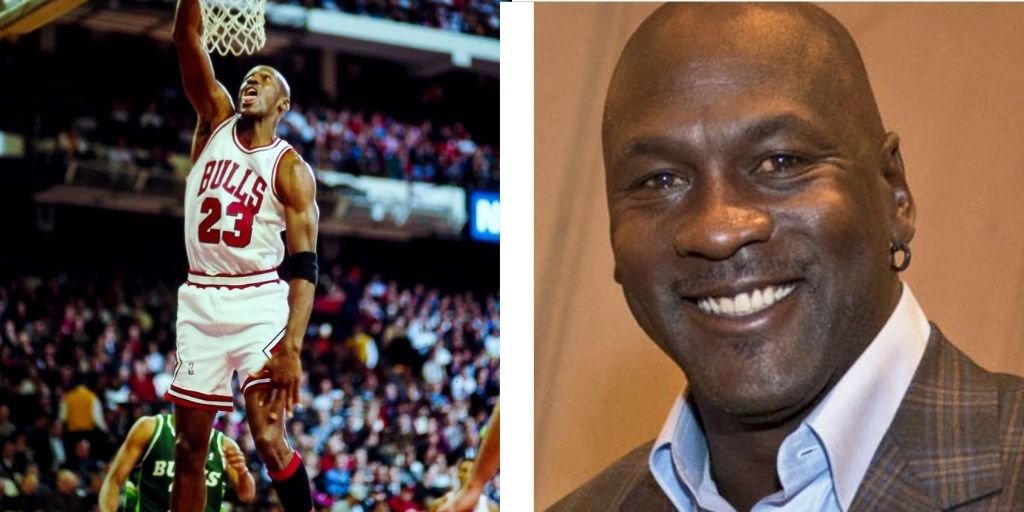
Michael Jordan is more than a former basketball player. For millions of people around the world, he represents ambition, confidence, discipline, and the determination to keep pushing when the pressure is at its highest. His career transformed professional basketball, changed the business of sports, and helped turn an athlete into a global cultural phenomenon.
From his early years in North Carolina to unforgettable nights in Chicago, Jordan built a reputation for delivering when it mattered most. His competitive nature, spectacular athletic ability, and willingness to work relentlessly made him one of the most recognizable athletes in history.
But what made his story so fascinating? It was not simply the championships or the famous shots. It was the combination of talent, setbacks, leadership, personality, and an almost relentless desire to improve.
Early Life and the Foundations of Greatness
Michael Jeffrey Jordan was born on February 17, 1963, in Brooklyn, New York. His family later moved to Wilmington, North Carolina, where he grew up. His parents, James and Deloris Jordan, emphasized discipline, education, responsibility, and hard work.
As a child, Jordan developed an interest in sports and competed in basketball, baseball, and football. Basketball eventually became his greatest passion.
His competitive personality appeared early. He did not like losing, and that attitude would become one of the defining characteristics of his career. Yet natural ability alone could not explain his future success. Jordan spent countless hours practicing, developing the physical skills and mental toughness that would eventually separate him from other players.
One of the most frequently discussed moments from his youth came during high school. Jordan did not immediately become the dominant basketball player many people now imagine. After being cut from the varsity basketball team as a sophomore, he used the disappointment as motivation.
Instead of allowing the setback to define him, he worked harder.
That experience became an important part of the larger Jordan story: failure was not necessarily an ending. It could become fuel.
North Carolina and the Rise of a Star
Jordan attended the University of North Carolina at Chapel Hill, where he played under legendary coach Dean Smith.
His college career quickly showed that he had something special. During his freshman season, he hit a memorable game-winning shot against Georgetown in the 1982 NCAA championship game. That moment introduced him to a much larger audience.
Over the next two seasons, Jordan continued developing his game. He became known for his scoring ability, athleticism, defensive skills, and remarkable control in important situations.
In 1984, he entered the NBA Draft.
The Chicago Bulls selected him with the third overall pick.
At that point, nobody could know exactly how dramatically Jordan would change the organization, the league, and the sports world.
Entering the NBA With the Chicago Bulls
Jordan joined the Bulls in 1984 and immediately captured attention.
He played with extraordinary energy and confidence. His ability to leap toward the basket, finish difficult shots, attack defenders, and create scoring opportunities made him one of the league’s most exciting young players.
He won the NBA Rookie of the Year Award in 1985 and quickly became one of basketball’s biggest attractions.
However, individual brilliance did not immediately translate into championships.
The Bulls repeatedly encountered the Boston Celtics and Detroit Pistons, two powerful teams that represented major obstacles during Jordan’s early career.
The Detroit Pistons were particularly difficult to overcome. Their physical defensive approach, often associated with the “Bad Boys” era, forced Jordan to understand that spectacular talent alone would not guarantee victory.
He needed strength.
He needed better teammates.
He needed patience.
Most importantly, he needed to become a more complete player.
The Challenge of Winning Championships
Jordan’s early NBA years demonstrated an important truth about professional sports: being the best player does not automatically mean being on the best team.
He could score enormous numbers and produce unforgettable performances, but the Bulls struggled to defeat the league’s strongest opponents.
Instead of abandoning his approach, Jordan expanded his game.
He improved his defense, passing, physical strength, and understanding of team basketball. The Bulls also developed around him, eventually adding players such as Scottie Pippen and Horace Grant.
Under coach Phil Jackson, the team adopted the triangle offense, a system that emphasized movement, spacing, passing, and decision-making.
The Bulls were becoming more than a collection of talented players.
They were becoming a championship team.
In 1991, Chicago finally reached the NBA Finals and defeated the Los Angeles Lakers.
Jordan won his first NBA championship.
For him, the victory was more than a trophy. It represented the result of years of disappointment and development.
The Bulls had crossed the mountain they had struggled to climb.
The First Three-Peat
The 1991 championship was only the beginning.
The Bulls successfully defended their title in 1992, defeating the Portland Trail Blazers. Jordan’s performance during the Finals further strengthened his reputation as basketball’s premier performer.
In 1993, Chicago completed a third consecutive championship by defeating the Phoenix Suns.
Three championships in three seasons changed Jordan’s position in sports history.
He was no longer simply a superstar.
He had become the central figure of a basketball dynasty.
During this period, his popularity exploded internationally. His shoes became cultural symbols, his appearances attracted enormous attention, and the Bulls became one of the world’s most recognizable sports teams.
Jordan’s famous No. 23 jersey became almost universally associated with basketball.
Yet even at the height of his success, his life was about to change dramatically.
A Shocking Retirement and a New Challenge
In October 1993, Jordan announced his retirement from professional basketball.
The decision shocked fans.
He had just completed his third consecutive NBA championship and appeared to be at the peak of his career.
Jordan explained that he had lost the desire to play basketball following the death of his father, James Jordan, who had been killed earlier that year.
He turned his attention toward professional baseball, signing with the Chicago White Sox organization.
Jordan’s baseball experiment became one of the most unusual chapters in his career. He played for the Birmingham Barons, a minor-league affiliate, rather than immediately returning to basketball.
He struggled statistically, but the decision revealed something important about his personality.
Jordan was willing to step into an unfamiliar environment and accept being a beginner again.
For an athlete accustomed to dominating opponents, that was a humbling experience.
The Return That Changed Everything
In March 1995, Jordan returned to the NBA.
His comeback was announced with two simple words:
” I’m back.”
The basketball world immediately erupted with excitement.
Jordan returned to the Bulls wearing No. 45 rather than his familiar No. 23. Although he performed at a high level, Chicago did not win the championship that season, losing to the Orlando Magic in the playoffs.
That defeat became another source of motivation.
Jordan returned for the 1995–96 season stronger and more determined.
The Bulls added Dennis Rodman, creating an exceptionally talented core alongside Jordan and Pippen.
The result was spectacular.
Chicago finished the regular season with a then-record 72 wins and only 10 losses. The team went on to defeat the Seattle SuperSonics in the NBA Finals.
Jordan won his fourth championship and his fourth Finals MVP award.
It was one of the most powerful comebacks in sports history.
The Second Three-Peat and the Last Shot
The Bulls did not stop after 1996.
They won another championship in 1997, defeating the Utah Jazz. Jordan’s performance in Game 5 of the Finals became legendary because he played through illness and still delivered a crucial victory.
The following season brought another dramatic meeting with Utah.
The 1998 NBA Finals became one of the defining chapters of Jordan’s career.
With the Bulls leading the series 3–2, Game 6 came down to a tense final sequence. Jordan stripped the ball from Karl Malone, moved toward the other end of the court, and hit a famous jump shot over Bryon Russell.
Chicago won 87–86.
Jordan had secured his sixth NBA championship.
The image of him holding the championship trophy became one of the defining sports photographs of the era.
After the season, Jordan retired again.
For many fans, the moment felt like the closing scene of a movie.
The story appeared complete.
Six championships.
Six Finals MVP awards.
Five regular-season MVP awards.
A global legacy.
But Jordan was not finished with professional basketball.
The Washington Wizards Chapter
In 2001, Jordan returned to the NBA as a player for the Washington Wizards.
This comeback was different.
He was no longer the dominant athlete who had ruled the league during his Chicago years. He was older, but he remained capable of producing impressive performances.
Jordan averaged more than 20 points per game during the 2001–02 season and became an important attraction for Washington.
His final NBA season came in 2002–03.
Jordan retired as a player at the age of 40.
Although the Wizards years did not produce another championship, they added an interesting final chapter to his playing career.
Jordan had returned not because he needed another trophy to validate himself, but because he still loved competition.
The Jordan Brand and Business Influence
Jordan’s impact extends far beyond basketball courts.
His partnership with Nike produced the Air Jordan line, which became one of the most influential athletic footwear brands in history.
The first Air Jordan shoes arrived in the 1980s and quickly became much more than basketball equipment. They became part of popular culture.
The shoes represented style, confidence, athletic achievement, and individuality.
Jordan demonstrated that an athlete could become a powerful commercial brand without separating that identity from performance.
His influence also expanded into restaurants, entertainment, endorsements, ownership, and investments.
In 2010, Jordan became the majority owner of the Charlotte Hornets, bringing his basketball career full circle in a different role.
His business career illustrated another lesson: athletic success can create opportunities long after an athlete leaves the court.
Jordan’s Playing Style and Basketball Skills
What actually made Jordan such an exceptional player?
The answer involves several qualities working together.
Scoring ability was one of his most obvious strengths. He could attack the basket, shoot from mid-range, finish difficult attempts, and create shots when defenders knew exactly what was coming.
Athleticism made him even more dangerous. His vertical leap and body control allowed him to remain in the air long enough to adjust his shot around defenders.
Footwork was another major part of his game. Jordan could change direction quickly and create separation using pivots, fakes, spins, and controlled movements.
Defense was sometimes overlooked because of his offensive fame. Yet he was also an elite defender and won the NBA Defensive Player of the Year Award in 1988.
Mental toughness may have been his most important quality.
Jordan seemed comfortable when pressure increased.
A close game did not make him disappear. It often made him more aggressive.
That is why his career became closely associated with clutch performances.
He was like a compass pointing toward the biggest moment of the game: when everything became uncertain, he seemed to know where he wanted to go.
Leadership, Competition, and Controversy
Jordan’s leadership style was demanding.
He expected a great deal from himself and from teammates. Stories from his playing career describe intense practices and fierce competitiveness.
Some people admired this approach.
Others believed it could be difficult for teammates.
Both perspectives help explain Jordan’s personality.
He was not a relaxed leader who simply encouraged everyone with positive words. He often pushed people through competition and high expectations.
That approach produced results, but it also created tension.
His career was not without controversy either. His gambling habits attracted significant media attention, while his private life was frequently examined by the press.
The larger lesson is that legendary status does not make a person perfect.
Jordan’s story contains achievements, mistakes, pressure, criticism, and difficult decisions.
That complexity makes his career more interesting, not less.
Olympic Glory and the Dream Team
Jordan also played an important role on the United States national basketball team.
He won Olympic gold medals in 1984 and 1992.
The 1992 United States Olympic team became known as the “Dream Team” and featured some of the greatest basketball players ever assembled, including Magic Johnson, Larry Bird, Charles Barkley, Scottie Pippen, and Jordan.
The team’s success helped introduce NBA-style basketball to an enormous international audience.
Jordan was one of its central stars.
The global popularity of basketball grew rapidly during this period, and Jordan became one of the faces of that international expansion.
For young fans outside the United States, basketball was no longer something they simply watched.
It became something they wanted to play.
Awards and Career Achievements
Jordan’s résumé is remarkable.
Among his most notable accomplishments are:
- Six NBA championships
- Six NBA Finals MVP awards
- Five NBA regular-season MVP awards
- 14 NBA All-Star selections
- 10 scoring titles
- Nine NBA All-Defensive First Team selections
- NBA Defensive Player of the Year
- Two Olympic gold medals
- NBA Rookie of the Year
- Naismith Memorial Basketball Hall of Fame induction
Numbers alone, however, do not fully explain his influence.
Plenty of athletes have impressive statistics.
Jordan’s difference was the way his performances connected with audiences.
People remember the statistics, but they also remember the moments.
They remember the dunks.
The championships.
The tongue-out celebrations.
The shoes.
The Finals.
The last shot.
The emotional intensity.
That combination helped transform him from an athlete into an icon.
Why Michael Jordan Still Matters
Why does Jordan remain relevant decades after his greatest games?
Part of the answer is that his story contains universal themes.
He experienced rejection.
He faced stronger opponents.
He lost important games.
He stepped away from the sport.
He tried another sport.
He returned.
He lost again.
Then he won.
That journey is easy for ordinary people to understand.
You do not have to be a basketball fan to appreciate the underlying message.
Success is rarely a straight line.
Jordan also changed the relationship between athletes and popular culture. Modern sports stars operate as entertainers, entrepreneurs, influencers, and global brands. Jordan helped establish the model.
His influence can be seen in athletes across basketball and other sports who have built personal brands around footwear, fashion, entertainment, and business.
Even younger generations who never watched him play know the name.
That is the mark of cultural longevity.
The Legacy of an Unforgettable Champion
Michael Jordan’s legacy cannot be reduced to six championship rings.
His greatest contribution may have been the standard he created.
He showed audiences what intense preparation could look like. He demonstrated the value of confidence while also revealing the enormous pressure that comes with being considered the best.
His career also reminds us that greatness requires more than talent.
Talent may open the door.
Work ethic keeps you inside.
Resilience helps you stay there.
And the ability to learn from failure can determine how far you ultimately go.
Jordan’s influence continues through basketball players, coaches, entrepreneurs, designers, collectors, and fans around the world.
Whether someone remembers him for his championship-winning shots, his shoes, his Olympic performances, or simply his competitive spirit, his place in sports history is secure.
Conclusion
Michael Jordan’s journey from a young athlete in North Carolina to one of the world’s most recognizable sports figures is a story about much more than basketball. His six championships, individual awards, Olympic achievements, business ventures, and cultural influence all form part of a larger picture.
What makes his story especially powerful is the struggle behind the success. He experienced setbacks, faced powerful opponents, walked away from basketball, tried baseball, returned to the NBA, and eventually completed another extraordinary championship run.
For millions of people, Jordan remains a symbol of what can happen when talent is matched with discipline and an unwillingness to accept defeat.
His career may have ended, but the standard he created continues to influence the world of sports.
Frequently Asked Questions
1. When was Michael Jordan born?
Michael Jordan was born on February 17, 1963, in Brooklyn, New York. His family later moved to Wilmington, North Carolina, where he grew up.
2. How many NBA championships did Michael Jordan win?
Jordan won six NBA championships with the Chicago Bulls. He won three consecutive titles from 1991 to 1993 and another three from 1996 to 1998.
3. Why did Michael Jordan retire from basketball in 1993?
Jordan retired in 1993 after the death of his father and amid a period of personal and professional pressure. He then pursued professional baseball before returning to the NBA in 1995.
4. How many MVP awards did Michael Jordan win?
Jordan won five NBA regular-season MVP awards and six NBA Finals MVP awards during his career.
5. Why is Michael Jordan considered one of the greatest basketball players ever?
Jordan combined elite scoring, defense, athleticism, leadership, competitiveness, and exceptional performances in high-pressure situations. His six championships and enormous cultural influence further strengthened his legacy.


