
Dr. Seuss: The Imaginative World of a Beloved Children’s Author
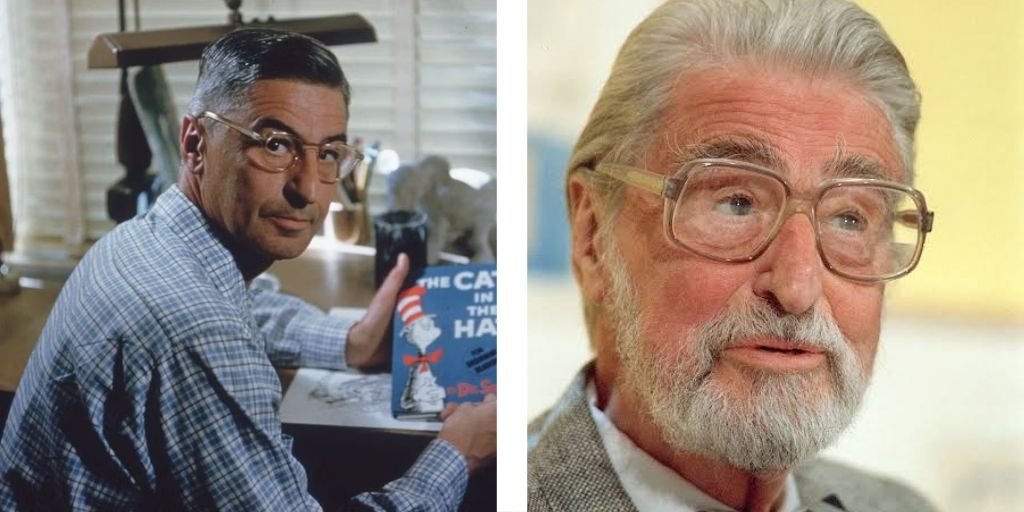
When people think about children’s books that made reading feel like play, few names stand out as strongly as Dr. Seuss. With his unusual characters, playful language, memorable rhymes, and imaginative worlds, he helped generations of young readers discover that books could be funny, surprising, and meaningful at the same time.
Born Theodor Seuss Geisel, the writer created stories that looked simple on the surface but often carried thoughtful messages about kindness, responsibility, individuality, the environment, and the importance of imagination. His books became part of childhood for millions of readers, and many of his characters remain recognizable decades after they first appeared.
But who was the person behind the famous name? How did he develop his distinctive style? Why have his books remained so influential, and how should modern readers understand both his achievements and the more complicated parts of his early work? Let’s take a closer look.
Who Was Dr. Seuss?
Dr. Seuss was the pen name of Theodor Seuss Geisel, an American writer and illustrator best known for children’s literature. He was born on March 2, 1904, in Springfield, Massachusetts, and died on September 24, 1991, in La Jolla, California.
Although many people assume he was a doctor because of his famous title, he was not a medical doctor. The “Dr.” in Dr. Seuss was part of his pen name. He studied at Dartmouth College and later pursued graduate studies at Oxford, although he did not complete a doctorate there.
His career was not limited to children’s books. Before becoming one of the best-known names in children’s publishing, Geisel worked as a cartoonist, illustrator, advertising artist, and political cartoonist.
That variety of experience helped shape his later work. He understood how pictures, short phrases, humor, and visual surprises could work together. His books were not simply collections of words. They were carefully designed experiences in which illustrations and language supported each other.
The name “Seuss” came from his middle name and family heritage. Over time, the name became so recognizable that it almost completely replaced his birth name in popular culture.
The Early Life That Shaped His Creativity
Growing up in Springfield, Geisel was surrounded by influences that later appeared in his creative work. His family had German roots, and his father was involved in the local brewing industry before Prohibition changed the business environment.
Young Geisel developed an interest in drawing and storytelling. He also became fascinated by unusual words and humorous observations. Those interests would eventually become central to his professional identity.
At Dartmouth, he contributed to the college humor magazine and became involved in editing and writing. After a disciplinary incident involving alcohol, he was removed from his editorial position. Rather than abandoning the publication, he began using different pen names, including “Seuss.”
This small change eventually became an important part of literary history.
His attempt to study at Oxford introduced him to another possible career path, but he ultimately returned to the United States and focused on illustration and writing. He married Helen Palmer, who was also a writer and editor and played an important role in encouraging his literary ambitions.
His early professional life was filled with uncertainty. He did not immediately become a famous children’s author. Instead, he spent years developing skills in advertising, illustration, and editorial work.
Those experiences were like pieces of a puzzle. Eventually, they came together to create the distinctive style that readers would associate with him.
How Dr. Seuss Changed Children’s Books
Before Geisel became famous, many children’s books relied heavily on straightforward stories and traditional illustrations. Geisel brought something different: movement, exaggeration, invented words, strange creatures, and energetic visual compositions.
His approach suggested that children did not need to be treated as passive readers.
They could handle unusual ideas.
They could enjoy nonsense.
They could laugh at language.
And they could learn while having fun.
One of his greatest contributions was his understanding of rhythm. His sentences often moved almost like songs. Repetition made phrases easier to remember, while rhyme encouraged children to anticipate what might come next.
This was especially useful for young readers learning to recognize words.
Instead of making reading feel like homework, his books could make it feel like a game.
His illustrations were equally important. Characters often had exaggerated bodies, unusual clothing, enormous eyes, strange hairstyles, or impossible physical shapes. These images immediately captured attention.
The combination of simple vocabulary and sophisticated imagination became one of his trademarks.
The Books That Made Him Famous
Dr. Seuss wrote and illustrated many books, several of which became enduring classics.
Among his most famous works are The Cat in the Hat, Green Eggs and Ham, How the Grinch Stole Christmas!, Horton Hears a Who!, The Lorax, Oh, the Places You’ll Go!, and One Fish Two Fish Red Fish Blue Fish
5
Each book has its own personality.
The Cat in the Hat, published in 1957, became particularly important in the development of early-reader literature. Its controlled vocabulary, repetition, rhythm, and entertaining story showed that beginning readers could enjoy books that were genuinely fun.
Green Eggs and Ham pushed the concept even further. Its vocabulary is famously limited, yet the story remains energetic because of repetition and escalating situations.
Then there is the Grinch, whose story became closely associated with Christmas culture. Beneath the comedy is a lesson about greed, generosity, and the meaning of celebration.
The Lorax takes a different approach. It addresses environmental responsibility through an imaginative story involving trees, industry, consumption, and consequences.
These books may look completely different from one another, but they share an important quality: they invite children to think without making the lesson feel like a lecture.
The Power of Rhymes and Invented Words
One reason the books remain so memorable is their unusual approach to language.
Geisel understood that children love the sound of words. A strange word can sometimes be more memorable than a complicated explanation.
His writing frequently used rhyme, repetition, alliteration, and invented expressions. This gave his stories a distinctive musical quality.
Imagine listening to someone play a familiar melody. Even if the words change, the rhythm can make you want to continue. His books often worked in a similar way.
That rhythm could help young readers predict sounds and patterns. It could also encourage them to read aloud.
Invented words served another purpose. They expanded the boundaries of ordinary language. A reader did not need to know every word in advance to understand what was happening.
The illustrations provided clues.
The surrounding sentence provided context.
The sound of the word provided another clue.
This encouraged children to become active participants rather than simply decoding every word mechanically.
His approach also demonstrated that children’s literature could be playful without being intellectually empty.
Characters That Became Cultural Icons
Dr. Seuss created a remarkable collection of characters.
The Cat in the Hat is perhaps the most recognizable. With his tall striped hat, bow tie, and mischievous personality, he became a symbol of playful disruption.
The Grinch represents another side of Geisel’s imagination. Initially selfish and bitter, the character becomes associated with transformation and generosity.
Horton is remembered for his loyalty and compassion. In Horton Hears a Who!, the elephant insists that even tiny lives deserve recognition and protection.
The Lorax became an environmental symbol. His role is not simply to entertain. He speaks for the natural world and challenges readers to think about what happens when resources are treated as limitless.
These characters have lasted because they are more than drawings. Each represents an idea or human quality.
Curiosity.
Kindness.
Stubbornness.
Greed.
Courage.
Imagination.
Responsibility.
That is one reason adults can revisit the books years later and discover meanings they may not have noticed as children.
Dr. Seuss and Educational Reading
The importance of Geisel’s work goes beyond entertainment.
His books became particularly influential in early literacy. The combination of repetition, rhythm, illustrations, and accessible vocabulary made them useful for children beginning to read independently.
Teachers and parents often used his books to make reading practice more enjoyable.
This was important because motivation matters. A child who sees reading as punishment may struggle to develop a lasting relationship with books. A child who associates books with laughter and discovery may be more willing to keep trying.
His stories also helped demonstrate that simple language does not necessarily mean simple ideas.
A short book can raise questions about morality, environmentalism, social responsibility, or personal growth.
For example, The Lorax can lead to conversations about nature and consumption. Horton Hears a Who! can encourage discussions about empathy and protecting vulnerable communities. Oh, the Places You’ll Go! can open conversations about uncertainty, ambition, disappointment, and perseverance.
The book becomes a starting point.
The conversation becomes the deeper lesson.
The Messages Behind the Humor
One of the most interesting aspects of Dr. Seuss’s work is the way serious themes are hidden inside humorous stories.
He rarely begins with a direct lecture.
Instead, he creates a strange situation and lets readers experience its consequences.
That method can be surprisingly powerful.
Consider a child reading about a character who refuses to try something new. The story may make the child laugh, but it also creates a small opportunity to think about fear and curiosity.
A story about someone destroying a forest may appear fantastical, yet it can encourage readers to consider what happens when economic interests overpower environmental concerns.
This is one of the strengths of children’s literature: a fictional world can provide enough distance for difficult ideas to become easier to discuss.
Geisel’s stories frequently use exaggeration as a mirror. By making behavior ridiculous, he can encourage readers to recognize similar patterns in the real world.
The More Complicated Side of His Career
A complete discussion of Dr. Seuss should not ignore the less comfortable aspects of his career.
Before becoming famous for children’s literature, Geisel created advertising work, editorial cartoons, and political illustrations. Some of his earlier work contained racial stereotypes and imagery that modern readers recognize as harmful.
Several of his early children’s books have also received criticism for stereotypical representations of particular ethnic and cultural groups.
This history matters because literary figures can have complicated legacies.
In 2021, the organization that manages the Dr. Seuss literary estate announced that six books would no longer be published because they contained images considered hurtful and wrong. The decision prompted public debate about censorship, historical context, artistic legacy, and responsible publishing.
It is possible to appreciate the enormous influence of Geisel’s later children’s literature while also acknowledging that some earlier representations were problematic.
Doing so does not require reducing his entire career to one judgment.
Instead, it gives readers a more accurate picture of the person and the era in which he worked.
Why Dr. Seuss Still Matters Today
Why are these books still read decades after their original publication?
Part of the answer is simple: they are fun.
Children respond to characters who behave unpredictably. They enjoy silly sounds, surprising pictures, and repeated phrases. Parents often enjoy reading the stories aloud because the language has a natural rhythm.
But entertainment alone does not explain the lasting appeal.
The books also provide opportunities for interpretation.
A child might simply enjoy the Grinch.
An older reader might notice a story about materialism.
A teacher might use The Lorax to introduce environmental responsibility.
A parent might use Oh, the Places You’ll Go! to talk about uncertainty and growing up.
The same book can therefore change as the reader changes.
That is one sign of durable literature.
A strong children’s book is not necessarily one that means exactly the same thing every time. Sometimes it is one that grows with the person reading it.
Adaptations, Merchandise, and Popular Culture
Dr. Seuss’s characters eventually moved beyond books.
Television specials, animated productions, stage adaptations, films, toys, clothing, classroom materials, and other products helped turn his creations into a major cultural brand.
How the Grinch Stole Christmas! became particularly influential through television and later film adaptations. The Grinch eventually became a recurring part of holiday entertainment for many families.
The Cat in the Hat also moved into film and other forms of entertainment.
These adaptations introduced the characters to people who might not have encountered the original books.
However, adaptations can change the tone of a story. A short picture book may become a much longer movie, requiring additional characters, dialogue, conflicts, and plotlines.
That distinction is worth remembering.
The original books were designed around economy. Every picture and phrase had a purpose. A film has different storytelling requirements.
Even so, the continued appearance of these characters in popular culture demonstrates how deeply they have entered the public imagination.
Dr. Seuss’s Lasting Literary Legacy
Geisel’s influence can be seen in the broader world of children’s publishing.
He demonstrated that early readers could be given books with personality. They did not need dull language or overly serious presentation.
He also showed how typography, illustration, rhythm, and storytelling could work together.
Perhaps his most lasting achievement was helping generations of readers discover that language itself could be entertaining.
A word could be silly.
A sentence could bounce.
A character could look impossible.
A story could make you laugh and still leave you thinking.
That combination is difficult to achieve.
Many children’s authors have since experimented with rhyme, invented vocabulary, unusual creatures, and visual humor, but Geisel’s particular combination remains distinctive.
His books became part of the cultural vocabulary of childhood.
Conclusion: An Imagination That Continues to Inspire
Dr. Seuss remains one of the most recognizable figures in children’s literature because his work combined imagination, humor, rhythm, pictures, and meaningful themes in a way that connected with young readers.
His career was not perfect, and some of his earlier work deserves critical examination. Yet his influence on children’s reading culture is difficult to deny. His best-known books encouraged children to explore language, embrace curiosity, question assumptions, and imagine worlds beyond the ordinary.
Perhaps that is the greatest lesson of all.
A child’s imagination is not a small thing. It is more like a door: once opened, it can lead almost anywhere.
For generations of readers, Dr. Seuss helped open that door.
FAQs About Dr. Seuss
1. Who was Dr. Seuss?
Dr. Seuss was the pen name of Theodor Seuss Geisel, an American author and illustrator best known for influential children’s books featuring imaginative characters, playful language, rhyme, and memorable illustrations.
2. Was Dr. Seuss actually a doctor?
No. The “Dr.” was part of his pen name. He was not a medical doctor. He studied at Dartmouth College and later attended Oxford but did not complete a doctoral degree there.
3. What is Dr. Seuss’s most famous book?
There is no single answer, but The Cat in the Hat, Green Eggs and Ham, How the Grinch Stole Christmas!, The Lorax, and Oh, the Places You’ll Go! are among his most widely recognized works.
4. Why are Dr. Seuss books important for children?
His books use rhyme, repetition, illustrations, and accessible vocabulary to make reading engaging. They can also introduce broader ideas such as kindness, environmental responsibility, individuality, and perseverance.
5. Why were some Dr. Seuss books discontinued?
In 2021, the organization overseeing his estate announced that six titles would stop being published because they contained imagery considered harmful or stereotypical. The decision became part of a broader discussion about historical works and how they should be presented to modern audiences.


