
Ray Charles: The Extraordinary Life, Music, and Legacy of a True American Icon
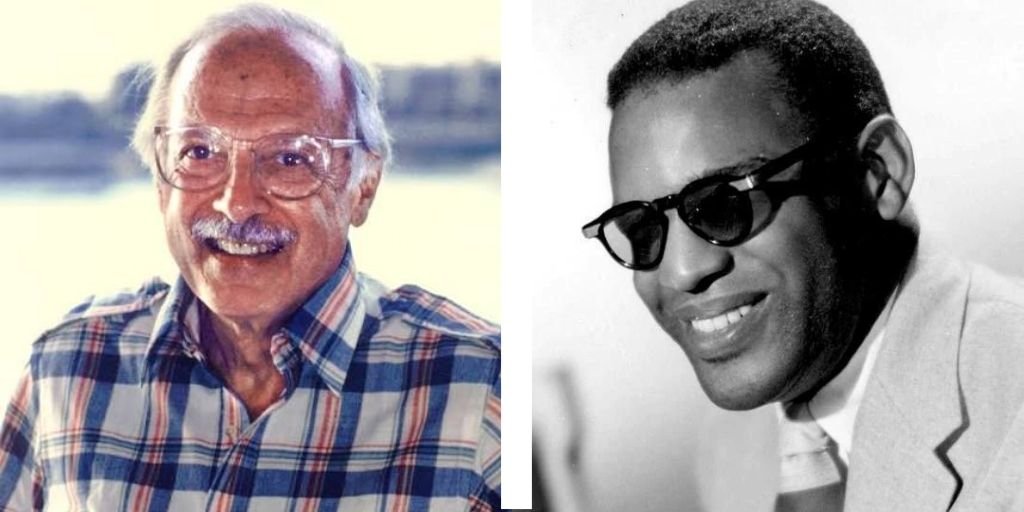
Ray Charles was more than a singer, pianist, and songwriter. He was an artist who changed the sound of American music and inspired generations of performers. With his unmistakable voice, powerful piano playing, and fearless approach to different musical styles, he became one of the most respected figures in twentieth-century music.
His story was also one of determination. He lost his sight as a child, experienced poverty, faced personal struggles, and entered a music industry that was often divided by race and genre. Yet he refused to allow those challenges to define his future.
Instead, he built a career around creativity and independence. He moved comfortably between rhythm and blues, gospel, jazz, country, soul, and pop. In doing so, he helped create a musical language that still influences artists today.
But what made Ray Charles so special? Perhaps it was the way he made every song feel personal. Whether he was performing a heartbreaking ballad or an energetic rhythm-and-blues number, his music sounded lived-in. It was not simply something you heard; it was something you felt.
Early Life and Childhood
Ray Charles Robinson was born on September 23, 1930, in Albany, Georgia. He grew up primarily in Greenville, Florida, during the difficult years of the Great Depression.
His childhood was not easy. His family had limited financial resources, and Charles experienced tragedy at a young age. One of the most devastating events occurred when he witnessed the drowning of his younger brother George.
Charles also began losing his eyesight when he was around five years old. Doctors later believed glaucoma was responsible. By the age of seven, he was completely blind.
For many people, such a loss might have seemed like the end of their possibilities. For Charles, however, music became a way forward.
He attended the Florida School for the Deaf and Blind in St. Augustine, where he learned Braille and studied music. He became skilled at piano and learned several other instruments, including the saxophone and clarinet.
The school gave him something extremely important: independence.
Rather than treating blindness as a reason to limit his ambitions, Charles developed the ability to navigate the world through sound, memory, touch, and determination. Music eventually became not merely a hobby but the foundation of his life.
Discovering a Passion for Music
Charles’s musical education began early. He listened carefully to the sounds around him and absorbed influences from different traditions.
Church music was especially important. Gospel provided him with powerful vocal techniques, emotional intensity, and a strong sense of rhythm. At the same time, he became fascinated by jazz and blues.
This mixture would later become one of the defining characteristics of his career.
Imagine music as a large kitchen filled with different ingredients. Some musicians might choose one or two ingredients and build their entire style around them. Charles was willing to use everything available to him.
He took the emotional power of gospel, the improvisation of jazz, the storytelling of blues, and the rhythm of popular music and combined them into something distinctive.
After leaving school, he began working as a professional musician while still a teenager. He performed with small groups and eventually moved to the West Coast, where he began developing his reputation.
His early career was marked by persistence. He was not an overnight celebrity. He spent years performing in clubs, traveling between cities, recording songs, and learning how to survive in a competitive industry.
Those experiences shaped the musician he would become.
The Rise of an Unmistakable Voice
During the 1950s, Charles began establishing himself as a major recording artist.
His early recordings showed clear jazz, blues, and rhythm-and-blues influences. But he was never satisfied with simply repeating what other musicians had already done.
His voice was distinctive. It could sound rough, tender, joyful, desperate, playful, or deeply emotional depending on the song.
His piano playing was equally important.
Charles did not treat the piano merely as an accompanying instrument. It was almost another voice. His playing could push a song forward, answer his singing, or create tension before releasing it.
This combination helped him stand apart from other performers.
Songs such as “I Got a Woman” became particularly important in his development. Released in 1954, the recording drew heavily from gospel traditions while presenting them in a secular rhythm-and-blues setting.
That approach helped establish a new musical direction.
Today, the sound may seem familiar because countless musicians have followed similar paths. At the time, however, combining sacred musical elements with popular entertainment could be controversial.
Charles did it anyway.
How Ray Charles Helped Shape Soul Music
Ray Charles is widely regarded as one of the foundational figures in soul music.
Soul did not suddenly appear from nowhere. It developed from several existing traditions, including gospel, blues, jazz, and rhythm and blues. Charles played a major role in bringing those elements together.
His performances had the emotional force of a church service but the freedom of a nightclub performance.
That combination became enormously influential.
He showed that a singer could use gospel-style vocal intensity in a secular song without losing authenticity. He also demonstrated that musical boundaries did not need to remain fixed.
This was one of his greatest contributions.
Charles was not interested in asking, “What genre is this supposed to be?”
He was more interested in asking, “Does this sound good?”
That attitude made his music unusually flexible.
His work helped open doors for future soul performers and influenced artists across rhythm and blues, rock, pop, country, and jazz.
A Remarkable Connection With Country Music
One of the most surprising chapters of Charles’s career was his relationship with country music.
At first glance, country and rhythm and blues might appear to belong to completely different worlds. Charles proved otherwise.
In 1962, he released the landmark album Modern Sounds in Country and Western Music.
The project featured Charles performing country standards through his own musical perspective. Instead of trying to imitate traditional country singers, he transformed the material with his distinctive voice, piano, arrangements, and emotional delivery.
The album was a major commercial success.
Its importance went beyond sales. It demonstrated that audiences could embrace music that crossed cultural and stylistic boundaries.
Songs such as “Georgia on My Mind” became closely associated with Charles, even though the song itself had been written decades earlier.
His interpretation showed how a familiar song could be transformed by the personality of a great performer.
This period also demonstrated an important quality in Charles’s career: curiosity.
He never seemed comfortable staying inside one musical box.
Major Songs and Recordings
Ray Charles produced an extraordinary collection of recordings throughout his career.
Some songs became major hits, while others developed long-lasting cultural significance.
Among his best-known recordings are:
- “What’d I Say”
- “Georgia on My Mind”
- “Hit the Road Jack”
- “I Got a Woman”
- “Unchain My Heart”
- “You Don’t Know Me”
- “Hallelujah I Love Her So”
- “Let’s Go Get Stoned”
- “America the Beautiful”
“What’d I Say” was particularly important. Its energetic call-and-response structure and electrifying rhythm captured the excitement of Charles’s live performances.
“Hit the Road Jack,” meanwhile, became one of his most recognizable recordings. The song’s dramatic vocal exchange and memorable rhythm helped turn it into a lasting popular classic.
Then there is “Georgia on My Mind,” a song that Charles transformed through an intensely emotional performance. His interpretation became so closely connected with the state of Georgia that it was later adopted as Georgia’s official state song.
These recordings reveal the range of his artistry. He could be playful, romantic, rebellious, spiritual, dramatic, and deeply reflective.
Ray Charles and the Civil Rights Era
Charles’s career unfolded during a period of enormous racial tension and social change in the United States.
As a Black musician, he encountered discrimination throughout his career. He also became involved in moments that reflected the broader struggle for racial equality.
One well-known incident occurred in 1961, when Charles was scheduled to perform in Augusta, Georgia. He learned that the audience was segregated and decided not to perform under those conditions.
The incident had consequences, but Charles stood by his decision.
Years later, his interpretation of “Georgia on My Mind” became a powerful part of his relationship with the state. In a complicated historical context, the song eventually came to symbolize both personal affection and a changing cultural identity.
Charles’s career therefore cannot be separated completely from the social history of America.
His music crossed racial boundaries at a time when American society itself was deeply divided.
That made his success particularly meaningful.
Personal Challenges and Struggles
Behind the success was a complicated personal life.
Charles experienced struggles involving drug addiction, relationships, family responsibilities, and the pressures of fame.
He became addicted to heroin during the early part of his career. Eventually, he entered a treatment program and overcame his dependence.
His story is not simply one of triumph without difficulty. Like many major artists, he lived with contradictions.
He could be disciplined about his music while struggling in other parts of his life. He could inspire millions of people while making personal decisions that caused pain or controversy.
Understanding these complexities does not diminish his artistic achievements. Instead, it gives a more complete picture of the person behind the legend.
Charles also had a large family and became the father of twelve children.
His life was therefore much bigger than the songs people heard on the radio. There were private responsibilities, complicated relationships, and difficult choices behind the public image.
Awards, Recognition, and Achievements
Ray Charles received extraordinary recognition during his lifetime.
He won numerous Grammy Awards and became one of the most decorated musicians of his generation.
In 1979, Georgia officially recognized his contribution by naming “Georgia on My Mind” its state song.
He was inducted into the Rock and Roll Hall of Fame in 1986.
Charles also received the Kennedy Center Honors and was awarded the National Medal of Arts.
In 2004, he received the Grammy Lifetime Achievement Award.
These honors represent only part of his impact.
Perhaps the most important recognition came from musicians themselves. Artists across generations have cited Charles as an influence.
His work demonstrated that a performer could succeed without allowing genre boundaries to dictate creativity.
He also showed that disability did not prevent someone from becoming a commanding presence in the entertainment industry.
His blindness was an important part of his story, but it was never the whole story.
He wanted to be recognized for what he could do.
Ray Charles’s Influence on Future Musicians
The influence of Ray Charles can be heard across modern music.
Soul singers inherited his emotional vocal style. R&B performers adopted aspects of his rhythm and phrasing. Jazz musicians admired his improvisational instincts. Country artists recognized his ability to reinterpret traditional songs.
Even rock and pop musicians benefited from the doors he helped open.
His influence was not based on copying his exact sound.
Instead, he encouraged musicians to combine influences and develop an individual identity.
That may be his greatest lesson for artists.
Music does not have to stay in separate rooms.
Jazz can speak to country. Gospel can influence rhythm and blues. Blues can connect with pop. When talented musicians are willing to experiment, something new can emerge.
Charles understood this instinctively.
Ray Charles in Film and Popular Culture
Ray Charles’s story eventually reached a new generation through the 2004 biographical film Ray.
The movie starred Jamie Foxx as Charles and explored important periods of his life, including his childhood, rise to fame, musical achievements, relationships, and struggles with addiction.
Foxx’s performance received widespread acclaim and earned him the Academy Award for Best Actor.
The film introduced Charles’s story to many people who may have known his songs but were unfamiliar with the details of his life.
Biographical films always involve artistic interpretation, so audiences should not treat every scene as a perfect historical record. Nevertheless, Ray helped renew public interest in his music and legacy.
It also demonstrated how powerful his life story remained decades after his biggest hits.
The Final Years of a Musical Legend
Ray Charles continued performing and recording well into his later years.
Even as his health declined, he remained connected to music.
He died on June 10, 2004, at his home in Beverly Hills, California, at the age of 73. He died from complications related to liver disease.
His death marked the end of an extraordinary career, but it did not end his influence.
His recordings continued to be played around the world. Younger musicians continued discovering his work. His story remained part of music education and American popular culture.
Most importantly, his music continued to communicate emotion.
That is one of the greatest tests of an artist’s legacy.
Trends change. Technology changes. Musical fashions come and go. But a truly powerful performance can remain meaningful long after the original moment has passed.
Charles’s recordings have repeatedly demonstrated that quality.
Why Ray Charles Still Matters Today
Why should people who were born long after his biggest hits still care about Ray Charles?
Because his career represents more than musical success.
He challenged expectations.
He crossed genres.
He confronted discrimination.
He overcame addiction.
He developed an unmistakable artistic identity.
And he demonstrated that limitations do not necessarily determine a person’s future.
His story also offers an important lesson about creativity.
Think of music as a river rather than a collection of separate swimming pools. Charles allowed different musical traditions to flow together. What emerged was something larger than any individual influence.
That is why his recordings still sound important.
Today’s musicians work in an environment where genres are increasingly mixed. Hip-hop can incorporate jazz. Pop can borrow from country. R&B can draw from electronic music. Artists routinely combine sounds that earlier generations might have considered separate.
Ray Charles was doing this long before it became common.
His willingness to experiment helped establish a creative tradition that continues today.
Conclusion
Ray Charles left behind much more than a collection of famous songs. He created a musical legacy built on courage, curiosity, emotional honesty, and independence.
From his childhood in Georgia and Florida to his rise as an international star, his journey was filled with challenges. Losing his sight at a young age did not stop him from mastering instruments, performing on major stages, and becoming one of America’s most influential musicians.
He moved freely between gospel, blues, jazz, rhythm and blues, country, and pop, helping shape the sound of soul music along the way. His recordings remain memorable because they carry genuine emotion rather than simply following musical formulas.
His life was complicated, and he faced serious personal struggles. Yet his artistic achievements remain remarkable.
Ray Charles proved that music could cross boundaries that society often tried to maintain. His voice, piano, and fearless creativity helped change American music forever.
For listeners discovering him today, the best way to understand his legacy may be simple: press play and listen. The history is there in the sound.
FAQs About Ray Charles
1. Who was Ray Charles?
Ray Charles was an American singer, pianist, songwriter, and composer who became one of the most influential figures in soul, rhythm and blues, jazz, blues, and country music.
2. Why was Ray Charles blind?
Ray Charles lost his eyesight during childhood. His blindness was generally attributed to glaucoma, and he became completely blind by approximately seven years of age.
3. What was Ray Charles’s most famous song?
He recorded many famous songs, including “Georgia on My Mind,” “Hit the Road Jack,” “What’d I Say,” and “I Got a Woman.” “Georgia on My Mind” became especially associated with him.
4. Did Ray Charles win an Oscar?
Ray Charles himself did not win an Oscar. However, Jamie Foxx won the Academy Award for Best Actor for portraying Charles in the 2004 film Ray.
5. What was Ray Charles’s greatest contribution to music?
One of his greatest contributions was helping develop soul music by blending gospel, blues, jazz, rhythm and blues, and other traditions. He also demonstrated how powerful musical experimentation could be when artists refused to stay inside traditional genre boundaries.


