
Susan Sarandon: An Amazing Life, Career, Movies & Legacy
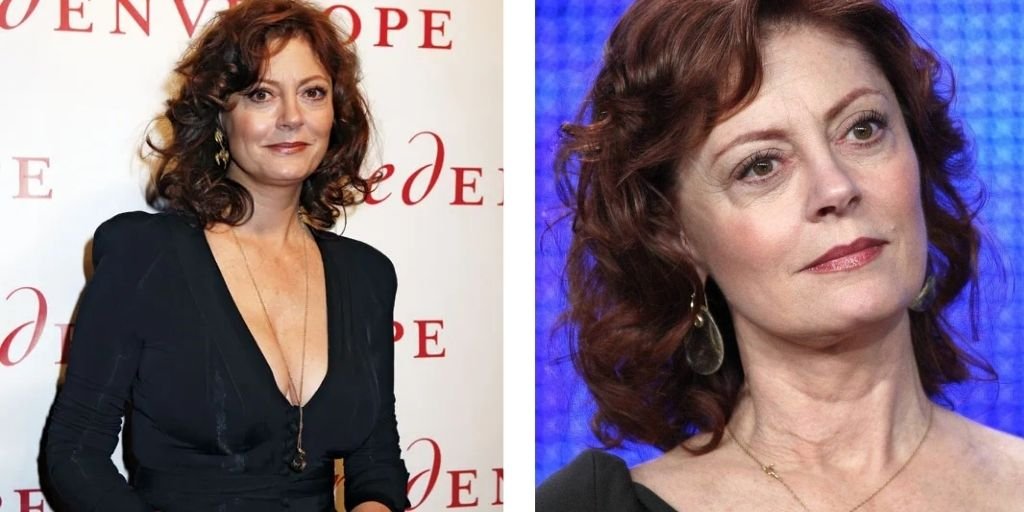
Susan Sarandon has spent more than five decades building a career that refuses to fit neatly into one box. She has played romantic leads, mothers, activists, mysterious characters, dramatic figures, comic roles, and unforgettable women who often refuse to accept the limits placed around them.
From The Rocky Horror Picture Show to Thelma & Louise, Bull Durham, Little Women, and Dead Man Walking, her filmography contains characters that feel remarkably different from one another. That variety is one reason her career has remained interesting for so long.
But who is Susan Sarandon beyond the famous roles? What made her performances stand out, and how did she become one of the most recognizable actors of her generation?
Her story is not simply about awards or box-office success. It is about taking chances, choosing complicated characters, working across film, television, and stage, and continuing to evolve as the entertainment industry changed around her.
Early Life and Education
Susan Abigail Tomalin was born on October 4, 1946, in New York City. She grew up in New Jersey in a large family and later attended the Catholic University of America in Washington, D.C., where she studied drama.
Like many people who eventually find themselves in the entertainment business, Sarandon’s path was not perfectly planned from the beginning. Acting became an important part of her life during her college years, but the career ahead of her was still uncertain.
After college, she moved toward professional acting and began auditioning for work. Her first film appearance came in Joe in 1970. Around the same period, she also worked in television, including soap operas.
Those early jobs gave her something that no classroom could fully provide: experience.
Acting can be compared to learning how to swim. You can study technique on the shore, but eventually you have to get into the water. Sarandon’s early career placed her directly into that water, where every role became another opportunity to learn.
Her early performances also showed a willingness to work with unusual material. Rather than immediately chasing conventional leading-lady roles, she gradually developed a reputation for choosing characters with personality and complexity.
The Rocky Horror Picture Show Changed Everything
One of the earliest major turning points in Sarandon’s career came with The Rocky Horror Picture Show in 1975.
She played Janet Weiss, a role that introduced her to a much wider audience. The movie did not simply become another film in her résumé. Over time, it developed an enormous cult following and became an important part of popular culture.
For Sarandon, the experience was significant because it demonstrated that a performer could become associated with a project that was unconventional and different from mainstream Hollywood entertainment.
The film also showed one of the qualities that would become central to her career: adaptability.
She could move between serious drama and more unusual material without appearing trapped by a particular image.
That became important later. While many performers become strongly associated with one kind of character, Sarandon continued moving between genres.
Her career would eventually include romance, comedy, family drama, crime stories, historical productions, fantasy, television drama, and socially serious films.
Building a Reputation Through Bold Roles
The late 1970s and 1980s were important years in Sarandon’s development as a leading performer.
She appeared in films such as Pretty Baby, The Hunger, The Witches of Eastwick, and Bull Durham. These projects allowed her to explore characters with very different personalities and motivations.
Her performance in Atlantic City was particularly important. The 1980 film earned her an Academy Award nomination for Best Actress, marking an important step in her recognition by the film industry.
Instead of following one predictable career path, Sarandon seemed increasingly comfortable taking roles that demanded emotional range.
That quality became especially visible in Bull Durham, released in 1988. She played Annie Savoy, a confident and intelligent baseball fan whose relationships with the players form the center of the story.
The film paired Sarandon with Kevin Costner and Tim Robbins and became one of her most recognizable movies.
It also helped demonstrate that she could combine humor, romance, intelligence, and emotional depth within the same performance.
Rather than simply playing a romantic character, she gave Annie a strong personality of her own.
Thelma & Louise Became a Cultural Landmark
Few films in Sarandon’s career have had the lasting cultural influence of Thelma & Louise.
Released in 1991, the movie starred Sarandon as Louise Sawyer and Geena Davis as Thelma Dickinson. The two characters embark on a road trip that gradually turns into a desperate escape.
The film became famous for its story of friendship, independence, fear, and rebellion.
Sarandon’s performance earned her an Academy Award nomination for Best Actress.
What makes Louise memorable is that she is not presented as a simple hero. She has a history, fears, responsibilities, and difficult choices. Sarandon gives the character a sense of strength without removing her vulnerability.
More than three decades later, the film continues to be discussed and adapted. In 2026, a new stage musical adaptation opened at London’s Young Vic Theatre, demonstrating the continuing interest in the story and its central relationship.
The importance of Thelma & Louise is therefore larger than its original box-office life. It became part of conversations about friendship, independence, gender expectations, and the way women are represented in popular storytelling.
A Remarkable Run of Oscar-Nominated Performances
The early 1990s became one of the most successful periods of Sarandon’s career.
After Thelma & Louise, she received another Academy Award nomination for Lorenzo’s Oil in 1992. She later received a nomination for The Client in 1994.
In Lorenzo’s Oil, she portrayed Michaela Odone, a mother searching for a treatment for her son’s rare illness. The role required emotional intensity and a strong sense of determination.
In The Client, she played lawyer Reggie Love, a character who becomes involved in a dangerous situation after encountering a young boy with crucial information.
These performances were very different, yet both demonstrated her ability to carry emotionally demanding stories.
Then came Dead Man Walking.
Dead Man Walking and Her Academy Award
In 1995, Sarandon played Sister Helen Prejean in Dead Man Walking, directed by Tim Robbins.
The film tells a serious story involving a Catholic nun who develops a relationship with a prisoner on death row. Sarandon’s performance earned her the Academy Award for Best Actress at the 68th Academy Awards.
This was a defining moment in her career.
The Academy’s official record confirms that Sarandon won the Best Actress award for Dead Man Walking, with the other nominees including Elisabeth Shue, Sharon Stone, Meryl Streep, and Emma Thompson.
The performance worked because Sarandon did not treat the character as a simple symbol. Sister Helen is compassionate, determined, questioning, and emotionally involved in an extremely difficult situation.
The film itself invites audiences to think about punishment, forgiveness, grief, responsibility, and human dignity.
For Sarandon, the Oscar represented recognition after years of respected performances. More importantly, it arrived after a remarkable sequence of major roles rather than as an isolated success.
Her path to the award included nominations for Atlantic City, Thelma & Louise, Lorenzo’s Oil, and The Client.
Family Films, Comedy and Emotional Drama
After her Oscar-winning performance, Sarandon did not restrict herself to serious prestige dramas.
She appeared in a wide range of projects, including Stepmom, Enchanted, The Lovely Bones, Cloud Atlas, Tammy, and The Meddler.
Stepmom, released in 1998, gave audiences a very different side of her work. She played Jackie Harrison, a mother dealing with divorce, family changes, and the arrival of another woman in her children’s lives.
The film was emotional without being built around the kind of dark subject matter found in Dead Man Walking.
Sarandon also embraced lighter and family-oriented entertainment.
In Enchanted, she played Queen Narissa, allowing her to lean into a larger-than-life fantasy character. The performance demonstrated that her career was not dependent on realistic drama alone.
This flexibility is one of the clearest patterns in her filmography.
She could move from a serious courtroom or social drama to a fantasy adventure and then into comedy without abandoning the qualities that made her recognizable as a performer.
Television and Stage Work
Although film remains central to her reputation, Sarandon has also built an important career in television and theater.
She made her Broadway debut in An Evening with Richard Nixon in 1972 and returned to Broadway decades later in the 2009 revival of Exit the King.
Theater requires a different kind of discipline from film. A film performance can be captured in multiple takes and shaped through editing, while stage performers must maintain concentration in front of a live audience.
Her return to Broadway showed that she remained willing to challenge herself in different performance environments.
Television became increasingly important to her career as well.
She appeared in productions such as Bernard and Doris and You Don’t Know Jack. The Television Academy notes that she received multiple Emmy nominations and highlights her work in projects including The Lovely Bones, The Client, Thelma & Louise, and Dead Man Walking.
In 2017, she portrayed Bette Davis in the television series Feud, opposite Jessica Lange as Joan Crawford.
Playing a real-life entertainment legend brought another challenge: audiences already had an image of Bette Davis in their minds.
Sarandon therefore had to create a performance that felt recognizable without simply copying the historical figure.
Susan Sarandon as a Producer and Creative Contributor
Sarandon’s career has not been limited to acting.
She has also received producer credits on a number of projects. Her involvement behind the camera reflects a broader change that has occurred throughout her career: performers increasingly have opportunities to participate in the creative and business sides of filmmaking.
This matters because producing can involve decisions about scripts, financing, casting, development, and the overall direction of a project.
Her willingness to take on these responsibilities adds another dimension to her career.
For audiences, the result is easy to overlook because the person on screen naturally receives most of the attention. Yet a long entertainment career often depends on much more than acting.
Sarandon’s longevity is partly connected to her ability to remain creatively active in different roles.
Activism and Public Life
Sarandon has also been known for her public activism and involvement in social causes.
Her activism has sometimes attracted significant public attention, and she has used her public profile to speak about issues she considers important.
The New Jersey Hall of Fame describes her as both an actor and activist and notes her long career in entertainment.
Her public work is important to understand separately from her acting career. A person can appreciate a performance without agreeing with every public position expressed by the performer.
That distinction is useful when looking at celebrities who become involved in public debates.
Sarandon’s career illustrates how difficult it can be to separate Hollywood fame from public life. Once a performer becomes widely recognized, their words and activities outside the screen can attract almost as much attention as their professional work.
For Sarandon, activism has been a visible part of her public identity for many years.
Awards, Recognition and Career Longevity
Awards are only one way to measure a career, but Sarandon’s record demonstrates the industry’s recognition of her work.
Her Academy Award win for Dead Man Walking remains the most prominent award in her career. The Golden Globes database lists ten nominations for her, while the Television Academy records multiple Emmy nominations.
Her Oscar history is particularly notable because several of her nominations came during a concentrated period.
She was nominated for Atlantic City, Thelma & Louise, Lorenzo’s Oil, and The Client before winning for Dead Man Walking.
But perhaps the more interesting achievement is longevity.
Sarandon began appearing professionally in the early 1970s and continued working across film, television, and theater for decades.
Hollywood careers can change quickly. Trends change. Audiences change. Studios change. Entire forms of entertainment can rise and fall.
Sarandon’s career has survived these shifts partly because she has repeatedly changed with them.
Her filmography resembles a large library rather than a single book. Each project tells a different story, but together they reveal the range of the person choosing them.
Susan Sarandon’s Most Memorable Movies
When discussing her career, several titles naturally stand out.
The Rocky Horror Picture Show introduced her to a cult audience and remains one of her most recognizable early films.
Atlantic City established her as a serious award-level performer and brought her first Academy Award nomination.
Bull Durham became one of her best-known romantic sports films and showcased her combination of confidence, humor, and emotional intelligence.
Thelma & Louise gave audiences Louise Sawyer, one of the defining characters of her career.
Lorenzo’s Oil showed her ability to portray a mother fighting through extraordinary circumstances.
The Client placed her in a tense legal thriller and earned another Oscar nomination.
Little Women allowed her to play Marmee March, the warm and principled mother at the heart of the story.
Dead Man Walking brought her the Academy Award and became one of the most important dramatic performances of her career.
Stepmom demonstrated her ability to handle emotional family stories.
Enchanted introduced her to a younger and broader family audience through fantasy comedy.
The Lovely Bones, Cloud Atlas, Tammy, and The Meddler further demonstrated that she continued taking different kinds of roles later in her career.
Looking at these titles together makes one thing clear: there is no single “Susan Sarandon type.”
That may be one of the biggest reasons audiences have continued to find her interesting.
Why Susan Sarandon’s Legacy Still Matters
What makes an actor’s career last?
Is it awards? Famous movies? A distinctive personality? Or the ability to make audiences believe that every new character is a completely different person?
In Sarandon’s case, the answer seems to involve a mixture of all these things.
She became recognizable without becoming predictable.
Her career includes cult cinema, mainstream entertainment, serious drama, romance, comedy, television, theater, voice work, and socially focused films. She has played characters who are glamorous, ordinary, complicated, funny, frightened, determined, caring, and confrontational.
Her work in Thelma & Louise continues to be discussed decades after its release, while Dead Man Walking remains a central part of her award history. The continuing cultural life of Thelma & Louise, including its 2026 stage adaptation, is another reminder that some performances do not simply disappear when their original films leave theaters.
Sarandon’s legacy is therefore not just about one Oscar or one famous movie.
It is about consistency without repetition.
She has spent decades showing that an actor can grow older without becoming creatively invisible, can change genres without losing credibility, and can take risks without knowing exactly where those risks will lead.
For audiences who have watched her career unfold, that may be the most interesting part of all.
Conclusion
Susan Sarandon’s career is a story of persistence, variety, and memorable characters. From her early work in Joe and The Rocky Horror Picture Show to acclaimed performances in Atlantic City, Thelma & Louise, Lorenzo’s Oil, The Client, and Dead Man Walking, she has built a filmography filled with very different experiences.
Her Academy Award for Dead Man Walking confirmed her place among highly respected performers, while her television and stage work showed that her talents were not limited to cinema.
Perhaps the best way to understand her legacy is to look at the variety of people she has portrayed. Each role added another piece to a career that has continued to evolve for decades.
That is why Susan Sarandon remains an interesting figure in entertainment: she never needed to be only one thing.
Frequently Asked Questions
1. Who is Susan Sarandon?
Susan Sarandon is an American actor whose career began professionally in the early 1970s. She is known for films including The Rocky Horror Picture Show, Thelma & Louise, Bull Durham, Little Women, and Dead Man Walking.
2. Did Susan Sarandon win an Academy Award?
Yes. She won the Academy Award for Best Actress for her performance as Sister Helen Prejean in Dead Man Walking at the 68th Academy Awards in 1996.
3. What was Susan Sarandon’s role in Thelma & Louise?
She played Louise Sawyer, one of the two central characters in the 1991 film Thelma & Louise. The performance earned her an Academy Award nomination for Best Actress.
4. What are some of Susan Sarandon’s most famous movies?
Some of her best-known films include The Rocky Horror Picture Show, Atlantic City, The Witches of Eastwick, Bull Durham, Thelma & Louise, Lorenzo’s Oil, The Client, Little Women, Dead Man Walking, Stepmom, and Enchanted.
5. Has Susan Sarandon worked in television and theater?
Yes. Sarandon has worked extensively in both areas. She made her Broadway debut in 1972 and returned to Broadway in Exit the King in 2009. She has also appeared in numerous television productions, including Bernard and Doris, You Don’t




