
Glenn Close: An Amazing Life, Career, Movies and Lasting Legacy
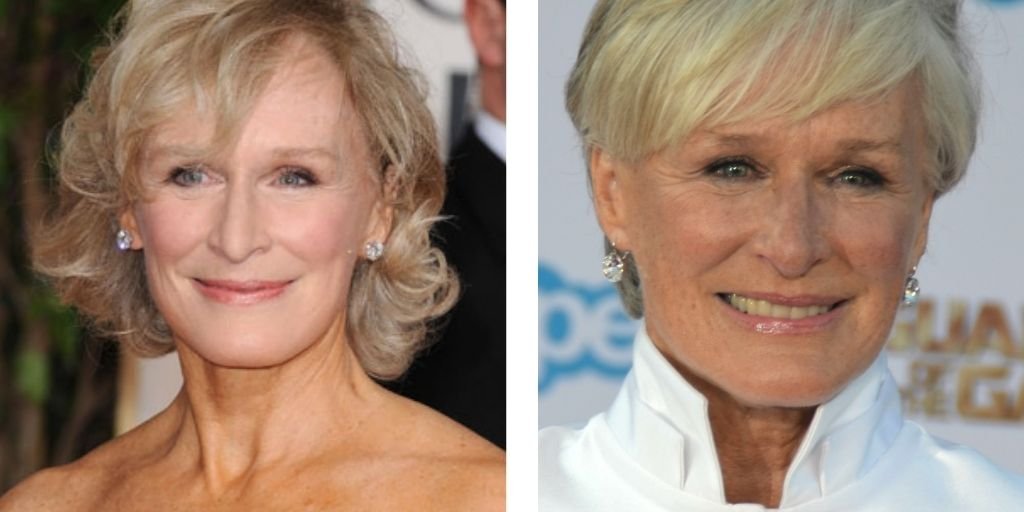
Some actors entertain us for a few hours, while others leave behind performances that stay in our minds for years. Glenn Close belongs firmly in the second group. With a career spanning more than five decades, she has played complicated mothers, ambitious professionals, troubled women, royalty, villains, and deeply human characters who rarely fit into a simple box.
Her screen presence can be quiet and controlled one moment and intensely emotional the next. That flexibility has helped her build one of the most respected careers in American film and television. The Academy says her career includes more than 100 film credits and eight Oscar nominations. In 2026, the Academy announced that she would receive an Honorary Oscar at the Governors Awards scheduled for November 15, 2026.
But what makes her story especially interesting? It is not simply the number of awards or famous films. It is the remarkable variety of people she has brought to life.
Early Life and the Beginning of Her Journey
Glenn Close was born on March 19, 1947, in Greenwich, Connecticut. She grew up in a family with strong intellectual and cultural influences, although acting was not necessarily an obvious career path at first.
Like many performers, her road to Hollywood was not perfectly straight. Before becoming a major movie star, she developed her craft on the stage. That experience gave her a strong foundation in character work and helped her understand how to communicate emotion without depending entirely on close-ups or cinematic effects.
The theater can be a demanding teacher. An actor has to hold an audience’s attention in a large room, often without the advantages available in film. Close’s stage background became an important part of her professional identity.
She eventually moved into professional theater and became associated with the New York stage. Her work with the theater company Theatre Company of Boston and later Broadway productions helped establish her as a serious performer.
Her Broadway breakthrough came with the musical Love for Love, followed by major recognition for The Real Thing. These experiences prepared her for an opportunity that would completely change the direction of her career.
That opportunity arrived with her first major film role.
A Remarkable Film Debut
In 1982, Close made her feature-film debut in The World According to Garp. She played Jenny Fields, the mother of Robin Williams’s character.
Imagine stepping onto a film set for your first major movie role and then receiving an Academy Award nomination for it. That is essentially what happened.
Close received an Oscar nomination for Best Supporting Actress for the performance. The Academy’s records confirm her nomination for The World According to Garp at the 55th Academy Awards.
Her performance immediately attracted attention because she did not play Jenny as a simple supporting figure. The character had independence, intelligence, strength, and contradictions.
This became something of a pattern throughout her career.
Rather than simply asking, “How can I make this character likable?” Close often seemed interested in a more challenging question: “What makes this person human?”
That distinction would become one of the defining features of her acting.
The 1980s: Building a Powerful Reputation
The early 1980s were extraordinary for Close. After her Oscar-nominated debut, she continued taking roles that demonstrated her range.
She appeared in The Big Chill, a film that became an important ensemble drama of its era. Her performance earned another Academy Award nomination for Best Supporting Actress.
She followed that with The Natural, where she played Iris Gaines opposite Robert Redford. Once again, she received an Oscar nomination.
Three consecutive supporting-actress nominations established something important: she was not simply a newcomer who had enjoyed one successful performance. She was becoming a major force in American cinema.
Her performances during this period were often emotionally layered. She could play warmth without becoming sentimental and strength without making a character seem one-dimensional.
This is one reason her early career remains so fascinating. Instead of allowing one successful role to define her, she kept moving into different dramatic territory.
Fatal Attraction and the Role That Changed Everything
Then came Fatal Attraction in 1987.
Close played Alex Forrest, a woman whose relationship with Michael Douglas’s character develops into a psychological nightmare. The film became a major cultural phenomenon, and her performance earned another Academy Award nomination for Best Actress.
Alex Forrest remains one of the most discussed characters of her career.
The role was challenging because it required Close to portray a character who could be frightening, vulnerable, emotional, and unpredictable. Rather than playing her as a cartoon villain, Close brought complexity to the performance.
That complexity helped make the character memorable.
The movie also demonstrated Close’s ability to carry enormous dramatic intensity. There are performances where an actor appears to disappear into a character. Here, Close created a personality so strong that the character became part of popular culture.
But Fatal Attraction was only the beginning of an even more prestigious period.
Dangerous Liaisons and a Different Kind of Power
In 1988, Close starred as the Marquise de Merteuil in Dangerous Liaisons.
The film was a period drama filled with manipulation, romance, social status, and emotional games. Close’s character was intelligent and calculating, but beneath the surface was a complicated emotional world.
Her performance earned another Academy Award nomination for Best Actress. The film itself received seven Oscar nominations and won three.
What made this performance so effective was restraint.
The character did not need to shout to dominate a scene. A glance, pause, or carefully chosen expression could communicate more than a long speech.
That is one of the qualities that has made Close such an effective screen performer. She understands that acting is often about what remains unsaid.
Her work in Dangerous Liaisons also showed that she could move comfortably between contemporary psychological drama and historical storytelling.
Exploring Different Genres and Characters
After establishing herself as a dramatic performer, Close continued experimenting with different genres.
She appeared in Reversal of Fortune, The House of the Spirits, The Paper, Mars Attacks!, Air Force One, and many other productions.
One particularly memorable turn came with Disney’s 101 Dalmatians, in which she played Cruella de Vil.
This was a very different challenge from her serious dramatic work.
Cruella is larger than life, fashionable, selfish, theatrical, and completely obsessed with her plans. Close embraced those qualities rather than trying to make the character realistic in the traditional sense.
The performance introduced her to a younger generation of viewers and showed how easily she could shift from serious drama to broad entertainment.
She later returned as Cruella in 102 Dalmatians.
Her filmography continued to grow because she was willing to move between genres instead of remaining in one comfortable lane.
Drama, comedy, thriller, fantasy, television, and stage work all became parts of her professional story.
Television and the Expansion of Her Range
Film has always been a major part of Close’s career, but television gave her additional opportunities to explore complicated characters.
One of her notable television roles was Patty Hewes in Damages. The series presented her as a brilliant and intimidating attorney who could be ruthless when pursuing her goals.
The character allowed Close to explore a different type of power.
Instead of physical strength, Patty’s influence came through intelligence, strategy, confidence, and psychological control.
Close’s television work demonstrated that her abilities were not limited to the cinema screen. In fact, long-form television allowed her to spend more time developing a character’s relationships, motivations, and contradictions.
This is one reason her career feels unusually broad. She did not build her reputation around a single kind of performance.
She kept changing the shape of her work.
Albert Nobbs and a Deeply Personal Performance
One of Close’s most distinctive later film performances came in Albert Nobbs, released in 2011.
She played Albert, a woman living as a man in 19th-century Ireland in order to survive and create a more secure life.
The role required significant transformation, both physically and emotionally. Close also had a long connection to the stage version of the story, making the film particularly meaningful within her career.
Her performance earned another Academy Award nomination for Best Actress. The Academy records show Albert Nobbs received three nominations, including Close’s lead performance and Janet McTeer’s supporting performance.
The character is quiet and guarded, and much of the emotional power comes from small gestures.
There are no easy answers in Albert’s story. The character is trying to create stability in a world that offers very little protection.
That makes the performance more than a simple transformation. It becomes an exploration of loneliness, identity, survival, and human connection.
The Wife and Another Oscar-Nominated Performance
In 2017, Close starred in The Wife, playing Joan Castleman.
The film focuses on a woman who has spent years supporting her husband’s literary career while confronting questions about recognition, sacrifice, marriage, and personal ambition.
It was another role that depended heavily on subtle acting.
Joan is not someone who explains everything she feels. Much of the character’s emotional history exists underneath the dialogue.
Close’s performance earned her another Academy Award nomination for Best Actress at the 91st Academy Awards. The Academy identified it as her seventh Oscar nomination overall at that time.
The performance also demonstrated something that had become increasingly clear throughout her career: Close could communicate enormous emotional weight through restraint.
Sometimes the most powerful moment is not a dramatic speech. Sometimes it is a character sitting quietly while realizing that an important part of life has been misunderstood.
That ability is one of Close’s greatest strengths as a performer.
Oscar Nominations and a Remarkable Career Record
Close’s relationship with the Academy Awards is an important part of her story.
Her Oscar nominations include:
- The World According to Garp — Supporting Actress
- The Big Chill — Supporting Actress
- The Natural — Supporting Actress
- Fatal Attraction — Actress in a Leading Role
- Dangerous Liaisons — Actress in a Leading Role
- Albert Nobbs — Actress in a Leading Role
- The Wife — Actress in a Leading Role
- Hillbilly Elegy — Actress in a Supporting Role
The Academy announced in 2026 that she had accumulated eight Oscar nominations across a career of more than five decades and more than 100 film credits.
Her Oscar journey is particularly notable because the nominations span several decades.
That longevity matters.
Hollywood changes constantly. Styles change. Audiences change. The kinds of stories that studios want to tell change. Yet Close has continued finding meaningful roles across different generations.
Her career is therefore less like a short sprint and more like a long-distance journey. The scenery changes, but the performer keeps moving forward.
Glenn Close’s Stage Career
It would be a mistake to discuss her career only through movies.
Close has always maintained a strong connection with theater. Her stage work includes productions such as The Real Thing, Death and the Maiden, Sunset Boulevard, and other major productions.
Her performance as Norma Desmond in Sunset Boulevard was particularly significant.
Playing Norma requires a performer to balance glamour, desperation, humor, sadness, and theatrical excess. The character is both powerful and vulnerable, which makes the role demanding.
Close’s theater background helps explain some of the qualities visible in her screen performances.
Stage actors learn to build characters from the inside out. They cannot depend entirely on editing, music, camera angles, or visual effects.
The result can be an especially strong sense of presence.
When Close enters a scene, she often seems completely aware of the character’s internal world.
Her Ability to Play Strong and Complicated Women
Perhaps the most interesting thread connecting many of Close’s performances is her willingness to play women who are complicated.
They are not always heroes.
They are not always villains.
They are not always easy to understand.
Sometimes they are sympathetic. Sometimes they are frightening. Sometimes they are funny. Sometimes they are deeply sad.
Alex Forrest in Fatal Attraction, Marquise de Merteuil in Dangerous Liaisons, Patty Hewes in Damages, Cruella de Vil in 101 Dalmatians, Joan Castleman in The Wife, and Albert Nobbs are all dramatically different.
Yet each character has an internal life.
This approach has helped Close avoid being trapped by a particular screen image.
An actor can become famous for playing the same personality repeatedly. Close repeatedly challenged that expectation.
Her career resembles a large toolbox: every role seems to require a different instrument, and she has spent decades learning how to use them.
Later Work and Continued Presence
Close has continued working across film and television as she has moved through different stages of her life and career.
Her later film credits include projects such as The Girl with All the Gifts, Four Good Days, Hillbilly Elegy, and other productions. The Academy’s 2026 announcement also lists her among the cast of Wake Up Dead Man: A Knives Out Mystery.
This continued activity is important because longevity in acting is not simply about appearing in more productions.
It is about finding characters that still offer something worth exploring.
Close has repeatedly demonstrated a willingness to work with different filmmakers, genres, and generations of performers.
That openness has helped keep her career relevant.
The 2026 Honorary Oscar
In June 2026, the Academy announced that Glenn Close would receive an Honorary Academy Award at the 17th Governors Awards.
The event is scheduled for November 15, 2026, at the Ray Dolby Ballroom at Ovation Hollywood. The Academy describes the Honorary Award as recognition for extraordinary distinction in lifetime achievement, exceptional contributions to the motion picture arts and sciences, or outstanding service to the Academy.
The announcement represents an important moment in her career.
An Honorary Oscar is different from a competitive acting award. Rather than recognizing one particular performance, it celebrates a broader body of work and contribution.
For Close, that body of work stretches from her film debut in The World According to Garp through decades of cinema, television, and theater.
Her career has included both famous mainstream productions and more intimate dramatic projects.
The upcoming honor therefore places the emphasis on the journey itself.
Why Glenn Close Remains Important to Popular Culture
Why does her work continue to attract attention?
One reason is versatility.
Another is her willingness to take risks.
But there is also something more difficult to define: presence.
Some performers disappear completely into a character. Others remain recognizable but make the character fascinating through their own personality.
Close can do both.
She can play a theatrical villain such as Cruella and then move into a quiet, deeply internal role such as Joan Castleman.
She can be intimidating without raising her voice and vulnerable without becoming sentimental.
That balance is difficult to achieve.
Her career also demonstrates that success does not have to follow a single path. A performer can work in theater, film, television, comedy, serious drama, family entertainment, and independent cinema while still maintaining a recognizable artistic identity.
For audiences, this means there is no single “Glenn Close role.”
There are many.
Glenn Close’s Lasting Legacy
A legacy is not created by one movie.
It develops over time, through repeated choices, memorable performances, risks, failures, successes, and the ability to remain curious.
Close’s career illustrates that idea clearly.
She arrived in Hollywood with serious stage experience and quickly established herself as an important film performer. From The World According to Garp and The Big Chill to Fatal Attraction and Dangerous Liaisons, she built a reputation for dramatic strength. Later, she embraced television, comedy, family films, independent productions, and deeply personal character studies.
Her eight Oscar nominations reflect the breadth of that journey, while the Academy’s 2026 Honorary Oscar announcement recognizes the larger contribution of her career.
For viewers, perhaps the most valuable lesson is simple: great acting is not always about being the most likable person in the room.
Sometimes it is about making audiences understand someone they would never expect to understand.
That is a skill Close has demonstrated again and again.
Her work remains a reminder that complicated characters can be the most memorable ones. And after more than five decades in the entertainment industry, her story is still being written.
Conclusion
Glenn Close has built an extraordinary career through versatility, discipline, and a willingness to explore difficult characters. From her Oscar-nominated debut to memorable performances in Fatal Attraction, Dangerous Liaisons, 101 Dalmatians, Albert Nobbs, The Wife, and Damages, she has repeatedly shown that powerful acting can take many forms. With an Honorary Oscar announced for 2026, her remarkable contribution to cinema is receiving another major recognition.
Her legacy is not simply about awards. It is about the characters she created and the emotions she made audiences feel. That is why her work continues to matter across generations.
Frequently Asked Questions
1. Who is Glenn Close?
Glenn Close is an American actress whose career spans film, television, and theater. She made her major film debut in The World According to Garp in 1982 and has since appeared in more than 100 film productions, according to the Academy.
2. How many Oscar nominations has Glenn Close received?
She has received eight Academy Award nominations. Her nominations include performances in The World According to Garp, The Big Chill, The Natural, Fatal Attraction, Dangerous Liaisons, Albert Nobbs, The Wife, and Hillbilly Elegy.
3. What is Glenn Close famous for?
She is particularly known for films such as Fatal Attraction, Dangerous Liaisons, The Big Chill, The Natural, 101 Dalmatians, Albert Nobbs, and The Wife. She is also widely recognized for her television work, including Damages.
4. Did Glenn Close play Cruella de Vil?
Yes. Close played Cruella de Vil in Disney’s 101 Dalmatians and returned to the character in 102 Dalmatians. The role showcased her ability to combine comedy, drama, theatricality, and larger-than-life characterization.
5. Is Glenn Close receiving an Honorary Oscar?
Yes. The Academy announced in June 2026 that Close would receive an Honorary Academy Award at the 17th Governors Awards on November 15, 2026.




