
Clint Eastwood: 15 Remarkable Facts About a Legendary Hollywood Career
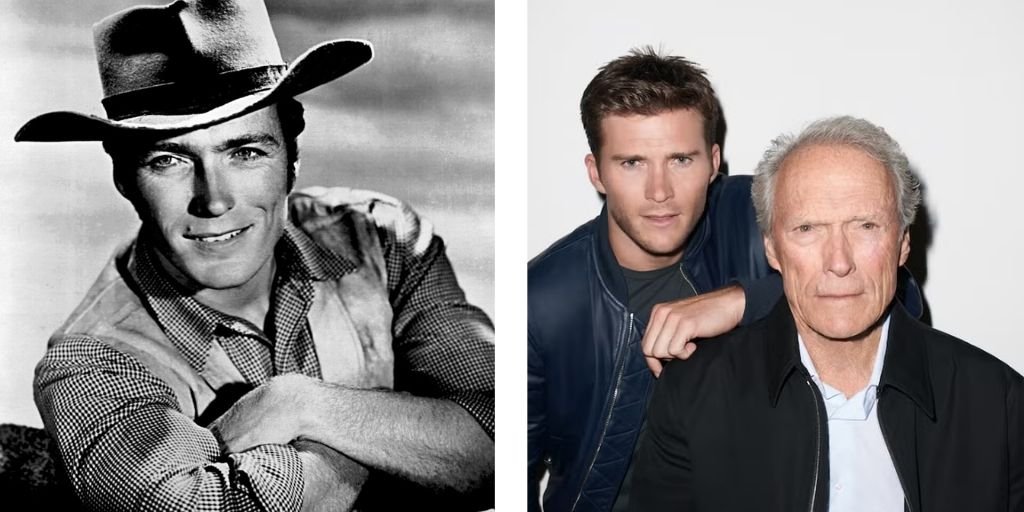
Few Hollywood figures have enjoyed a career as long, varied, and memorable as Clint Eastwood. For more than seven decades, he has moved between acting, directing, producing, and composing music, building a reputation that reaches far beyond the Western films that first made him famous.
To many viewers, Eastwood represents the classic image of the quiet, tough screen hero. Yet there is much more to his story. Behind the familiar squint and calm voice is a filmmaker who spent decades challenging himself creatively and developing a distinctive approach to storytelling.
How did an unknown young actor become one of the most recognizable faces in cinema? And how did the man associated with gunslingers eventually become an acclaimed director of serious dramas?
His journey is fascinating because it is not simply a story about fame. It is a story about persistence, reinvention, and the willingness to take creative risks.
1. Early Life and the Road to Hollywood
Clint Eastwood was born on May 31, 1930, in San Francisco, California. His family moved around during his childhood because of his father’s work, and Eastwood grew up in different parts of California.
His early years did not immediately suggest that he would become one of the biggest names in American cinema. He attended several schools and held a variety of jobs before finding his way into entertainment.
Like many aspiring performers, Eastwood faced uncertainty at the beginning. Hollywood was not waiting for him with open arms. He had to build his career gradually, accepting small opportunities and learning how the entertainment business worked.
His physical appearance eventually helped him stand out. Tall, lean, and naturally reserved, he had a screen presence that did not require excessive dialogue. In fact, one of his greatest strengths became his ability to communicate emotion through a glance, expression, or movement.
That quality would later become central to his acting style.
Before becoming a major star, he worked under contract at Universal Pictures and appeared in small film and television roles. These early experiences gave him valuable exposure, but real success was still several years away.
2. The Television Role That Changed Everything
Eastwood’s major breakthrough came through television.
In 1959, he joined the cast of the Western series Rawhide, playing cattle driver Rowdy Yates. The program became popular and ran for several years, giving Eastwood regular exposure to American audiences.
For a young actor, this was an important opportunity. Television allowed viewers to become familiar with his face and personality over time.
However, Eastwood was not satisfied with simply being a television star. He wanted to expand his career and explore film.
His chance arrived when Italian director Sergio Leone offered him a role in a Western made in Europe.
At the time, the idea was not necessarily viewed as the obvious next step for a rising American television actor. Yet Eastwood accepted.
That decision changed his life.
3. The Spaghetti Western and the Birth of a Screen Icon
Eastwood became internationally famous through Sergio Leone’s Western trilogy.
The films were ** A Fistful of Dollars (1964), For a Few Dollars More (1965), and The Good, the Bad and the Ugly (1966)**.
Together, they transformed Eastwood’s career.
He played a mysterious gunslinger often referred to as the Man with No Name. Unlike many traditional Western heroes, the character was not constantly explaining his feelings or motivations. He was quiet, calculating, and unpredictable.
Eastwood’s performance fit the role perfectly.
His character could enter a dusty town, look around silently, and create tension without saying much. The combination of Leone’s direction, Ennio Morricone’s unforgettable music, and Eastwood’s screen presence created a new style of Western filmmaking.
The films also helped establish Eastwood as an international star.
The success was particularly important because it allowed him to move beyond the limitations of his earlier television career. He was no longer simply the actor from Rawhide. He had become a cinematic personality.
It was as though Hollywood had discovered a completely new version of him.
4. Dirty Harry and Another Defining Character
After his Western success, Eastwood returned to American filmmaking and took on another role that would become closely associated with his name.
In 1971, he starred in Dirty Harry, directed by Don Siegel.
Eastwood played San Francisco police inspector Harry Callahan, a character known for his blunt attitude and willingness to operate outside conventional boundaries.
The movie became a major commercial success and spawned several sequels.
Why did the character connect so strongly with audiences?
Part of the answer was Eastwood’s performance. Harry Callahan was tough, but he was not a traditional larger-than-life action hero. His quiet manner and controlled personality made him feel different from many other screen characters of the period.
The role also reflected changing attitudes toward crime, policing, and social order in the United States. As a result, Dirty Harry became more than an action movie. It became part of a larger cultural conversation.
At the same time, Eastwood’s association with tough characters created a challenge. Audiences could easily have expected him to repeat the same formula forever.
Instead, he gradually began looking in another direction.
5. Clint Eastwood the Director
One of the most important developments in Eastwood’s career was his move into directing.
He made his directorial debut with Play Misty for Me in 1971, a psychological thriller that demonstrated that he had ambitions behind the camera as well as in front of it.
Directing allowed Eastwood to control the storytelling process in a different way.
Rather than simply interpreting a character written by someone else, he could make decisions about pacing, performances, camera work, editing, atmosphere, and music.
His directing style became known for efficiency.
Eastwood generally avoided unnecessary complications on set. He developed a reputation for shooting efficiently and allowing actors room to perform without excessive interference.
This approach helped distinguish him from directors who were known for elaborate production methods.
Over time, his directing career became just as important as his acting career.
In fact, some of his most respected achievements came when he was sitting behind the camera rather than standing in front of it.
6. A Filmmaker Willing to Explore Difficult Stories
Eastwood’s filmography as a director covers a surprisingly wide range of subjects.
He has explored war, crime, sports, family, aging, loss, morality, ambition, friendship, and regret.
One of his most important films was Unforgiven, released in 1992.
Eastwood directed the film and played William Munny, a former gunslinger who has left his violent past behind. The story examines the consequences of violence rather than presenting it as simple entertainment.
The movie became a critical and commercial success and won four Academy Awards, including Best Picture and Best Director for Eastwood.
Unforgiven was especially significant because it revisited the Western genre that had originally made him famous.
But this was not the same kind of Western audiences had seen from him decades earlier.
Instead of celebrating the myth of the fearless gunslinger, the film questioned the cost of violence and the way legends are created.
It showed how much Eastwood’s perspective as a filmmaker had evolved.
7. The Emotional Power of Mystic River
In 2003, Eastwood directed Mystic River, a dark crime drama based on Dennis Lehane’s novel.
The film follows three childhood friends whose lives become connected again after a devastating crime.
Sean Penn, Tim Robbins, and Kevin Bacon led the cast, while Eastwood focused on directing.
The movie received widespread critical praise, particularly for its performances and emotional intensity.
Eastwood demonstrated that he could handle deeply serious material without relying on excessive visual effects or complicated storytelling tricks.
Instead, the drama came from the characters themselves.
That became one of his trademarks as a filmmaker.
He often allows difficult subjects to unfold gradually, giving viewers time to understand the people involved rather than simply labeling them as heroes or villains.
8. Million Dollar Baby and an Unexpected Triumph
Another major milestone came with Million Dollar Baby in 2004.
Eastwood directed the film and also appeared in it as Frankie Dunn, an experienced boxing trainer.
The story centers on Maggie Fitzgerald, played by Hilary Swank, who dreams of becoming a professional boxer.
At first glance, the movie might appear to be a traditional sports story. But it eventually becomes something much deeper, exploring relationships, personal dignity, sacrifice, and difficult choices.
The film became one of Eastwood’s greatest achievements.
It won four Academy Awards, including Best Picture and Best Director. Hilary Swank won Best Actress, while Morgan Freeman won Best Supporting Actor.
The movie demonstrated that Eastwood could create powerful emotional drama without abandoning the restrained style that had defined much of his career.
It also reinforced an important lesson about his filmmaking: a story does not need to be loud to be powerful.
9. Exploring History Through Flags of Our Fathers and Letters from Iwo Jima
Eastwood continued experimenting with historical storytelling in the mid-2000s.
He directed two films about the Battle of Iwo Jima during World War II: Flags of Our Fathers and Letters from Iwo Jima.
Rather than telling the entire story from one perspective, Eastwood approached the conflict through American and Japanese viewpoints.
Flags of Our Fathers examined the famous photograph of American soldiers raising the flag on Iwo Jima and the complicated reality behind the image.
Letters from Iwo Jima focused on Japanese soldiers defending the island.
The second film received particularly strong critical praise and was nominated for several Academy Awards, including Best Picture and Best Director.
These movies revealed another side of Eastwood’s work.
He was interested not only in battles but also in the human beings caught inside historical events.
That approach gave the films a more personal quality.
10. A Career Built on Reinvention
Perhaps the most impressive thing about Eastwood is his ability to reinvent himself.
Think about the different stages of his career.
First, he was a struggling actor.
Then he became a television star.
After that, he became an international Western icon.
He later became one of America’s best-known action stars.
Then he developed into a respected director.
This kind of transformation is rare.
Many performers become strongly identified with one character or genre. Eastwood certainly had iconic roles, but he did not allow those roles to completely define his creative life.
His career resembles a long road rather than a straight line. Each stage opened the door to another.
Even when audiences expected one thing from him, he often moved in a different direction.
That willingness to change helped keep his career alive for generations.
11. Clint Eastwood’s Acting Style and Screen Presence
Eastwood’s acting style is remarkably restrained.
He rarely needs long speeches to dominate a scene. His performances often depend on small details: a pause, a look, a slight movement of the head, or a change in tone.
This became particularly effective in Western and crime roles.
His characters often appear calm even when the situation around them is dangerous.
That contrast creates tension.
Instead of telling viewers that a character is dangerous, Eastwood often lets the audience discover it through behavior.
His voice also became an important part of his identity.
Deep, controlled, and understated, it complemented the characters he frequently portrayed.
But his range is sometimes underestimated because his most famous roles were tough characters.
Films such as The Bridges of Madison County, Gran Torino, and Million Dollar Baby reveal a more emotional side of his acting.
In The Bridges of Madison County, for example, he played Robert Kincaid, a photographer whose brief relationship with a married woman becomes deeply meaningful.
The performance is much quieter than his action roles, yet that restraint is exactly what makes it effective.
12. Legacy, Awards, and Influence on Cinema
Eastwood’s impact on Hollywood extends far beyond his individual performances.
As an actor, he helped redefine the modern Western hero.
As a director, he demonstrated that successful filmmaking does not always require enormous budgets or complicated production techniques.
He has received numerous major honors throughout his career, including multiple Academy Awards.
Unforgiven and Million Dollar Baby both won Best Picture, while Eastwood won Best Director for both films.
He has also received recognition from major film organizations and festivals around the world.
Yet awards alone do not explain his importance.
His real legacy can be seen in the filmmakers and performers influenced by his work.
Eastwood showed that an actor could successfully become a director without abandoning the qualities that made him famous.
He also proved that an older filmmaker could continue producing commercially successful and critically respected movies.
That longevity is extraordinary.
13. Clint Eastwood Beyond the Movies
Although cinema has been the central focus of Eastwood’s public life, his interests have extended into other areas.
He has maintained a strong connection with music throughout his career and has been involved with film scores and compositions.
Jazz, in particular, has played an important role in his creative interests.
He has also had an association with Carmel-by-the-Sea, California, where he served as mayor from 1986 to 1988.
His connection with Carmel reflected another side of his personality. Away from Hollywood’s traditional image of glamour and excess, Eastwood developed an identity associated with a quieter California lifestyle.
This contrast is interesting.
On screen, audiences often saw him as the ultimate tough guy.
Away from the camera, his interests and career choices have shown a more varied personality.
That difference is part of what makes his story so compelling.
14. Why Clint Eastwood Still Matters
Why are audiences still interested in Eastwood after such a long career?
One reason is familiarity.
People who grew up watching his Westerns can still find something to appreciate in his later dramas. Meanwhile, younger viewers can discover his earlier movies through streaming services and modern film collections.
Another reason is his ability to tell stories about ordinary human problems.
His movies frequently deal with questions that never become outdated.
What does it mean to live with regret?
Can a person escape their past?
What happens when morality becomes complicated?
Can forgiveness change someone?
These are not questions limited to one generation.
Eastwood’s films often place characters in situations where there is no perfect answer. Instead of handing viewers an easy solution, he allows them to think about the consequences.
That quality gives his work lasting appeal.
15. The Enduring Legacy of a Hollywood Original
Clint Eastwood’s career is remarkable not simply because it has lasted so long, but because it has continually changed.
He began as a young actor searching for opportunities. He became a television performer, an international Western star, an action icon, an Oscar-winning director, and one of the most recognizable figures in American cinema.
His story also demonstrates the value of patience.
Success did not arrive overnight. It developed through years of small roles, unexpected opportunities, creative risks, and persistence.
Perhaps that is why his career remains so interesting.
Eastwood never needed to completely abandon his past to move forward. Instead, he built on each chapter.
The quiet gunslinger became a police inspector. The action star became a director. The director became a storyteller interested in history, family, morality, aging, and human relationships.
For audiences, that evolution offers something valuable: the reminder that a career does not have to follow one predictable path.
Sometimes the most interesting journey is the one that keeps changing direction.
Conclusion
Clint Eastwood stands as one of the most enduring figures in Hollywood history. His journey from television Westerns to international stardom and eventually to award-winning filmmaking is a remarkable example of reinvention.
His greatest contribution may not be a single character or movie. Instead, it is the body of work created across generations. From The Good, the Bad and the Ugly to Unforgiven, Mystic River, and Million Dollar Baby, his films have continued to explore people facing difficult choices.
For movie fans, his career is a fascinating reminder that true longevity comes from adaptation. Eastwood changed with the times while maintaining the quiet, disciplined style that made him recognizable in the first place.
And that may be the most remarkable part of all: after decades in the spotlight, Clint Eastwood remains a name that instantly brings Hollywood history to mind.
Frequently Asked Questions
1. Who is Clint Eastwood?
Clint Eastwood is an American actor, filmmaker, producer, and musician whose career has spanned more than seven decades. He became famous through Western films and later established himself as an acclaimed director.
2. What made Clint Eastwood famous?
Eastwood first gained recognition through the television Western Rawhide. His international breakthrough came through Sergio Leone’s Dollars trilogy, particularly The Good, the Bad and the Ugly.
3. What are Clint Eastwood’s most famous movies?
Some of his best-known films include A Fistful of Dollars, For a Few Dollars More, The Good, the Bad and the Ugly, Dirty Harry, Unforgiven, Million Dollar Baby, Gran Torino, and The Bridges of Madison County.
4. Has Clint Eastwood won an Academy Award?
Yes. Eastwood has won Academy Awards for directing Unforgiven and Million Dollar Baby. Both films also won Best Picture.
5. Why is Clint Eastwood important to Hollywood?
Eastwood is important because he successfully built careers as both a major actor and an influential director. His work helped shape the Western and action genres while his later films explored complex emotional and social themes.


