
Alfred Hitchcock: The Master of Suspense and His Lasting Legacy
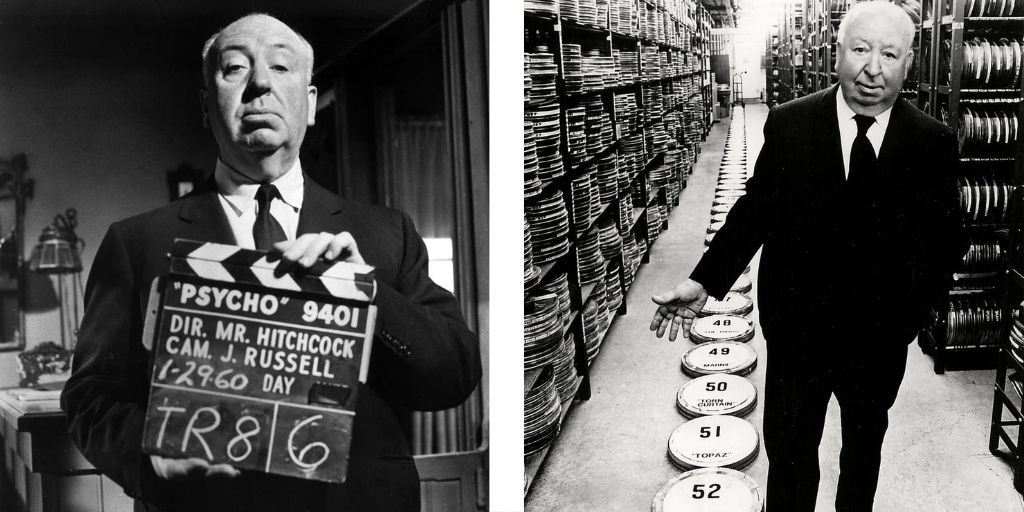
Few filmmakers have changed the way audiences experience movies as profoundly as Alfred Hitchcock. His name has become almost synonymous with suspense, psychological tension, unexpected twists, and unforgettable cinematic moments. Even people who have never watched one of his films may recognize the famous silhouette, the dry humor, or the idea of the “Hitchcockian” thriller.
But what made Hitchcock so special? Was it his stories, his camera work, his understanding of human fear, or simply his ability to make ordinary situations feel dangerous?
The answer is all of these things.
Hitchcock understood something fundamental about audiences: fear does not always come from monsters, explosions, or violence. Sometimes it comes from waiting. Sometimes it comes from knowing something that a character does not. A man looking through a window can become terrifying. A shower can become unforgettable. A flock of birds can turn an ordinary afternoon into a nightmare.
Across a career spanning decades, Hitchcock directed some of the most influential films in cinema history. He worked in both Britain and the United States, experimented with sound and visual storytelling, introduced techniques that later filmmakers adopted, and built a public personality that became almost as recognizable as his movies.
His career was not without controversy, however. Modern audiences and critics have examined his treatment of actors, women, sexuality, obsession, and control. Understanding Hitchcock therefore means looking at both the extraordinary artist and the complicated person behind the camera.
1. The Early Life of Alfred Hitchcock
Alfred Joseph Hitchcock was born on August 13, 1899, in Leytonstone, London, England. He grew up in a strict Victorian household, and his childhood experiences would later be connected by critics and biographers to some of the recurring themes in his movies.
Hitchcock was raised by William and Emma Hitchcock. His father worked as a greengrocer, and the family lived a relatively modest life. Hitchcock later described himself as a quiet and solitary child.
His relationship with authority and discipline became one of the most discussed aspects of his childhood. He famously told stories about being frightened by the police and punishment during his youth. Whether every detail of these stories should be taken literally is another question, but the idea of guilt, fear, authority, and punishment appears repeatedly throughout his work.
As a young man, Hitchcock studied engineering and technical subjects. He eventually became interested in the film industry, initially working in title design and production-related positions.
That beginning is important because Hitchcock did not enter filmmaking simply as a storyteller. He developed an interest in the technical side of cinema as well.
He learned how images could communicate information without words. He became fascinated by editing, framing, lighting, set design, and visual rhythm.
That technical foundation would eventually become one of his greatest strengths.
2. From British Filmmaker to International Director
Hitchcock began directing films during the silent era in Britain. His early work helped him develop the visual language that would later make him famous.
One of his important early successes was The Lodger: A Story of the London Fog, released in 1927. The film showed Hitchcock experimenting with suspense, mistaken identity, murder, and visual storytelling.
Unlike filmmakers who relied heavily on dialogue, Hitchcock was interested in communicating through images.
This approach became increasingly important when sound entered cinema.
Hitchcock successfully made the transition from silent films to sound pictures, demonstrating that his filmmaking abilities were not tied to one particular technological period.
During the 1930s, he directed several successful British films, including The Man Who Knew Too Much, The 39 Steps, Sabotage, and The Lady Vanishes.
His reputation continued to grow.
Hollywood soon came calling.
In 1939, Hitchcock moved to the United States, where he began another major chapter of his career. His first American film was Rebecca, released in 1940.
The film was a major success and won the Academy Award for Best Picture, although the award went to producer David O. Selznick rather than Hitchcock personally.
The move to Hollywood gave Hitchcock access to larger budgets, major stars, and sophisticated production facilities. Yet he remained intensely interested in controlling the details of his films.
3. What Made Hitchcock’s Films So Suspenseful?
Hitchcock’s greatest talent was not simply creating frightening scenes. It was controlling information.
Think of suspense like holding a glass filled almost to the edge. The audience keeps wondering when the next drop will cause it to spill.
Hitchcock understood that anticipation could be more powerful than the event itself.
One famous example involves a simple table scene. Imagine two people talking while a bomb is secretly placed underneath their table. If the audience does not know about the bomb, the conversation can remain ordinary.
But if the audience knows the bomb is there, every second becomes tense.
That distinction was central to Hitchcock’s philosophy of suspense.
He often gave viewers information that characters did not have. The audience would then wait anxiously for the inevitable moment when the character discovered the truth.
This technique transformed ordinary actions into suspenseful experiences.
A character walking down a hallway could become terrifying. Someone opening a door could feel dangerous. A phone ringing could suddenly seem threatening.
Hitchcock also understood the importance of pacing.
He did not always rush toward violence. Sometimes he slowed the story down, allowing tension to build gradually.
The result was a distinctive kind of suspense that continues to influence filmmakers today.
4. The Hitchcock Style: Camera, Editing, and Visual Storytelling
Hitchcock’s films are often described as “Hitchcockian,” a term that has become part of everyday film vocabulary.
But what does it actually mean?
There is no single definition. Instead, it refers to a collection of recurring techniques and themes.
Hitchcock frequently used subjective camera angles, unusual perspectives, dramatic close-ups, visual symbolism, and carefully designed editing.
He wanted the camera to place the audience inside the experience of the character.
One of his most famous techniques was the point-of-view shot. Instead of simply showing a character looking at something, Hitchcock would often show the character, then show what the character sees.
This creates a direct relationship between the viewer and the character.
His editing could also manipulate time and emotion.
A few seconds on screen might feel much longer because of carefully selected cuts.
Hitchcock also paid extraordinary attention to locations and objects.
A staircase, a key, a window, a telephone, a train, or even a glass of milk could become dramatically important.
Objects in his films were rarely meaningless.
They could represent danger, secrets, desire, guilt, or discovery.
This visual approach made his movies rewarding to study. You could watch a Hitchcock film simply for entertainment, but you could also watch it repeatedly and notice new details.
5. The Films That Defined His Career
Hitchcock directed dozens of films, but several stand above the rest because of their influence and enduring popularity.
Rebecca
Released in 1940, Rebecca was Hitchcock’s first American film. Based on Daphne du Maurier’s novel, it follows a young woman who marries a wealthy widower and enters a world dominated by the memory of his first wife.
The film explores jealousy, insecurity, identity, and psychological pressure.
It established Hitchcock as a major Hollywood filmmaker.
Shadow of a Doubt
Released in 1943, Shadow of a Doubt brought danger into an apparently ordinary family environment.
The idea is simple but unsettling: What if someone close to you is not who you think they are?
That question became one of Hitchcock’s favorite storytelling devices.
Notorious
Notorious, released in 1946, combined espionage, romance, betrayal, and suspense.
The film starred Cary Grant and Ingrid Bergman and became one of Hitchcock’s most admired works.
Its tension does not come only from external danger. Personal relationships become dangerous as well.
Rear Window
Released in 1954, Rear Window is perhaps one of the clearest examples of Hitchcock turning observation into suspense.
James Stewart plays a photographer confined to his apartment because of an injury. With little else to do, he begins watching his neighbors through his rear window.
Eventually, he suspects that one of them has committed murder.
What begins as curiosity becomes an increasingly dangerous investigation.
The genius of the film lies in its limitation. The main character cannot freely move around. The audience sees the world from almost the same restricted perspective.
Vertigo
Released in 1958, Vertigo was initially received with mixed reactions but later became recognized as one of the greatest films ever made.
It explores obsession, identity, love, illusion, and psychological instability.
Its central character becomes increasingly obsessed with recreating the image of a woman he has lost.
The film is haunting because the real danger is not always physical. The mind itself becomes the battlefield.
North by Northwest
This 1959 thriller combined mistaken identity, espionage, romance, humor, and spectacular set pieces.
Cary Grant plays Roger Thornhill, an advertising executive who is mistaken for a government agent.
The film contains the famous crop-duster sequence, one of the most recognizable action scenes in classic Hollywood cinema.
Psycho
Few Hitchcock films have had an impact comparable to Psycho.
Released in 1960, the movie challenged audience expectations and became a landmark in horror and psychological thriller filmmaking.
Its famous shower sequence remains one of the most discussed scenes in film history.
But the real power of Psycho goes beyond that scene.
Hitchcock deliberately played with audience expectations. He made viewers believe they were watching one kind of story before suddenly changing direction.
That willingness to surprise audiences helped influence the development of modern horror and thriller cinema.
The Birds
Released in 1963, The Birds presented an unusual threat: ordinary birds suddenly becoming violent toward people.
The film is effective because Hitchcock does not provide a comfortable explanation for the attacks.
The uncertainty itself becomes frightening.
6. Hitchcock and His Famous Cameos
One of Hitchcock’s most entertaining traditions was appearing briefly in his own movies.
These appearances became known as cameos.
Sometimes he was visible for only a few seconds. He might be sitting on a bus, walking through a street, standing in a train station, or appearing somewhere in the background.
The cameos became so popular that audiences started looking for him.
Eventually, Hitchcock realized that viewers were watching for his appearance and that it could distract them from the story.
As a result, he sometimes placed his cameo near the beginning of a film.
His silhouette also became part of his public image.
With his round figure, distinctive profile, and dry expression, Hitchcock became instantly recognizable.
In many ways, he became one of the earliest directors to develop a strong public persona.
Today, famous directors are often treated like celebrities. Hitchcock was one of the filmmakers who helped establish that tradition.
7. The Actors Who Helped Bring His Vision to Life
Hitchcock worked with many major performers throughout his career.
Cary Grant appeared in several of his most famous films, including Suspicion, Notorious, and North by Northwest.
James Stewart collaborated with Hitchcock on several projects, including Rope, Rear Window, The Man Who Knew Too Much, and Vertigo.
Ingrid Bergman worked with him on Spellbound, Notorious, and Under Capricorn.
Grace Kelly became one of his most famous leading ladies, appearing in Dial M for Murder, Rear Window, and To Catch a Thief.
Hitchcock had a particular fascination with glamorous blonde actresses, and his treatment of female characters became a major subject of film criticism.
His heroines were often intelligent and independent, but they could also be placed in situations involving obsession, manipulation, danger, or control.
This contradiction makes his female characters interesting to discuss even today.
At the same time, Hitchcock’s relationships with actors were sometimes difficult.
He was known for demanding precise performances and maintaining strict control over production.
Some actors praised his genius, while others later described working with him as challenging.
Both perspectives help create a fuller picture of the director.
8. Psycho, Fear, and the Power of Breaking Expectations
When Psycho arrived in 1960, Hitchcock was already a famous filmmaker.
Yet he decided to take significant creative risks.
The film’s structure was unusual, and Hitchcock understood the value of keeping audiences uncertain.
He also made an important decision about audience behavior: viewers were encouraged not to enter the theater after the movie had started.
This helped preserve the film’s surprises.
The strategy became part of the movie’s cultural identity.
But why does Psycho still matter?
Because it demonstrated how expectations could become part of the storytelling.
A viewer enters a movie with assumptions about who the main character is, what kind of story is being told, and what will happen next.
Hitchcock could then use those assumptions against the audience.
That approach influenced generations of filmmakers.
Modern thrillers frequently use unreliable information, sudden reversals, shifting perspectives, and unexpected character developments.
Many of these techniques can be traced, directly or indirectly, to the kind of storytelling Hitchcock helped popularize.
9. Hitchcock’s Relationship With Television
Hitchcock’s influence was not limited to theatrical films.
He became a familiar television personality through Alfred Hitchcock Presents, which premiered in 1955.
The program featured suspenseful and sometimes darkly humorous stories.
Hitchcock introduced episodes himself, often using a dry and playful sense of humor.
His television presence helped turn him from a respected director into a household name.
For many viewers, the man himself became part of the entertainment.
This was an important development in popular culture.
Hitchcock understood branding long before modern filmmakers had social media, streaming platforms, and digital marketing.
His silhouette, voice, humor, and public appearances all reinforced the same recognizable identity.
He was not simply selling individual movies.
He was building a recognizable cinematic personality.
10. Criticism, Controversy, and the Complicated Hitchcock
It is easy to admire Hitchcock’s technical achievements while ignoring the more uncomfortable parts of his career.
A modern assessment should do neither.
Hitchcock was a complicated figure.
His films often explored obsession, control, fear, sexuality, guilt, and psychological manipulation. Those themes were not merely fictional interests; they were also reflected in the way some of his professional relationships have been remembered.
His treatment of actresses, especially during difficult productions, has received considerable criticism.
Tippi Hedren, who worked with Hitchcock on The Birds and Marnie, later spoke publicly about serious difficulties in their professional relationship.
These accounts have changed the way many people discuss Hitchcock.
His artistic achievements remain enormous, but artistic greatness does not require us to ignore troubling behavior.
In fact, examining both sides can lead to a better understanding of his work.
Why were control and obsession such recurring themes?
Why did his films repeatedly place characters in situations where identity and trust became unstable?
These questions become even more interesting when viewed alongside the history of the man who made them.
11. Alfred Hitchcock’s Legacy in Modern Cinema
Hitchcock died on April 29, 1980, in Los Angeles, California.
By that time, his reputation as one of cinema’s defining filmmakers was firmly established.
His influence can still be seen everywhere.
Modern thrillers use suspense techniques that Hitchcock refined. Directors continue to experiment with point-of-view shots, visual clues, dramatic irony, unreliable characters, and psychological tension.
His influence can be found in horror movies, detective stories, television dramas, crime films, and even comedy.
The basic Hitchcock idea is remarkably simple: make the audience care about what is going to happen next.
That sounds obvious, doesn’t it?
Yet achieving it consistently is incredibly difficult.
Hitchcock also demonstrated that suspense does not require constant action.
Sometimes all you need is a person, a room, a secret, and enough time for the audience to become nervous.
His films have also benefited from reevaluation.
Movies such as Vertigo, which were not always universally celebrated when first released, later became central to discussions about cinematic greatness.
Film schools continue to study Hitchcock’s techniques.
Directors continue to reference his scenes.
Audiences continue to discover his work.
That is perhaps the clearest measure of his legacy.
A filmmaker’s career can end, but influence can continue for generations.
Hitchcock’s influence has become part of the language of cinema itself.
Conclusion
Alfred Hitchcock was far more than a director who made suspense movies. He was a filmmaker who understood how audiences think, what they fear, and how curiosity can keep them glued to the screen.
From his early British productions to his celebrated Hollywood films, he constantly experimented with storytelling, editing, camera movement, sound, and audience expectations.
Movies such as Rear Window, Vertigo, North by Northwest, Psycho, and The Birds remain important because their ideas still work. Technology has changed dramatically since Hitchcock’s time, but human emotions have not.
We still fear the unknown. We still become curious when we see something we cannot explain. We still worry when a character walks toward danger without realizing it.
That is why Hitchcock’s work remains relevant.
His legacy is ultimately like a carefully built maze: the deeper you go, the more details you discover. His films can be entertaining on the surface, but beneath that surface are questions about fear, identity, desire, guilt, obsession, and human behavior.
For anyone interested in cinema, Hitchcock remains a fascinating place to begin.
Frequently Asked Questions
1. Who was Alfred Hitchcock?
Alfred Hitchcock was an English filmmaker who became one of the most influential directors in the history of cinema. He was particularly famous for suspense, psychological thrillers, mystery stories, and innovative visual techniques.
2. What is Alfred Hitchcock best known for?
He is best known for films such as Psycho, Vertigo, Rear Window, North by Northwest, The Birds, Rebecca, and Notorious. He is also famous for his brief appearances in many of his movies.
3. Why is Hitchcock called the Master of Suspense?
Hitchcock earned that reputation because he understood how to create anticipation and tension. Rather than depending only on shocking events, he often gave audiences information that characters did not have, making viewers anxious about what would happen next.
4. What is Hitchcock’s most famous movie?
Psycho is arguably his most famous movie among general audiences. Its shower sequence, psychological themes, unusual structure, and memorable characters have made it one of the most influential films in popular culture.
5. Why is Alfred Hitchcock still important today?
Hitchcock remains important because many modern filmmakers continue to use techniques and storytelling ideas that he developed or popularized. His influence can be seen across thrillers, horror movies, television series, and psychological dramas.


