
Fred Astaire: The Legendary Dancer Who Changed Entertainment
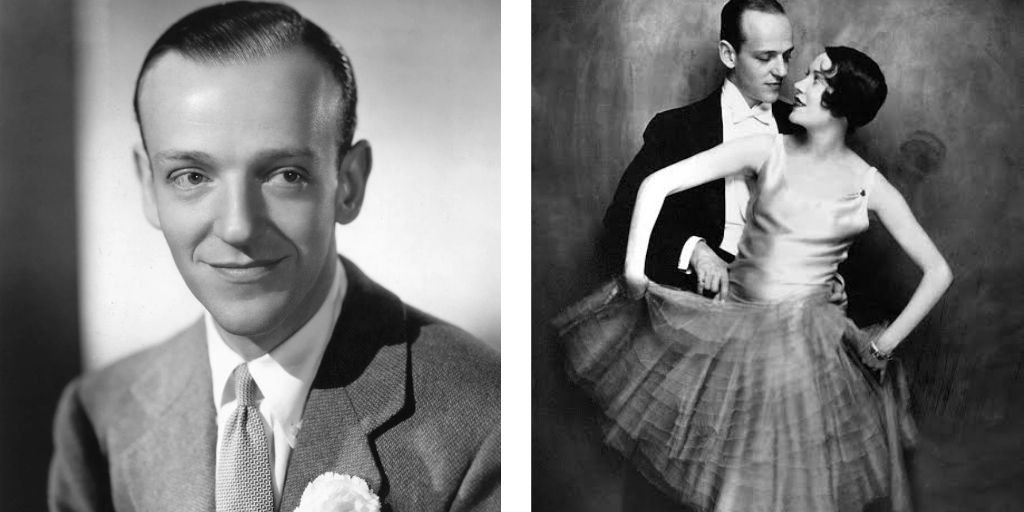
Fred Astaire remains one of the most admired entertainers in the history of American cinema. With his effortless dancing, elegant style, gentle humor, and remarkable musical ability, he created a screen presence that still feels fresh decades after his greatest films were released. He did not simply perform dance routines; he made movement feel like storytelling.
Born in Omaha, Nebraska, in 1899, Astaire spent more than seven decades connected to the performing arts. His career stretched from vaudeville stages to Broadway and eventually to Hollywood, where he became one of the defining stars of the musical film era. Along the way, he worked with some of the most talented performers, choreographers, composers, directors, and musicians of the twentieth century.
What made him so special? Perhaps it was the way he combined technical skill with apparent ease. Watching him dance could make an extremely difficult routine look as natural as walking across a room. His performances had the quality of a conversation: graceful, playful, precise, and full of personality.
Early Life and the Beginning of a Remarkable Career
Frederick Emanuel Austerlitz was born on May 10, 1899. His father, Friedrich Emanuel Austerlitz, was an Austrian immigrant, while his mother, Ann Austerlitz, was born in the United States. His older sister, Adele, would become one of the most important people in his early professional life.
Fred’s interest in performance developed when he was still a child. His mother recognized the potential of her children as performers, and Fred and Adele were eventually trained in dancing and performing arts.
The partnership between the siblings became the foundation of Fred’s early career. The two performed together on stage while they were still young, gradually developing a reputation for their polished routines.
Their act eventually reached Broadway, where they appeared in successful productions and gained wider attention. Fred’s early years were therefore not simply about learning steps. He was learning how to entertain an audience, how to work with music, how to command a stage, and how to make choreography communicate emotion.
Those lessons would later become essential to his success in Hollywood.
Adele Astaire and the Family Partnership
For many years, Fred Astaire’s professional identity was closely connected with his sister Adele. Together, they became a celebrated dance team.
Their performances combined comedy, elegance, movement, and musical timing. Fred often played the more restrained and sophisticated figure, while Adele brought a lively personality to their routines. Their contrasting qualities made the partnership memorable.
The siblings appeared in several Broadway productions and eventually became major stage attractions. Their success demonstrated that Fred had abilities far beyond dancing. He understood rhythm, theatrical timing, character development, and audience reaction.
However, their partnership eventually came to an end when Adele retired from performing after marrying Lord Charles Cavendish in 1932.
For Fred, this was a major turning point. He had spent much of his professional life working with his sister. Now he had to establish himself independently.
That challenge ultimately led him toward Hollywood.
Hollywood and the Transformation of the Movie Musical
Fred Astaire arrived in Hollywood during a period when sound cinema was transforming the film industry. Musical pictures were becoming increasingly popular, and studios were looking for performers who could sing, dance, and act.
Astaire’s first screen appearances did not immediately make him a major star. He had to prove that his stage talents could work within the language of cinema.
His breakthrough came with Flying Down to Rio, released in 1933. Although Astaire was not the film’s central star, his dancing partnership with Ginger Rogers attracted enormous attention.
The success of that pairing changed the direction of both performers’ careers.
Astaire and Rogers went on to appear together in a series of celebrated musicals. Their screen chemistry became one of the most famous partnerships in Hollywood history.
Films such as The Gay Divorcee, Top Hat, Swing Time, Shall We Dance, and Carefree helped establish the dance musical as a sophisticated form of cinematic entertainment.
Astaire’s contribution was particularly important because he wanted dance to be treated as an essential part of the story rather than an interruption.
Instead of stopping a movie so that characters could perform a routine, he often worked with filmmakers to make dancing part of the narrative.
That approach helped change the way movie musicals were made.
The Ginger Rogers Partnership
When people discuss Fred Astaire, Ginger Rogers is almost always part of the conversation. Their partnership became legendary.
Together, Astaire and Rogers appeared in ten films. Their success was based on more than technical dancing ability. They created believable characters and relationships through movement.
Astaire often portrayed a charming but slightly awkward gentleman who pursued romance with persistence and humor. Rogers could match him with intelligence, wit, glamour, and her own exceptional dancing ability.
Their routines often communicated emotions that ordinary dialogue could not.
One of their most famous films, Top Hat, contains the celebrated number “Cheek to Cheek.” The sequence demonstrates why their partnership became so influential. The choreography is elegant, but the emotional connection between the characters is just as important as the steps.
Their work also challenged a common assumption about dance partners. Astaire was not simply the star while Rogers followed him. She was an accomplished performer in her own right, and the two were carefully balanced on screen.
Their chemistry made the dancing feel like a genuine exchange.
Fred Astaire’s Unique Dancing Style
What exactly made Astaire’s dancing so distinctive?
For one thing, he avoided unnecessary showmanship. His style could be spectacular without appearing forced. He rarely looked as though he was trying to impress the audience.
Instead, he appeared to be enjoying himself.
His movements were clean and controlled. His posture was elegant, his timing was exceptional, and his footwork could be incredibly complex. Yet he presented difficult choreography with remarkable simplicity.
It is useful to think of his technique like handwriting. A skilled writer does not need to think about every movement of the pen. The result looks natural because years of practice have made the process almost invisible.
Astaire achieved something similar with dance.
He also had a strong relationship with music. He did not merely dance to a melody; he interpreted musical accents, changes in tempo, and rhythms through his body.
Tap dancing was another major part of his artistry. His feet could function almost like a percussion instrument, producing intricate rhythms while his upper body remained relaxed.
This combination of control and apparent effortlessness became one of his trademarks.
Working With Great Choreographers and Musicians
Astaire’s career was strengthened by his relationships with talented creative collaborators.
Choreographers such as Hermes Pan played important roles in developing the routines associated with Astaire and Rogers. Pan worked closely with Astaire, helping translate ideas into choreography suitable for the screen.
Astaire also had a strong relationship with music. He worked with some of the greatest composers and songwriters of the period, including Irving Berlin, George Gershwin, Jerome Kern, and Cole Porter.
Songs such as “Night and Day,” “Cheek to Cheek,” and “They Can’t Take That Away from Me” became closely associated with the golden age of musical cinema.
Astaire’s ability to sing these songs with understated charm was another reason he stood apart from performers who were primarily dancers.
He understood that a musical number had to feel connected to the character and story.
Life Beyond Ginger Rogers
Although Astaire and Rogers remain his most famous screen partnership, his career was much broader than those ten films.
He worked with numerous leading actresses, including Eleanor Powell, Rita Hayworth, Judy Garland, Cyd Charisse, and Audrey Hepburn.
Each partnership brought something different.
His work with Eleanor Powell showcased extraordinary dancing ability. Powell was one of the great tap dancers of her generation, and their collaborations demonstrated Astaire’s willingness to share the screen with equally powerful performers.
With Rita Hayworth, he created another successful musical pairing. Their films combined romance, sophistication, and energetic choreography.
His work with Judy Garland brought a different emotional tone, blending warmth and musical charm.
Perhaps one of the most interesting partnerships came with Cyd Charisse. Their dancing together could be glamorous, dramatic, and intensely choreographed, particularly in films such as The Band Wagon and Silk Stockings.
Astaire’s ability to adapt to different partners demonstrated that his success was not dependent on one particular formula.
The Band Wagon and a New Stage of His Career
By the early 1950s, musical cinema was changing. Astaire himself was also entering a different stage of his career.
The Band Wagon, released in 1953, is widely regarded as one of his finest films. It allowed him to explore themes that were surprisingly close to his own experiences as an aging entertainer trying to remain relevant.
The movie included memorable numbers and sophisticated choreography. It also showed that Astaire could participate in a story that reflected on show business itself.
One of the film’s most famous sequences is “Dancing in the Dark,” performed with Cyd Charisse. The scene is graceful and romantic, demonstrating Astaire’s ability to create atmosphere without relying on excessive spectacle.
Another famous sequence, “The Girl Hunt Ballet,” blended dance, storytelling, costume, lighting, and theatrical style.
The Band Wagon remains important because it shows Astaire not simply as a dancer but as a complete cinematic performer.
Astaire’s Influence on Fashion and Personal Style
Fred Astaire’s influence extended beyond entertainment.
His clothing became part of his image. Tailored suits, elegant evening wear, ties, hats, and polished shoes helped create the sophisticated persona audiences associated with him.
Yet his fashion was never completely separate from his dancing.
Clothing had to move with him.
Loose enough for movement but refined enough for a formal setting, his costumes helped establish an ideal of relaxed elegance. He could dance in formalwear without appearing uncomfortable.
This became part of his appeal.
Astaire also helped popularize a style of masculinity that was polished without being overly aggressive. His characters could be romantic, humorous, vulnerable, and graceful.
That quality made him especially distinctive during an era when Hollywood male stars were often presented primarily as rugged heroes.
Television, Later Films, and Career Reinvention
Astaire did not disappear when the golden age of Hollywood musicals began to decline.
Instead, he adapted.
Television provided a new platform for his talents, and he appeared in a variety of television productions. He also continued acting in films, gradually taking on roles that did not always require elaborate dancing.
One of the most memorable examples was The Towering Inferno, where he played a supporting role rather than a traditional musical lead. His performance earned him an Academy Award nomination for Best Supporting Actor.
This was significant because it demonstrated that his acting abilities had never depended entirely on dance.
Astaire also appeared in films such as Ghost Story later in his career, showing that he could remain effective even when working far outside the musical genre that had originally made him famous.
His willingness to change with the entertainment industry helped extend his career.
Awards, Recognition, and Cultural Legacy
Astaire received numerous honors during his lifetime.
Although awards provide one way to measure success, his cultural influence is much harder to quantify.
Generations of dancers and performers have studied his work. His routines remain available through classic films, television broadcasts, recordings, and modern streaming platforms.
His influence can be seen in later performers who combine dancing, singing, acting, and comedy.
Astaire also changed audience expectations. Before his era, dance in movies could sometimes feel like a separate attraction. He helped demonstrate that movement could develop character and advance a story.
His work remains valuable to filmmakers, choreographers, dancers, and students of popular culture.
Why Fred Astaire Still Matters Today
Why should modern audiences care about an entertainer who reached his greatest fame nearly a century ago?
The answer is simple: great performance does not become irrelevant merely because technology changes.
Astaire worked before digital effects, modern camera systems, and many of the tools filmmakers now take for granted. His performances depended heavily on preparation, timing, physical skill, and collaboration.
That gives his work a special quality.
When you watch one of his classic routines, there is a sense that the performer is genuinely present in the room. The movement may have been rehearsed hundreds of times, but the final result feels spontaneous.
His influence also survives in the broader idea of the “triple threat” performer—someone capable of acting, singing, dancing, and entertaining an audience.
Astaire showed how powerful those skills could become when they were combined rather than treated separately.
The Lasting Legacy of a Hollywood Original
Fred Astaire died on June 22, 1987, at the age of 88. By then, he had already secured his place among the most influential entertainers of the twentieth century.
His career was remarkable not simply because he danced beautifully. It was remarkable because he understood performance as a complete art.
He knew when to move, when to pause, when to smile, when to sing, and when to allow another performer to take the spotlight.
That balance is one reason his work continues to attract new audiences.
Astaire’s legacy can be compared to a classic piece of music. Styles change, technology evolves, and audiences discover new forms of entertainment, but a beautifully constructed performance can still communicate something immediately recognizable.
His dancing expressed joy, romance, humor, confidence, and sometimes vulnerability.
More than anything, Fred Astaire made difficult things look easy.
That may be one of the hardest achievements in entertainment.
Conclusion
Fred Astaire’s career represents much more than the history of an exceptional dancer. From his early partnership with Adele to his unforgettable films with Ginger Rogers and his later work in television and dramatic cinema, he continually adapted while preserving his distinctive elegance.
His contribution to musical films helped transform dance into an important storytelling tool. His collaborations with great performers, choreographers, composers, and directors produced some of the most enduring moments in classic Hollywood.
Even today, his performances remind us that technical mastery does not have to look complicated. Sometimes the greatest skill is making extraordinary work appear completely natural.
Fred Astaire did exactly that, and his influence continues to move across generations.
Frequently Asked Questions
1. Who was Fred Astaire?
Fred Astaire was an American dancer, singer, actor, and entertainer whose career covered vaudeville, Broadway, film, and television. He became especially famous for his sophisticated dancing and musical performances in Hollywood films.
2. How many movies did Fred Astaire make with Ginger Rogers?
Fred Astaire and Ginger Rogers appeared together in ten films. Their partnership became one of the most celebrated collaborations in the history of musical cinema.
3. What was Fred Astaire best known for?
He was best known for his elegant dancing, tap technique, musical timing, singing, acting, and influential performances in classic Hollywood musicals.
4. Did Fred Astaire only work in musical films?
No. Although musicals were central to his fame, Astaire also worked in television and dramatic films. His later career demonstrated that he was capable of much more than dance performance.
5. Why is Fred Astaire still famous today?
Astaire remains famous because his performances influenced generations of dancers, actors, choreographers, and filmmakers. His films continue to be watched because his combination of elegance, humor, music, and movement remains distinctive and entertaining.


