
Steve Martin: The Remarkable Life and Career of a Comedy Legend
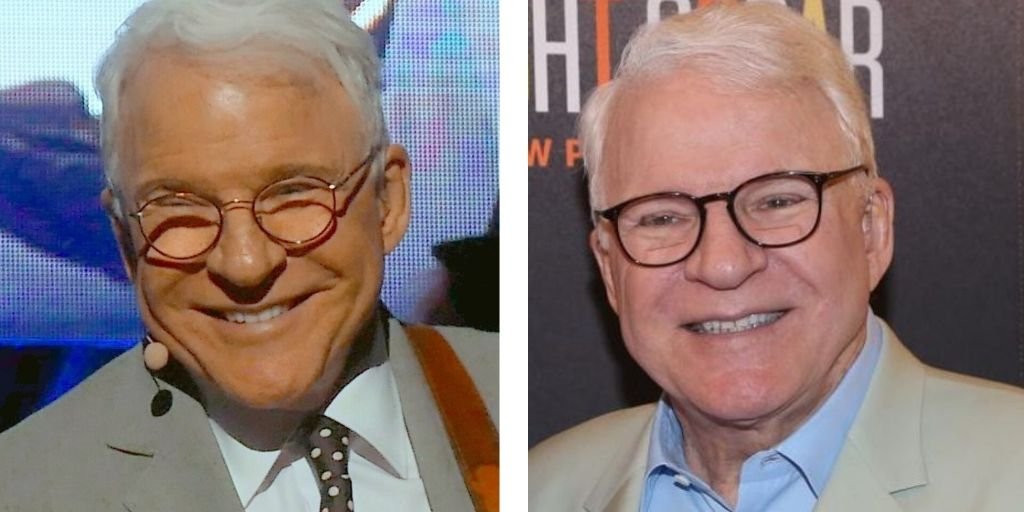
Some entertainers become famous for one thing and remain associated with it for the rest of their lives. Steve Martin is different. He has been a comedian, actor, writer, musician, playwright, author, producer, and television performer. Just when audiences thought they understood him, he found another creative door to open.
His career is especially interesting because it was never built around simply repeating the same joke. From his unusual stand-up routines and memorable films to his love of the banjo and his successful writing career, Martin has continually reinvented himself. His humor could be absurd, clever, dry, innocent, or completely unexpected.
Born in 1945 in Waco, Texas, Martin moved with his family to California as a child and began developing his entertainment skills remarkably early. He worked at Disneyland, learned magic and juggling, taught himself the banjo, studied philosophy and theater, and eventually found his way into television writing and stand-up comedy.
What makes his story so fascinating? Perhaps it is the fact that behind the apparently effortless humor was an enormous amount of discipline and experimentation.
1. Early Life and the Beginning of a Creative Mind
Steve Martin was born on August 14, 1945, in Waco, Texas. His family moved to Los Angeles in 1950, and California became the environment in which his imagination began to flourish.
As a child, Martin found work at Disneyland. He sold guidebooks and later worked in the park’s magic shop. This was far more than an ordinary teenage job. It gave him an opportunity to watch people, understand audiences, perform tricks, and discover how entertainment could capture attention.
He also developed an interest in juggling and rope tricks. These early experiences would become important because Martin learned something many performers eventually discover: getting people to laugh or pay attention requires timing.
At the same time, music became another important part of his life. Martin taught himself to play the banjo while still in high school. His fascination with the instrument would remain with him for decades and eventually become an important part of his professional identity.
After high school, he studied philosophy and theater. On the surface, these subjects might seem unrelated to comedy. In reality, they helped develop the kind of curiosity that became central to his work.
Philosophy encouraged him to question assumptions, while theater introduced him to performance and storytelling. Martin eventually combined both qualities into a style that often made ordinary situations seem completely ridiculous.
His early life can almost be viewed as a workshop. Magic, music, philosophy, theater, writing, and comedy were all ingredients. Years later, he would mix those ingredients into something uniquely his own.
2. From Television Writer to Stand-Up Sensation
Martin’s professional breakthrough did not happen overnight.
In 1967, he joined the writing staff of The Smothers Brothers Comedy Hour. Writing for television gave him an opportunity to sharpen his comedic instincts and understand how jokes worked on a larger scale. He won an Emmy in 1969 for his television writing.
But writing was only one side of his ambition.
Martin continued developing his stand-up act, performing in clubs and appearing on television programs. During this period, he experimented heavily with unusual ideas and deliberately challenged the traditional expectations of stand-up comedy.
Instead of simply telling familiar jokes, he could build a strange premise, deliver it with a straight face, and then take it somewhere nobody expected.
That approach became one of his trademarks.
His performances were filled with physical comedy, wordplay, surreal observations, exaggerated confidence, and deliberate awkwardness. The audience was sometimes unsure whether Martin was serious—and that uncertainty became part of the joke.
His appearances on television helped expose this distinctive style to a much larger audience.
In 1976, he made his first appearance on Saturday Night Live, beginning a relationship with the program that would become an important part of his public image. One of his appearances also helped popularize the novelty song “King Tut,” which became a Billboard-charting hit.
By the late 1970s, Martin was no longer simply an emerging comedian. He had become a major entertainment personality.
3. The Unique Comedy Style That Made Him Famous
Why did audiences respond so strongly to Martin?
One reason was that his comedy did not always behave like conventional comedy.
Imagine a magician who suddenly decides to reveal that the entire magic show is ridiculous. That is somewhat similar to Martin’s approach. He understood traditional performance techniques, but he enjoyed turning expectations upside down.
His comedy frequently used exaggeration.
He might take a simple idea and push it far beyond reality. He also understood the power of silence, facial expression, pauses, body language, and delivery.
This is important because comedy is not only about the words being spoken. Timing can transform an ordinary sentence into a memorable moment.
Martin also had an unusual ability to appear completely confident while saying something absurd. That contrast became a central feature of his stage persona.
His famous stand-up years eventually became the subject of his memoir Born Standing Up: A Comic’s Life. On his official website, the book is described as an account of his early performance career, creative development, mentors, fears, anxieties, and the process through which he discovered what worked on stage.
The book gives readers an important insight: successful comedy was not simply something that happened to Martin. He worked intensely to discover his voice.
4. The Jerk and His Breakthrough in Movies
Martin’s transition from stand-up performer to movie star was a major turning point.
In 1977, he wrote and starred in the Oscar-nominated short film The Absent-Minded Waiter. Two years later, he collaborated with director Carl Reiner on The Jerk. Martin co-wrote and starred in the film, establishing himself as a major comedic presence in Hollywood.
The Jerk became an important part of his career because it demonstrated that his unusual stage personality could work on the big screen.
The film combined physical humor, ridiculous situations, misunderstandings, and an unconventional protagonist. Rather than playing a traditional movie hero, Martin created a character who was often naïve, confused, and hilariously disconnected from the world around him.
His partnership with Carl Reiner continued with films such as Dead Men Don’t Wear Plaid and All of Me.
All of Me, in particular, showcased Martin’s physical comedy skills. His performance required precise movement and interaction with another character in ways that could easily have become chaotic without exceptional timing.
He made the chaos look natural.
That ability would become one of the defining characteristics of his movie career.
5. Expanding Beyond Comedy
One of the most impressive aspects of Martin’s career is that he refused to remain trapped inside one category.
He could have continued making broad comedies forever. Instead, he explored dramatically different material.
The 1981 film Pennies from Heaven allowed him to show a darker and more dramatic side. He even learned tap dancing for the role. The Academy notes that the project demonstrated his willingness to move beyond the expectations created by his stand-up career.
Then came films such as Roxanne, Planes, Trains & Automobiles, and Dirty Rotten Scoundrels.
Roxanne was particularly significant because Martin wrote and starred in the modern adaptation of Cyrano de Bergerac. It demonstrated that he could combine romance, character development, literary inspiration, and comedy.
Planes, Trains & Automobiles showed another side of him. His character was frustrated and exhausted, but the humor came from ordinary human problems rather than purely surreal situations.
That balance helped Martin become more than a comedian.
He became an actor capable of carrying different kinds of stories.
6. Father of the Bride and the Everyman Persona
During the late 1980s and 1990s, Martin increasingly became associated with a relatable adult persona.
Parenthood gave him an opportunity to explore family life and the pressures of being a parent. The performance showed that he could be funny without making the character ridiculous.
Then came Father of the Bride in 1991.
The movie became one of his most recognizable family comedies. Martin played a father struggling emotionally and financially with his daughter’s wedding.
The premise was simple, but the emotional foundation made the comedy stronger.
Rather than laughing at the character from a distance, audiences could recognize themselves in him. Weddings, family expectations, money, responsibility, and changing relationships are universal experiences.
That may be one reason the movie has remained memorable.
Martin’s work during this era showed that comedy becomes even more effective when audiences care about the people involved.
His film career also continued to include more serious performances. He appeared in Grand Canyon, Leap of Faith, and The Spanish Prisoner, demonstrating that his dramatic abilities were not merely an experiment. The Academy specifically highlights his range across comedy and drama.
7. A Writer Who Built a Second Career
Acting alone would have been enough to make Martin famous.
But writing became another major part of his creative life.
He wrote essays, plays, novels, screenplays, and short pieces. His literary work often shares the same characteristics as his comedy: unusual observations, clever language, absurd situations, and a fascination with human behavior.
One of his best-known literary works is Shopgirl, a novella that he later adapted into a film.
His official bibliography includes numerous works, including Born Standing Up, An Object of Beauty, The Pleasure of My Company, Pure Drivel, Picasso at the Lapin Agile and Other Plays, and Walking: My Life in the Movies and Other Diversions.
His writing demonstrates that his humor was never dependent entirely on performing in front of an audience.
He could make people laugh on the page, too.
In 2025, his official website announced Steve Martin Writes the Written Word, a collection bringing together selections from his writing career, including previously published and newer material.
That continuing literary work reinforces an important point about Martin: his creativity has always extended beyond the screen.
8. The Musician Behind the Comedy
For many casual viewers, Martin’s musical career may come as a surprise.
He has been passionate about the banjo since his youth. What began as a teenage interest eventually developed into serious musicianship.
Martin’s relationship with bluegrass music has become an important part of his later career. He has performed with respected musicians and has been involved in recording and live performances.
His musical work is not simply a celebrity hobby.
It reflects the same discipline that shaped his comedy. Learning an instrument requires practice, rhythm, patience, and a willingness to make mistakes before improving.
Martin’s musical interests also became part of his public identity through performances and recordings.
His official website continues to feature music among his major creative activities. In October 2025, the site announced Safe, Sensible and Sane, a collaborative album with Alison Brown featuring original songs and tunes and contributions from several established musicians.
The musical chapter of Martin’s career is fascinating because it shows how an artist can return to an early passion and develop it into a serious second act.
His career is not a straight road. It is more like a tree, with branches extending in several directions.
9. Awards, Recognition, and Lasting Influence
Martin’s achievements have been recognized by some of the most important institutions in American entertainment.
In 2005, he received the Mark Twain Prize for American Humor. In 2007, he was recognized at the Kennedy Center Honors. He also became a three-time host of the Academy Awards, including the 2010 ceremony with Alec Baldwin.
In 2013, the Academy of Motion Picture Arts and Sciences selected Martin for an Honorary Award recognizing his extraordinary contributions to cinema.
That recognition was significant because Martin’s contribution to entertainment cannot easily be reduced to one category.
He was not simply an actor.
He was not simply a stand-up comedian.
He was not simply a writer.
He was not simply a musician.
His career represents the combination of all those disciplines.
The Academy’s own biography describes him as a versatile performer whose work includes acting, screenwriting, novels, plays, music, and comedy.
For younger performers, that versatility is perhaps one of his most valuable lessons.
You do not necessarily have to choose one creative identity and stay there forever.
10. Steve Martin in the Modern Era
Martin’s career did not disappear after his biggest movie successes.
Instead, he continued finding new ways to entertain audiences.
One of the most notable later chapters came through television. He joined Martin Short and Selena Gomez in Only Murders in the Building, a comedy-mystery series that brought his dry humor to a new generation of viewers.
The series demonstrated that Martin’s appeal had not depended solely on the comedy styles of earlier decades.
His official website reported in January 2026 that Only Murders in the Building had received a 2026 Actor Award nomination.
That continuing recognition says something important about his cultural relevance.
Audiences who grew up watching The Jerk or Father of the Bride can appreciate him, while younger viewers can discover his humor through contemporary television.
This is a difficult achievement for any entertainer.
Comedy changes. Technology changes. Audiences change.
Yet certain performers remain recognizable without becoming outdated.
Martin has managed to do that by continuing to evolve.
11. Why Steve Martin Remains So Popular
What explains the longevity of his career?
The answer probably involves several qualities working together.
First, he understands timing.
Second, he is comfortable with absurdity.
Third, he does not appear afraid of looking foolish.
That last quality is especially important. Many performers want to appear intelligent, attractive, powerful, or sophisticated. Martin has often been willing to play characters who are confused, unlucky, awkward, arrogant, innocent, or completely ridiculous.
That willingness creates freedom.
He also understands that audiences appreciate surprise.
If viewers know exactly what will happen next, comedy loses some of its magic. Martin’s work frequently plays with expectations, taking familiar situations and giving them an unexpected turn.
Another reason for his longevity is curiosity.
He moved from comedy to acting, from acting to writing, from writing to music, and from film to television. Instead of treating his previous achievements as a final destination, he kept exploring.
That is perhaps the biggest lesson in his career.
Talent may open the door, but curiosity keeps you moving through the building.
12. The Lasting Legacy of a Remarkably Versatile Performer
Steve Martin’s legacy is much larger than a list of movies.
He helped reshape American stand-up comedy during a period when television and live performance were becoming increasingly influential. He demonstrated that a comedian could build a persona around intelligence, absurdity, physical performance, and unconventional ideas.
He also showed that a successful entertainer could become a respected writer and musician without abandoning humor.
His movies remain popular because many of them deal with situations people understand: family, relationships, ambition, loneliness, friendship, embarrassment, and the strange complications of everyday life.
His books reveal another side of the same imagination.
His music demonstrates patience and craftsmanship.
And his later television work shows that his creative voice can still connect with audiences.
Perhaps the easiest way to understand Martin’s career is to think of it as a long improvisation.
An improviser begins with an idea and asks, “What happens next?”
Martin has spent decades doing exactly that.
A childhood interest in magic became performance. Performance became comedy. Comedy became writing. Writing led to film. Film opened the door to dramatic acting. Music became a serious creative pursuit. Later television introduced his work to another generation.
The journey has never been completely predictable.
That unpredictability is part of what makes it so compelling.
Conclusion
Steve Martin’s career is a remarkable example of what can happen when talent is combined with curiosity, discipline, and a willingness to take creative risks.
From working at Disneyland and learning magic to becoming a celebrated comedian, actor, writer, playwright, author, and banjo player, he has built a career that refuses to fit neatly into one box. The Academy’s recognition of his lifetime contribution reflects the extraordinary range of his work.
For audiences, his greatest gift may be his ability to make the ordinary feel strange and the strange feel completely ordinary.
And perhaps that is why, after so many decades, people are still interested in what Steve Martin will do next.
Frequently Asked Questions
1. When was Steve Martin born?
Steve Martin was born on August 14, 1945, in Waco, Texas. His family moved to California when he was a child, where he began developing interests in magic, performance, and music.
2. What is Steve Martin best known for?
He is best known for his work as a comedian and actor, particularly films such as The Jerk, Roxanne, Planes, Trains & Automobiles, and Father of the Bride. However, he is also an accomplished writer, playwright, author, and banjo musician.
3. Did Steve Martin really play the banjo?
Yes. Martin learned to play the banjo as a teenager and later developed a serious career as a bluegrass musician. Music has remained an important part of his creative life.
4. Has Steve Martin won an Oscar?
Martin received an Honorary Academy Award in 2013 for his extraordinary contributions to the motion picture arts. He has also been involved with the Academy Awards as a host.
5. What books has Steve Martin written?
Martin has written numerous books, including Born Standing Up: A Comic’s Life, Shopgirl, An Object of Beauty, The Pleasure of My Company, Pure Drivel, and Picasso at the Lapin Agile and Other Plays. His official bibliography includes a wide range of fiction, essays, plays, memoir, and other writing.


