
Vanessa Redgrave: An Extraordinary Life, Career and Legacy
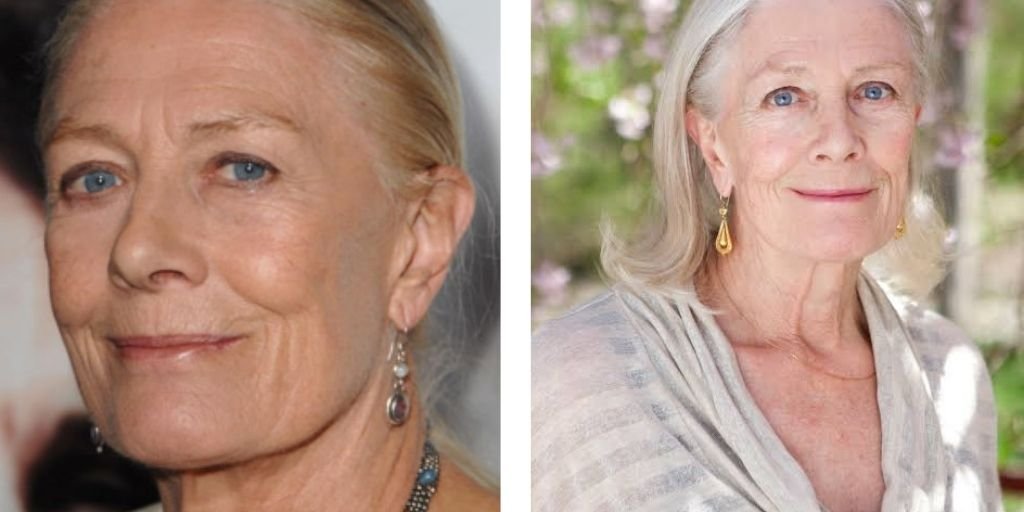
Vanessa Redgrave is one of those performers whose career seems almost impossible to fit into a single description. She has worked on stage, in films, and on television, taking on characters from Shakespearean figures and historical queens to mothers, artists, and complicated modern women. Across more than six decades, she has built a reputation for seriousness, emotional depth, and a willingness to choose challenging material.
Born into one of Britain’s most famous theatrical families, Redgrave had acting around her from childhood. Yet family background alone could never explain such a long career. Her work has carried her from London’s stages to Hollywood, from intimate dramas to major productions, and from classic literature to contemporary stories.
She is also an award-winning performer. Her honors include an Academy Award for Julia, a Tony Award, Emmy and Golden Globe recognition, and the BAFTA Fellowship, the British Academy’s highest individual honor.
Early Life and a Famous Acting Family
Vanessa Redgrave was born on January 30, 1937, in London, England. Acting was already deeply rooted in her family. Her father, Michael Redgrave, became a major British actor, while her mother, Rachel Kempson, was also a respected performer.
Her family environment gave her an unusual introduction to the theater. She grew up surrounded by actors, rehearsals, performances, and discussions about literature and drama. Her siblings, Lynn Redgrave and Corin Redgrave, also became actors.
The theatrical connection went even further. Vanessa later became part of another remarkable acting family through her relationships with fellow performers. Her children, including Joely Richardson and Natasha Richardson, also pursued acting careers.
It would be easy to assume that such a background made success inevitable. It did not. Acting still demanded discipline, training, confidence, and the ability to connect with an audience.
Redgrave studied at the Central School of Speech and Drama, where she developed the skills that would become central to her career. Her training prepared her for the demanding world of theater, where an actor cannot simply rely on close-ups, editing, or special effects.
The Beginning of a Remarkable Acting Career
Redgrave’s professional career developed during a period when British theater and cinema were undergoing major changes. She quickly attracted attention for her stage work and then began building a reputation in film.
One of her early significant screen appearances came in Morgan: A Suitable Case for Treatment. The film brought her considerable critical attention and earned her a BAFTA nomination.
Soon afterward, she appeared in important productions including Blow-Up, A Man for All Seasons, Camelot, and The Sea Gull. These projects demonstrated something that would remain important throughout her career: she was comfortable moving between different kinds of stories.
Some performers become strongly associated with one genre. Redgrave never seemed interested in staying inside one box. She could handle literary drama, historical stories, political material, television productions, and mainstream cinema.
Her early career was like laying the foundation of a large house. The public might notice the finished building, but the strength of the structure comes from years of preparation underneath.
Vanessa Redgrave and the Power of Historical Roles
Historical characters became an important part of Redgrave’s screen identity.
In Isadora, she portrayed dancer Isadora Duncan. The performance brought her another major wave of attention and demonstrated her ability to carry a demanding character study.
She later portrayed Mary, Queen of Scots in the 1971 film Mary, Queen of Scots. Historical roles require more than costumes and accents. The actor has to make a person from another century feel emotionally understandable to a modern audience.
Redgrave had a particular strength in this area. Her performances often gave historical figures a sense of inner life rather than presenting them simply as names from textbooks.
That quality also helped her with literary characters. Whether the story was based on a historical figure, a novel, or a play, she tended to approach characters as complete human beings.
The Film That Brought Her an Oscar
One of the defining moments of Redgrave’s career came with the 1977 film Julia.
The movie, directed by Fred Zinnemann, featured Jane Fonda in the title role and Redgrave as Julia. Redgrave’s performance earned her the Academy Award for Best Supporting Actress at the 50th Academy Awards in 1978.
The Academy records show that Julia received 11 nominations and won three awards, including Supporting Actress for Redgrave.
Winning an Oscar can change the public perception of an actor. Suddenly, an already respected performer receives a level of international recognition that can follow them for decades.
For Redgrave, however, the award was not the end of her journey. It became one important milestone within a much larger career.
Her acceptance speech also became controversial because of political remarks she made while accepting the award. The Academy’s own historical account records the controversy surrounding her comments.
A Career Across Film, Television and Stage
What makes Redgrave particularly interesting is the range of her work.
She never treated film as the only important form of acting. Theater remained central to her artistic life, while television provided another space for complex performances.
Her film credits include Agatha, The Bostonians, Wetherby, Howards End, Mission: Impossible, Mrs Dalloway, Wilde, Girl, Interrupted, The Pledge, Venus, and Atonement.
Television also gave her opportunities to explore characters over longer narratives. Her performance as Clementine Churchill in The Gathering Storm earned a BAFTA television nomination.
This ability to move between mediums is one reason her career has lasted so long.
A theater performance happens in real time. Film captures individual moments. Television can stretch a character’s journey across hours. Redgrave has worked successfully within all three environments.
Her Connection With Shakespeare and Classical Drama
For Redgrave, theater was never simply another branch of entertainment. It was part of her artistic foundation.
Her family background connected her with Britain’s great theatrical tradition, and Shakespeare became an important part of that world.
Classical drama can be demanding for performers because the language is often unfamiliar to modern audiences. The actor must make the words feel natural rather than simply reciting them.
Redgrave’s stage career allowed her to explore precisely this kind of material.
Her approach to performance has often emphasized language, emotion, character, and human relationships. Instead of treating classical plays as museum pieces, she has helped make their conflicts feel immediate.
This is perhaps one reason audiences and critics have continued to associate her with serious theater.
Major Later Films and Memorable Performances
Redgrave did not disappear after her most celebrated early work. Her career continued through the 1980s, 1990s, 2000s, and beyond.
She appeared in Prick Up Your Ears, earning a BAFTA supporting actress nomination for her portrayal of literary agent Peggy Ramsay.
In the 1990s, audiences saw her in films such as Howards End, Little Odessa, A Month by the Lake, and Mission: Impossible.
Her later work included Wilde, Girl, Interrupted, The Gathering Storm, The Pledge, Venus, and Atonement. BAFTA specifically highlighted her work in Atonement and Venus when discussing her career.
One of the pleasures of watching an established actor like Redgrave is seeing how experience changes performance. A young performer may communicate energy through movement and expression. An older performer can sometimes communicate just as much through stillness, timing, or a single look.
Redgrave’s later career demonstrated that acting ability does not necessarily fade with age. In many cases, experience gives an actor additional emotional colors to work with.
Her Acclaimed Stage Career
Although many people know Redgrave primarily from movies, theater remains essential to understanding her career.
She continued appearing on stage throughout her life and received major recognition for her theatrical performances.
One important example was Long Day’s Journey Into Night, Eugene O’Neill’s demanding family drama. Her performance earned her a Tony Award in 2004.
She later appeared in The Year of Magical Thinking, Joan Didion’s one-woman play. The production brought her a Tony nomination in 2007 after successful performances in London and New York.
A one-person play requires an extraordinary level of concentration. There is no large ensemble to share the stage, and the performer has to hold the audience’s attention almost entirely through voice, presence, and storytelling.
Redgrave’s success in this form illustrates why her reputation extends well beyond cinema.
Awards, Honors and Recognition
Over a career lasting decades, Redgrave has received recognition from several major entertainment institutions.
Her Academy Award came for Julia in 1978.
She also received a Tony Award for Long Day’s Journey Into Night, while her work in television and film brought additional Emmy, Golden Globe, and BAFTA recognition.
Perhaps one of the most significant honors came in 2010, when she received the BAFTA Fellowship. BAFTA describes the Fellowship as its highest accolade, recognizing an outstanding contribution to film, games, or television.
The honor was especially meaningful because it recognized the breadth of her career rather than a single performance.
By that point, she had already worked across more than 60 films and countless television dramas, alongside an extensive stage career.
Vanessa Redgrave’s Public Life and Beliefs
Redgrave has also been known for speaking publicly about political and humanitarian issues.
Her political activism has sometimes attracted considerable attention, including controversy. The Academy’s historical record of the 1978 Oscars specifically notes the reaction to her acceptance speech.
It is important to separate her artistic work from the debates surrounding her public statements. Whatever an audience member thinks about a particular political position, her willingness to speak publicly became part of her public identity.
For many performers, political activism can create tension between public expectations and artistic careers. Redgrave continued acting despite that tension.
Her career therefore offers two different stories running alongside each other: the story of a highly accomplished performer and the story of a public figure who was willing to express strong views on international and social issues.
Family, Legacy and Influence
The Redgrave name has become almost synonymous with British acting.
Vanessa’s father, Michael Redgrave, established an important theatrical and film legacy. Her mother, Rachel Kempson, was also a respected actor. Her siblings Lynn and Corin Redgrave pursued acting, while the next generation included performers such as Natasha Richardson and Joely Richardson.
This family history makes the Redgraves unusual even within the theater world.
But Vanessa Redgrave’s legacy does not depend solely on her family. Her individual career stands on its own through decades of performances across stage, television, and cinema.
She has shown that an actor can build a career around challenging roles rather than chasing one particular image.
Her influence can also be understood through the kinds of stories she has helped bring to audiences. Historical dramas, literary adaptations, political stories, intimate family tragedies, and contemporary films have all been part of her work.
Why Vanessa Redgrave Still Matters
Why does Vanessa Redgrave remain an interesting figure to audiences decades after her career began?
Perhaps the answer is simple: she never stopped being curious about acting.
Her career has never been limited to one generation or one medium. Someone might discover her through Julia, another viewer through Mission: Impossible, and another through Atonement or one of her stage performances.
That broad reach is rare.
Her story also reminds us that a successful career does not have to follow a straight line. There were major awards, controversial moments, theatrical triumphs, television appearances, historical dramas, mainstream films, and experimental projects.
Think of her career as a long river rather than a single road. It has taken different turns, crossed different landscapes, and continued flowing through several generations of audiences.
For aspiring actors, there is another lesson. Redgrave’s career shows the value of continuing to learn, taking on demanding material, and remaining open to different forms of storytelling.
Her body of work is not important simply because she has won major awards. It matters because she has spent decades exploring what an actor can do.
Conclusion
Vanessa Redgrave’s career is a remarkable chapter in British and international performing arts. From her beginnings in a famous theatrical family to her acclaimed work in film, television, and theater, she has created a legacy built on range and commitment.
Her Academy Award for Julia, Tony-winning stage work, television performances, and BAFTA Fellowship represent only a selection of her achievements.
More importantly, her career demonstrates the lasting power of serious acting. She has continued to take on challenging characters and demanding stories across generations.
For audiences discovering her work today, there is plenty to explore. Her filmography is not simply a collection of credits; it is a record of an actor continually finding new ways to tell human stories.
Frequently Asked Questions
1. Who is Vanessa Redgrave?
Vanessa Redgrave is an acclaimed English actress known for her work in film, television, and theater. She has had a career spanning more than six decades and has received major honors including an Academy Award and the BAFTA Fellowship.
2. Did Vanessa Redgrave win an Oscar?
Yes. She won the Academy Award for Best Supporting Actress for Julia at the 50th Academy Awards in 1978.
3. What is Vanessa Redgrave famous for?
She is known for films such as Julia, Isadora, Mary, Queen of Scots, Howards End, Mission: Impossible, Girl, Interrupted, Atonement, and Venus, as well as major theater performances.
4. Has Vanessa Redgrave won a Tony Award?
Yes. She won a Tony Award for her performance in Eugene O’Neill’s Long Day’s Journey Into Night. She later received a Tony nomination for The Year of Magical Thinking.
5. What is the BAFTA Fellowship awarded to Vanessa Redgrave for?
Redgrave received the BAFTA Fellowship in 2010. BAFTA describes it as its highest accolade, recognizing an outstanding contribut




