
Sean Connery: The Legendary Actor Who Defined James Bond and Beyond
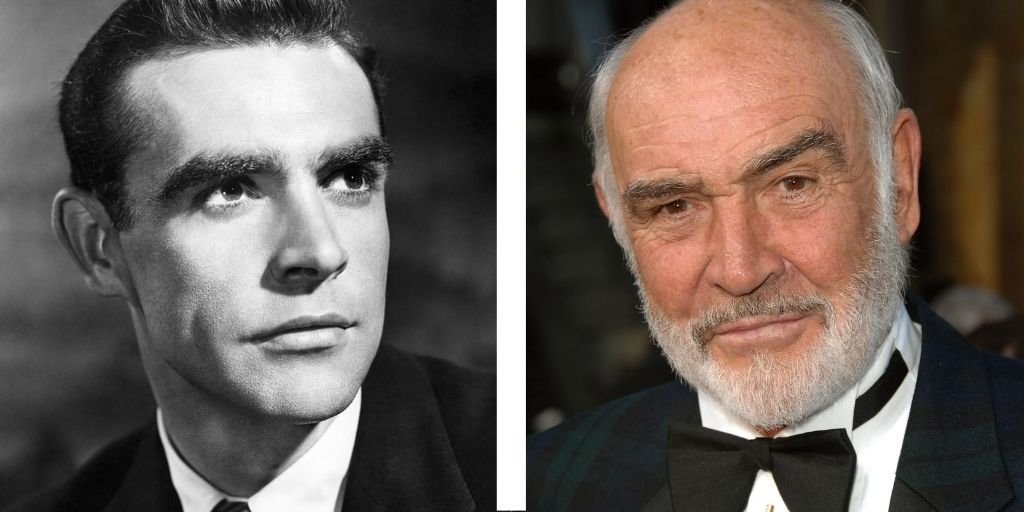
Sean Connery was more than just the first major movie star to play James Bond. With his commanding voice, unmistakable screen presence, and effortless confidence, he became one of the most recognizable actors of the 20th century. From humble beginnings in Edinburgh to international fame, his career stretched across decades and included action films, dramas, historical adventures, thrillers, and even comedies.
What made him special? Perhaps it was the combination of toughness and sophistication he brought to his roles. He could walk into a scene and immediately become its center of gravity. For millions of viewers, he was Bond. For others, he was the Oscar-winning performer who continued reinventing himself long after leaving the famous spy series.
His life and career offer a fascinating look at how a working-class Scottish actor became a global icon.
Early Life and Humble Beginnings in Scotland
Sean Connery was born Thomas Sean Connery on August 25, 1930, in Edinburgh, Scotland. His childhood was far removed from the glamorous world of Hollywood. He grew up in a working-class family and experienced a modest upbringing in the Fountainbridge area of Edinburgh.
His father, Joseph Connery, worked a variety of jobs, while his mother, Euphemia, was a cleaner. Young Sean left school relatively early and began working to support himself.
Before acting became his profession, Connery tried several different occupations. He worked as a milkman, laborer, coffin polisher, and model. He also served in the Royal Navy for a period.
These experiences helped shape the personality audiences would later see on screen. He wasn’t trained from childhood to become a polished movie star. Instead, he developed his confidence through real-world experiences.
Interestingly, bodybuilding also played an important role in his early life. Connery competed in bodybuilding contests and developed a powerful physique. This eventually helped him stand out when filmmakers were searching for someone capable of embodying Ian Fleming’s famous secret agent.
His journey is a reminder that careers rarely develop in a straight line. Sometimes, the experiences that seem unrelated to your ultimate goal become the very things that prepare you for it.
The Road to Acting and His First Screen Roles
Connery became increasingly interested in entertainment during his twenties. He worked as a model and became involved with theater productions. His physical appearance initially attracted attention, but he gradually proved that he could do much more than simply look the part.
Small acting opportunities eventually led to television appearances and film roles.
During the 1950s, he appeared in productions such as No Road Back, Another Time, Another Place, and Darby O’Gill and the Little People. These early projects helped him gain valuable experience.
At this stage, Connery was not yet a household name. Hollywood had plenty of handsome actors, and simply having a strong presence wasn’t enough to guarantee success.
He needed a role that would transform his career.
That opportunity arrived in 1962.
Becoming James Bond
When producers were preparing Dr. No, the first official film in the James Bond series, they needed an actor who could convincingly portray Fleming’s sophisticated but dangerous secret agent.
Connery was selected for the role.
At first, the choice was not universally obvious. He was relatively unknown to international audiences, and some people questioned whether he could embody the character created in Fleming’s novels.
But once Dr. No reached theaters, those doubts quickly disappeared.
Connery’s Bond was confident without constantly needing to prove himself. He combined physical strength with dry humor and sophisticated style. His performance established many of the characteristics audiences would associate with Bond for generations.
The movie was a major success, and Connery quickly became an international star.
His performance can be compared to the foundation of a building: later actors could add their own designs, but they were building on a structure he helped establish.
The Bond Films That Made Him a Global Star
Connery continued as Bond in several highly successful films.
His second appearance came in From Russia with Love in 1963. The film was praised for its stronger storytelling and helped establish the series as a major cinematic franchise.
Then came Goldfinger in 1964, one of the most influential entries in the series. The movie expanded the formula with memorable characters, gadgets, action sequences, and a larger sense of spectacle.
Connery followed it with Thunderball in 1965 and You Only Live Twice in 1967.
After You Only Live Twice, he temporarily stepped away from the role. However, he returned for Diamonds Are Forever in 1971.
His Bond movies helped establish the international image of the British secret agent: tailored suits, fast cars, exotic locations, clever one-liners, and dangerous missions.
But there was another side to the success.
Playing the same iconic character repeatedly could easily trap an actor. Connery understood that his career needed to become bigger than Bond.
Life After 007 and the Search for Different Roles
Leaving James Bond behind was not an easy career decision.
The character had become strongly associated with Connery, and audiences could easily have rejected him in other roles. Instead, he deliberately explored different genres.
He appeared in films such as Marnie, The Hill, and The Molly Maguires. These projects allowed him to demonstrate a wider emotional range.
His post-Bond career eventually became one of the most impressive aspects of his professional life.
Connery did not simply attempt to repeat the success of 007. He took on characters with different personalities, backgrounds, and motivations.
This helped audiences recognize him as an actor rather than merely as a franchise star.
An Oscar Win and Critical Recognition
One of the biggest milestones of Connery’s career came with The Untouchables in 1987.
Directed by Brian De Palma, the film focused on the battle between federal agents and organized crime during the Prohibition era.
Connery played Jim Malone, an experienced Irish-American police officer who becomes a mentor to Eliot Ness, portrayed by Kevin Costner.
The role was very different from Bond. Malone was older, rougher, more grounded, and emotionally complex.
Connery’s performance earned him the Academy Award for Best Supporting Actor.
The Oscar was particularly meaningful because it confirmed something critics had increasingly recognized: his talents extended far beyond the suave spy persona that had made him famous.
His performance in The Untouchables remains one of the most celebrated chapters of his career.
Memorable Performances Beyond James Bond
Connery’s filmography contains numerous roles that demonstrate his versatility.
In Indiana Jones and the Last Crusade, he played Professor Henry Jones, the father of Indiana Jones. Appearing opposite Harrison Ford, Connery brought humor, warmth, and authority to the character.
The relationship between father and son gave him an opportunity to show a lighter side.
He also starred in The Name of the Rose, based on Umberto Eco’s novel. Connery played William of Baskerville, a Franciscan friar investigating mysterious deaths in a medieval monastery.
Another important film was The Hunt for Red October, where Connery portrayed Soviet submarine commander Marko Ramius. The movie became a major commercial success and introduced him to a new generation of viewers.
He also appeared in The Rock, Highlander, The Man Who Would Be King, A Bridge Too Far, and The Presidio.
These roles demonstrated an important quality: Connery could remain recognizable without playing the same personality every time.
Sean Connery’s Distinctive Acting Style
What exactly made Connery so memorable?
His voice was certainly part of it. Deep, controlled, and unmistakably Scottish, it gave even ordinary lines a sense of authority.
Then there was his physical presence.
Connery did not usually need exaggerated movements to dominate a scene. He could stand still, deliver a line, and command attention.
His acting often relied on restraint. Rather than explaining everything through dramatic gestures, he allowed pauses, expressions, and tone to communicate character.
That approach worked particularly well in action movies.
Think of it like a great piece of music. A performer doesn’t need to play every note loudly. Sometimes the pauses and quieter moments make the strongest impression.
Connery understood that principle on screen.
His characters often appeared confident because he rarely seemed desperate for the audience’s approval.
His Influence on James Bond and Popular Culture
It is difficult to discuss James Bond without discussing Connery’s influence.
The later actors who portrayed Bond inevitably faced comparisons with him. George Lazenby, Roger Moore, Timothy Dalton, Pierce Brosnan, and Daniel Craig each developed different interpretations, but Connery’s version remained a reference point.
He helped establish the visual and emotional template for the character.
His Bond was masculine, stylish, witty, dangerous, and occasionally vulnerable. The character could move from a sophisticated casino to a violent confrontation without seeming completely out of place.
Connery’s influence also extended beyond Bond.
His combination of authority, humor, and physical strength became a recognizable screen archetype. Filmmakers frequently used him in roles involving leaders, military officers, professors, investigators, mentors, and experienced professionals.
Even decades after his Bond debut, audiences continued to associate him with intelligence and authority.
Personal Life, Interests, and Public Image
Connery was famously private about many aspects of his personal life.
He married actress Diane Cilento in 1962, and they had one son, Jason Connery. The marriage ended in divorce in 1973.
He later married Micheline Roquebrune, an artist and painter, in 1975. They remained together for the rest of his life.
Golf was another major interest. Connery enjoyed the sport and frequently incorporated his passion for it into his lifestyle.
He also maintained a strong connection with Scotland.
Although his international fame made him a global celebrity, his Scottish identity remained an important part of his public image. His accent, background, and pride in his roots helped distinguish him from many of his contemporaries.
His relationship with Scotland was not simply a marketing feature. It was deeply connected to his identity and the story of his rise from a working-class Edinburgh neighborhood to worldwide fame.
Later Career and Retirement From Film
Connery continued working well into his later years.
His appearances in major productions demonstrated that audiences remained interested in his presence even after decades in the industry.
One of his final major acting roles was in The League of Extraordinary Gentlemen, released in 2003. The production was intended to launch a major action franchise, but Connery ultimately became increasingly dissatisfied with the filmmaking experience.
After the film, he largely retired from acting.
Unlike some stars who continue appearing on screen indefinitely, Connery seemed comfortable stepping away when he felt his time had come.
His retirement added another interesting chapter to his career. He had achieved something relatively rare: the ability to leave the movie business on his own terms.
Awards, Achievements, and Lasting Legacy
Over his career, Connery received numerous honors.
His Academy Award for The Untouchables was among his most important achievements. He also received BAFTA and Golden Globe recognition, along with major lifetime honors.
In 2000, he was knighted by Queen Elizabeth II.
For many people, however, awards tell only part of the story.
Connery’s real achievement was the longevity of his cultural influence.
He became Bond and then successfully escaped the shadow of Bond.
That’s not easy.
Many actors become permanently identified with a single character. Connery managed to make 007 one chapter of a much larger career.
His performances continue to attract new audiences, while his Bond films remain central to the history of popular cinema.
Sean Connery’s Death and the End of an Era
Sean Connery died on October 31, 2020, at the age of 90.
His death marked the end of an extraordinary life in entertainment.
Tributes came from fellow actors, filmmakers, fans, and organizations around the world. Many remembered him not only as James Bond but also as a respected actor whose career extended across multiple generations.
His death also encouraged renewed interest in his earlier films.
For younger audiences discovering his work for the first time, the experience can be surprising. They may begin with Bond and then discover The Untouchables, Indiana Jones and the Last Crusade, The Name of the Rose, The Hunt for Red October, and other performances.
That is perhaps the clearest evidence of a lasting career.
A star may be famous for one role, but a great actor gives audiences reasons to keep watching.
Why Sean Connery Still Matters Today
Why does Connery continue to matter decades after his biggest successes?
The answer is simple: presence.
Modern cinema has changed dramatically. Visual effects have become more advanced, franchises have grown larger, and audiences have countless entertainment choices.
Yet personality remains difficult to manufacture.
Connery had it naturally.
His performances remind us that a compelling actor does not always need to shout, move constantly, or rely on spectacular effects. Sometimes a distinctive voice, confident posture, intelligent delivery, and emotional control are enough.
His career also offers a valuable lesson about reinvention.
He could have remained exclusively associated with Bond. Instead, he deliberately expanded his range. He moved between action, drama, adventure, mystery, comedy, and historical stories.
That flexibility allowed him to remain relevant for decades.
Conclusion
Sean Connery’s career was much bigger than James Bond. He began life in modest circumstances in Edinburgh and eventually became one of the most influential actors in international cinema.
His portrayal of 007 created a template that shaped the franchise for generations, but his greatest achievement may have been what came afterward. Through acclaimed performances in films such as The Untouchables, Indiana Jones and the Last Crusade, and The Hunt for Red October, he proved that he could continually move beyond the character that made him famous.
His deep voice, commanding presence, Scottish identity, and understated acting style made him instantly recognizable.
Even today, when audiences revisit his films, his performances retain their power. That’s the mark of a genuine screen legend: the passage of time does not erase the impact.
Sean Connery left behind more than movies. He left behind a standard for charisma, confidence, and cinematic presence that continues to influence popular culture.
Frequently Asked Questions
1. Who was Sean Connery?
Sean Connery was a Scottish actor best known for originating the cinematic James Bond role in the official film series. He also enjoyed a long career in dramas, thrillers, adventures, and historical films.
2. How many James Bond movies did Sean Connery make?
Connery officially played James Bond in seven films, including Dr. No, From Russia with Love, Goldfinger, Thunderball, You Only Live Twice, Diamonds Are Forever, and the non-Eon production Never Say Never Again.
3. Did Sean Connery win an Academy Award?
Yes. Connery won the Academy Award for Best Supporting Actor for his performance as Jim Malone in The Untouchables.
4. What are Sean Connery’s most famous movies besides James Bond?
Some of his best-known non-Bond films include The Untouchables, Indiana Jones and the Last Crusade, The Hunt for Red October, The Name of the Rose, The Rock, and Highlander.
5. When did Sean Connery die?
Sean Connery died on October 31, 2020, at the age of 90. He had largely retired from acting after his final major film appearances.


