
Stephen Hawking: The Extraordinary Life, Discoveries, and Legacy of a Modern Genius
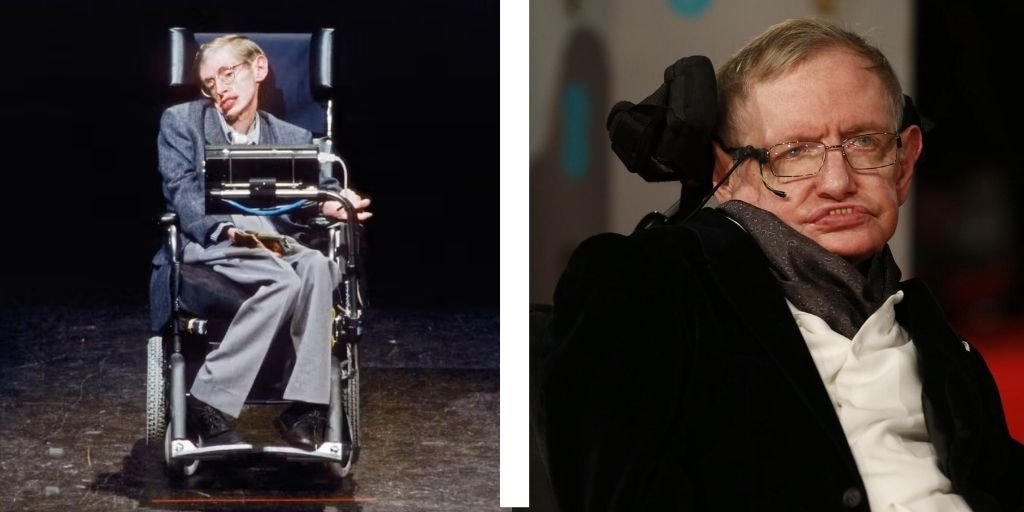
Stephen Hawking was more than a famous physicist sitting in a wheelchair and speaking through a computer. He was a remarkable thinker who changed the way people understood black holes, the universe, and humanity’s place within it. Despite living with a serious neurological illness for most of his adult life, he continued asking some of the biggest questions imaginable: How did the universe begin? What happens inside a black hole? Could humans survive beyond Earth?
His story is one of scientific curiosity, determination, and an extraordinary ability to make complicated ideas interesting to ordinary people. From his childhood in England to his years at Cambridge and his worldwide fame, Hawking became one of the most recognizable scientists of the modern era.
Early Life and Childhood of Stephen Hawking
Stephen William Hawking was born on January 8, 1942, in Oxford, England. Interestingly, his birth came exactly 300 years after the death of Galileo Galilei, another famous figure in the history of astronomy.
Hawking grew up in a family that valued education. His father, Frank Hawking, was a medical researcher, while his mother, Isobel, had studied philosophy, politics, and economics. The family encouraged intellectual curiosity, and young Stephen developed an interest in how things worked.
As a child, however, he was not the stereotypical student who excelled at everything. He was curious and imaginative, but his school performance was not always exceptional. Friends reportedly gave him the nickname “Einstein” because they recognized his unusual intelligence.
At St Albans School, Hawking became increasingly interested in mathematics and science. He later attended University College, Oxford, where he studied physics.
Oxford was an important period in his life. He was interested in understanding the fundamental rules governing nature rather than simply memorizing information. That curiosity would eventually lead him toward cosmology, the study of the universe as a whole.
Education at Oxford and Cambridge
After studying physics at Oxford, Hawking moved to Cambridge to pursue graduate research in cosmology.
Cambridge would become closely connected with his professional life. He worked under physicist Dennis Sciama and became interested in questions involving the beginning and structure of the universe.
During this period, scientists were debating whether the universe had a definite beginning. The expanding-universe model suggested that the cosmos had once been much smaller, hotter, and denser.
Hawking became fascinated by this problem.
Together with mathematician and physicist Roger Penrose, he helped demonstrate that Einstein’s general theory of relativity could lead to conditions resembling a beginning of the universe. Their work connected the mathematics of gravity with the idea that space and time themselves could have a starting point.
This was not simply a question about what existed before the universe. It challenged people to think about whether “before” even made sense if time itself had a beginning.
Living With Motor Neurone Disease
One of the most extraordinary parts of Hawking’s story began when he was still a young man.
At the age of 21, he was diagnosed with amyotrophic lateral sclerosis, commonly known as ALS, a form of motor neurone disease. Doctors initially believed he might have only a few years to live.
For a young researcher with ambitions of becoming a scientist, the diagnosis could have completely changed the direction of his life.
Instead, Hawking continued his work.
The illness gradually affected his ability to move. Eventually, he needed a wheelchair and assistance with many everyday activities. His speech also became increasingly difficult.
Yet his mind remained intensely active.
This contrast became one of the defining features of his public image. His physical limitations became severe, but his intellectual ambitions did not disappear.
Hawking’s experience is often described as a story of overcoming adversity, but it is important not to reduce his life to his illness. He was a scientist first, and his greatest contribution came from his ideas.
His condition changed how he communicated, but it did not stop him from participating in research, teaching, writing, and public discussion.
The Revolutionary Idea of Hawking Radiation
Perhaps Hawking’s most famous scientific contribution involved black holes.
A black hole is an object with gravity so powerful that, beyond a certain boundary, even light cannot escape. For a long time, scientists believed that black holes could only absorb matter and energy.
Hawking challenged that picture.
In 1974, he proposed that black holes could emit radiation because of quantum effects near their boundaries. This phenomenon became known as Hawking radiation.
The idea was revolutionary because it connected two areas of physics that seemed difficult to reconcile: general relativity and quantum mechanics.
Imagine a black hole as a cosmic trapdoor. Classical physics suggests that once something crosses its boundary, it is permanently lost from the outside universe. Hawking’s work suggested that black holes are not completely black after all. They can slowly lose energy.
Over extremely long periods, a black hole could therefore shrink and potentially disappear.
This discovery created an enormous puzzle known as the black hole information paradox. If information falls into a black hole and the black hole eventually disappears, what happens to that information?
The question remains one of the deepest problems in theoretical physics.
Hawking’s work transformed black holes from mysterious astronomical objects into laboratories for studying the fundamental laws of nature.
His Work on the Beginning of the Universe
Black holes were not Hawking’s only major area of interest. He also spent much of his career exploring the origin of the cosmos.
His research with Roger Penrose helped establish important connections between gravitational collapse and the mathematical structure of spacetime.
Hawking later worked on models describing the early universe. He was interested in whether the universe required a traditional boundary or whether quantum effects could provide a different picture.
One famous proposal associated with Hawking and James Hartle was the “no-boundary” proposal.
The basic idea is difficult but fascinating. Instead of imagining the universe as beginning from a sharp edge in ordinary time, the earliest state of the cosmos could behave differently under quantum conditions.
Hawking often tried to explain these concepts in ways that ordinary people could understand.
That ability became a major part of his public appeal. He understood that science did not belong only in universities. The universe belonged to everyone.
A Brief History of Time and Global Fame
In 1988, Hawking published A Brief History of Time.
The book attempted something extremely ambitious: explain the history and structure of the universe to general readers.
It discussed subjects such as the Big Bang, black holes, space, time, and the nature of scientific theories.
Few people expected a book containing advanced ideas about cosmology to become a global bestseller. Yet that is exactly what happened.
The book sold millions of copies and was translated into numerous languages. Hawking became an international celebrity.
Its success demonstrated something important. People were interested in science when scientists were willing to tell the story clearly.
Hawking became a bridge between the scientific community and the general public.
He also published other books, including The Universe in a Nutshell, The Grand Design, and books aimed at younger readers with his daughter Lucy Hawking.
His popular writing helped introduce generations of readers to questions that might otherwise have seemed too difficult or distant.
Stephen Hawking’s Communication Technology
As Hawking’s physical condition progressed, communicating became increasingly challenging.
He eventually relied on a speech-generating computer system. He could select words using a small movement, and the computer would convert those selections into synthesized speech.
The electronic voice became instantly recognizable.
It may have sounded unusual, but Hawking embraced it as part of his identity. The voice allowed him to lecture, conduct interviews, write books, and communicate with colleagues.
Technology therefore became more than a convenience in his life. It became his connection to the wider world.
His situation also demonstrated how assistive technology can provide independence to people with severe physical disabilities.
Hawking’s public career would have been dramatically different without communication technology. His story helped raise awareness about accessibility and the importance of designing technology that allows people to participate fully in society.
Stephen Hawking as a Science Communicator
Hawking understood that scientific discovery becomes more meaningful when people can appreciate why it matters.
He appeared in documentaries, interviews, television programs, and public lectures. He even made appearances in popular entertainment.
His recognizable voice and personality appeared in programs such as The Simpsons, Star Trek: The Next Generation, and The Big Bang Theory.
These appearances may seem unusual for a theoretical physicist, but they helped make science feel less distant.
Hawking could discuss enormous subjects while maintaining a sense of humor.
He also challenged the idea that scientists had to remain isolated from popular culture.
For many people, their first exposure to cosmology came through Hawking rather than a textbook.
That is an important part of his legacy. He did not simply produce scientific papers; he inspired curiosity.
Hawking’s Views on Artificial Intelligence and Humanity
As technology developed, Hawking increasingly discussed the future of artificial intelligence.
He recognized the potential benefits of advanced technology but also warned that highly capable artificial intelligence could create serious risks if developed without appropriate safeguards.
His concerns were not simply about robots becoming villains in a science-fiction movie. They were about whether humanity would remain capable of controlling systems that became increasingly sophisticated.
Hawking also worried about humanity’s long-term future.
He discussed threats such as nuclear conflict, environmental problems, pandemics, and uncontrolled technological development. He argued that humans should think beyond short-term problems and consider how civilization could survive for centuries or longer.
One of his recurring themes was the importance of space exploration.
If humanity could eventually establish communities beyond Earth, our species might become less vulnerable to a disaster affecting a single planet.
Whether or not such predictions prove correct, Hawking encouraged people to think on an unusually large scale.
Space Exploration and the Search for the Future
Hawking believed that humanity should continue exploring space.
He was fascinated by the possibility of humans eventually reaching other planets and perhaps traveling much farther into the cosmos.
He supported projects designed to advance interstellar exploration and frequently discussed the possibility of intelligent life elsewhere.
The search for extraterrestrial life raised another question: Are we alone?
Considering the enormous size of the observable universe, Hawking regarded the possibility of other intelligent civilizations as worth serious scientific consideration.
At the same time, he cautioned that humanity should be careful about how it communicates with unknown civilizations.
His perspective was shaped by the enormous distances involved in space. Even the nearest stars are unimaginably far away by human standards.
Still, Hawking believed that asking such questions was valuable.
Science often begins with a simple question that sounds almost impossible: What if?
Awards, Honors, and Academic Career
Hawking received numerous awards and honors throughout his career.
He became a fellow of the Royal Society and later received the prestigious Presidential Medal of Freedom from the United States.
He also held the Lucasian Professorship of Mathematics at Cambridge, a position previously associated with figures such as Isaac Newton.
That connection was particularly symbolic. Newton had transformed humanity’s understanding of gravity centuries earlier, while Hawking helped reshape modern thinking about gravity, black holes, and the universe.
Despite receiving international recognition, Hawking remained focused on scientific questions.
He continued researching and writing well into later life.
His career demonstrated that scientific achievement is not always about performing experiments in a laboratory. Sometimes it involves using mathematics, imagination, and careful reasoning to investigate things that cannot be directly touched or observed.
The Theory of Everything and the Limits of Knowledge
One of the biggest questions in modern physics is whether all the fundamental forces of nature can eventually be described within one unified framework.
Hawking was deeply interested in this challenge.
Physicists have successful theories describing gravity and quantum phenomena, but combining them into one complete description remains extraordinarily difficult.
Hawking’s work contributed to the conversation about what such a theory might look like.
But he also recognized something important: scientific knowledge has limits.
The universe is not obligated to be simple enough for humans to understand easily.
That is perhaps one of the most inspiring aspects of his career. Hawking did not pretend that every mystery had already been solved. Instead, he treated unanswered questions as invitations to investigate further.
In that sense, science resembles an enormous puzzle. Solving one piece does not finish the picture. Sometimes it reveals several new pieces that nobody knew existed.
Personal Life and Relationships
Hawking’s personal life attracted considerable public attention.
He married Jane Wilde in 1965, and they had three children. Jane played an important role in supporting the family during the early decades of Hawking’s illness.
Their relationship later became the subject of Jane’s memoir Travelling to Infinity: My Life with Stephen, which was adapted into the 2014 film The Theory of Everything.
The movie introduced Hawking’s story to an even wider audience and featured Eddie Redmayne in an award-winning performance.
Hawking later married Elaine Mason, although that marriage eventually ended in divorce.
While his personal relationships were sometimes complicated, they were part of a much larger life that included family, scientific research, travel, teaching, and public engagement.
The Theory of Everything Film
The 2014 film The Theory of Everything presented a dramatized version of Hawking’s early life and relationship with Jane Wilde.
Eddie Redmayne portrayed Hawking, while Felicity Jones played Jane.
Redmayne’s performance received widespread acclaim, and he won the Academy Award for Best Actor.
The film focused less on detailed physics and more on Hawking’s personal journey.
For many viewers, it offered an emotional introduction to a man they previously knew mainly from photographs or television appearances.
However, as with any biographical film, it should be understood as a dramatization rather than a complete historical record.
The real Hawking’s life was much broader than a single movie could capture.
Stephen Hawking’s Final Years
Hawking continued working and appearing publicly during his later years.
He remained interested in cosmology, artificial intelligence, space exploration, and the future of humanity.
He also continued encouraging scientific education and public interest in astronomy.
On March 14, 2018, Stephen Hawking died at his home in Cambridge at the age of 76.
His death attracted worldwide attention.
Scientists, educators, political leaders, celebrities, and ordinary people remembered him as one of the most influential scientific personalities of the modern age.
His ashes were later interred in Westminster Abbey, close to the graves of Isaac Newton and Charles Darwin.
It was a fitting location for someone whose work connected the laws of nature with humanity’s understanding of life and the universe.
The Lasting Legacy of Stephen Hawking
What makes Hawking’s legacy so powerful?
It is not only the scientific theories that carry his name.
His influence can be seen in classrooms, documentaries, books, disability advocacy, popular culture, and the millions of people who became interested in astronomy because of him.
He showed that physical limitations do not automatically determine intellectual possibilities.
He also showed that difficult scientific ideas can be communicated without making the audience feel excluded.
Perhaps most importantly, Hawking encouraged people to remain curious.
He repeatedly returned to questions that have fascinated humans for centuries: Where did everything come from? Why does the universe exist? What happens at the edge of a black hole? Could intelligent life exist elsewhere?
These questions remain open in many ways.
And that is exactly why Hawking’s work continues to matter.
His greatest gift may not have been providing final answers. It may have been teaching people to ask better questions.
Conclusion
Stephen Hawking left behind a remarkable scientific and cultural legacy. His research changed our understanding of black holes and helped deepen our knowledge of the universe. His books brought cosmology to millions of readers, while his public appearances made science part of popular culture.
His life also demonstrated the extraordinary possibilities of human determination and technology. Faced with a progressive illness that dramatically restricted his physical abilities, he continued to work, communicate, teach, write, and explore some of humanity’s biggest questions.
Hawking reminded us that the universe is vast, mysterious, and full of unanswered questions. More importantly, he encouraged ordinary people to look up at the stars and wonder.
That sense of wonder may ultimately be his most enduring legacy.
Frequently Asked Questions
1. Who was Stephen Hawking?
Stephen Hawking was a British theoretical physicist and cosmologist best known for his work on black holes, Hawking radiation, cosmology, and the origins of the universe. He was also a highly successful science communicator.
2. What was Stephen Hawking famous for?
He was particularly famous for predicting that black holes can emit radiation, now called Hawking radiation. He also became internationally known for his books and efforts to explain cosmology to the general public.
3. What illness did Stephen Hawking have?
Hawking was diagnosed with amyotrophic lateral sclerosis, or ALS, at age 21. The disease gradually affected his ability to move and speak, but he continued his scientific career for decades.
4. What was Stephen Hawking’s most famous book?
His best-known book was A Brief History of Time, published in 1988. It introduced subjects such as black holes, cosmology, space, and time to a general audience.
5. When did Stephen Hawking die?
Stephen Hawking died on March 14, 2018, at the age of 76, at his home in Cambridge, England. His scientific and popular legacy continues to influence discussions about physics, space, and humanity’s future.


